
Selected model: Jinjie J-2815C
Typical application
Estate boundary-wall and low stone-wall washing
Jinjie J-2815C
Application guidance on Estate boundary-wall and low-wall washing, including equipment selection, working conditions and practical value.
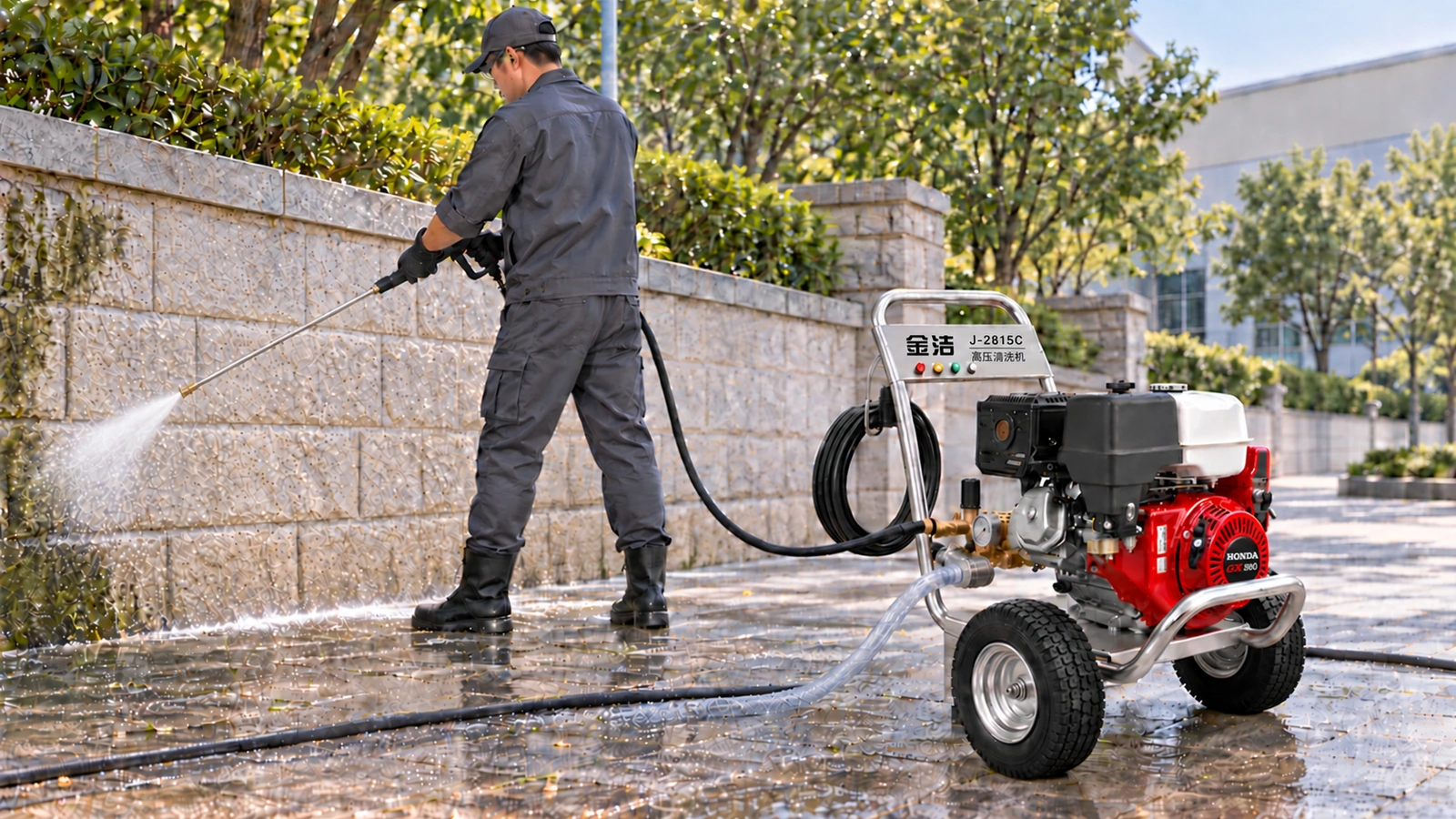
01 · What makes this site difficult?
Local soil on low stone walls and boundary walls must be considered alongside joints, finishes, windows and water-sensitive areas. Greater impact can damage a finish, while repeated hand wiping can be difficult to coordinate with scattered work points, runoff and pedestrian access.
02 · Why consider Jinjie J-2815C?
Consider mobile washing with J-2815C only in open outdoor areas that permit wet cleaning and can be reached safely from the ground. Identify the substrate and deposit first, then organise local work around a suitable nozzle, stand-off distance and small-area trial rather than choosing by pressure alone.
03 · Method and practical customer value
Protect windows, joints and water-sensitive parts, treat local soil in sections after a suitable trial, and check splash and drainage. Where the task and equipment match, this can reduce repeated wiping and the risk of damage or rework caused by unsuitable operation, supporting more planned low-wall maintenance.
Check stone, finishes, pointing, windows, doors and water ingress before selecting a method.
What site information is needed first
- Stone or finish, pointing and joint condition
- Cracks, hollow areas, windows/doors and water-sensitive points
- Height safely reachable from the ground and people exclusion zone
Method and limitations
- Inspect substrate and joints first; stop the pressure-washing assessment if damage, water ingress or unknown finishes are found.
- Only low areas safely reachable from ground level are discussed; this chapter is not guidance for work at height or facade engineering.
- Higher pressure cannot replace material assessment. Choose nozzles, distance and trials according to instructions and site results.
Equipment selection basis
For low walls, prioritize substrate, pointing, joints and water-ingress risks. Consider J-2815C only for open outdoor work safely performed from ground level. Reassess fragile finishes, damaged walls or unknown materials rather than recommending by pressure alone.
View current J-2815C specificationsCommon questions
Can pressure washing directly remove posters, rust and wall coatings?
Not universally. Deposits may require different treatment, and pressure water may damage coatings, finishes or joints. Identify materials, contaminants and permitted treatment first.
How should equipment be chosen for these applications?
Identify substrate, soil, utilities, ventilation and working space, then select a method using actual configuration and trial results.
Submit site requirements
Provide site photos, city, materials, contamination, area, work window, water and drainage. For rental enquiries, add the start date and duration.
Discuss equipment and the site planDiscuss a rental planModels and original application images
Compare each model against its own configuration and the actual route, material and site services.
Jinjie J-2815C
Current model
Estate boundary-wall and low-wall washing