
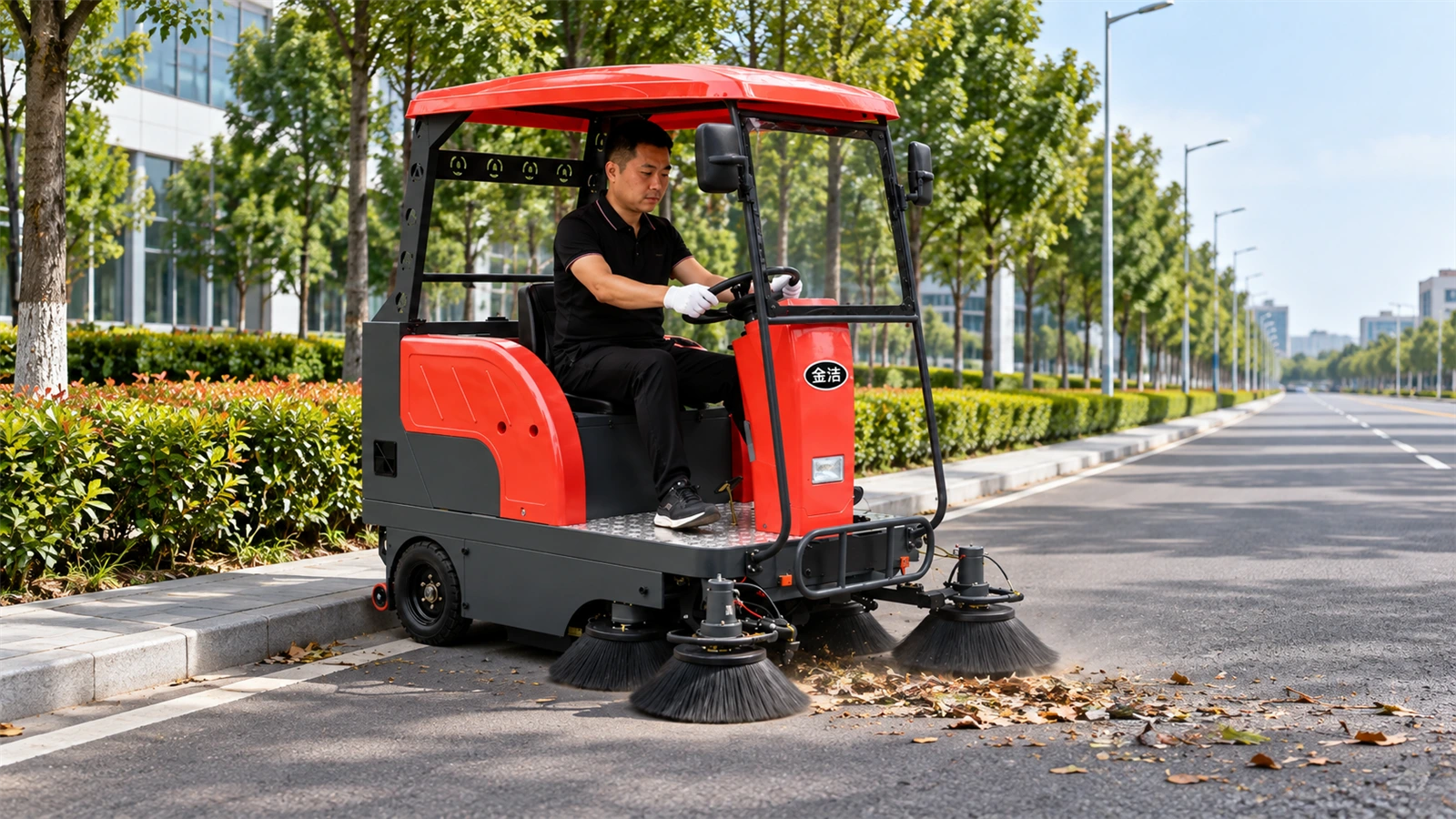
Selected model: Jinjie J-XS1800
Typical application · Equipment selectionOpen public perimeter routes: balance coverage, unloading and traffic separation
Jinjie J-XS1800
Confirm separation, sightlines and turning space on public routes before collecting ordinary dry debris, reducing repeated manual gathering without claiming unattended road safety.
01 · What makes this task difficult?
Commercial perimeters, open plaza routes and comparable public roads collect scattered leaves, paper, grit and ordinary dust. Long routes involve pedestrian exits, vehicle encounters and the return distance when the hopper fills, not just sweep width. Typical illustrations do not establish legal permission for public-road travel.
A wide main road has narrow entrances
Verify gates, turns and parking along the full route
Long routes require return trips for unloading
Record real waste volume and route; compare sectional unloading
People and vehicles share public space
Work in off-peak sections and retain emergency and accessible routes
02 · Why consider this Jinjie machine?
With route separation and operation arrangements in place, sweeping and collection can concentrate ordinary dry debris and reduce long manual rounds; equipment does not replace traffic control or supervision.
Check sweep width separately from the machine envelope
Verify gates, turns and parking along the full route
Avoid selecting from an open-space demonstration alone
Actual hopper load and disposal points
Record real waste volume and route; compare sectional unloading
Ground shift planning in site evidence
Driver observation, segregation and timing
Work in off-peak sections and retain emergency and accessible routes
Help operators plan public access
Jinjie J-XS1800 · Current sweep width is 1880 mm with a 180 L hopper, not 1800 mm inferred from the model name. Check the narrowest route first.
03 · A better cleaning workflow and customer value
Confirm separation, sightlines and turning space on public routes before collecting ordinary dry debris, reducing repeated manual gathering without claiming unattended road safety.
Avoid selecting from an open-space demonstration alone
A wide main road has narrow entrances · Verify gates, turns and parking along the full route
Ground shift planning in site evidence
Long routes require return trips for unloading · Record real waste volume and route; compare sectional unloading
Help operators plan public access
People and vehicles share public space · Work in off-peak sections and retain emergency and accessible routes
Match tools, the material and the working route before comparing labour, time, consumables and maintenance costs. The potential value depends on suitable conditions and correct operation; no fixed saving or damage-free result is promised.
Do not infer output, slope ability, payload, explosion protection or all-weather capability from sweep width, cab or battery voltage. Reassess standing water, sticky waste, strong-wind dust and unidentified powder. Confirm standard and optional equipment against the model order.
Working method, evidence and original professional analysis
Task-specific equipment selection
Open public perimeter routes: balance coverage, unloading and traffic separation
Site, material and contamination
Commercial perimeters, open plaza routes and comparable public roads collect scattered leaves, paper, grit and ordinary dust. Long routes involve pedestrian exits, vehicle encounters and the return distance when the hopper fills, not just sweep width. Typical illustrations do not establish legal permission for public-road travel.
Equipment basis and model differences
Compare the currently stated 1880 mm of J-XS1800, 1900 mm of J-XS1900Q and 2100 mm of J-XS2100Q on sufficiently open routes. Check gates, height limits, turns and passing space before hopper, tank and shift arrangements. The enclosed driving spaces of J-XS1900Q and J-XS2100Q are structural differences, not promises of air conditioning, filtration ratings, all-weather capability or unattended operation.
Model configuration and selection
Check model-specific configurations against the machine and order before purchase.
| Model | Current basis and limits |
|---|---|
| J-XS1800 | Current sweep width is 1880 mm with a 180 L hopper, not 1800 mm inferred from the model name. Check the narrowest route first. |
| J-XS1900Q | 1900 mm sweep width, 180 L hopper, 150 L water tank and 48 V on the current page; an enclosed cab establishes neither a dust-protection rating nor explosion protection. |
| J-XS2100Q | 2100 mm sweep width, 200 L hopper, 100 L water tank and 48 V on the current page; verify gates and turns rather than choosing solely by open-road area. |
| Site problem | Equipment / conditions | Suggested method | Potential value |
|---|---|---|---|
| A wide main road has narrow entrances | Check sweep width separately from the machine envelope | Verify gates, turns and parking along the full route | Avoid selecting from an open-space demonstration alone |
| Long routes require return trips for unloading | Actual hopper load and disposal points | Record real waste volume and route; compare sectional unloading | Ground shift planning in site evidence |
| People and vehicles share public space | Driver observation, segregation and timing | Work in off-peak sections and retain emergency and accessible routes | Help operators plan public access |
Working method, accessories and site supply
- Distinguish private site routes from public roads. Confirm management permission, traffic rules and vehicle eligibility; images establish no road-use approval.
- Record surface, waste, wind and kerbs. Remove oversized items, straps and unknown material; verify actual brushes, filtration and dust controls.
- Choose trial speed under the manual. Record sweeping, travel, refill and unloading time separately; a 12 km/h calculation convention is not a safe operating speed.
- Check residues, dust and traffic separation before handover. Stop for maintenance and follow actual battery charging/storage requirements.
Limits and safety
Do not infer output, slope ability, payload, explosion protection or all-weather capability from sweep width, cab or battery voltage. Reassess standing water, sticky waste, strong-wind dust and unidentified powder. Confirm standard and optional equipment against the model order.
Questions for this task
Prepare site information
Provide the complete route, narrowest and lowest points, waste load, traffic times, unloading/refill and charging locations.
FAQ
Is 2100 mm necessarily more suitable than 1900 mm?
No. Gates, turns, waste load and unloading across the full route determine suitability first.
Does an enclosed cab establish air conditioning or a dust-protection rating?
No. Those need specific configuration and supporting evidence, not an appearance-based inference.
Can theoretical area output become a cleaning-time commitment?
Not directly. Include yielding, turns, unloading and maintenance in the site trial and shift plan.
What site information is needed for selection?
Provide the complete route, narrowest and lowest points, waste load, traffic times, unloading/refill and charging locations.
Select equipment for the actual site
Provide the complete route, narrowest and lowest points, waste load, traffic times, unloading/refill and charging locations.
Jinjie J-XS1800 · Selection enquiryCompare application plansModels and original application images
Compare each model against its own configuration and the actual route, material and site services.
Jinjie J-XS1800
Current model
Current sweep width is 1880 mm with a 180 L hopper, not 1800 mm inferred from the model name. Check the narrowest route first.
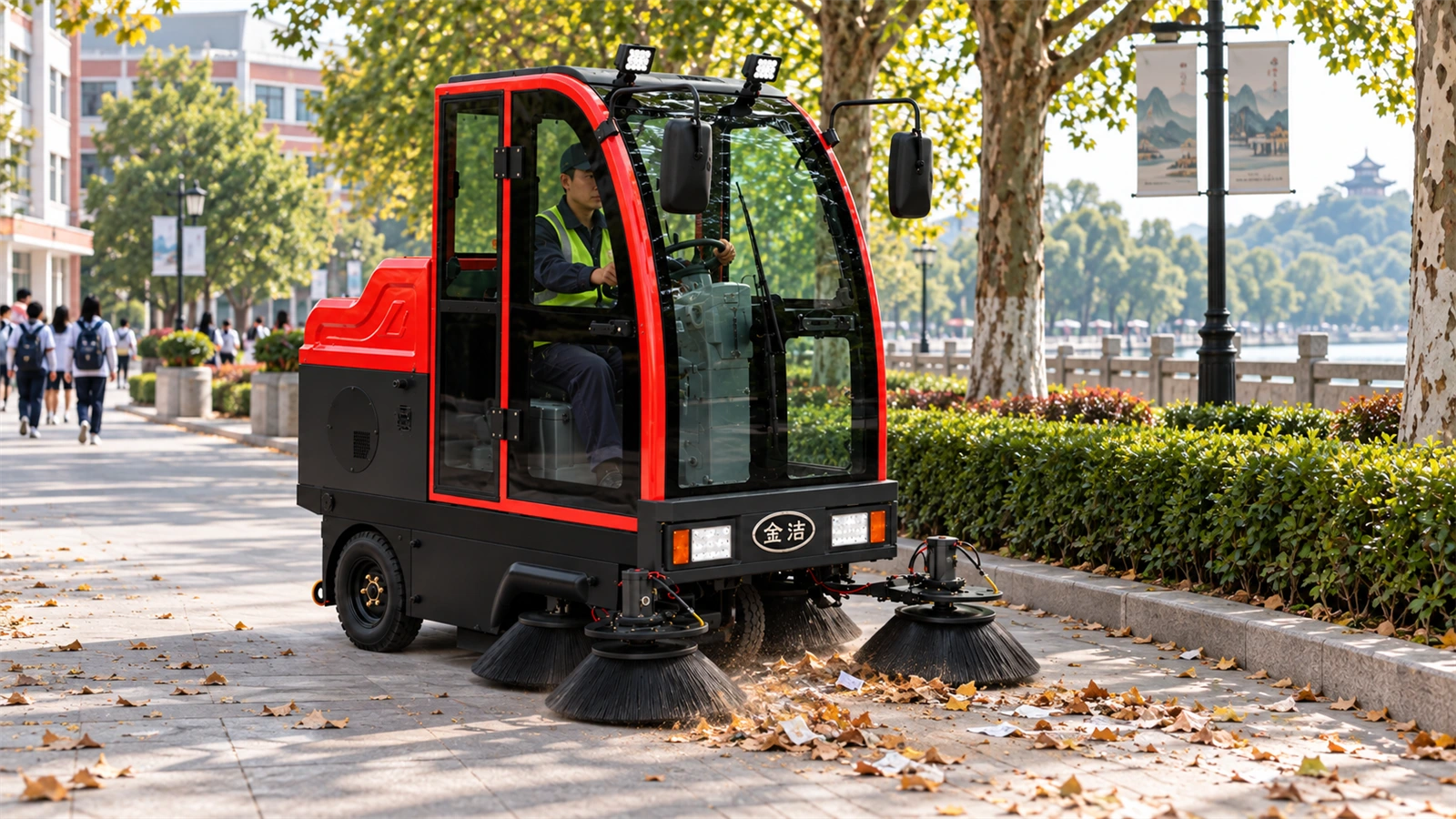
Jinjie J-XS1900Q
1900 mm sweep width, 180 L hopper, 150 L water tank and 48 V on the current page; an enclosed cab establishes neither a dust-protection rating nor explosion protection.
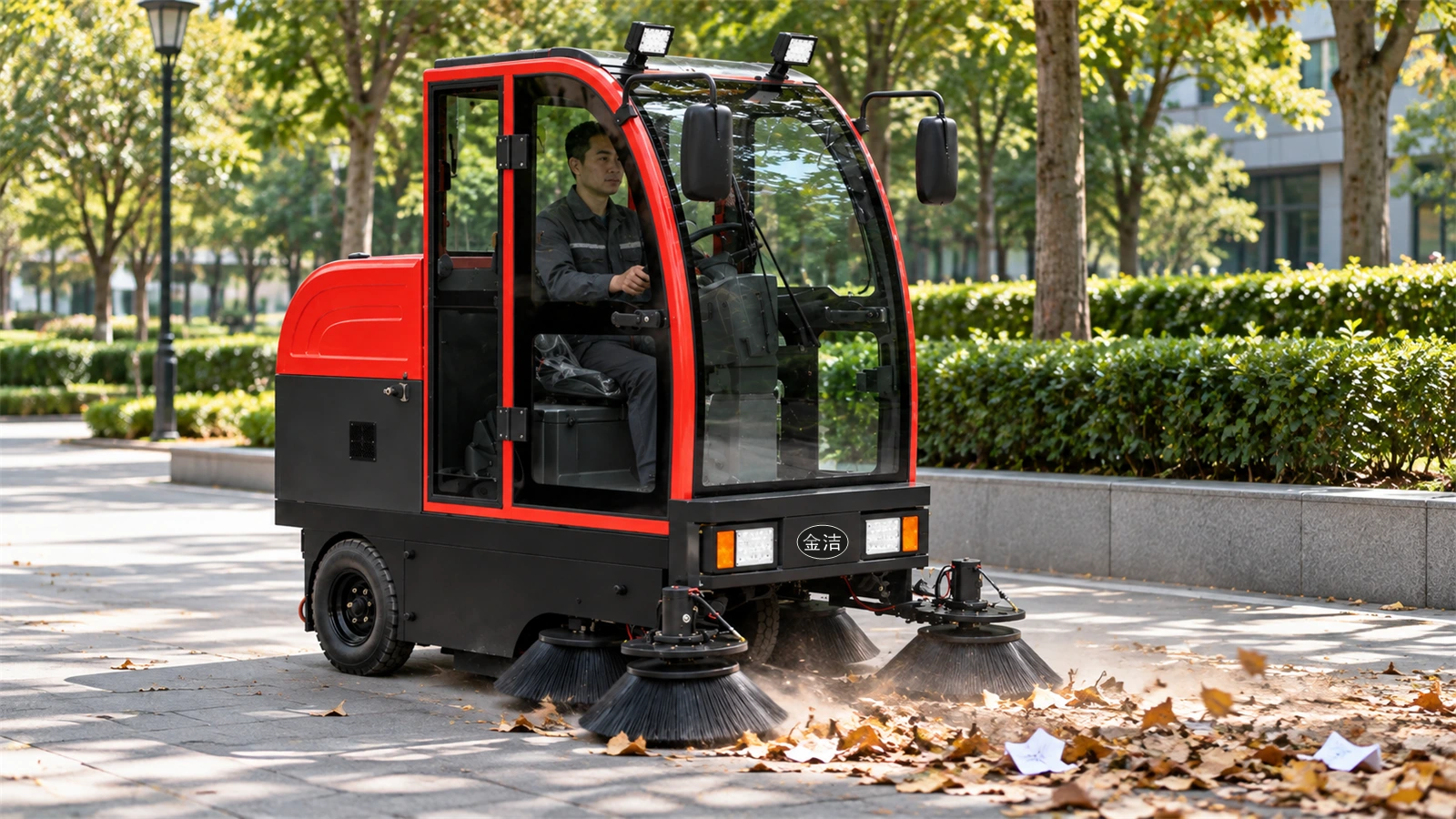
Jinjie J-XS2100Q
2100 mm sweep width, 200 L hopper, 100 L water tank and 48 V on the current page; verify gates and turns rather than choosing solely by open-road area.
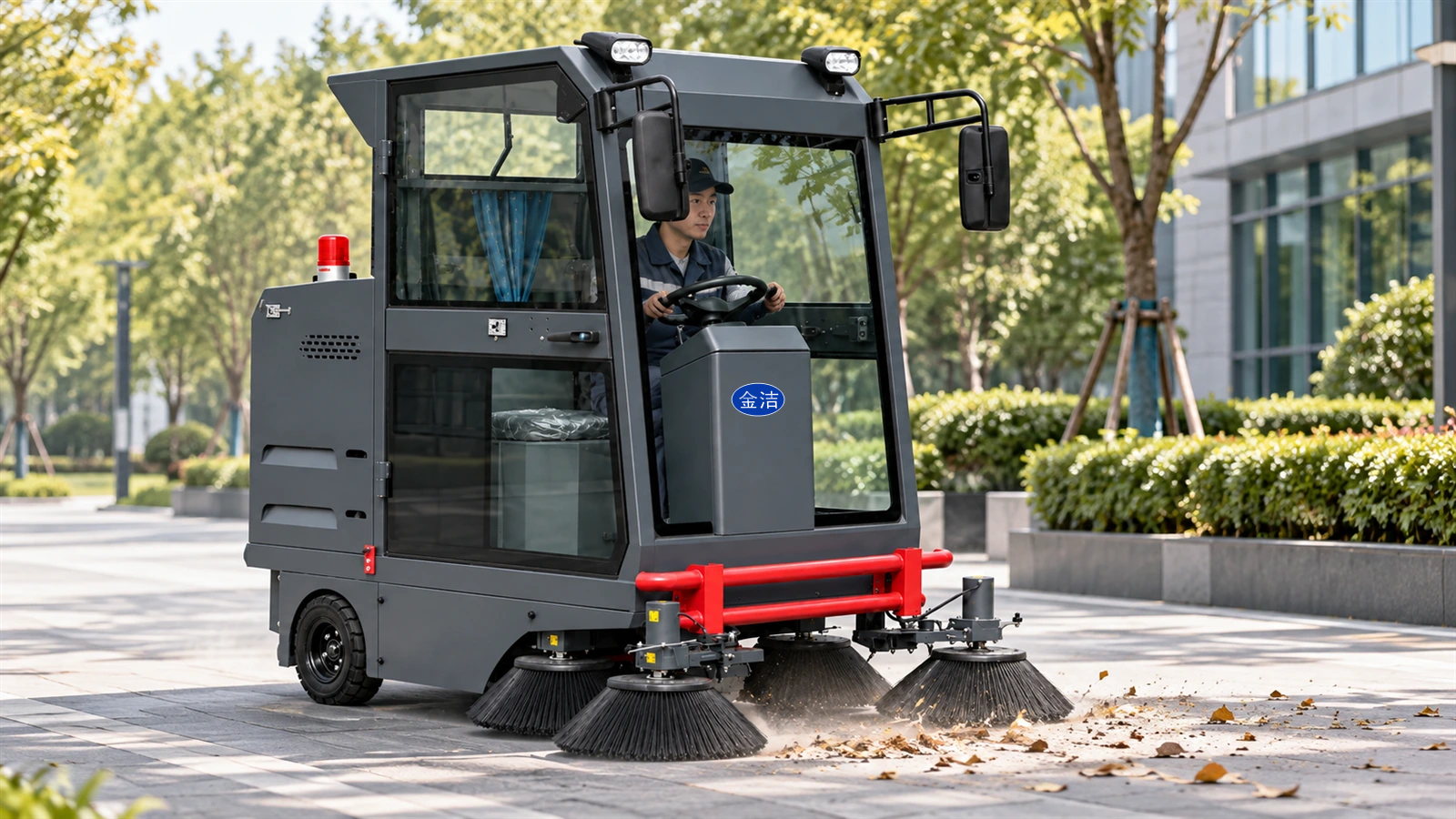
Jinjie J-XS1950
Model information positions J-XS1950 as an enclosed ride-on option for wider outdoor routes, with visibility, turns and height clearance assessed. Do not infer sweeping width from 1950; enclosure does not certify hazardous-dust protection or unlimited working…
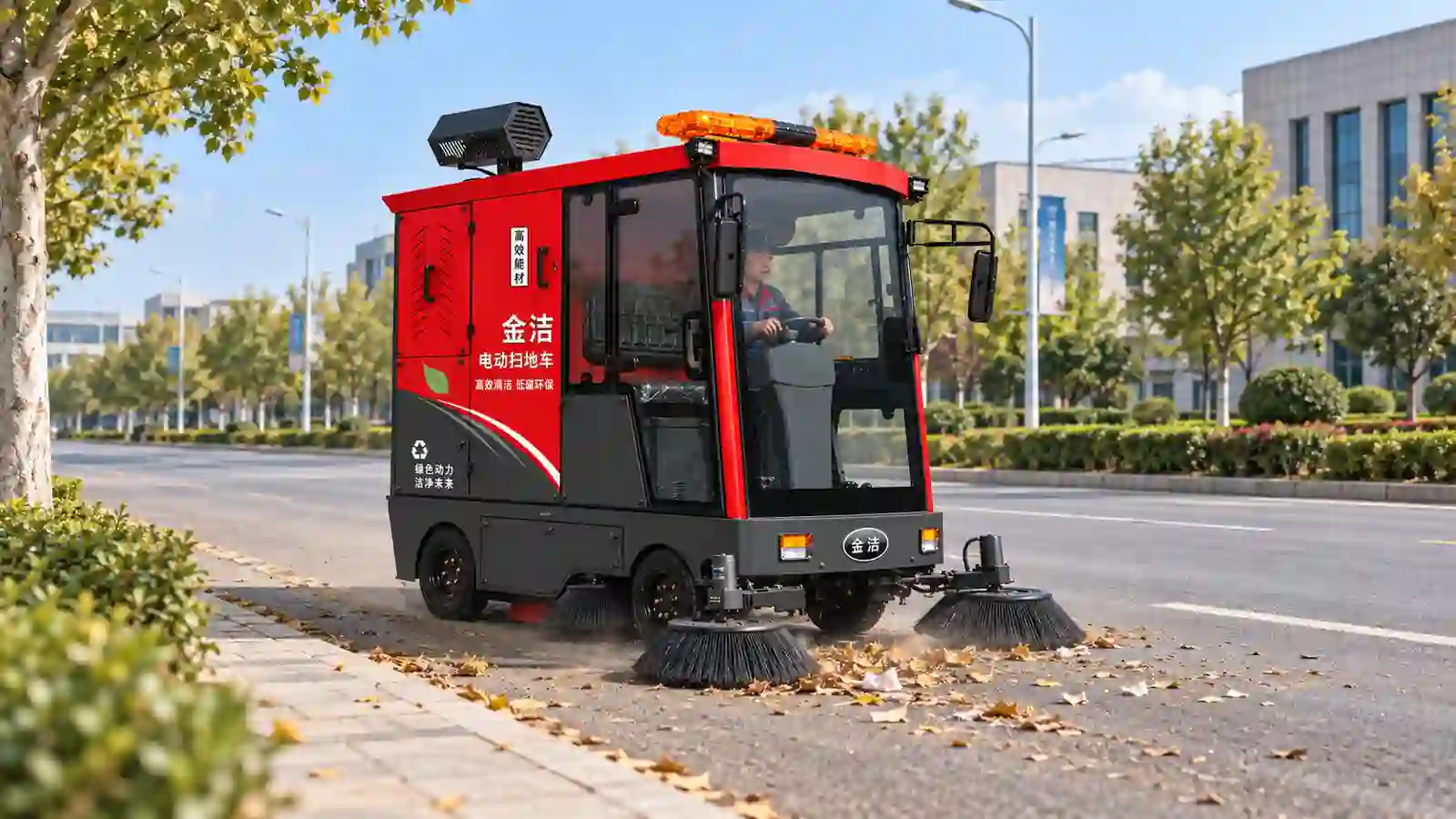
Jinjie J-WX2400A
J-WX2400A is intended for larger enclosed road sweeping, electric routes, water replenishment, disposal and charging. Verify width, hopper and comfort equipment against its sales configuration rather than borrowing B mist-cannon or R specifications.
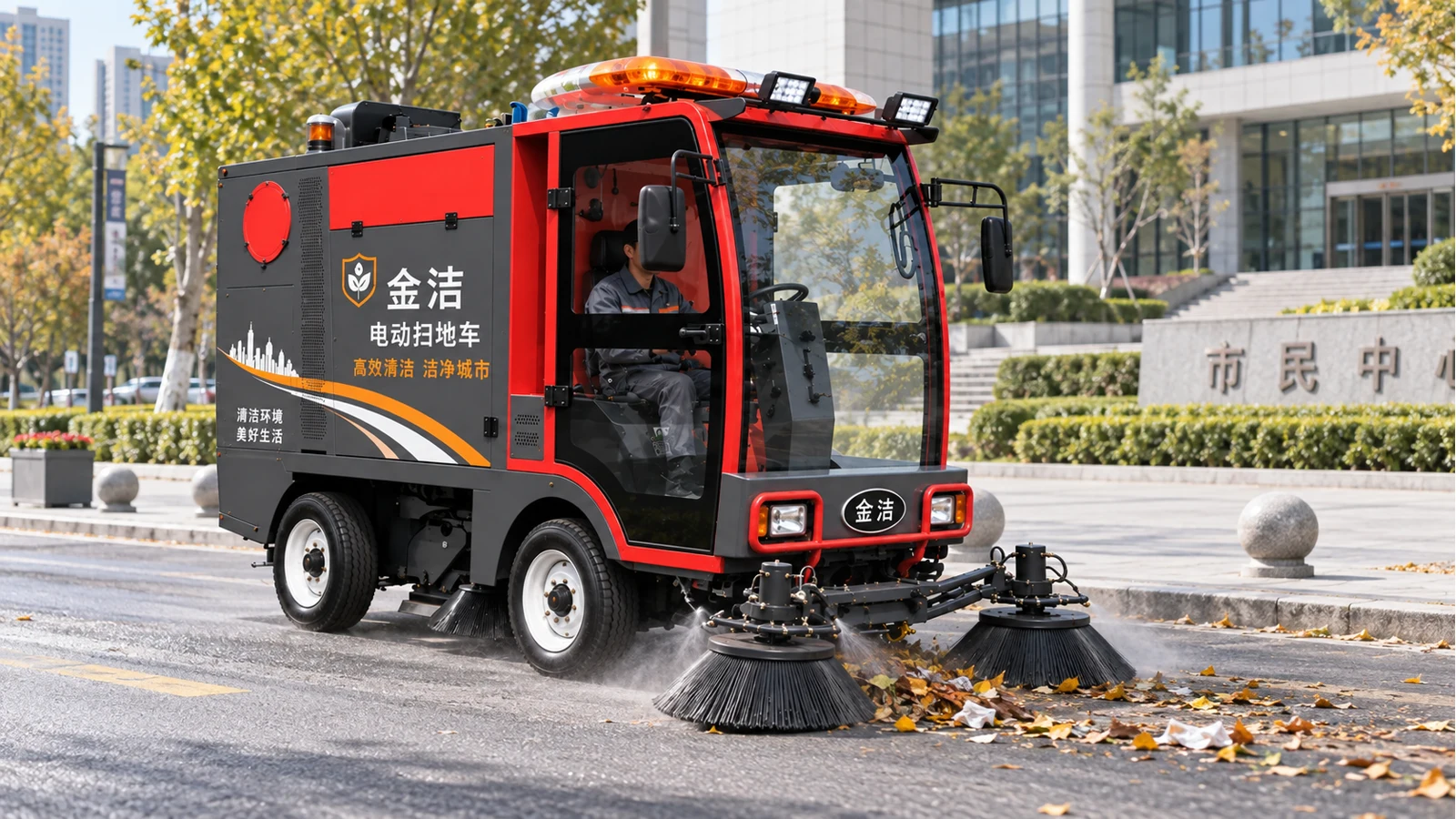
Jinjie J-WX2400B
J-WX2400B provides sweeping with auxiliary mist-cannon dust suppression. Water, wind, people, vehicles and electrics must suit spraying; this is not hazardous-dust treatment or certified air purification. Verify its own tanks, hopper and battery.
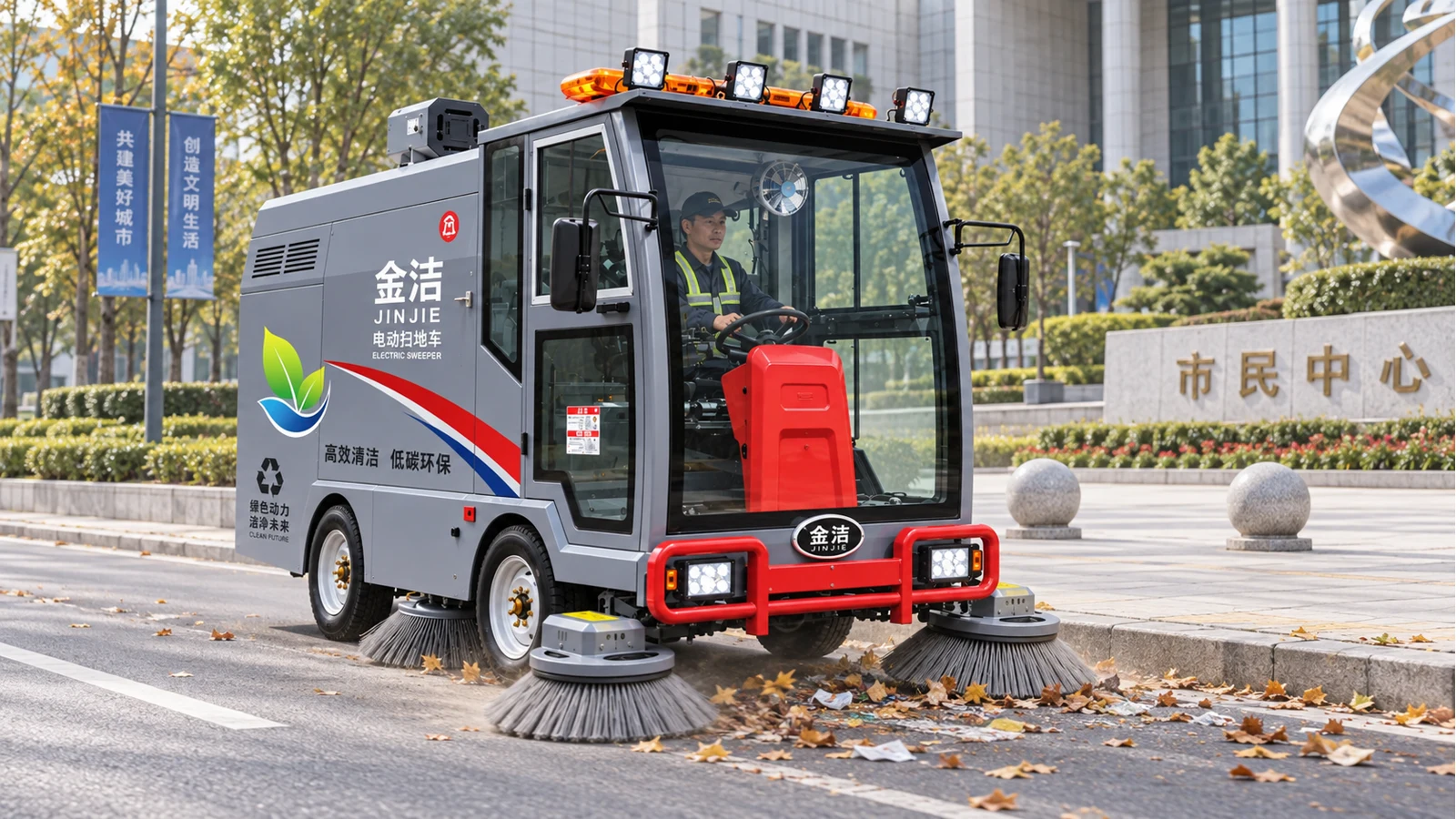
Jinjie J-WX2400R
J-WX2400R is a larger enclosed road sweeper selected around route length, height clearance, water, disposal, gradients and charging. Confirm air conditioning and specialist dust options; enclosure does not imply explosion protection, dust certification or wor…