
Selected model: Jinjie J-3515D
Typical application · Equipment selectionIndustrial parts and equipment exteriors: match soil to the washing process
Jinjie J-3515D
Separating precleaning, local washing and collection can reduce repeated brushing and recontamination. On compatible surfaces, correct operation helps protect workpieces and organise station time.

01 · What makes this task difficult?
Parts and mould recesses can retain ordinary machining oil films, oily residue and loose debris. Repeated hand brushing takes time and may move loosened waste back onto cleaned areas.
Deposits and surface conditions differ
Shut down and isolate the work area, collect loose or bulk waste and protect electrics, seals and non-washable areas. Trial an approved surface, work sectionally and collect wastewater for authorised disposal.
02 · Why consider this Jinjie machine?
J-3515D can support local washing of approved water-compatible part surfaces, aligning nozzle direction with waste collection. Separate recoverable debris and trial the material and deposits rather than repeatedly wetting the whole part.
Plan local washing around the machine, nozzle and actual supply
Shut down and isolate the work area, collect loose or bulk waste and protect electrics, seals and non-washable areas. Trial an approved surface, work sectionally and collect wastewater for authorised disposal.
Separating precleaning, local washing and collection can reduce repeated brushing and recontamination. On compatible surfaces, correct operation helps protect workpieces and organise station time.
Jinjie J-3515D · J-3515D can support local washing of approved water-compatible part surfaces, aligning nozzle direction with waste collection. Separate recoverable debris and trial the material and deposits rather than repeatedly wetting the whole part.
03 · A better cleaning workflow and customer value
Separating precleaning, local washing and collection can reduce repeated brushing and recontamination. On compatible surfaces, correct operation helps protect workpieces and organise station time.
Separating precleaning, local washing and collection can reduce repeated brushing and recontamination. On compatible surfaces, correct operation helps protect workpieces and organise station time.
Deposits and surface conditions differ · Shut down and isolate the work area, collect loose or bulk waste and protect electrics, seals and non-washable areas. Trial an approved surface, work sectionally and collect wastewater for authorised disposal.
Match tools, the material and the working route before comparing labour, time, consumables and maintenance costs. The potential value depends on suitable conditions and correct operation; no fixed saving or damage-free result is promised.
This plan concerns identified ordinary soil on approved, isolated washable exteriors. Match working pressure, flow, nozzle, power and water to this machine’s instructions; maximum pressure is not a universal setting. Scale, resin, rust or paint removal is not guaranteed. Hazardous media, explosive atmospheres and specialist surface treatment require separate methods.
Working method, evidence and original professional analysis
Task-specific equipment selection
Cleaning oily parts, moulds and metal workpieces | J-3515D
Site, material and contamination
Parts and mould recesses can retain ordinary machining oil films, oily residue and loose debris. Repeated hand brushing takes time and may move loosened waste back onto cleaned areas.
Equipment basis and model differences
J-3515D can support local washing of approved water-compatible part surfaces, aligning nozzle direction with waste collection. Separate recoverable debris and trial the material and deposits rather than repeatedly wetting the whole part.
Model configuration and selection
Check model-specific configurations against the machine and order before purchase.
| Model | Current basis and limits |
|---|---|
| J-3515D | J-3515D can support local washing of approved water-compatible part surfaces, aligning nozzle direction with waste collection. Separate recoverable debris and trial the material and deposits rather than repeatedly wetting the whole part. |
| Site problem | Equipment / conditions | Suggested method | Potential value |
|---|---|---|---|
| Deposits and surface conditions differ | Plan local washing around the machine, nozzle and actual supply | Shut down and isolate the work area, collect loose or bulk waste and protect electrics, seals and non-washable areas. Trial an approved surface, work sectionally and collect wastewater for authorised disposal. | Separating precleaning, local washing and collection can reduce repeated brushing and recontamination. On compatible surfaces, correct operation helps protect workpieces and organise station time. |
Working method, accessories and site supply
- Shut down and isolate the work area, collect loose or bulk waste and protect electrics, seals and non-washable areas. Trial an approved surface, work sectionally and collect wastewater for authorised disposal.
Limits and safety
This plan concerns identified ordinary soil on approved, isolated washable exteriors. Match working pressure, flow, nozzle, power and water to this machine’s instructions; maximum pressure is not a universal setting. Scale, resin, rust or paint removal is not guaranteed. Hazardous media, explosive atmospheres and specialist surface treatment require separate methods.
Questions for this task
Prepare site information
Share the material, soil sample, washable areas, electrical and water supplies and wastewater destination for machine and tool selection.
FAQ
Will water alone remove every oily, resin or scale deposit?
No. Identify deposits and material and trial them before choosing any additional compatible process.
How should working pressure be selected?
Follow this machine’s instructions, material, nozzle and trial results rather than defaulting to maximum pressure.
How can rework and wastewater handling be reduced?
Collect bulk and loose waste first, wash sectionally, protect prohibited areas and plan runoff collection.
What site information is needed for selection?
Share the material, soil sample, washable areas, electrical and water supplies and wastewater destination for machine and tool selection.
Select equipment for the actual site
Share the material, soil sample, washable areas, electrical and water supplies and wastewater destination for machine and tool selection.
Jinjie J-3515D · Selection enquiryCompare application plansModels and original application images
Compare each model against its own configuration and the actual route, material and site services.
Jinjie J-3515D
Current model
J-3515D can support local washing of approved water-compatible part surfaces, aligning nozzle direction with waste collection. Separate recoverable debris and trial the material and deposits rather than repeatedly wetting the whole part.
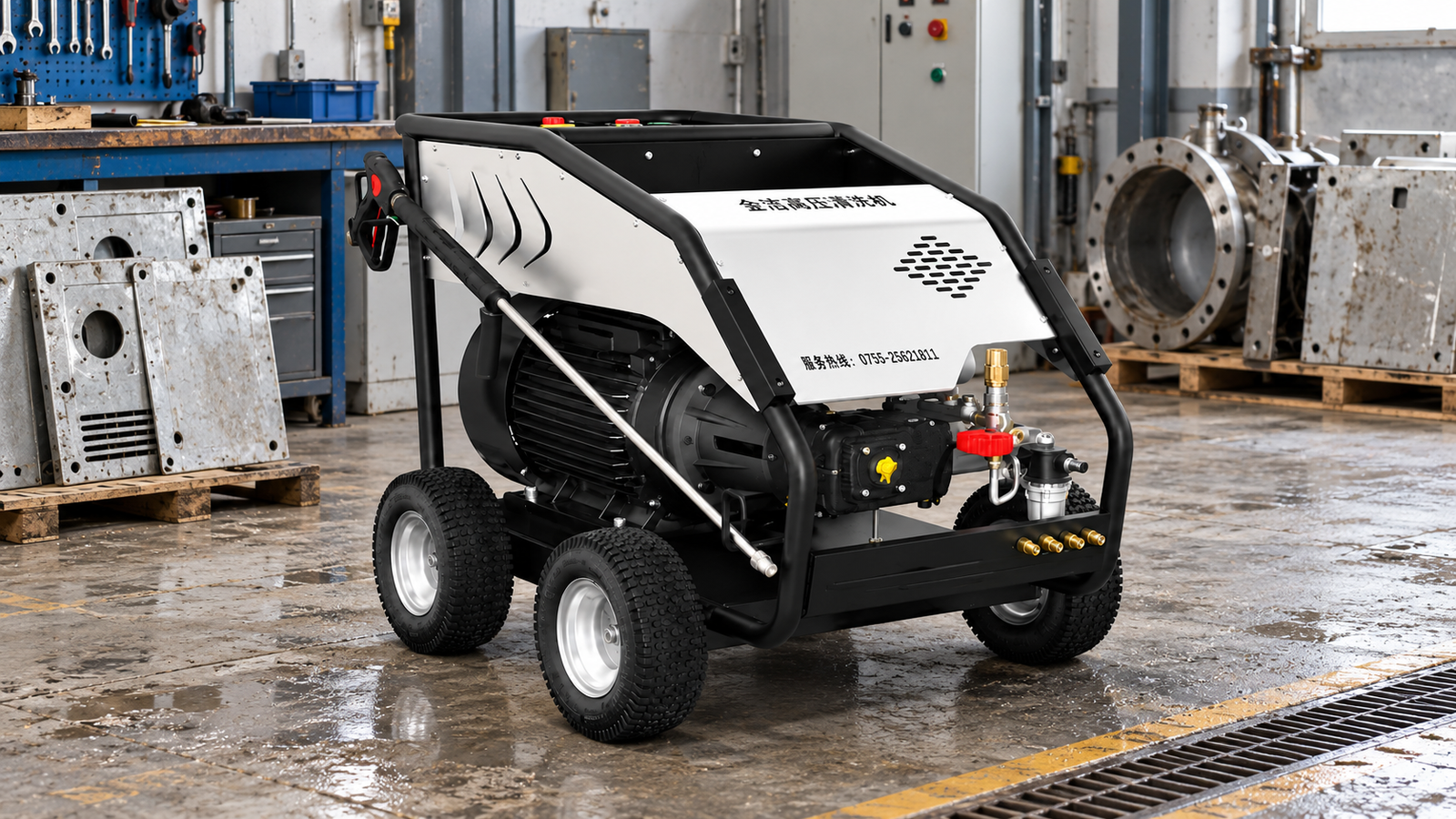
Jinjie J-3515D
J-3515D local water-jet cleaning can form one stage of approved exterior maintenance. Separate washable soil from deposits needing a specialist process, then trial a suitable nozzle and distance.
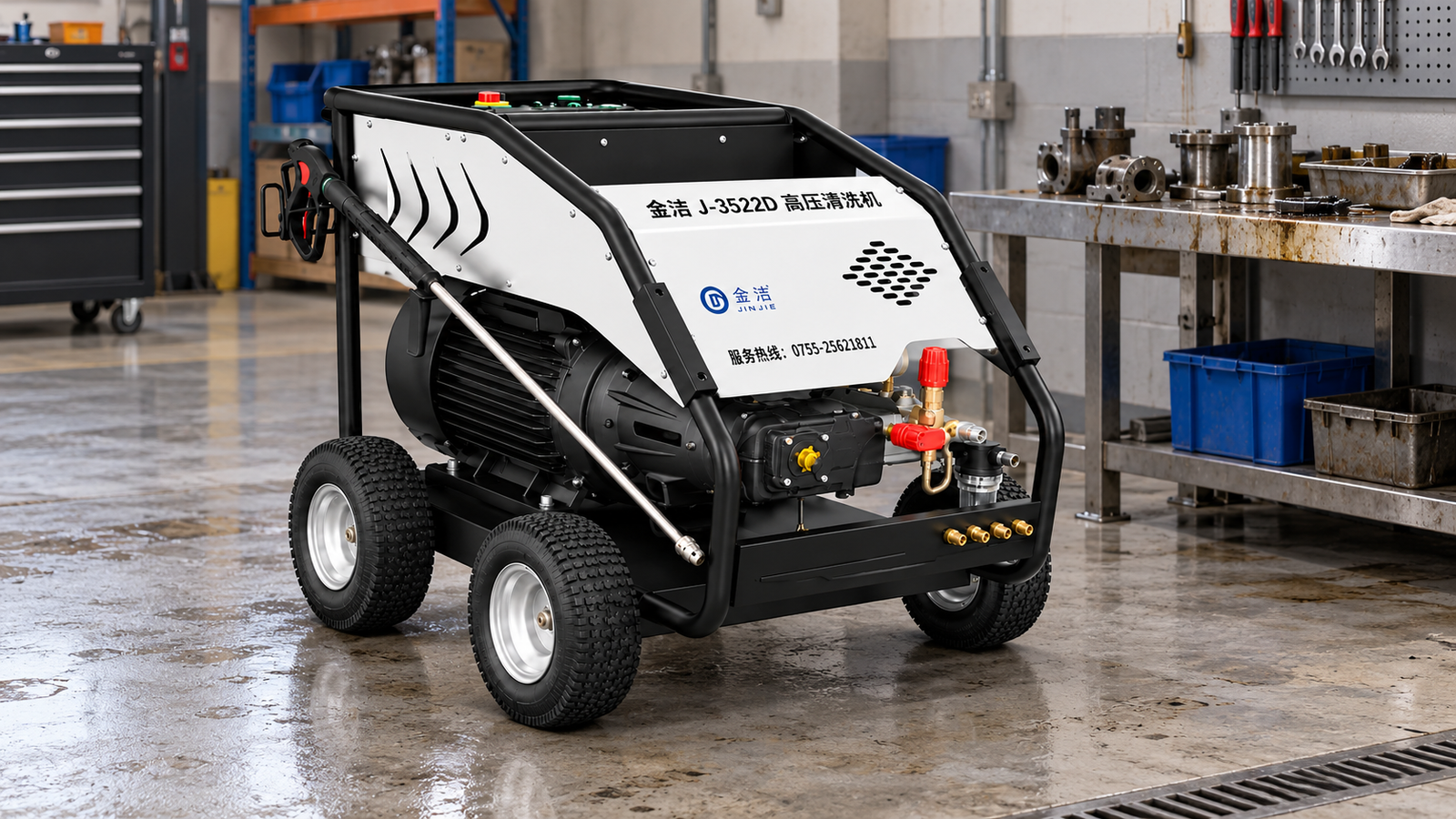
Jinjie J-3522D
Assess J-3522D’s actual water-jet configuration for approved washable parts, combining bulk-soil precleaning with local rinsing. Protect coatings, seals and precision surfaces separately and establish the process through material and soil trials.
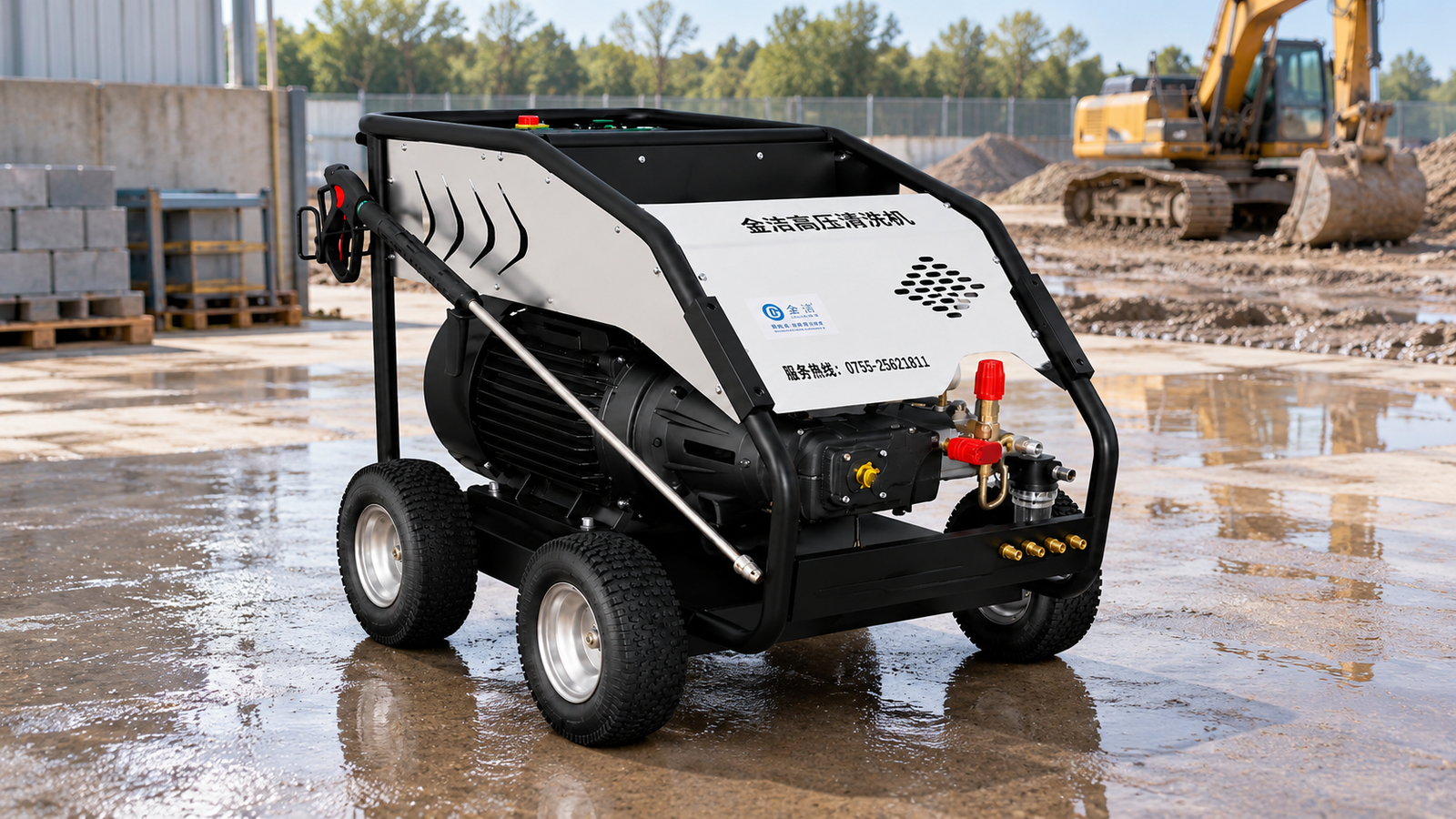
Jinjie J-5022D
J-5022D can support sectional cleaning of water-compatible exteriors. Remove bulk mud before using a suitable nozzle on remaining ordinary soil; exterior washing does not mean every machine component is washable.
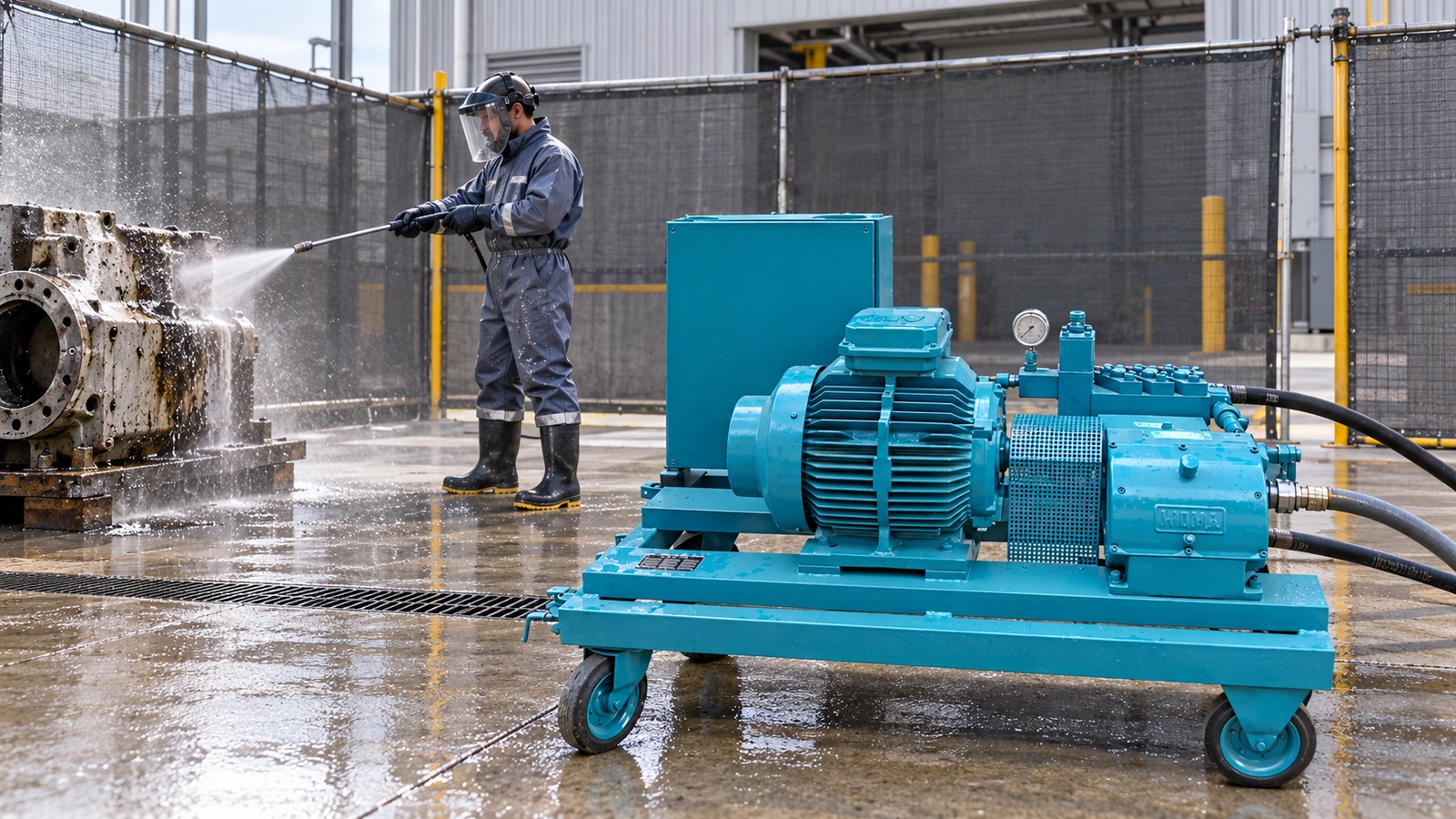
Jinjie J-7530 Industrial High-pressure Cleaner
The 45kW electric drive and plunger-pump assembly suit assessment for industrial wash stations with a suitable fixed 380V supply. Match the 30L/min flow and pressure class to the surface and nozzle arrangement. The wheeled base supports station planning, subj…
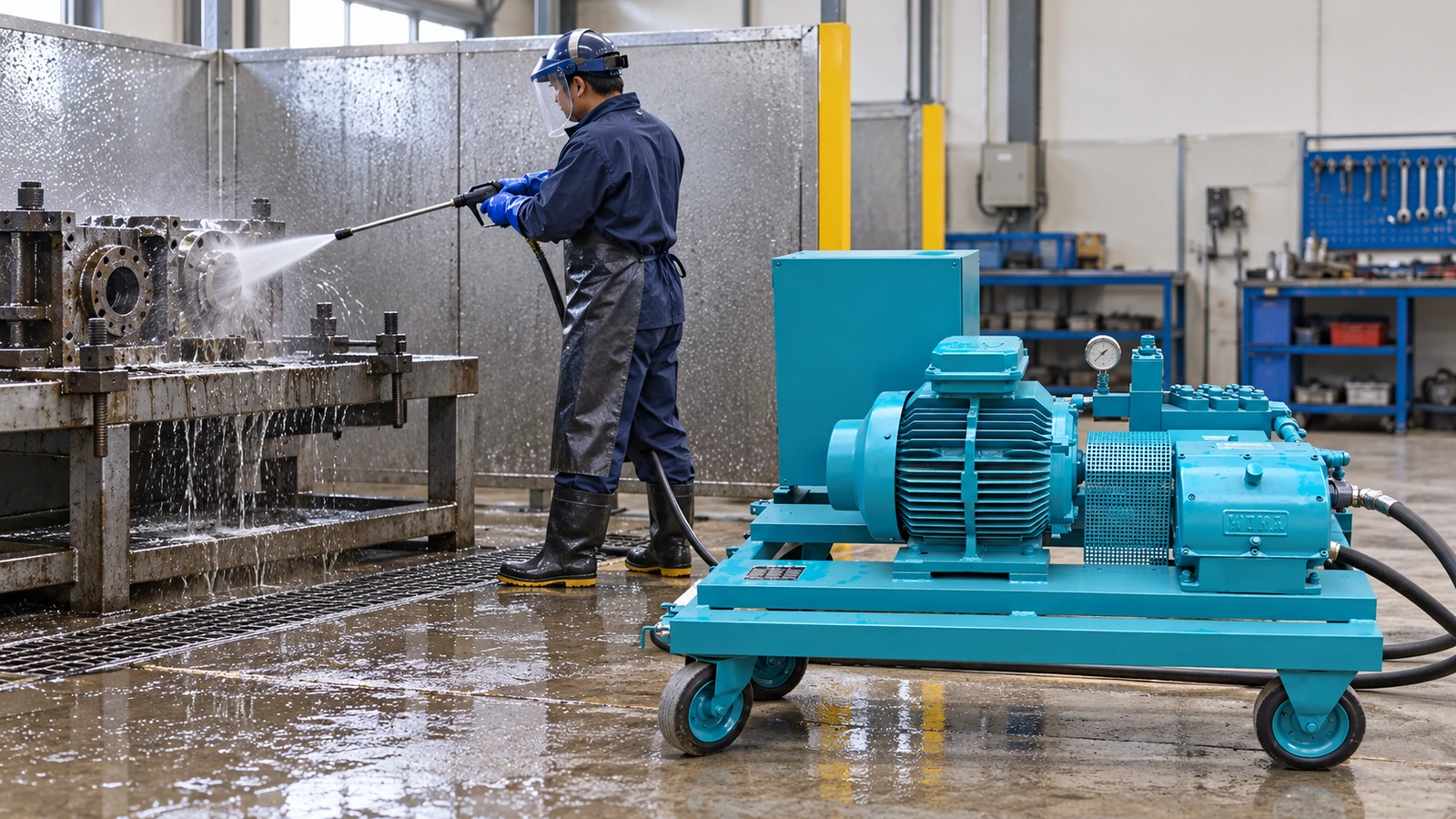
Jinjie J-7530 Industrial High-pressure Cleaner
The 45kW electric drive and plunger-pump assembly suit assessment for industrial wash stations with a suitable fixed 380V supply. Match the 30L/min flow and pressure class to the surface and nozzle arrangement. The wheeled base supports station planning, subj…
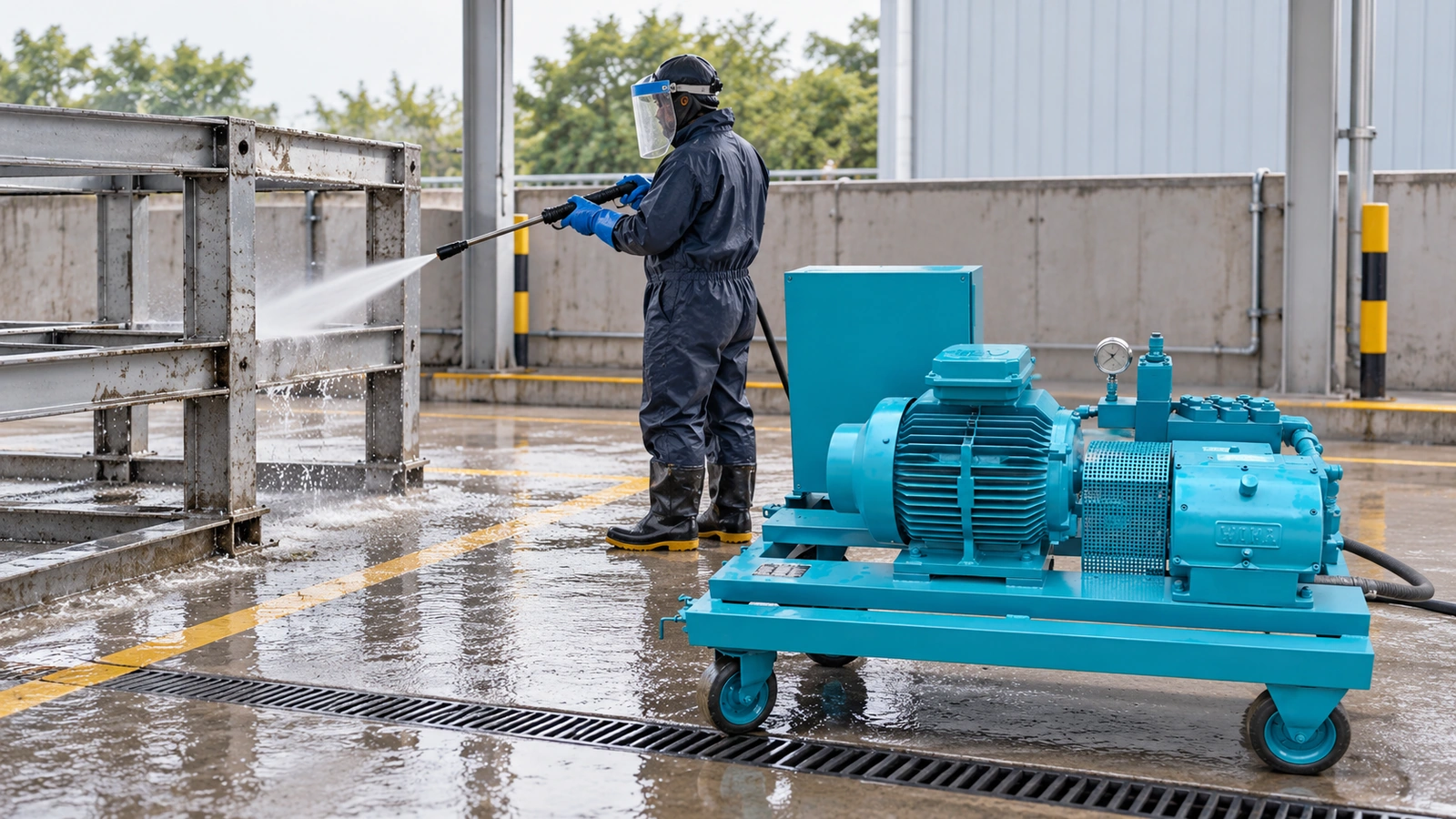
Jinjie J-7530 Industrial High-pressure Cleaner
The 45kW electric drive and plunger-pump assembly suit assessment for industrial wash stations with a suitable fixed 380V supply. Match the 30L/min flow and pressure class to the surface and nozzle arrangement. The wheeled base supports station planning, subj…