
Selected model: Jinjie J-XS1250
Typical application · Equipment selectionProperty roads: collect leaves, paper and grit along the kerb
Jinjie J-XS1250
Sweep and collect suitable dry leaves, grit and surface dust along planned routes to reduce repeated manual gathering; sludge and sticky waste need another method.
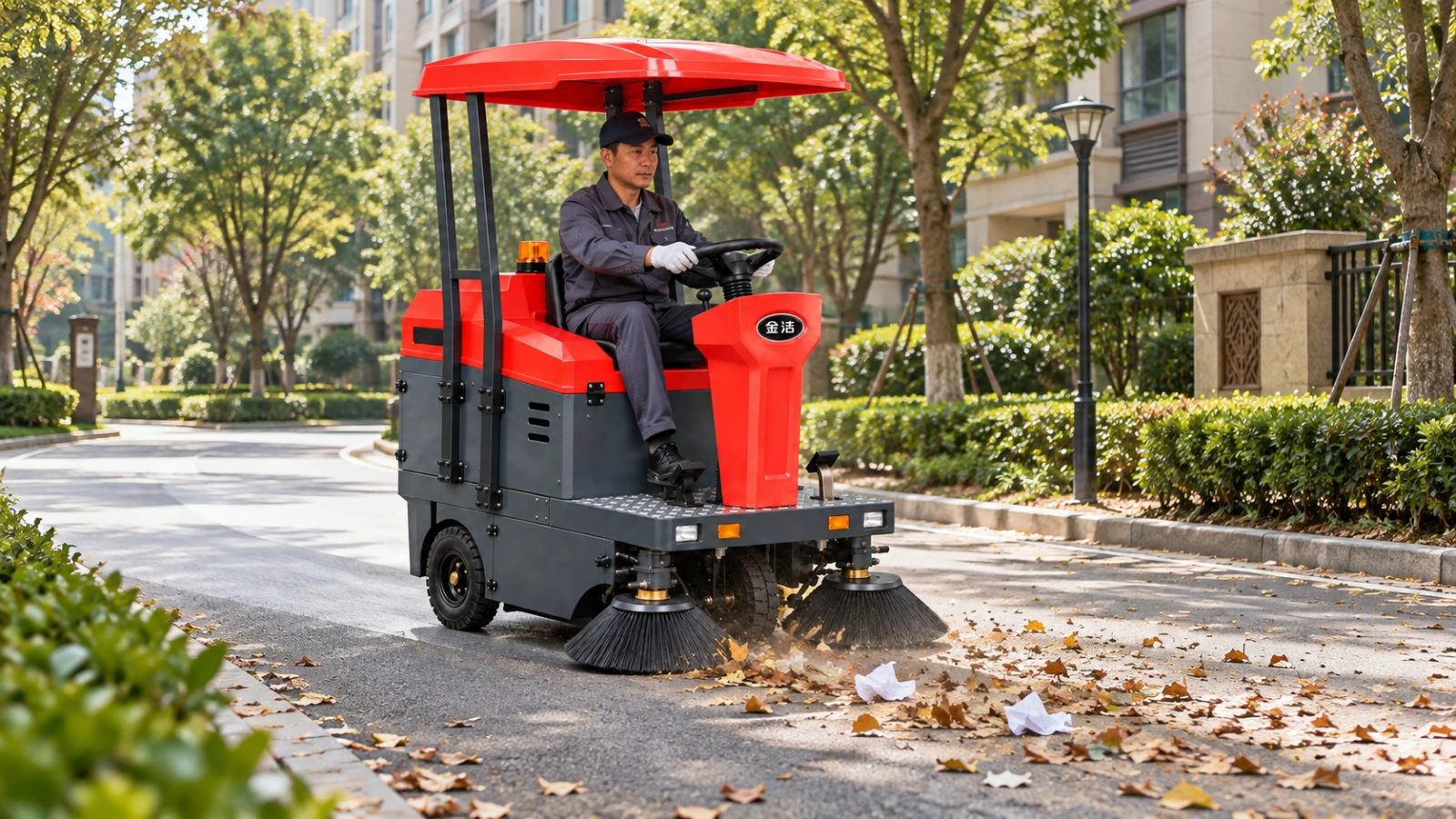
01 · What makes this task difficult?
Level, hard-surfaced estate roads collect leaves, paper and grit carried through entrances. Kerbs, parking gaps and corners create dispersed work and easily missed handover points. This chapter concerns road surfaces suitable for mechanical sweeping, not planted soil, sticky mud or bonded oil.
Debris lies along kerbs
Trial a representative edge; retain necessary manual finishing
Children, pedestrians and vehicles cross
Avoid peak access and isolate crossing sections
Leaves are bulky; grit is heavier
Record filling time and unloading distance separately
02 · Why consider this Jinjie machine?
Sweeping and collection can handle suitable ordinary dry road debris along a route. Select each model for its actual turning, dust-control and collection configuration rather than substituting pressure washing for sweeping.
Actual main- and side-brush collection arrangement
Trial a representative edge; retain necessary manual finishing
Separate route work from edge finishing
Human driving and site separation
Avoid peak access and isolate crossing sections
Make handovers easier to organise
Hopper volume and actual load limit
Record filling time and unloading distance separately
Plan unloading by debris rather than area alone
Jinjie J-XS1250 · 1250 mm sweep width, 120 L hopper and 48 V on the current page; check the route and charging. Hopper volume is not an area rating.
03 · A better cleaning workflow and customer value
Sweep and collect suitable dry leaves, grit and surface dust along planned routes to reduce repeated manual gathering; sludge and sticky waste need another method.
Separate route work from edge finishing
Debris lies along kerbs · Trial a representative edge; retain necessary manual finishing
Make handovers easier to organise
Children, pedestrians and vehicles cross · Avoid peak access and isolate crossing sections
Plan unloading by debris rather than area alone
Leaves are bulky; grit is heavier · Record filling time and unloading distance separately
Match tools, the material and the working route before comparing labour, time, consumables and maintenance costs. The potential value depends on suitable conditions and correct operation; no fixed saving or damage-free result is promised.
No single-pass or fixed-saving claim is made. Assess wet leaves, standing water, oil and loose paving separately. Ordinary sweepers are not a recommendation for hazardous dust, hot ash, combustible waste or unsegregated crowds. Batteries, filtration and misting vary by machine; unspecified accessories are not standard equipment.
Working method, evidence and original professional analysis
Task-specific equipment selection
Property roads: collect leaves, paper and grit along the kerb
Site, material and contamination
Level, hard-surfaced estate roads collect leaves, paper and grit carried through entrances. Kerbs, parking gaps and corners create dispersed work and easily missed handover points. This chapter concerns road surfaces suitable for mechanical sweeping, not planted soil, sticky mud or bonded oil.
Equipment basis and model differences
Screen ride-on sweepers by the narrowest road, turns, debris and unloading route before comparing sweep widths. J-XS1250, J-XS1300 and J-XS1280 provide smaller-road options; compare J-XS1450 and J-XS1460 where routes permit more coverage. Consider J-XS2100Q only after checking roads, gates and turns. Greater width is not automatically better, and sweep width is not overall passing width.
Model configuration and selection
Check model-specific configurations against the machine and order before purchase.
| Model | Current basis and limits |
|---|---|
| J-XS1250 | 1250 mm sweep width, 120 L hopper and 48 V on the current page; check the route and charging. Hopper volume is not an area rating. |
| J-XS1300 | 1300 mm sweep width with a main brush and two side brushes; do not borrow unconfirmed hopper, battery or runtime figures from adjacent models. |
| J-XS1450 | 1450 mm sweep width, 160 L hopper and 48 V on the current page; assess coverage and unloading separately. |
| J-XS1280 | 1280 mm sweep width and 36 V; an 80 L table entry coexists with capacity-verification wording. Confirm the actual machine. |
| J-XS1900Q | 1900 mm sweep width, 180 L hopper, 150 L water tank and 48 V on the current page; an enclosed cab establishes neither a dust-protection rating nor explosion protection. |
| J-XS2100Q | 2100 mm sweep width, 200 L hopper, 100 L water tank and 48 V on the current page; verify gates and turns rather than choosing solely by open-road area. |
| J-XS1460 | 1460 mm sweep width, 150 L hopper and 60 L water tank on the current page; water assists dust control and does not make this a road washer or scrubber. |
| Site problem | Equipment / conditions | Suggested method | Potential value |
|---|---|---|---|
| Debris lies along kerbs | Actual main- and side-brush collection arrangement | Trial a representative edge; retain necessary manual finishing | Separate route work from edge finishing |
| Children, pedestrians and vehicles cross | Human driving and site separation | Avoid peak access and isolate crossing sections | Make handovers easier to organise |
| Leaves are bulky; grit is heavier | Hopper volume and actual load limit | Record filling time and unloading distance separately | Plan unloading by debris rather than area alone |
Working method, accessories and site supply
- Map gates, tight turns, slopes, pedestrian exits and unloading points across the full route. Use the manual for slope limits.
- Pick up straps, oversized hard objects and unidentified waste first. Check brushes, filtration and hopper condition; use misting only if actually fitted and approved.
- Trial an isolated level section at a speed selected under the manual. Observe kerb collection and dust; theoretical speed is not a recommended sweeping speed.
- Stop and unload safely under the instructions, remove entanglement and maintain filtration, then check route residues.
Limits and safety
No single-pass or fixed-saving claim is made. Assess wet leaves, standing water, oil and loose paving separately. Ordinary sweepers are not a recommendation for hazardous dust, hot ash, combustible waste or unsegregated crowds. Batteries, filtration and misting vary by machine; unspecified accessories are not standard equipment.
Questions for this task
Prepare site information
Provide narrowest-road and turning dimensions, dry/wet debris photos, access peaks, charging and unloading locations. Ask about purchase or existing rental services; confirm model and service availability separately.
FAQ
Does a 1250 mm sweep width guarantee passage through a 1250 mm gate?
No. Measure the whole machine, brush positions, clearance and turning space.
Can the same leaf route be swept immediately after rain?
Do not assume so. Check leaf adhesion, standing water and filter moisture limits against the manual and a trial.
Does a water tank mean the machine washes the road?
No. Dust-control assistance does not replace pressure washing or scrub-and-recover cleaning.
What site information is needed for selection?
Provide narrowest-road and turning dimensions, dry/wet debris photos, access peaks, charging and unloading locations. Ask about purchase or existing rental services; confirm model and service availability separately.
Select equipment for the actual site
Provide narrowest-road and turning dimensions, dry/wet debris photos, access peaks, charging and unloading locations. Ask about purchase or existing rental services; confirm model and service availability separately.
Jinjie J-XS1250 · Selection enquiryCompare application plansModels and original application images
Compare each model against its own configuration and the actual route, material and site services.
Jinjie J-XS1250
Current model
1250 mm sweep width, 120 L hopper and 48 V on the current page; check the route and charging. Hopper volume is not an area rating.
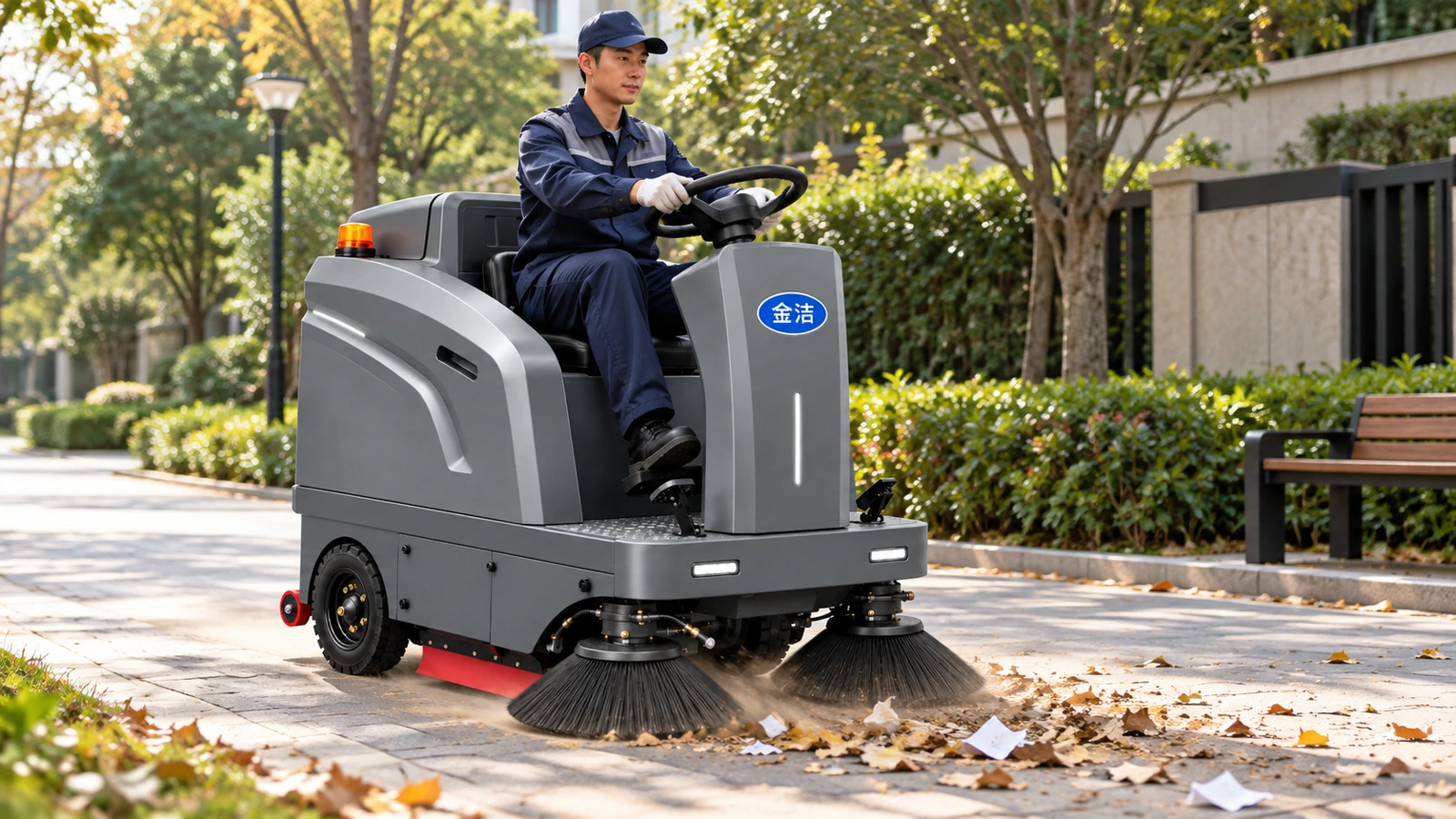
Jinjie J-XS1300
1300 mm sweep width with a main brush and two side brushes; do not borrow unconfirmed hopper, battery or runtime figures from adjacent models.
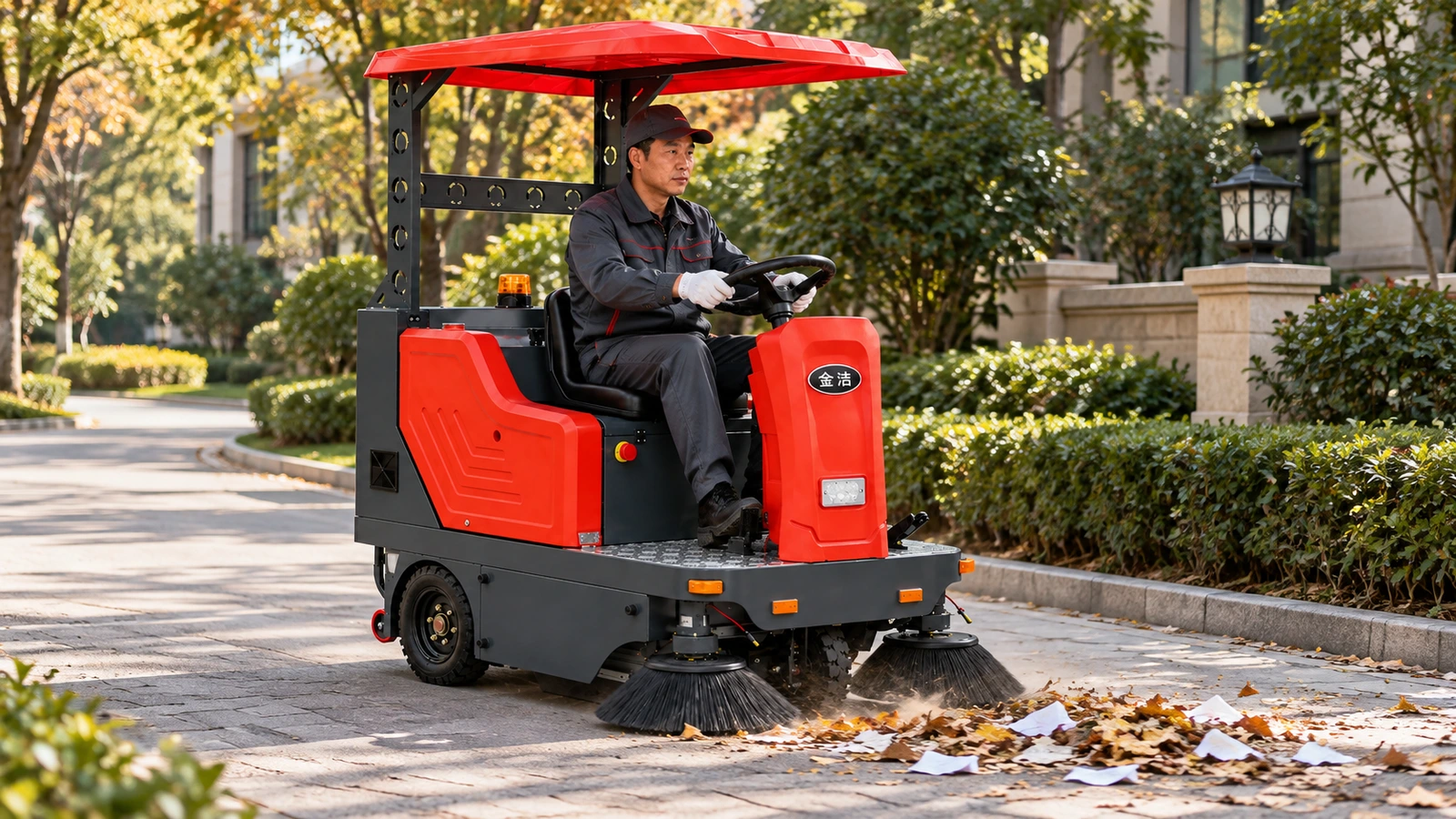
Jinjie J-XS1450
1450 mm sweep width, 160 L hopper and 48 V on the current page; assess coverage and unloading separately.
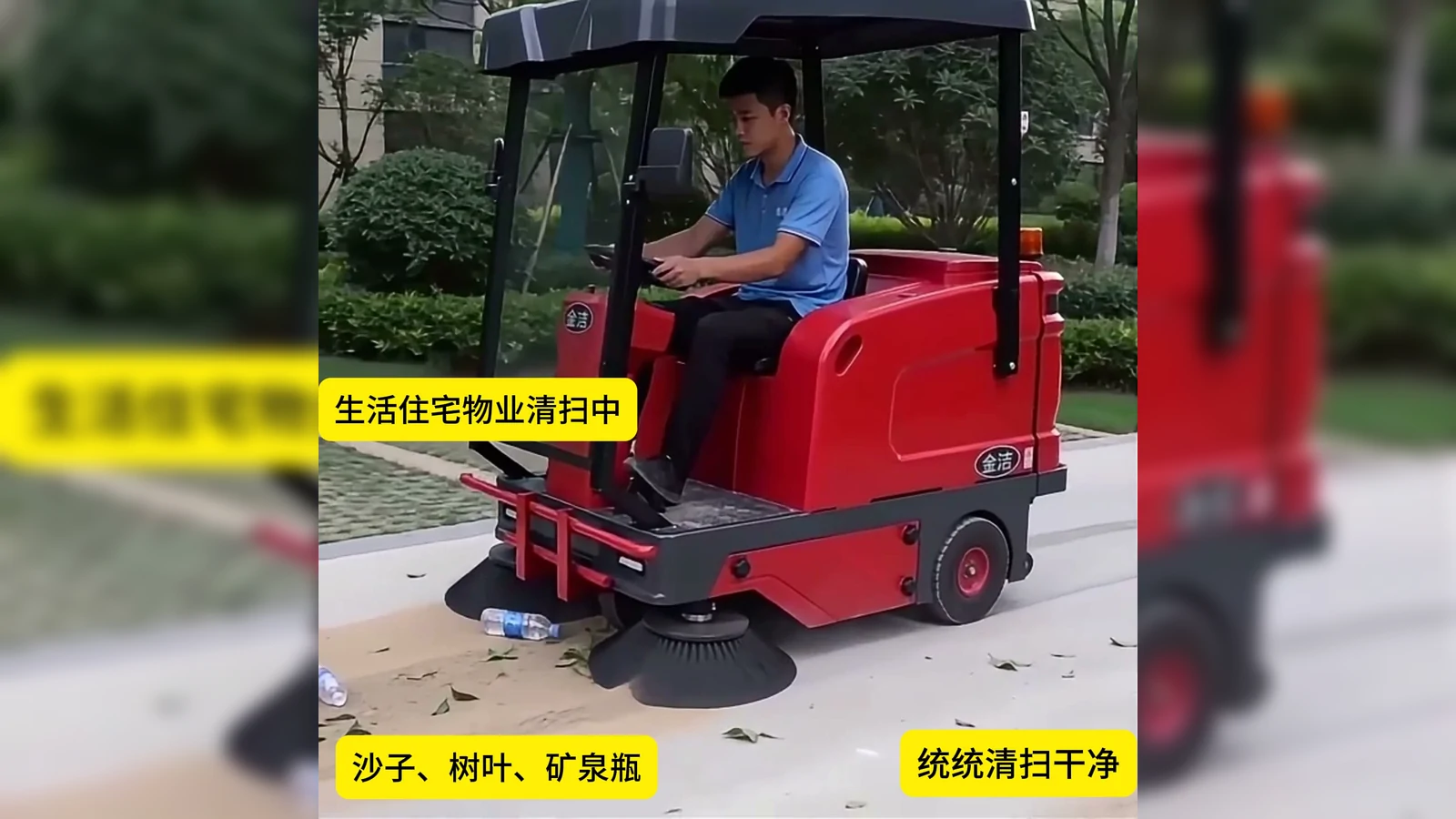
Jinjie J-XS1550
J-XS1550: Plan ride-on sweeping around longer roads, turns and disposal points. Route digits do not establish specifications, and ride-on does not imply an enclosed cab.
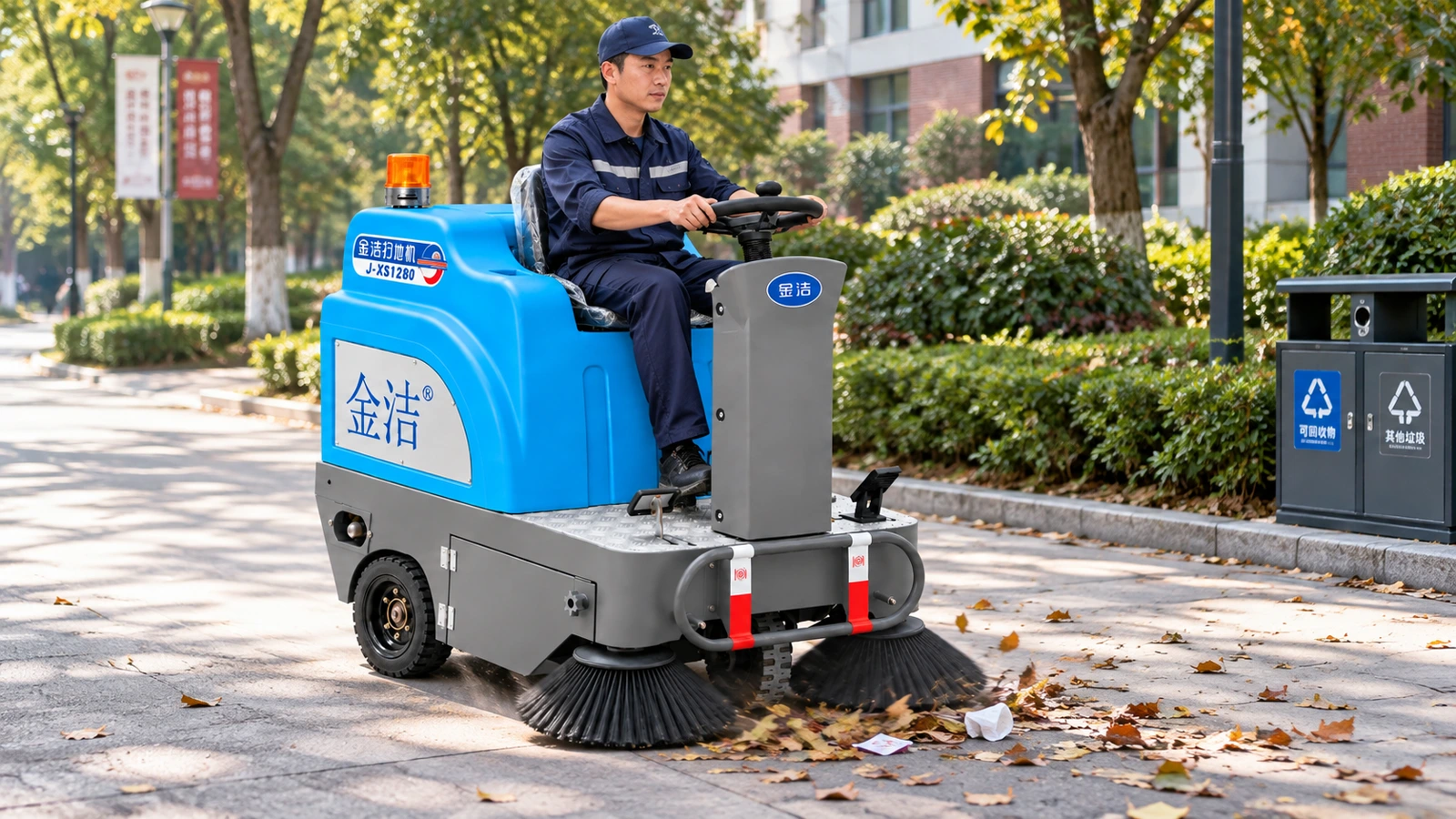
Jinjie J-XS1280
1280 mm sweep width and 36 V; an 80 L table entry coexists with capacity-verification wording. Confirm the actual machine.
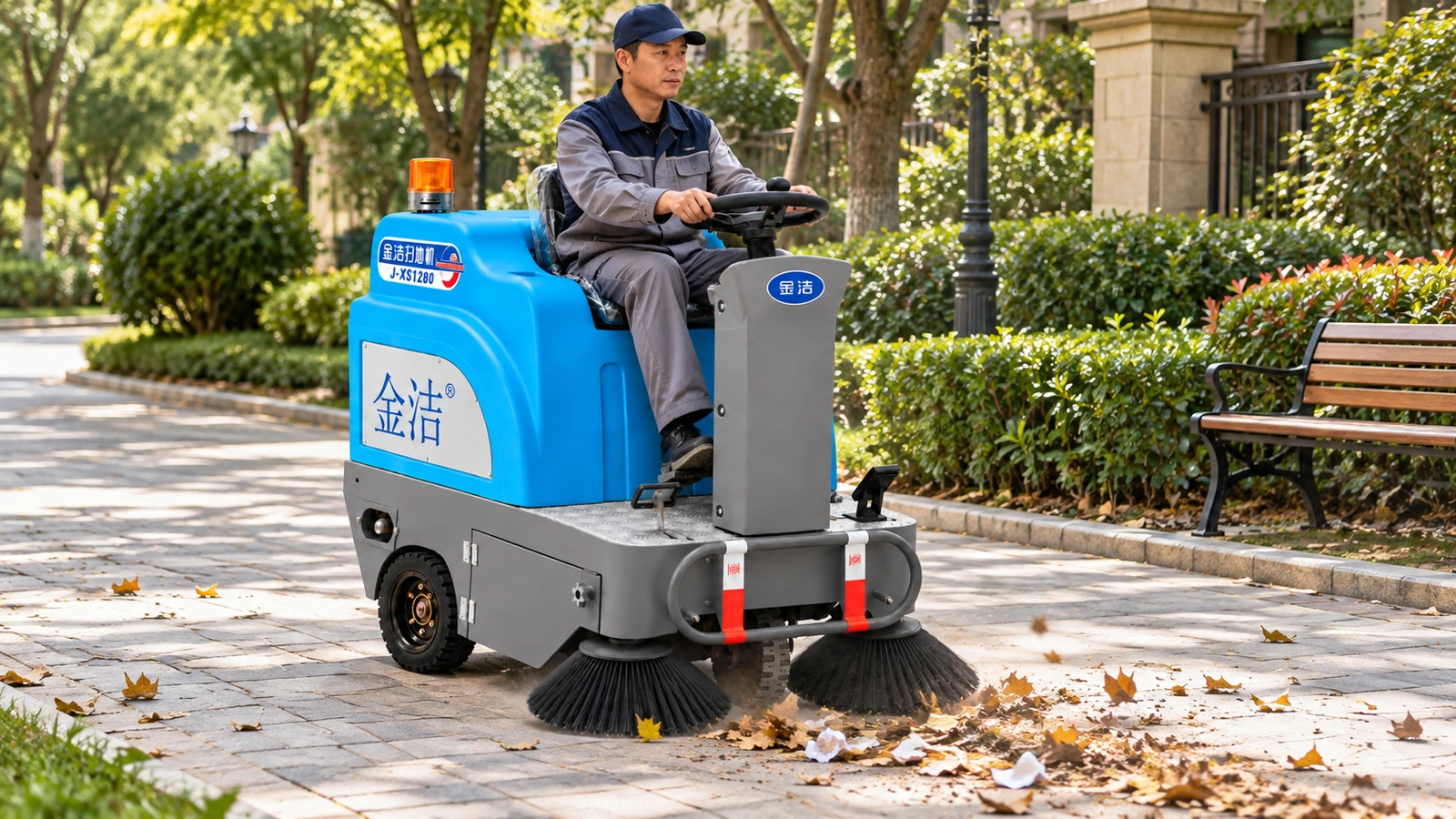
Jinjie J-XS1280
1280 mm sweep width and 36 V; an 80 L table entry coexists with capacity-verification wording. Confirm the actual machine.
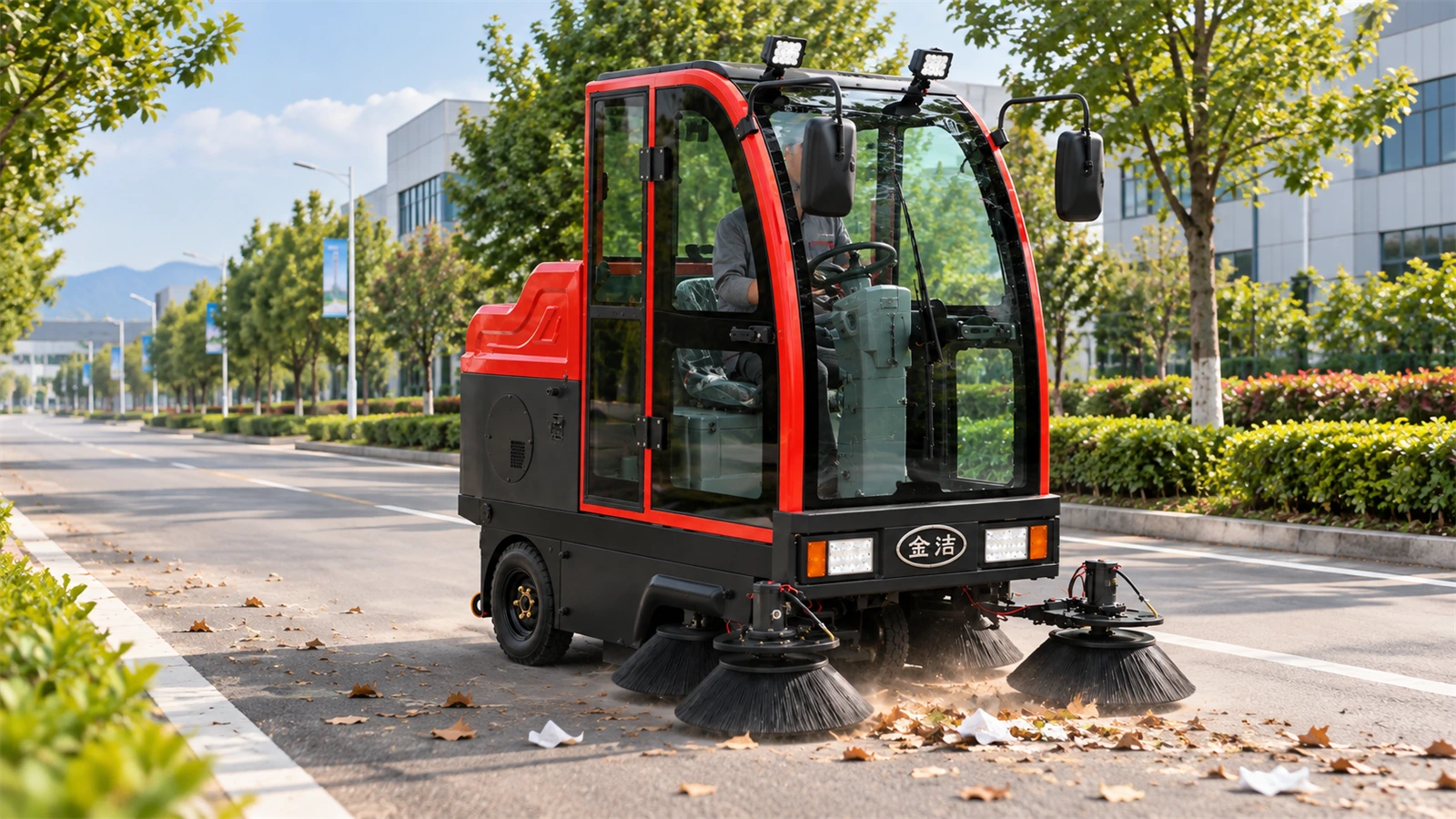
Jinjie J-XS1900Q
1900 mm sweep width, 180 L hopper, 150 L water tank and 48 V on the current page; an enclosed cab establishes neither a dust-protection rating nor explosion protection.
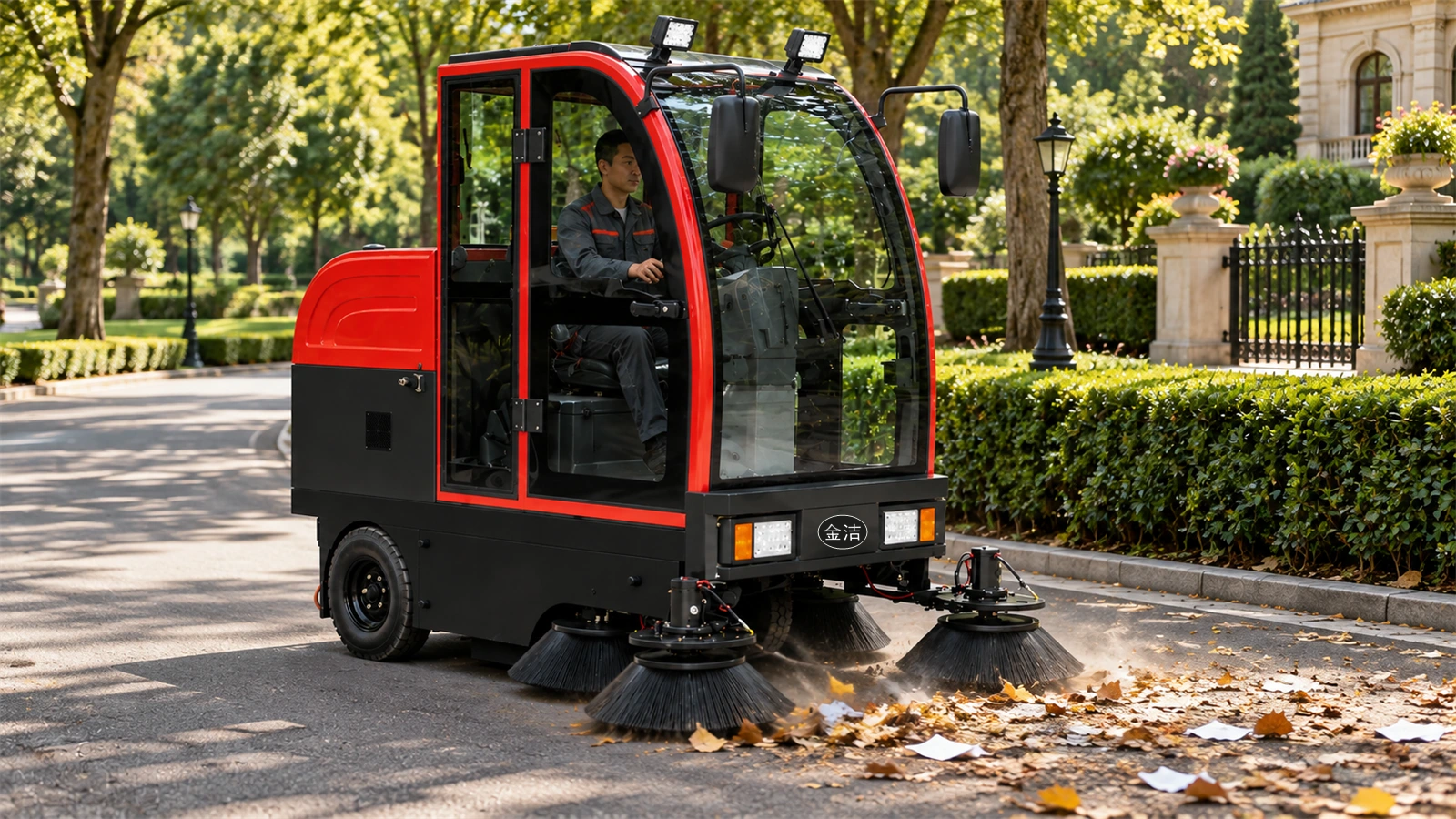
Jinjie J-XS2100Q
2100 mm sweep width, 200 L hopper, 100 L water tank and 48 V on the current page; verify gates and turns rather than choosing solely by open-road area.
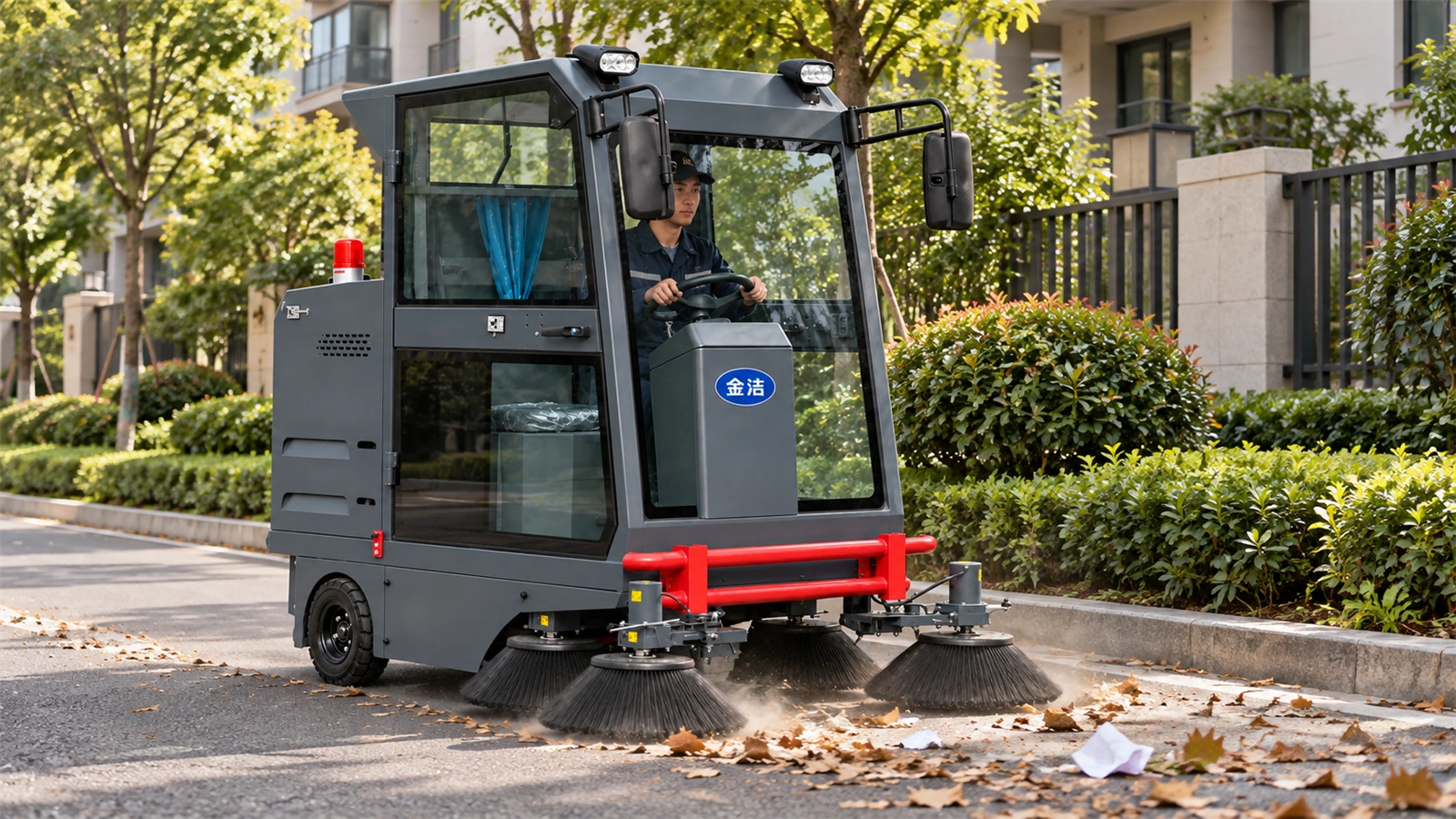
Jinjie J-XS1950
Model information positions J-XS1950 as an enclosed ride-on option for wider outdoor routes, with visibility, turns and height clearance assessed. Do not infer sweeping width from 1950; enclosure does not certify hazardous-dust protection or unlimited working…
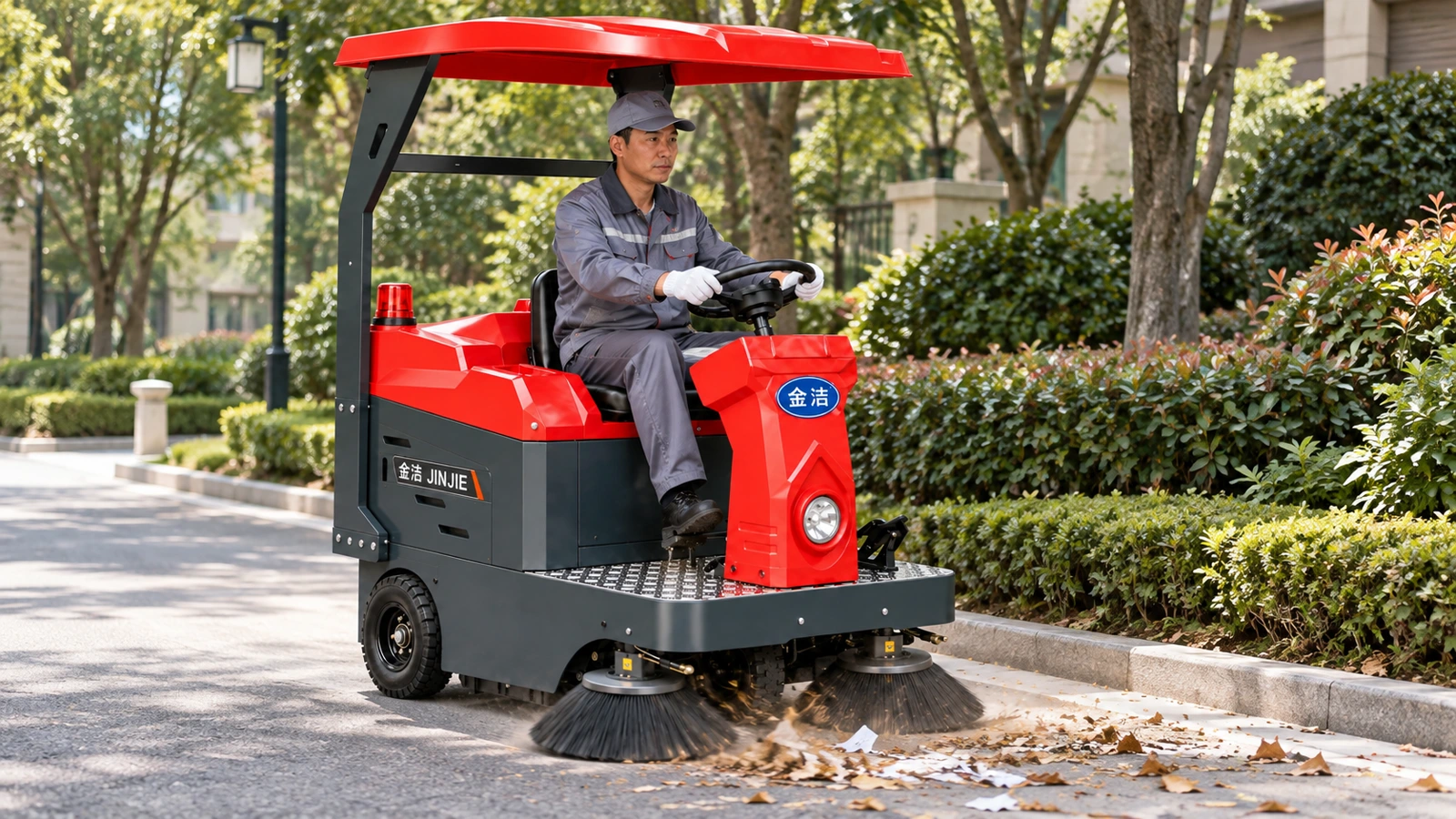
Jinjie J-XS1460
1460 mm sweep width, 150 L hopper and 60 L water tank on the current page; water assists dust control and does not make this a road washer or scrubber.
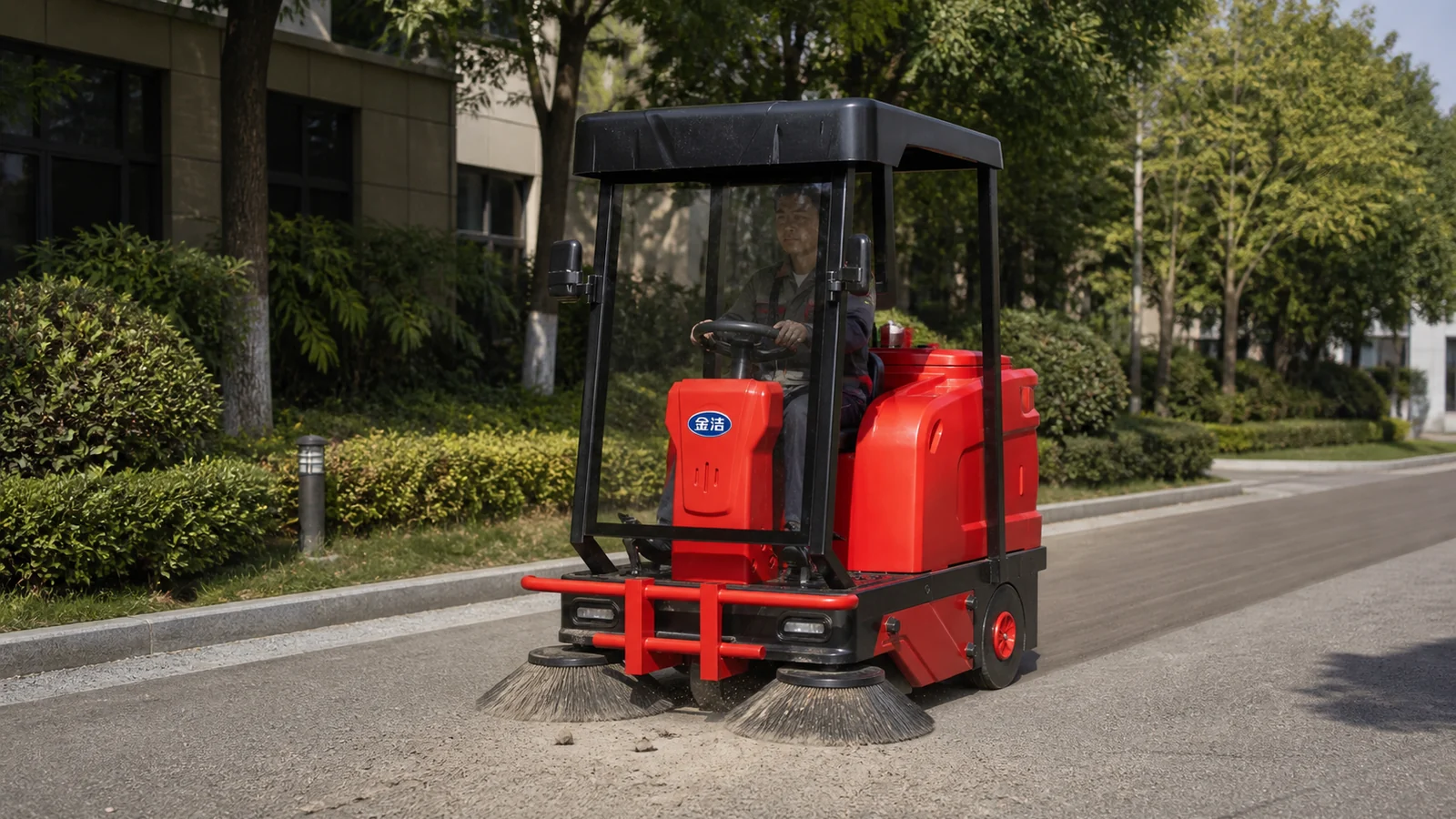
Jinjie J-XS1500
J-XS1500 supports ride-on sweeping planned around fixed obstacles, charging, disposal points and shifts. Ride-on work can reduce long manual gathering routes but still requires an operator, observation and maintenance; no fixed runtime is promised.
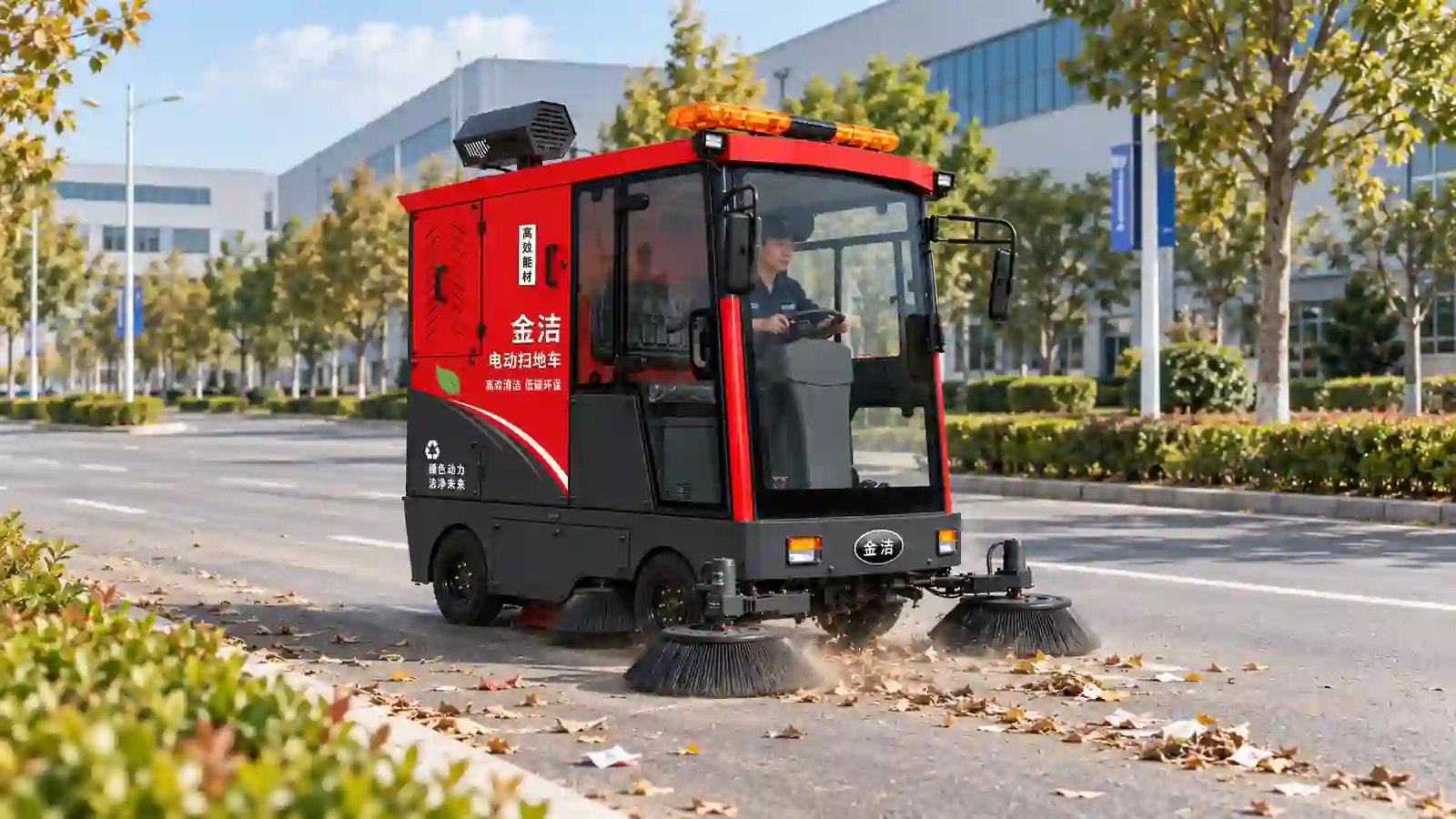
Jinjie J-WX2400A
J-WX2400A is intended for larger enclosed road sweeping, electric routes, water replenishment, disposal and charging. Verify width, hopper and comfort equipment against its sales configuration rather than borrowing B mist-cannon or R specifications.
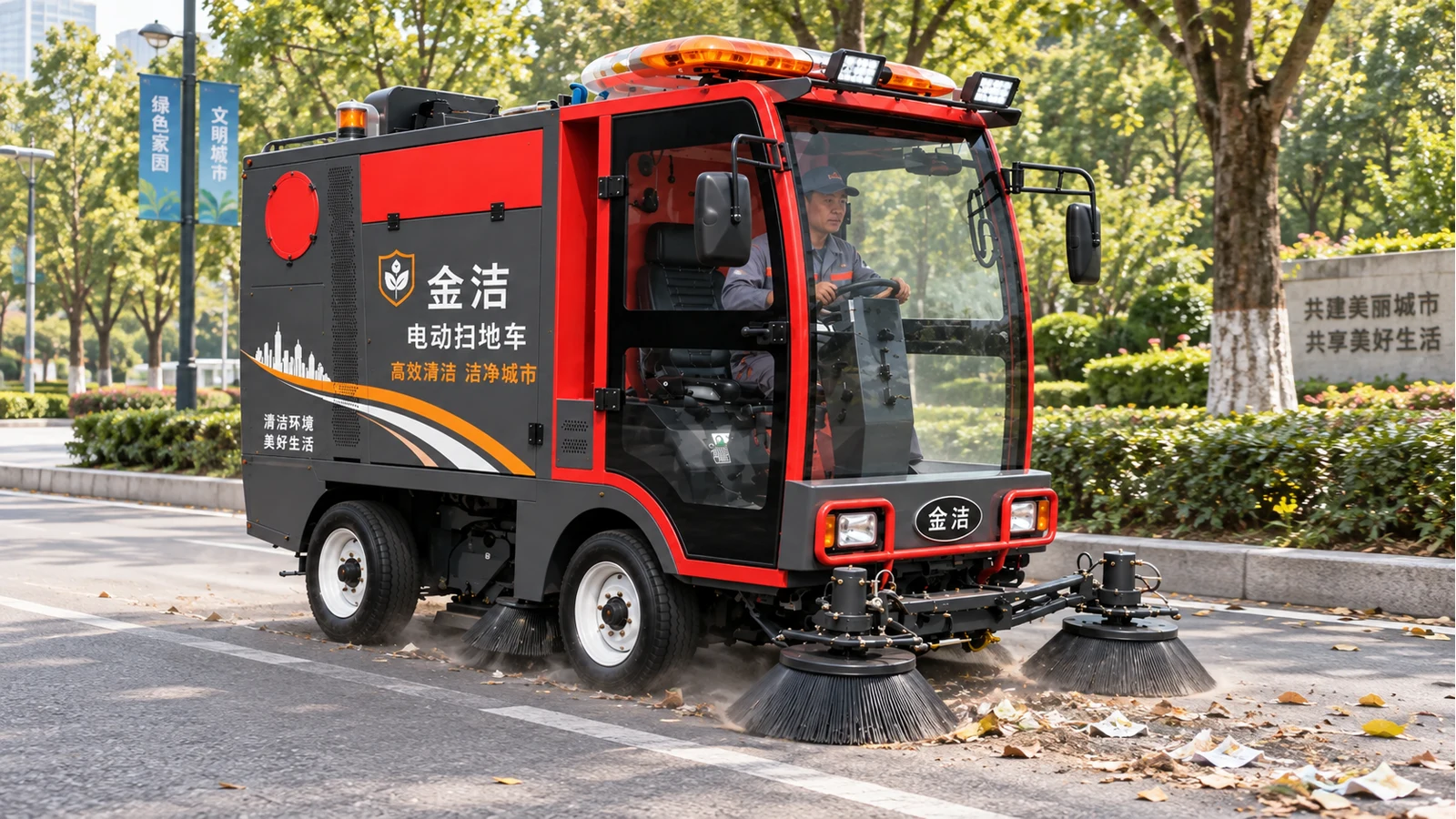
Jinjie J-WX2400B
J-WX2400B provides sweeping with auxiliary mist-cannon dust suppression. Water, wind, people, vehicles and electrics must suit spraying; this is not hazardous-dust treatment or certified air purification. Verify its own tanks, hopper and battery.
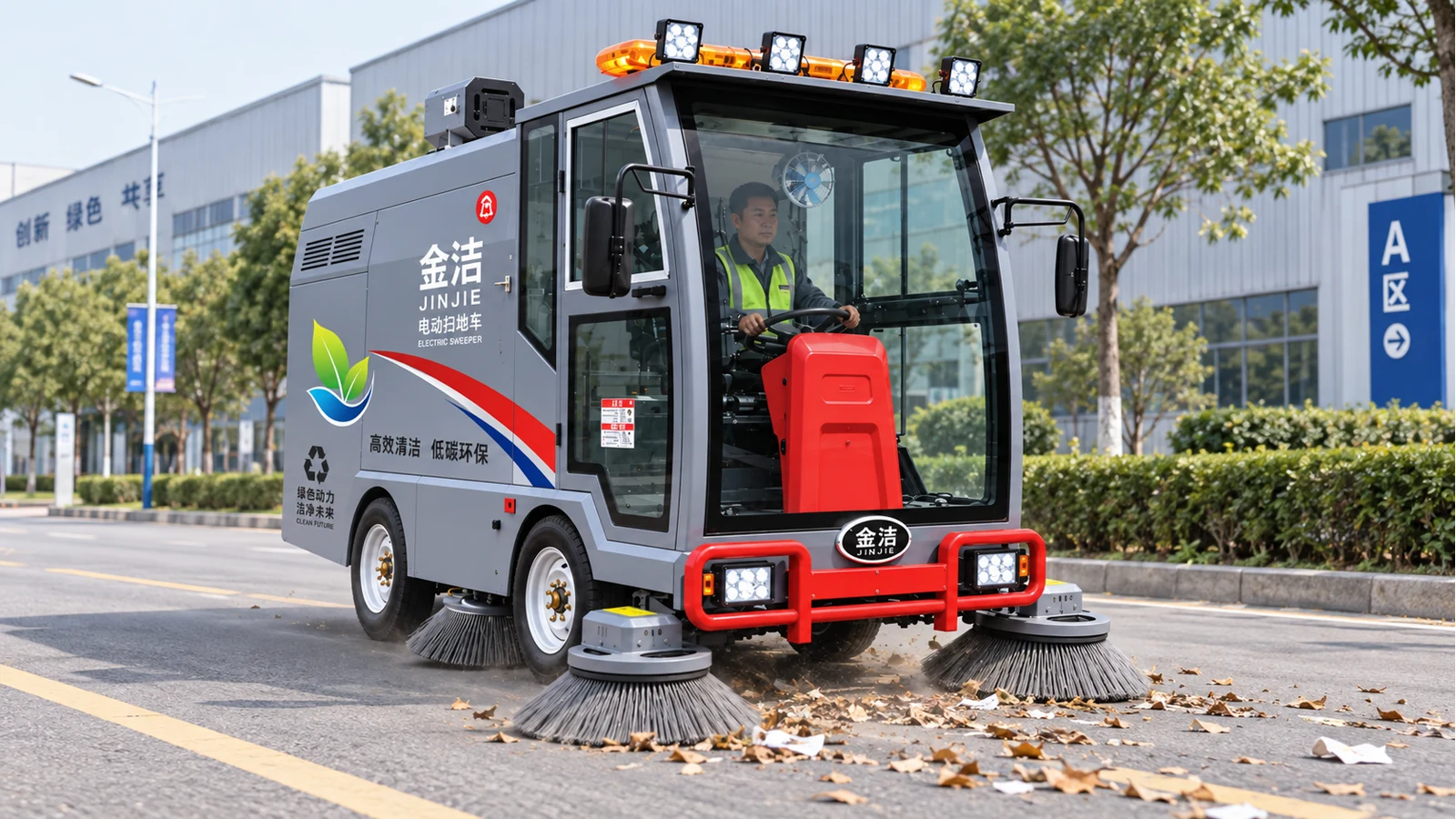
Jinjie J-WX2400R
J-WX2400R is a larger enclosed road sweeper selected around route length, height clearance, water, disposal, gradients and charging. Confirm air conditioning and specialist dust options; enclosure does not imply explosion protection, dust certification or wor…