
Selected model: Jinjie J-1020D
Typical application · Equipment selectionSmall branches and drain access: assess the pipe before J-1020D jetting
Jinjie J-1020D
Clarifying access, bends, soil and the downstream route can reduce blind nozzle selection and repeated trials while coordinating cleaning, collection and reopening.
01 · What makes this task difficult?
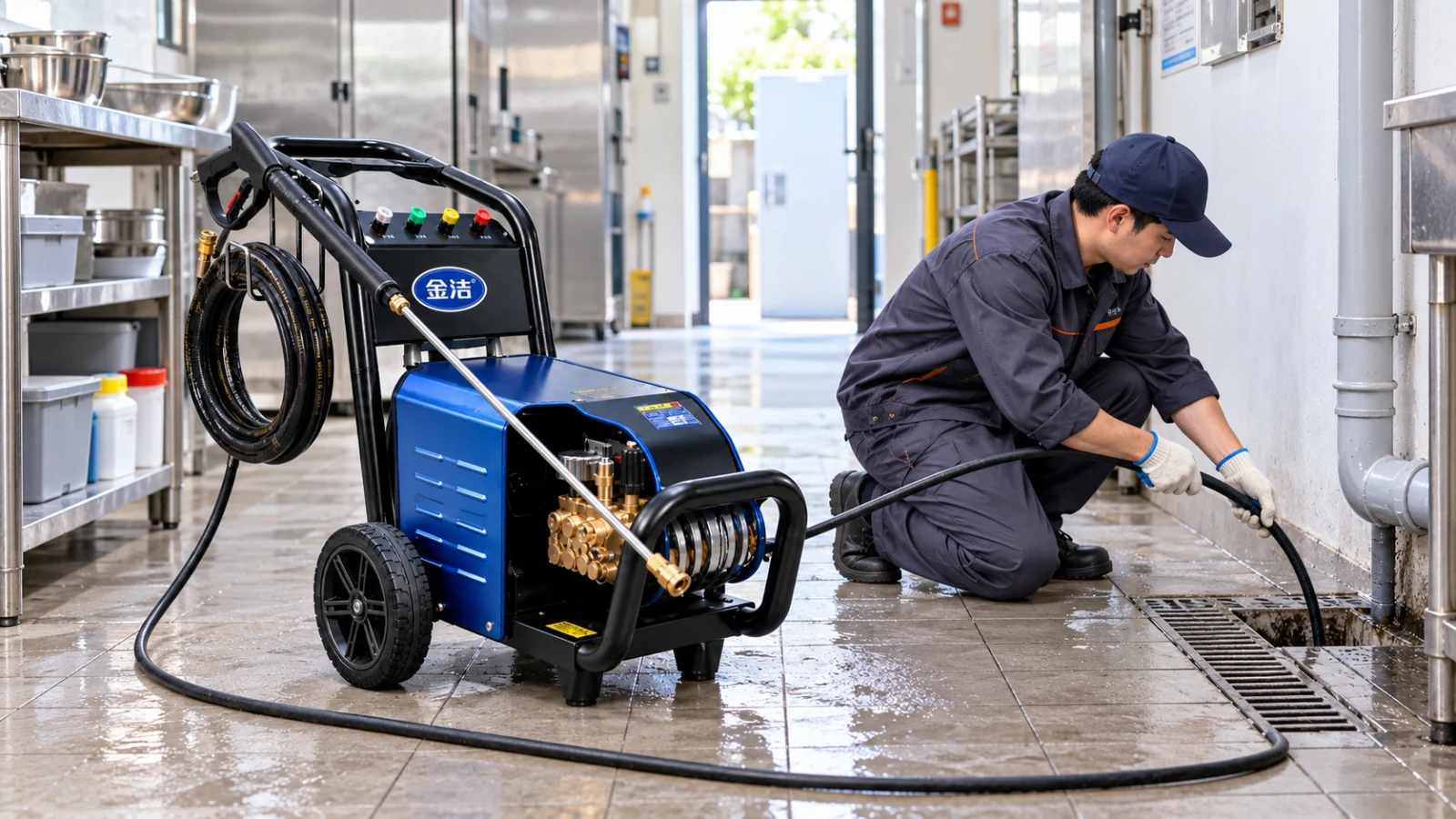
Slow drainage in commercial/property branches may involve light-to-moderate sediment, soft deposits or grease residues. Distinguish access blockage, bends, deposits and structural damage. The object is a pipe confirmed suitable for flushing, not a diameter guessed from an illustration. The image is a typical application reference.
Slow drainage has an unclear cause
Assess backflow, hard obstruction or collapse; stop jetting for structural problems
Access, bends and nozzle do not match
Check assembly and recovery route before a trained trial
Loosened waste has no disposal route
Confirm collection, discharge destination and service window
02 · Why consider this Jinjie machine?
Assess J-1020D for branch maintenance with suitable access, matching nozzle, pipe and water arrangements. Identify blockage and pipe condition rather than inferring diameter or reach from the model number.
Pipe and blockage identification
Assess backflow, hard obstruction or collapse; stop jetting for structural problems
Avoid assigning repair work to water pressure
Measured bore and compatible hose/nozzle
Check assembly and recovery route before a trained trial
Avoid selection from a diameter headline alone
20 L/min supply and downstream collection conditions
Confirm collection, discharge destination and service window
Organise transport and collection together
Jinjie J-1020D · Current information lists 100bar(10MPa), 20 L/min, a 30 m hose and electric operation. Hose length is not guaranteed jetting reach; confirm the actual electrical supply on the nameplate.
03 · A better cleaning workflow and customer value
Clarifying access, bends, soil and the downstream route can reduce blind nozzle selection and repeated trials while coordinating cleaning, collection and reopening.
Avoid assigning repair work to water pressure
Slow drainage has an unclear cause · Assess backflow, hard obstruction or collapse; stop jetting for structural problems
Avoid selection from a diameter headline alone
Access, bends and nozzle do not match · Check assembly and recovery route before a trained trial
Organise transport and collection together
Loosened waste has no disposal route · Confirm collection, discharge destination and service window
Match tools, the material and the working route before comparing labour, time, consumables and maintenance costs. The potential value depends on suitable conditions and correct operation; no fixed saving or damage-free result is promised.
No nozzle, permitted bore or pressure setting is selected from the image. Jetting is not confined-space entry permission. This is no recommendation for hazardous industrial lines, pressurised systems or unidentified pipes. Confirm voltage and water conditions on the actual unit; do not borrow J-1730D's 380 V specification.
Working method, evidence and original professional analysis
Task-specific equipment selection
Small branches and drain access: assess the pipe before J-1020D jetting
Site, material and contamination
Slow drainage in commercial/property branches may involve light-to-moderate sediment, soft deposits or grease residues. Distinguish access blockage, bends, deposits and structural damage. The object is a pipe confirmed suitable for flushing, not a diameter guessed from an illustration. The image is a typical application reference.
Equipment basis and model differences
Model information presents J-1020D as a compact electric unit with 100bar(10MPa), 20 L/min and a 30 m hose. It is a selection direction for branch maintenance with suitable power, but the article's 50/75 mm title guarantees no universal machine/nozzle/material range. Obtain measured bore, access, bends, material, blockage and compatible-nozzle data first. A 30 m hose is not guaranteed jetting reach.
Model configuration and selection
Check model-specific configurations against the machine and order before purchase.
| Model | Current basis and limits |
|---|---|
| J-1020D | Current information lists 100bar(10MPa), 20 L/min, a 30 m hose and electric operation. Hose length is not guaranteed jetting reach; confirm the actual electrical supply on the nameplate. |
| Site problem | Equipment / conditions | Suggested method | Potential value |
|---|---|---|---|
| Slow drainage has an unclear cause | Pipe and blockage identification | Assess backflow, hard obstruction or collapse; stop jetting for structural problems | Avoid assigning repair work to water pressure |
| Access, bends and nozzle do not match | Measured bore and compatible hose/nozzle | Check assembly and recovery route before a trained trial | Avoid selection from a diameter headline alone |
| Loosened waste has no disposal route | 20 L/min supply and downstream collection conditions | Confirm collection, discharge destination and service window | Organise transport and collection together |
Working method, accessories and site supply
- Record measured bore, material, length, bends, access, deposits and downstream condition. Assess chemicals, hard objects, roots and suspected collapse separately.
- Confirm electrical supply/protection from the actual nameplate; inspect hose and compatible nozzle. Standard equipment follows the configuration list, not an image.
- Segregate access and arrange supply/collection. Trained personnel must follow the manual; expose no pressurised nozzle and do not enter the chamber. Stop for abnormal backflow or resistance.
- Stop and release pressure before instructed recovery, cleaning and inspection. Record drainage; recurring problems need cause assessment rather than a one-pass cure promise.
Limits and safety
No nozzle, permitted bore or pressure setting is selected from the image. Jetting is not confined-space entry permission. This is no recommendation for hazardous industrial lines, pressurised systems or unidentified pipes. Confirm voltage and water conditions on the actual unit; do not borrow J-1730D's 380 V specification.
Questions for this task
Prepare site information
Provide a pipe sketch, measured bore, access photos, deposits/backflow, power and downstream collection conditions before discussing model and nozzle.
FAQ
Does a 50 or 75 mm label make this an automatic purchase?
No. Check actual bore, material, nozzle, hose, bends and blockage together.
Does a 30 m hose guarantee clearing 30 m?
No. Access, bends, nozzle and waste-return path constrain the work.
Can every grease blockage be solved by raising pressure?
No. Identify deposits and condition; hard objects, roots and structural damage may require another method.
What site information is needed for selection?
Provide a pipe sketch, measured bore, access photos, deposits/backflow, power and downstream collection conditions before discussing model and nozzle.
Select equipment for the actual site
Provide a pipe sketch, measured bore, access photos, deposits/backflow, power and downstream collection conditions before discussing model and nozzle.
Jinjie J-1020D · Selection enquiryCompare application plansModels and original application images
Compare each model against its own configuration and the actual route, material and site services.
Jinjie J-1020D
Current model
Current information lists 100bar(10MPa), 20 L/min, a 30 m hose and electric operation. Hose length is not guaranteed jetting reach; confirm the actual electrical supply on the nameplate.