
Selected model: Jinjie J-D3C
Typical application · Equipment selectionOffice corridor floor cleaning
Jinjie J-D3C
Organise routine footprint cleaning as sectional scrubbing and recovery, including doors, turns and residual-water checks in the handover route.
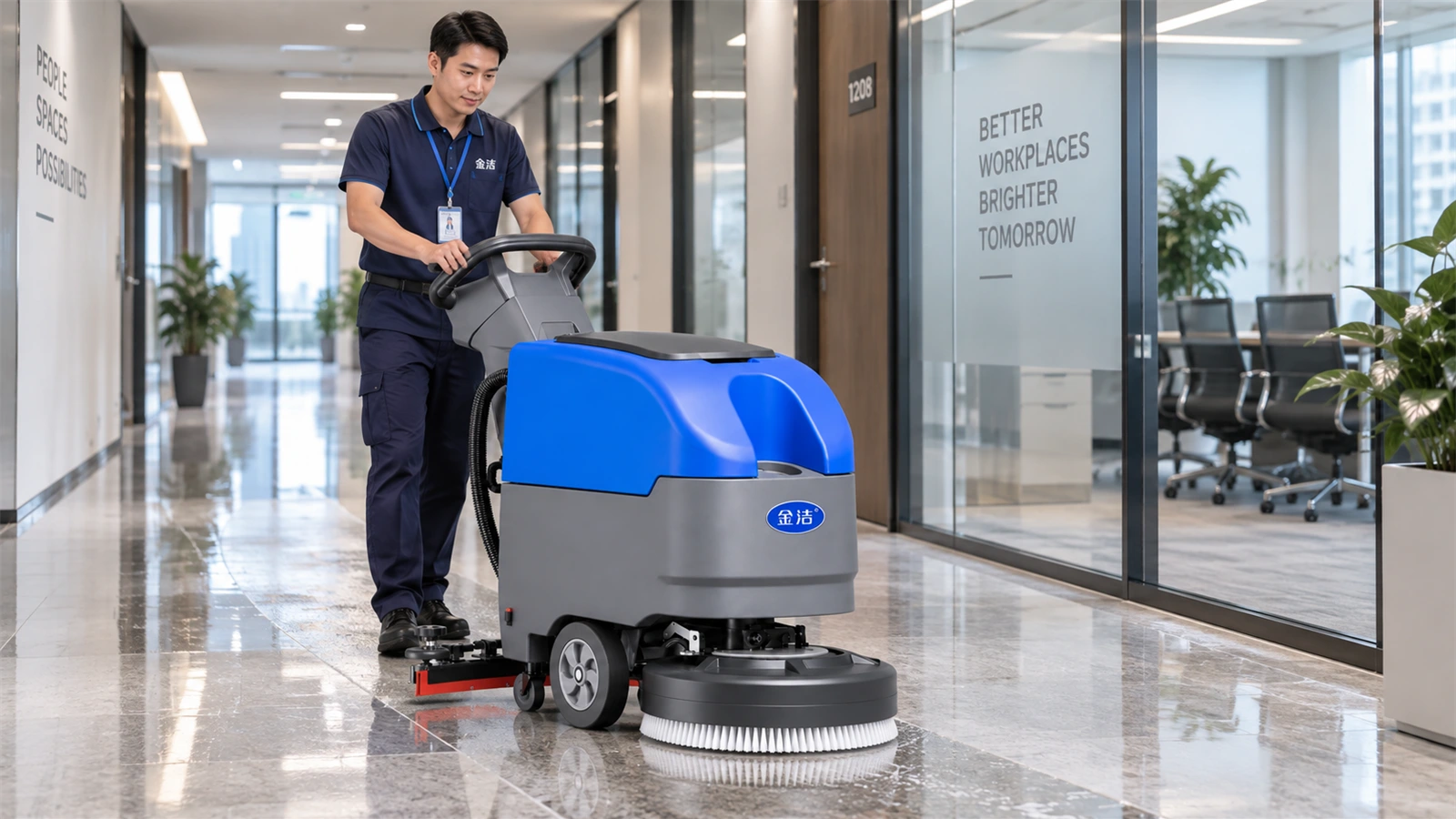
01 · What makes this task difficult?
Office corridors are long, narrow routes with doorways, partitions and material transitions. Trial ordinary footprints, but do not assume carpet edges or timber trims tolerate water.
Water remains at doors and partitions
Trial edges and inspect water
Cleaning crosses occupied routes
Isolate sections and stagger floors
02 · Why consider this Jinjie machine?
Compact walk-behind scrubbing and recovery can address doors, corridor turns and routine footprints in sections, coordinating cleaning with pedestrian access.
Blade and recovery condition
Trial edges and inspect water
Include edge finishing in the task
Attended route planning
Isolate sections and stagger floors
Reduce unplanned crossings
03 · A better cleaning workflow and customer value
Organise routine footprint cleaning as sectional scrubbing and recovery, including doors, turns and residual-water checks in the handover route.
Include edge finishing in the task
Water remains at doors and partitions · Trial edges and inspect water
Reduce unplanned crossings
Cleaning crosses occupied routes · Isolate sections and stagger floors
Match tools, the material and the working route before comparing labour, time, consumables and maintenance costs. The potential value depends on suitable conditions and correct operation; no fixed saving or damage-free result is promised.
Corridor scrubbing is not electrical cleaning, carpet extraction or hospital infection control.
Working method, evidence and original professional analysis
Task-specific equipment selection
Office corridors: control doorway water and schedule around occupants
Site, material and contamination
Office corridors are long, narrow routes with doorways, partitions and material transitions. Trial ordinary footprints, but do not assume carpet edges or timber trims tolerate water.
Equipment basis and model differences
This chapter serves the J-D3C corridor card, focusing on attended manoeuvring, scrubbing and recovery rather than verified quietness or disinfection.
| Site problem | Equipment / conditions | Suggested method | Potential value |
|---|---|---|---|
| Water remains at doors and partitions | Blade and recovery condition | Trial edges and inspect water | Include edge finishing in the task |
| Cleaning crosses occupied routes | Attended route planning | Isolate sections and stagger floors | Reduce unplanned crossings |
Working method, accessories and site supply
- Record floor/trim materials, electrics and busy periods.
- Collect grit and trial material transitions while checking recovery.
- Inspect door edges, turns and slip conditions before reopening each section.
Limits and safety
Corridor scrubbing is not electrical cleaning, carpet extraction or hospital infection control.
Questions for this task
Prepare site information
Provide floor routes, doorway materials, occupancy windows and service/storage points.
FAQ
Must every room be washed with the corridor?
Follow the task boundary; do not expand wet work merely to maintain a continuous route.
Does a small machine necessarily cause less disturbance?
No. Assess noise and timing from actual site conditions and testing.
What site information is needed for selection?
Provide floor routes, doorway materials, occupancy windows and service/storage points.
Select equipment for the actual site
Provide floor routes, doorway materials, occupancy windows and service/storage points.
Jinjie J-D3C · Selection enquiryCompare application plansModels and original application images
Compare each model against its own configuration and the actual route, material and site services.
Jinjie J-D3C
Current model
This chapter serves the J-D3C corridor card, focusing on attended manoeuvring, scrubbing and recovery rather than verified quietness or disinfection.