
Selected model: Jinjie J-D3C
Retail shelving aisles · Typical applicationRetail shelving-aisle floor cleaning
Jinjie J-D3C · Compact Walk-Behind Scrubber
For daily footprints, dust and wet-cleanable residues on water-compatible hard floors, J-D3C combines scrubbing and wastewater recovery so store teams can work along planned shelf sections.
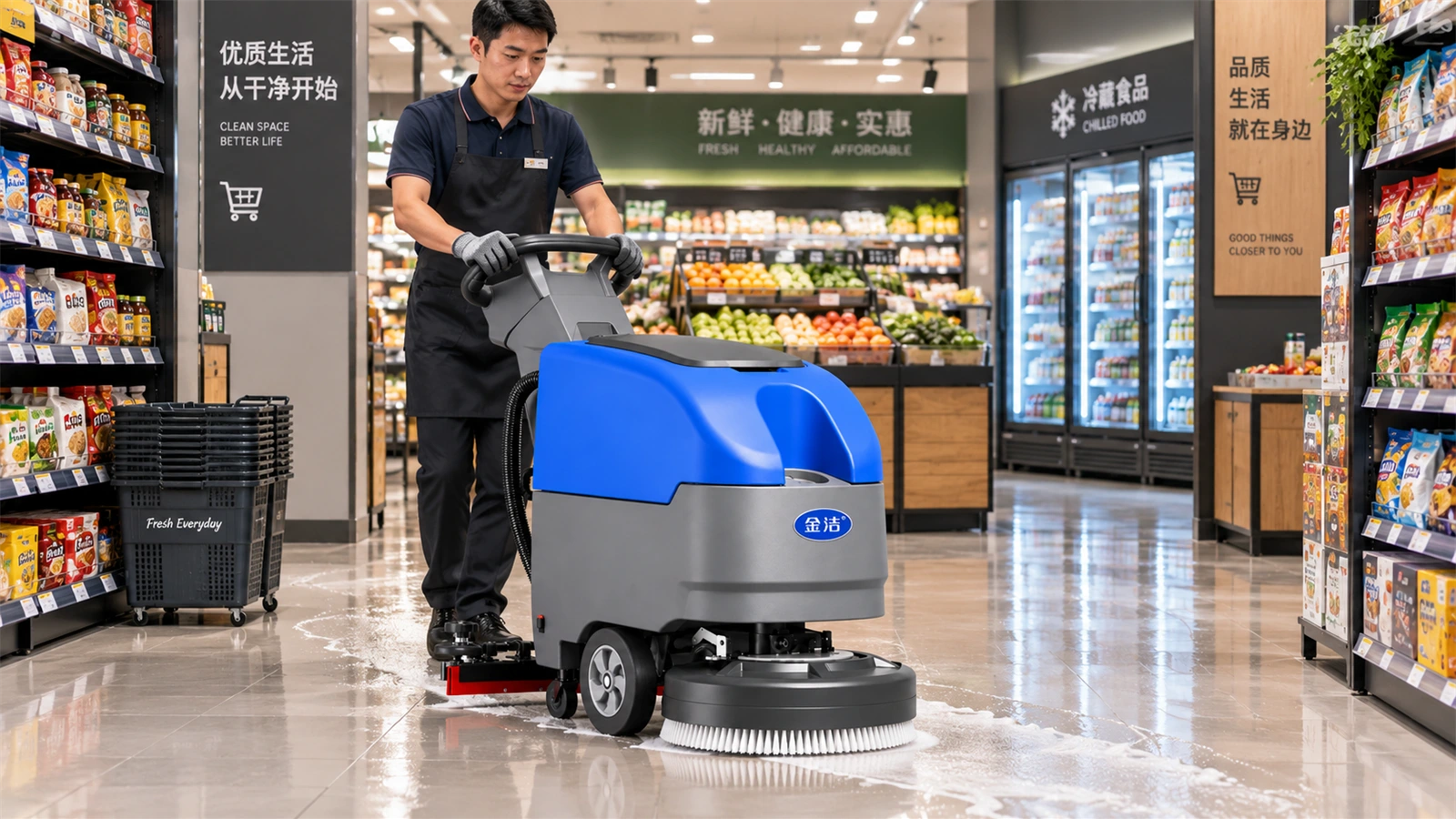
Consider this compact walk-behind machine for small areas, frequent cleaning and routes with turns. Confirm passage along the whole route first, then assign suitable work to mechanical scrubbing and recovery.
Discuss J-D3C for your aisles View this model’s specifications- 460 mm cleaning width
- 45 L clean / 50 L recovery tanks
- Walk-behind scrub and recovery
Between the shelves, area is only part of the challenge
Shelf aisles are constrained by access, not merely small area. Separate loose packaging and grit from footprints and wet-cleanable spill residues.
Footprints, paper and sticky residues occur together
Manual mopping often needs debris removal, repeated wiping and water collection. Reworking the same aisle can interrupt the cleaning route.
Shelf ends and displays restrict turning
Fitting through the entrance does not prove that a machine turns between shelves. Its envelope, squeegee and merchandise layout affect continuity.
Trading continues while cleaning is needed
Customers, restocking and cleaning overlap. Soil removal must be coordinated with lower-shelf protection, water checks and sectional handover.
Why consider Jinjie J-D3C
Its value is coordinating scrubbing, recovery and access in smaller areas—not transferring a large machine’s claims to a small store.
Plan shelf sections around a 460 mm cleaning width
Use the 460 mm cleaning width to plan sectional work on smaller, turning-intensive routes. The listed squeegee width is 720 mm; verify passing and turning clearance rather than treating 460 mm as doorway clearance.
Coordinate scrubbing with wastewater recovery
Assign suitable wet-cleanable residues to mechanical scrubbing and recover wastewater along the route, reducing separate follow-on collection. Residual water must still be inspected.
Use separate 45 L / 50 L tanks to plan service stops
Separate clean and recovery tanks support planning around store sections, fill points and disposal points. An operator still pushes this walk-behind machine; compare self-propelled options when sustained pushing is a concern.
Work by shelf section, then hand the aisle back
Collect paper and grit, match the pad and low-foam detergent, and trial a small area. Scrub and recover in sections, then check water at shelf edges and turns before restoring access.
Surface protection
Match pads and chemicals and trial first to reduce damage risks from grit, tools or unsuitable wet methods.
Daily cleaning quality
Use mechanical scrubbing for suitable bonded soil with wastewater recovery, improving the organisation of repeated manual-wiping tasks.
Workflow continuity
Keep scrubbing and recovery on one planned route to reduce unnecessary process changes and repeat travel.
Completion planning
Work and hand over sections within suitable quiet windows rather than opening the entire store floor at once.
Repetitive labour
Let mechanical scrubbing perform suitable repetitive wiping tasks; operators still push, steer and inspect.
Overall operating cost
Where area, shifts and configuration fit, assess labour, consumables and maintenance together for opportunities to lower total cleaning input.
Water and environment
Include residual-water checks, collection and designated disposal to help control slipping, tracking and improper discharge.
Clearance check: 460 mm is cleaning width; this model lists a 720 mm squeegee. Also check the complete envelope, turns, displays, stock protection and actual configuration.
Maintain required access during opening hours; reassess moisture-sensitive stock, exposed electrics and hazardous dust before wet work.
Working and selection evidence
Specifications support selection; the actual route and a trial determine use. The original chapter’s technical points remain available below.
J-D3C is the small walk-behind option associated with this card. Check actual machine, brush and squeegee clearance; cleaning width is not passage clearance.
Difficult end-of-aisle turns
Machine envelope and squeegee position
Measure clearance and trial the full route
Reduce late discovery of access limitations
Packaging, spills and footprints mix
Scrubbing and recovery
Collect debris and trial isolated stains
Keep debris out of the recovery task
- Record narrow aisles, displays and turns; protect low-level stock.
- Remove debris, confirm compatible brush/pad and detergent, then trial.
- Check shelf-edge water and slip risk; use designated fill/empty points.
These are potential benefits in suitable conditions, not measured savings. Time, labour and cost depend on surface, soil, area, route and maintenance. No damage-free, fixed-saving or immediately slip-free outcome is promised.
Questions to settle before choosing for a store
Does fitting through the entrance prove aisle suitability?
No. Check turns, displays and squeegee clearance too.
Can an aisle reopen with residual water?
Check blades, recovery and the floor first; having suction is not an acceptance test.
Is the required aisle clearance the same as the 460 mm cleaning width?
No. The J-D3C squeegee width is 720 mm. Check the complete envelope, side clearance and end-of-aisle turns too.
Does J-D3C move without pushing like a self-propelled model?
No. It is walk-behind. Compare J-D5SL when area or sustained pushing becomes an issue, reassessing dimensions and configuration.
Share the shelf route before choosing J-D3C
Provide aisle clearance, shelf-end turns, floor and soil photos, daily area and trading windows. Match the equipment and tools to pads, chemicals, service points and staffing.
Provide aisle and turn dimensions, stock-protection needs and operating hours.
Discuss J-D3C for your aislesExplore the next step
- J-D3C product and configuration
- Compare self-propelled J-D5SL for larger workloads
- Choose by area, floor and cleaning frequency
- Manage pads, blades, batteries and consumables
Rental depends on available resources and project assessment; no J-D3C stock, price or lead time is promised.
Models and original application images
Compare each model against its own configuration and the actual route, material and site services.
Jinjie J-D3C
Current model
J-D3C is the small walk-behind option associated with this card. Check actual machine, brush and squeegee clearance; cleaning width is not passage clearance.
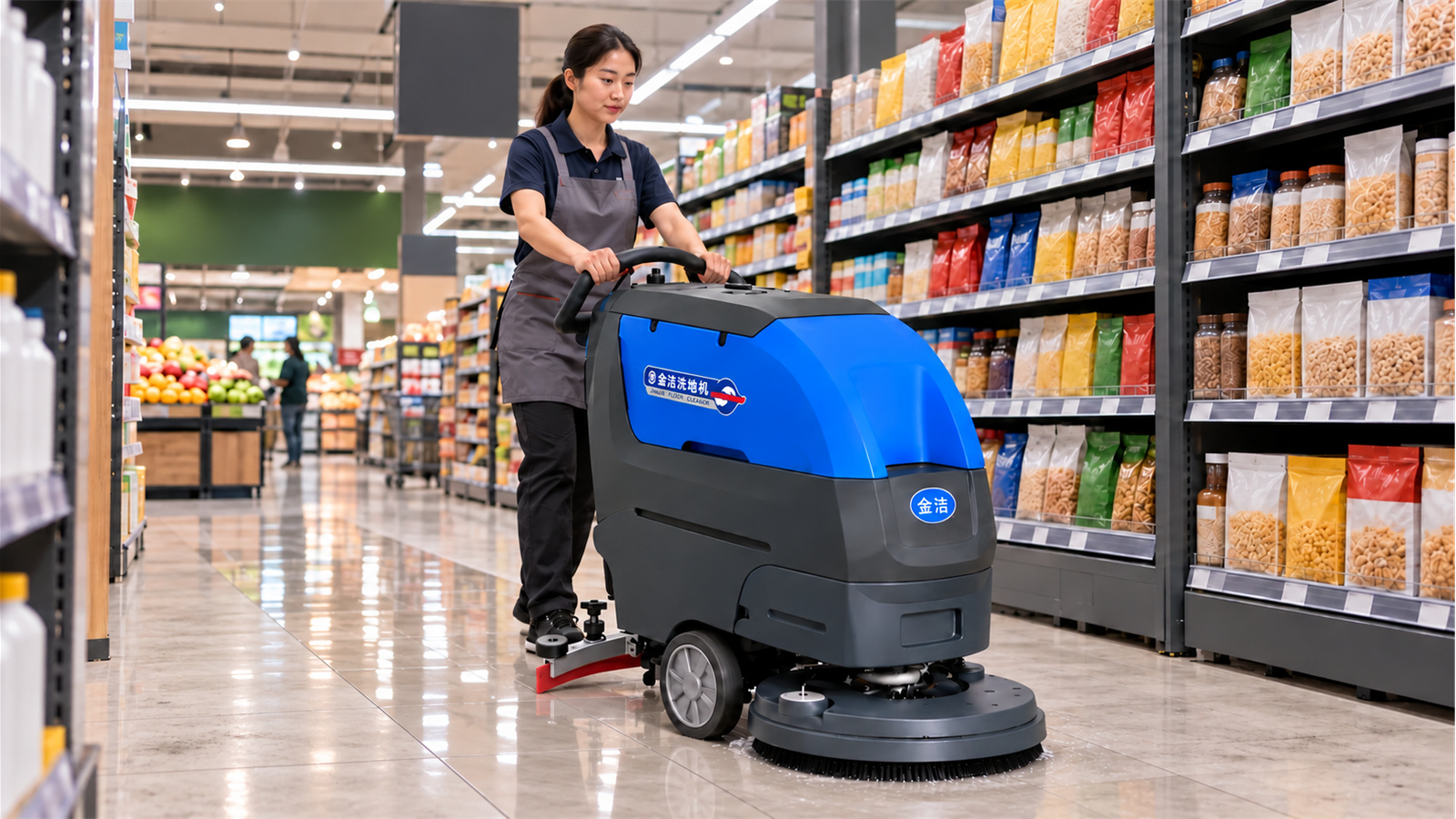
Jinjie J-D5SL
Current J-D5SL product information lists self-propelled travel, 24 V, 510 mm cleaning width and a 780 mm squeegee as selection checks, not measured hourly output. Self-propulsion is not autonomy or proof of adequate turning space.
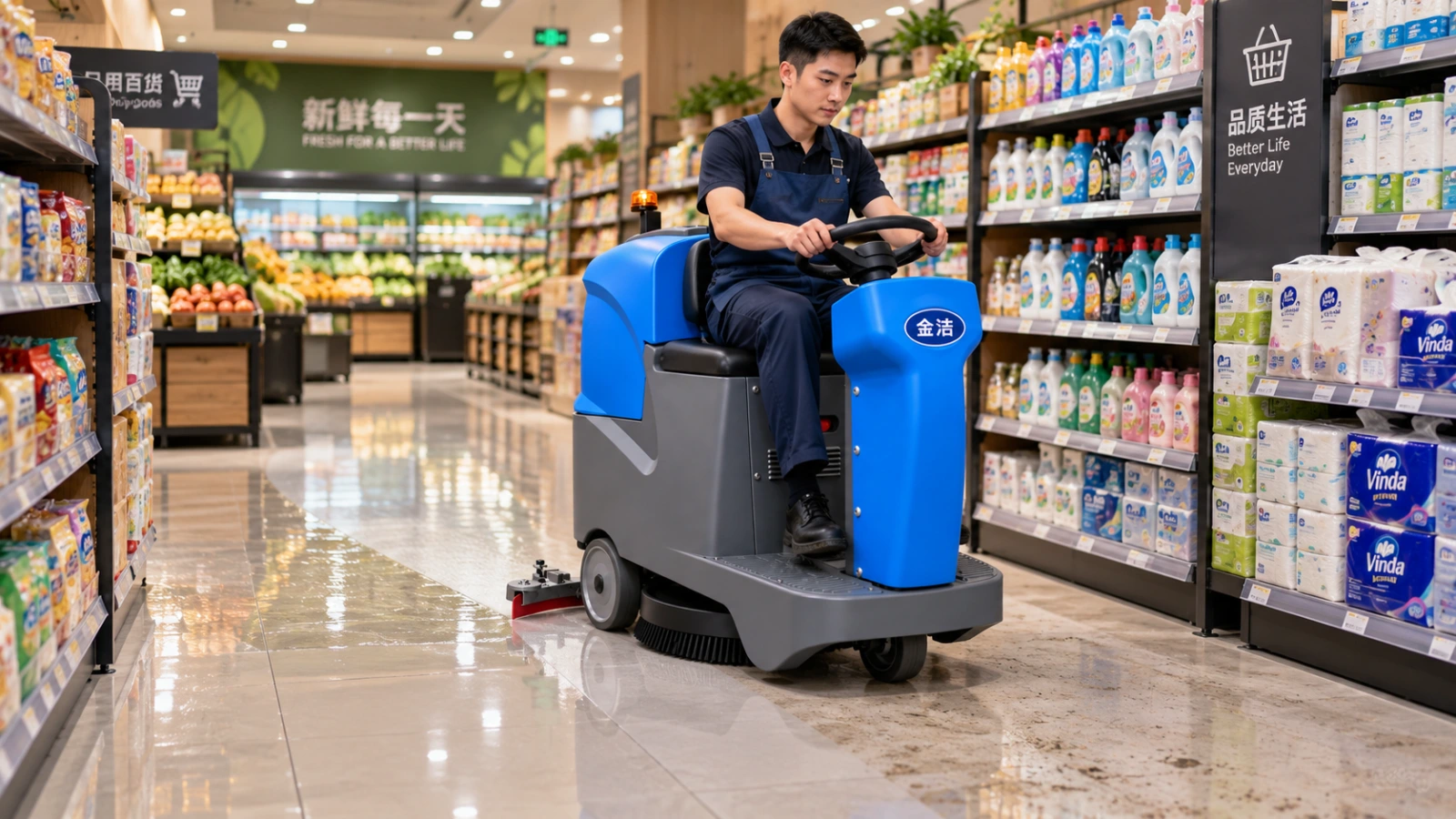
Jinjie J-56BF
The J-56BF card illustrates ride-on aisle selection. Trial aisle ends, squeegee sweep and operator visibility; straight-line access does not establish full-route suitability.
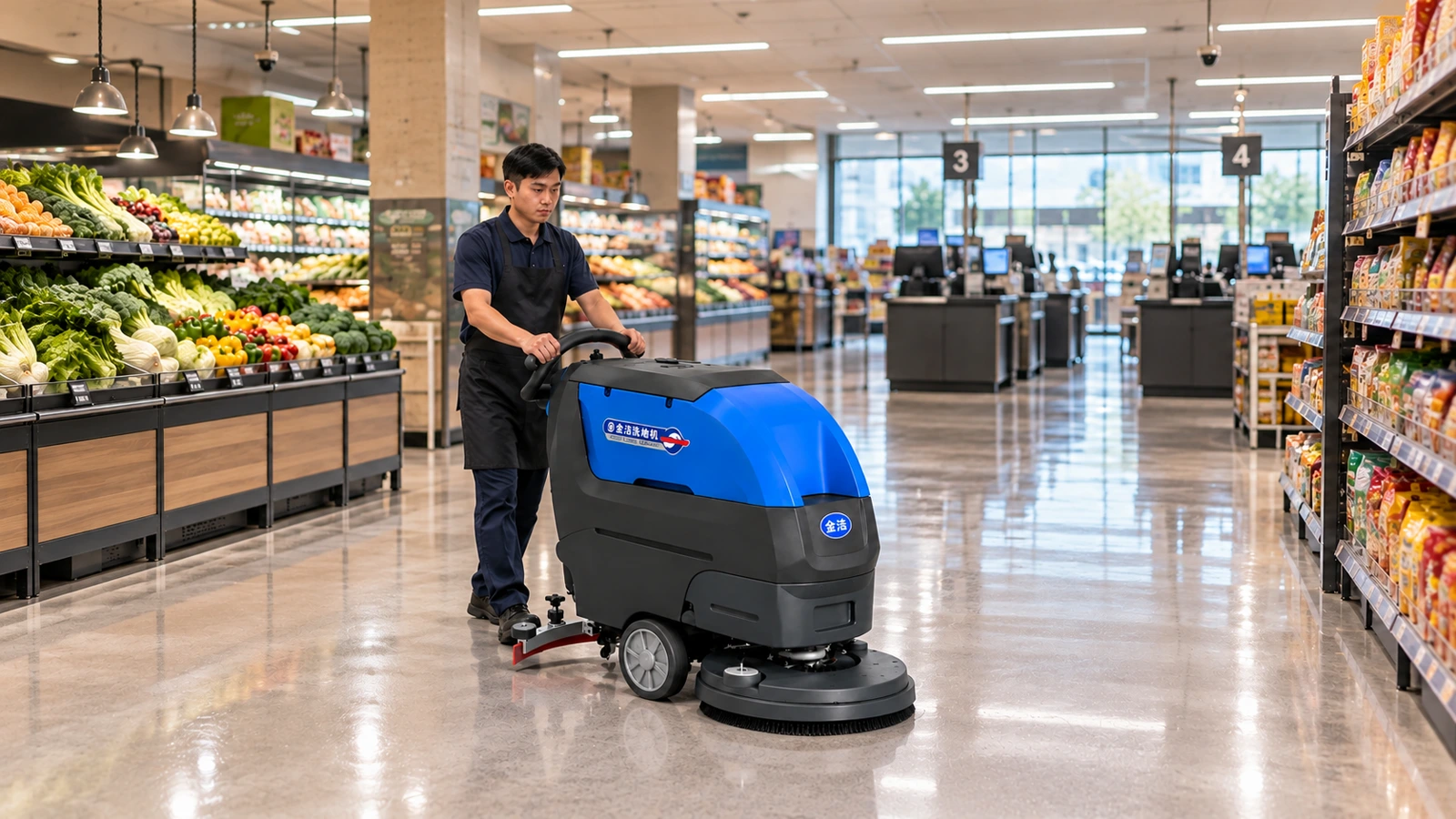
Jinjie J-D3L
Supermarket and shop floor cleaning