
Selected model: Jinjie J-D3L
Typical application · Equipment selectionWarehouse and production-access floor cleaning
Jinjie J-D3L
Plan scrubbing and recovery around shelves, packaging and turns to reduce restocking conflicts and keep loose debris out of wet recovery.
01 · What makes this task difficult?
Rack aisles can contain packaging, pallet fragments, grit and wheel marks. Separate collectable debris from adherent marks; ordinary scrubbing is not industrial-waste or hazardous-dust treatment.
Pallets and packaging obstruct the route
Clear debris and protect low stock
Forklifts and people cross the aisle
Stop local traffic and inspect water
02 · Why consider this Jinjie machine?
In wet-cleanable warehouse aisles, a compact walk-behind machine can scrub and recover around shelf turns after loose debris is collected.
Separate collection from scrubbing
Clear debris and protect low stock
Reduce debris-related route interruptions
Zoned scrubbing and recovery
Stop local traffic and inspect water
Support cleaning-to-logistics handover
03 · A better cleaning workflow and customer value
Plan scrubbing and recovery around shelves, packaging and turns to reduce restocking conflicts and keep loose debris out of wet recovery.
Reduce debris-related route interruptions
Pallets and packaging obstruct the route · Clear debris and protect low stock
Support cleaning-to-logistics handover
Forklifts and people cross the aisle · Stop local traffic and inspect water
Match tools, the material and the working route before comparing labour, time, consumables and maintenance costs. The potential value depends on suitable conditions and correct operation; no fixed saving or damage-free result is promised.
Do not recommend ordinary equipment in unverified chemical or combustible-dust areas; collect oily wastewater under site requirements.
Working method, evidence and original professional analysis
Task-specific equipment selection
Small walk-behind machines between warehouse racks: collect debris first
Site, material and contamination
Rack aisles can contain packaging, pallet fragments, grit and wheel marks. Separate collectable debris from adherent marks; ordinary scrubbing is not industrial-waste or hazardous-dust treatment.
Equipment basis and model differences
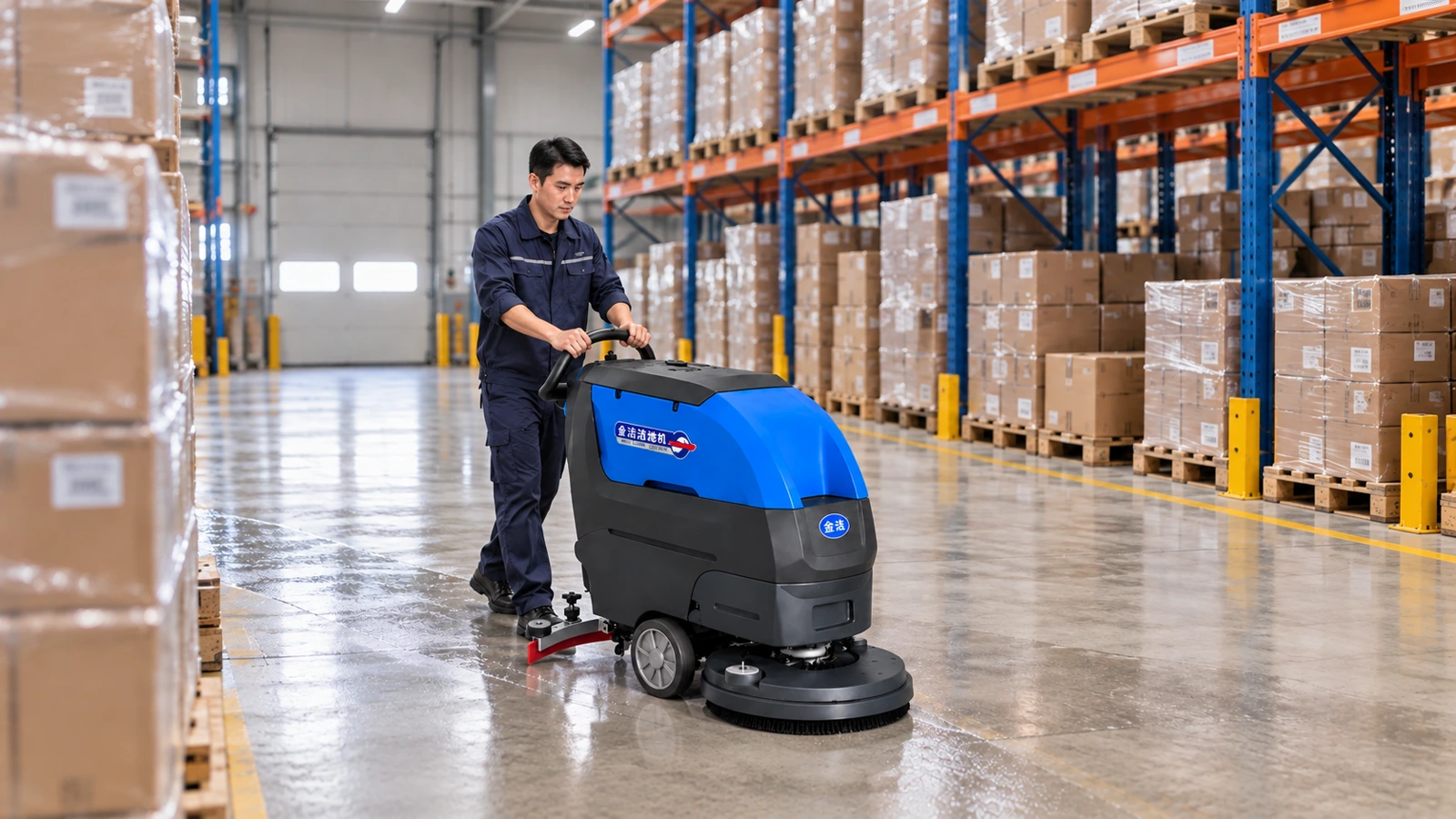
The J-D3L illustration supports discussion of attended narrow-aisle work and recovery checks. Verify its brush, power and dimensions rather than borrowing J-D3C or ride-on specifications.
| Site problem | Equipment / conditions | Suggested method | Potential value |
|---|---|---|---|
| Pallets and packaging obstruct the route | Separate collection from scrubbing | Clear debris and protect low stock | Reduce debris-related route interruptions |
| Forklifts and people cross the aisle | Zoned scrubbing and recovery | Stop local traffic and inspect water | Support cleaning-to-logistics handover |
Working method, accessories and site supply
- Mark pallets, narrow aisles, required access and forklift windows.
- Collect grit and packaging, assess floor/stock moisture tolerance and trial.
- Recover water by zone and check rack edges before reopening logistics routes.
Limits and safety
Do not recommend ordinary equipment in unverified chemical or combustible-dust areas; collect oily wastewater under site requirements.
Questions for this task
Prepare site information
Provide rack routes, debris types, forklift windows and fill/empty points.
FAQ
Does warehouse area alone decide walk-behind versus ride-on?
No. Check rack clearance, turns, task frequency and traffic planning.
Can forklift traffic continue in the same washing zone?
Separate conflicting routes and agree handover rather than relying on improvised avoidance.
What site information is needed for selection?
Provide rack routes, debris types, forklift windows and fill/empty points.
Select equipment for the actual site
Provide rack routes, debris types, forklift windows and fill/empty points.
Jinjie J-D3L · Selection enquiryCompare application plansModels and original application images
Compare each model against its own configuration and the actual route, material and site services.
Jinjie J-D3L
Current model
The J-D3L illustration supports discussion of attended narrow-aisle work and recovery checks. Verify its brush, power and dimensions rather than borrowing J-D3C or ride-on specifications.
Jinjie J-85BF
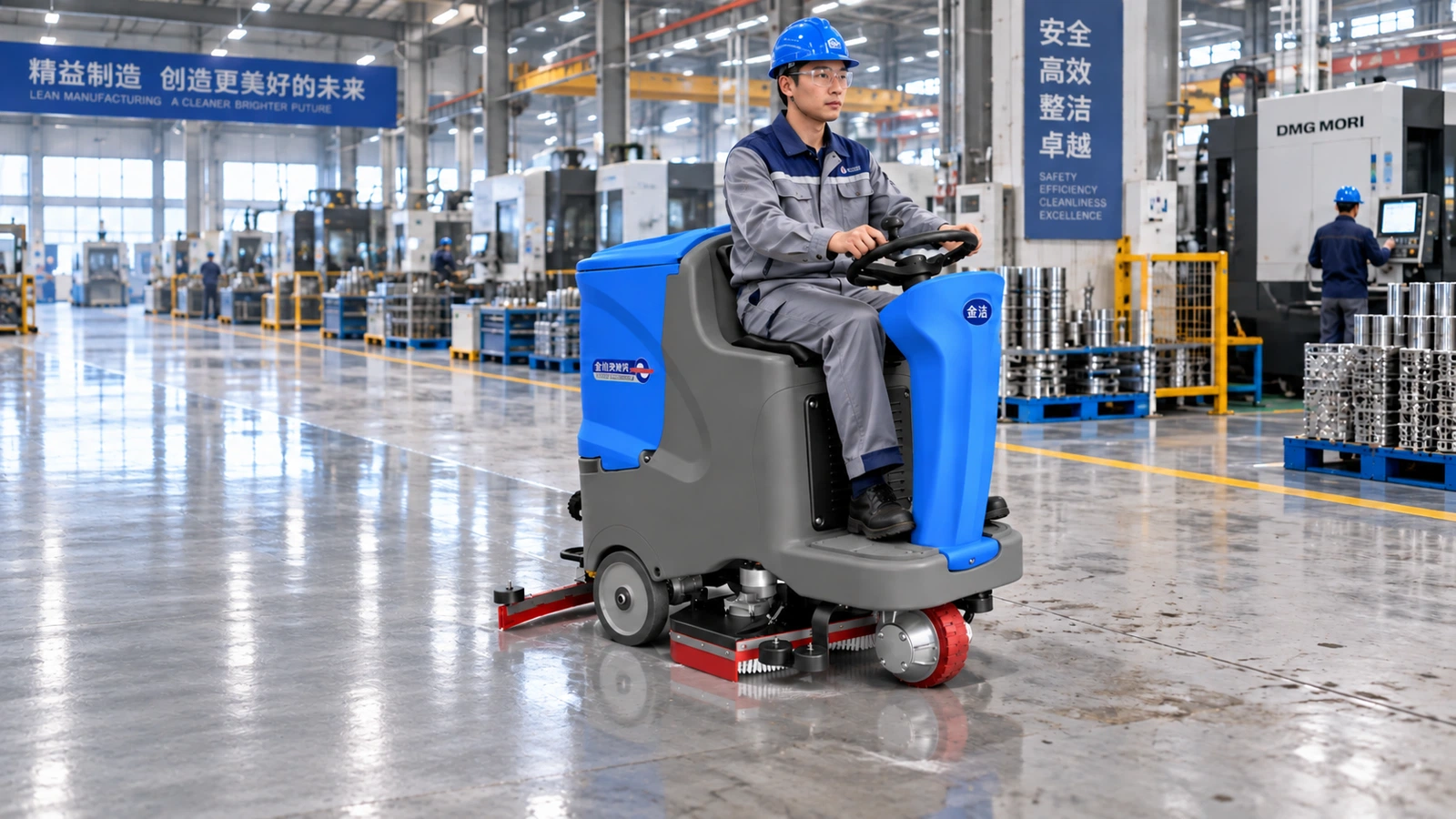
Front-wheel drive and twin-brush cleaning support planned warehouse main aisles. Separate forklifts and stock, then organise filling and emptying; ride-on construction does not establish slope capability.
Jinjie J-D8SL mm
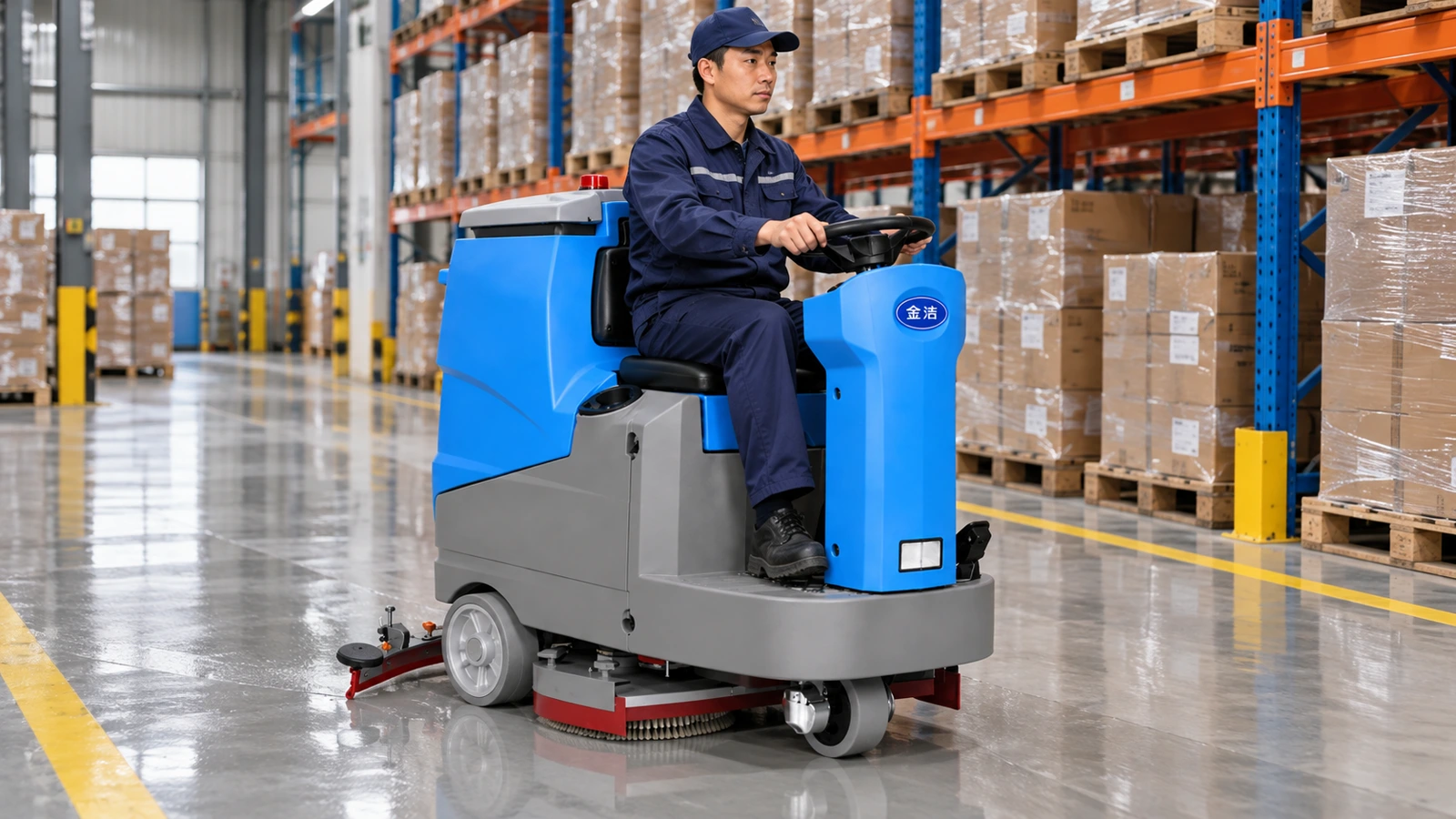
The associated J-D8SL and J-920B illustrations concern ride-on warehouse work. Verify clearance, turns, servicing and charging; squeegee width or theoretical output does not guarantee access or onsite throughput.
Jinjie J-920B
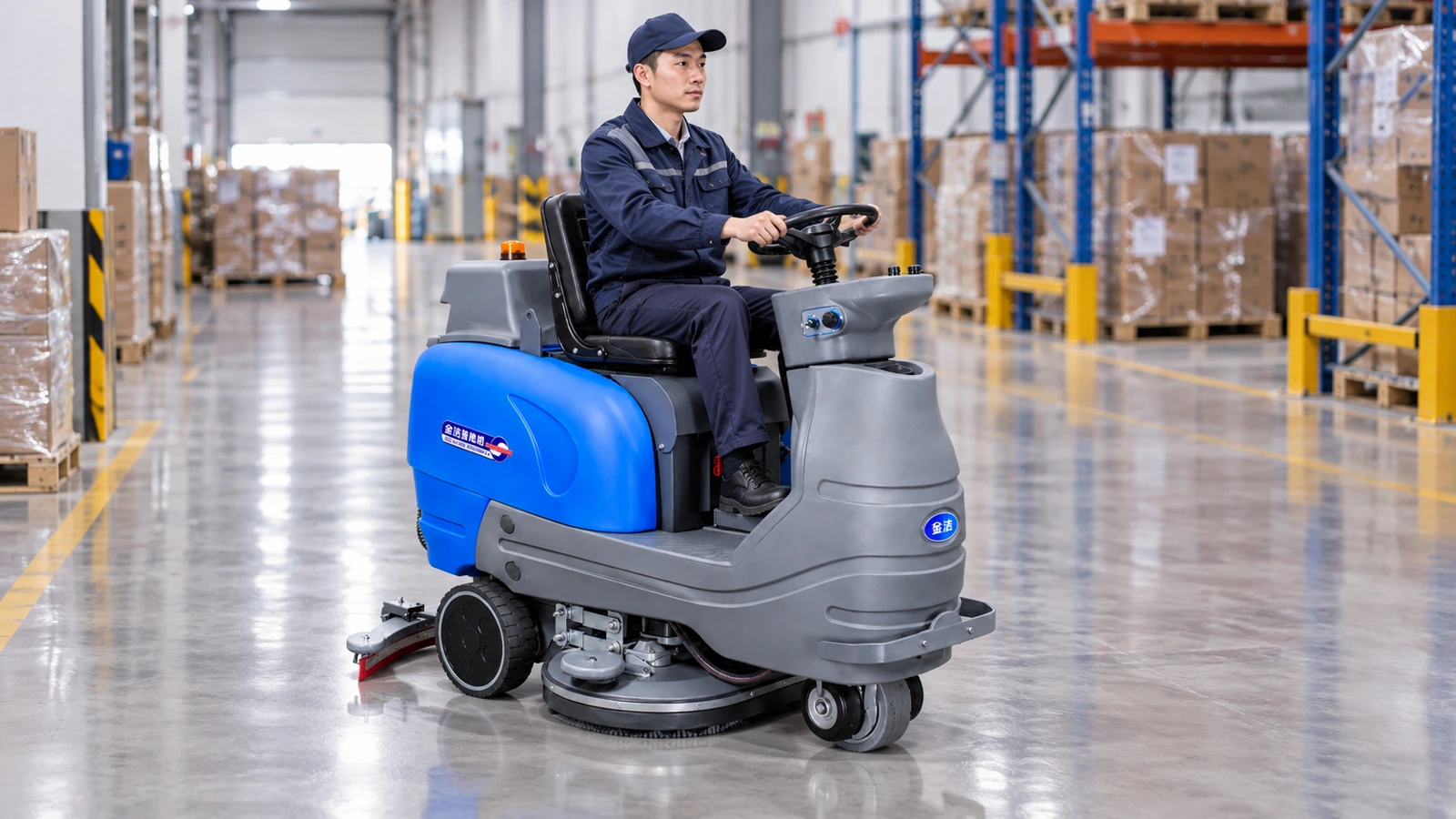
The associated J-D8SL and J-920B illustrations concern ride-on warehouse work. Verify clearance, turns, servicing and charging; squeegee width or theoretical output does not guarantee access or onsite throughput.
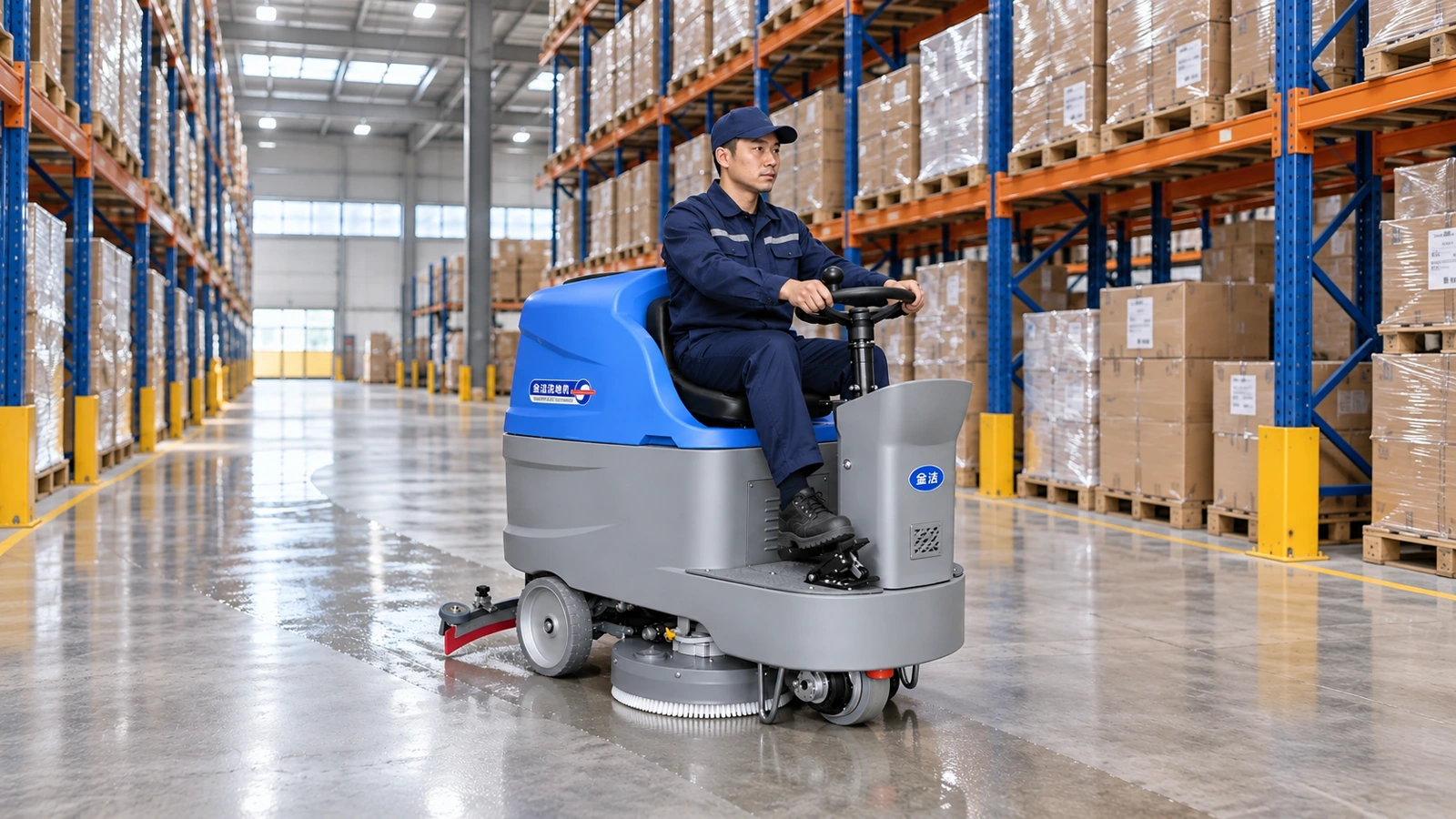
Jinjie J-960B
Assess the current larger ride-on scrubbing and recovery configuration for broad continuous routes, including squeegee clearance and turns. This guidance concerns level floors; slope conditions remain unverified.
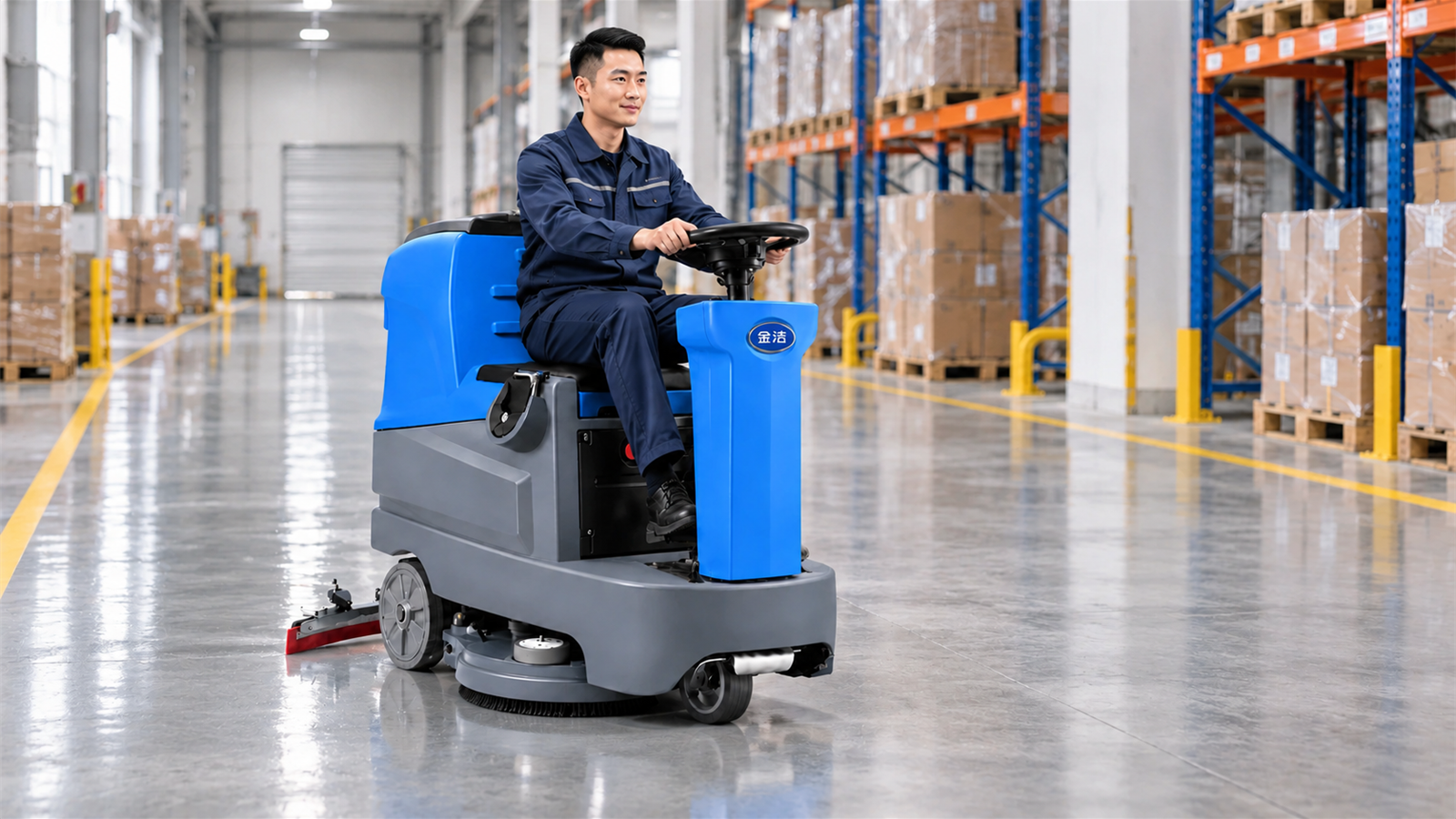
Jinjie J-D6SL ride-on scrubber
J-D6SL serves continuous warehouse hard-floor routes that accommodate ride-on equipment. Compared with narrow-aisle walk-behind machines, check turns, stock protection and forklift isolation; it is not a universal narrow-aisle choice.