
Selected model: Jinjie JGY-80P
Typical application · Equipment selectionWarehouse and packing debris: identify materials before selecting vacuum tools
Jinjie JGY-80P
Separate packaging, ordinary dry particles and special dusts; use suitable tools to collect ordinary debris and reduce repeated gathering and tracking.
01 · What makes this task difficult?
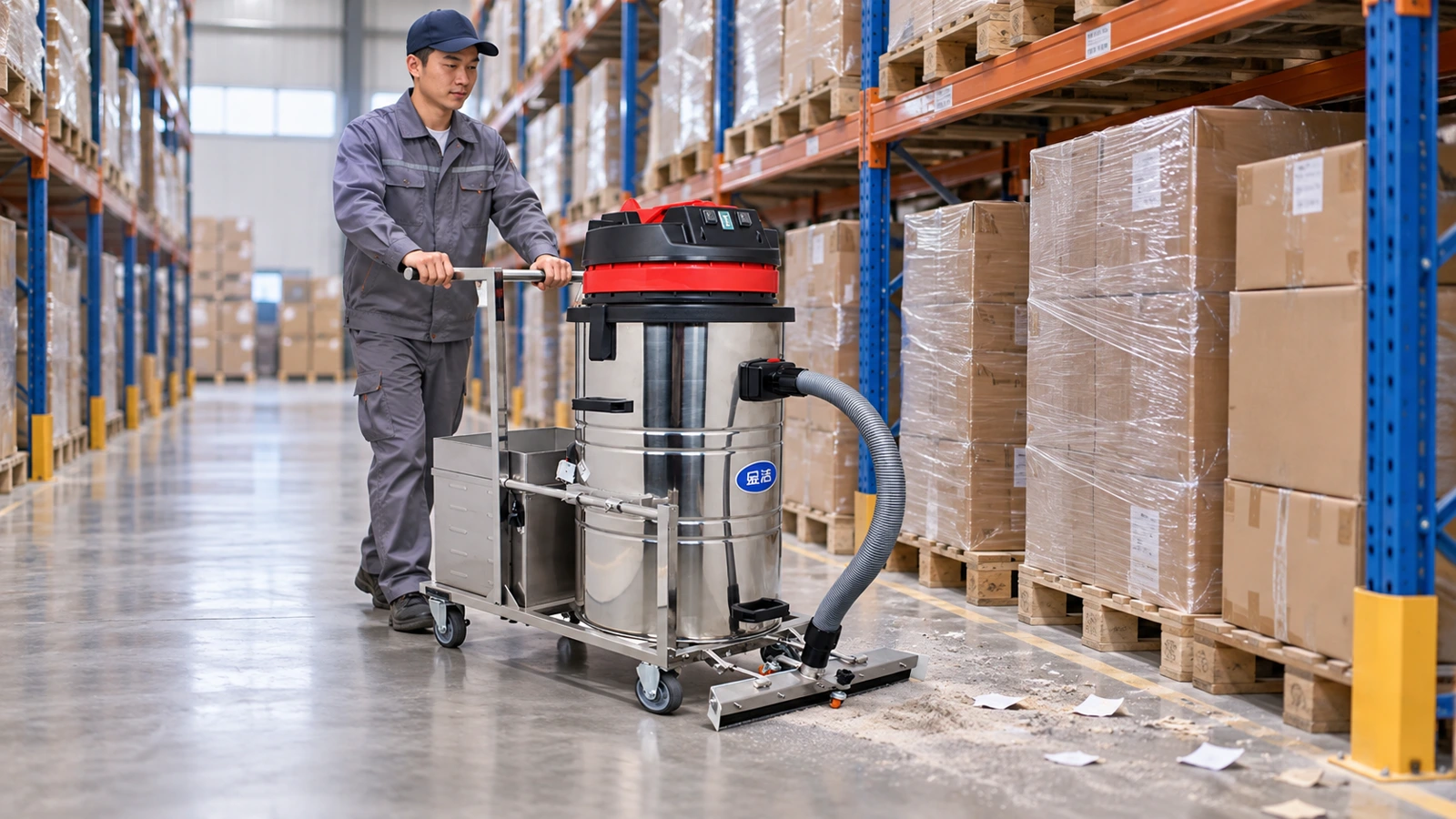
Warehouse aisles, pallet edges and packing stations collect paper, identified ordinary scraps and small quantities of particles on hard floors. Dense storage, forklift traffic, difficult edges and mixed-waste disposal complicate cleaning. Only ordinary dry debris confirmed by the site and permitted by the equipment instructions is covered; an image cannot identify powder composition.
Paper and debris collect at edges
Pick up oversized or entangling objects before a representative edge trial
Forklifts, pallets and cords intersect
Pause local traffic and plan corded or battery routes
Waste volume differs from weight
Separate waste and unload before handling becomes unsafe
02 · Why consider this Jinjie machine?
Match pickup tools to ordinary warehouse packaging and dry particles by size, density and filtration, coordinating collection with disposal. Fine or hazardous dust and hot swarf are not automatically included.
Actual tool, hose and reach
Pick up oversized or entangling objects before a representative edge trial
Separate manual preparation from machine collection
Mobility and power arrangement
Pause local traffic and plan corded or battery routes
Reduce unplanned cord crossings and carrying
Actual tank load and disposal conditions
Separate waste and unload before handling becomes unsafe
Avoid treating tank volume as permitted payload
Jinjie JGY-80P · Currently presented as a battery-powered mobile dry/wet unit for dispersed points. Verify battery, runtime, dry/wet filter changeover and permitted materials on the actual machine.
03 · A better cleaning workflow and customer value
Separate packaging, ordinary dry particles and special dusts; use suitable tools to collect ordinary debris and reduce repeated gathering and tracking.
Separate manual preparation from machine collection
Paper and debris collect at edges · Pick up oversized or entangling objects before a representative edge trial
Reduce unplanned cord crossings and carrying
Forklifts, pallets and cords intersect · Pause local traffic and plan corded or battery routes
Avoid treating tank volume as permitted payload
Waste volume differs from weight · Separate waste and unload before handling becomes unsafe
Match tools, the material and the working route before comparing labour, time, consumables and maintenance costs. The potential value depends on suitable conditions and correct operation; no fixed saving or damage-free result is promised.
No single-pass, fixed-output or continuous-heavy-duty promise is made. Ordinary vacuum configuration proves no explosion protection, hazardous-dust class, hot-material or liquid suitability. A factory image establishes no permission to collect every material there; pressure-washer pressure/flow ratings are irrelevant to this vacuum task.
Working method, evidence and original professional analysis
Task-specific equipment selection
Warehouse and packing debris: identify materials before selecting vacuum tools
Site, material and contamination
Warehouse aisles, pallet edges and packing stations collect paper, identified ordinary scraps and small quantities of particles on hard floors. Dense storage, forklift traffic, difficult edges and mixed-waste disposal complicate cleaning. Only ordinary dry debris confirmed by the site and permitted by the equipment instructions is covered; an image cannot identify powder composition.
Equipment basis and model differences
The battery-mobile positioning of JGY-80P supports assessing routes with dispersed sockets. Assess JGY-3070 for ordinary packing debris and filter maintenance. Check the individual dry-pickup setup and tools of JGY-3078P and JGY-3078BA without borrowing configurations. JGY80-40 still requires material, filtration and unloading-load verification. Check permitted debris, hose bore, floor tool, disposal and power before interpreting power ratings, tank appearance or industrial naming.
Model configuration and selection
Check model-specific configurations against the machine and order before purchase.
| Model | Current basis and limits |
|---|---|
| JGY-80P | Currently presented as a battery-powered mobile dry/wet unit for dispersed points. Verify battery, runtime, dry/wet filter changeover and permitted materials on the actual machine. |
| JGY-3070 | Currently presented as an industrial dust/debris vacuum. Only confirmed ordinary dry debris is discussed; model numbers establish no filter grade, hose suitability or continuous-duty rating. |
| JGY-3078P | Currently presented as an industrial dry/wet model. Check the floor tool and filter for ordinary warehouse packaging debris; this chapter confirms no metal-swarf or cutting-fluid application. |
| JGY-3078BA | The route is jgy-3078a but the displayed model is JGY-3078BA. Assess general spot cleaning, not bulk metal-swarf or all-day heavy-duty service. |
| JGY80-40 | The current name describes a heavy-dust vacuum; it establishes no hazardous-dust class, explosion protection or mineral-dust suitability. This chapter concerns identified ordinary debris on perimeter floors. |
| Site problem | Equipment / conditions | Suggested method | Potential value |
|---|---|---|---|
| Paper and debris collect at edges | Actual tool, hose and reach | Pick up oversized or entangling objects before a representative edge trial | Separate manual preparation from machine collection |
| Forklifts, pallets and cords intersect | Mobility and power arrangement | Pause local traffic and plan corded or battery routes | Reduce unplanned cord crossings and carrying |
| Waste volume differs from weight | Actual tank load and disposal conditions | Separate waste and unload before handling becomes unsafe | Avoid treating tank volume as permitted payload |
Working method, accessories and site supply
- Confirm waste origin and properties. Have unknown powder, chemicals, hot material, combustibles and hazardous dust assessed first.
- Separate forklift traffic and remove straps and oversized objects. Fit dry filters, hose and tool under the model instructions; tools are neither universally compatible nor all standard.
- Check cord/socket or actual battery condition. Trial a small representative quantity and observe blockage, exhaust and filtration.
- Stop before safe unloading and filter maintenance. If scrubbing follows, assess floor material, chemicals and wastewater separately; dry pickup does not automatically authorise wet pickup.
Limits and safety
No single-pass, fixed-output or continuous-heavy-duty promise is made. Ordinary vacuum configuration proves no explosion protection, hazardous-dust class, hot-material or liquid suitability. A factory image establishes no permission to collect every material there; pressure-washer pressure/flow ratings are irrelevant to this vacuum task.
Questions for this task
Prepare site information
Provide the warehouse route, close-up debris photos and origin, narrowest aisles, forklift times, power/charging points, unloading method and current configuration list.
FAQ
Can a large tank be filled with grit before moving it?
Not on volume alone. Check material density, permitted load, unloading method and handling conditions.
Can a dry/wet model collect water without changing filters?
Do not assume so. Follow the manual for filter changeover, tool and liquid-level protection; this chapter covers dry debris only.
Does visible debris prove hazardous-dust filtration compliance?
No. Material and filter classifications require separate documentation; an illustration is not certification.
What site information is needed for selection?
Provide the warehouse route, close-up debris photos and origin, narrowest aisles, forklift times, power/charging points, unloading method and current configuration list.
Select equipment for the actual site
Provide the warehouse route, close-up debris photos and origin, narrowest aisles, forklift times, power/charging points, unloading method and current configuration list.
Jinjie JGY-80P · Selection enquiryCompare application plansModels and original application images
Compare each model against its own configuration and the actual route, material and site services.
Jinjie JGY-80P
Current model
Currently presented as a battery-powered mobile dry/wet unit for dispersed points. Verify battery, runtime, dry/wet filter changeover and permitted materials on the actual machine.
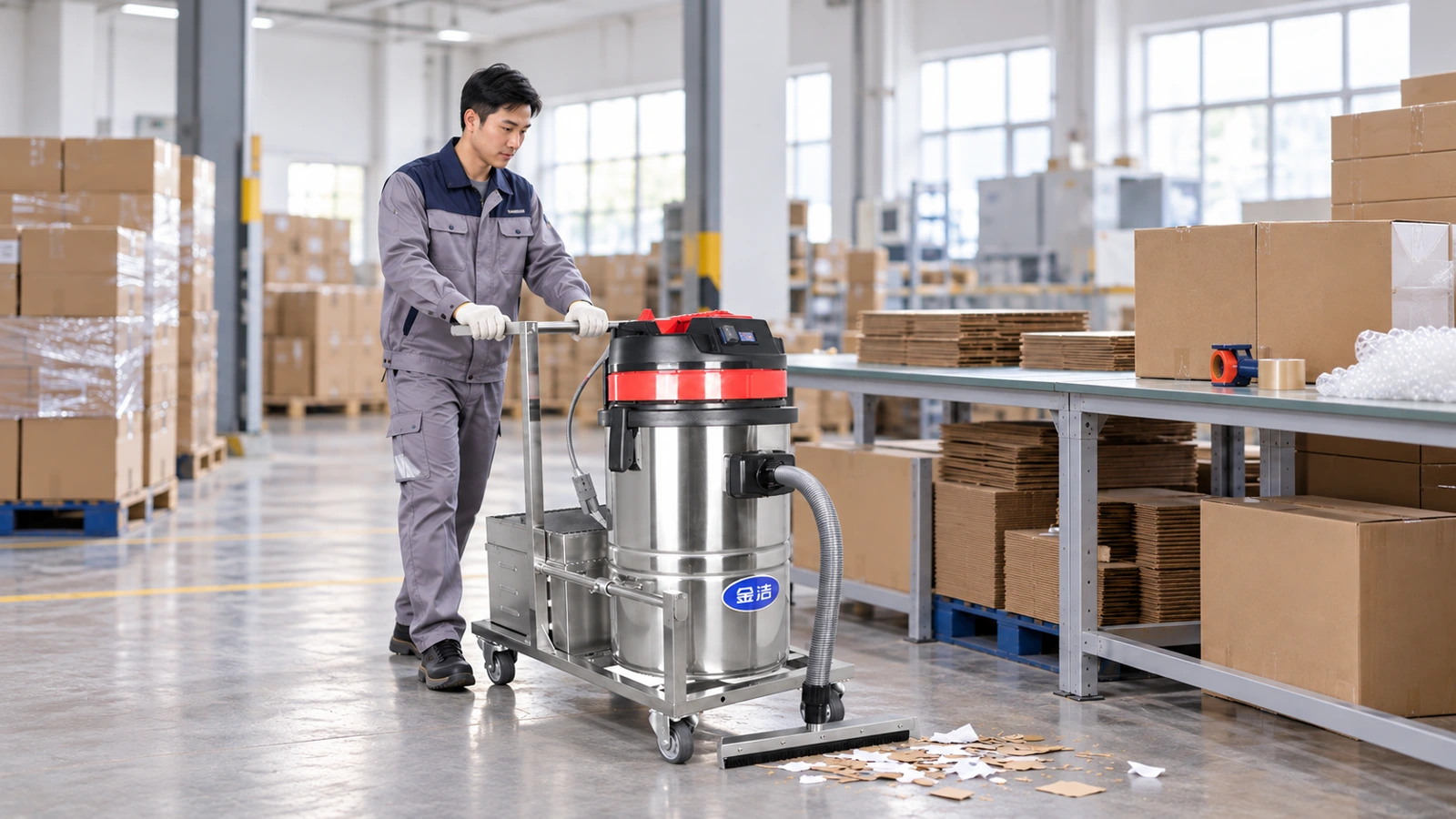
Jinjie JGY-3070
Currently presented as an industrial dust/debris vacuum. Only confirmed ordinary dry debris is discussed; model numbers establish no filter grade, hose suitability or continuous-duty rating.
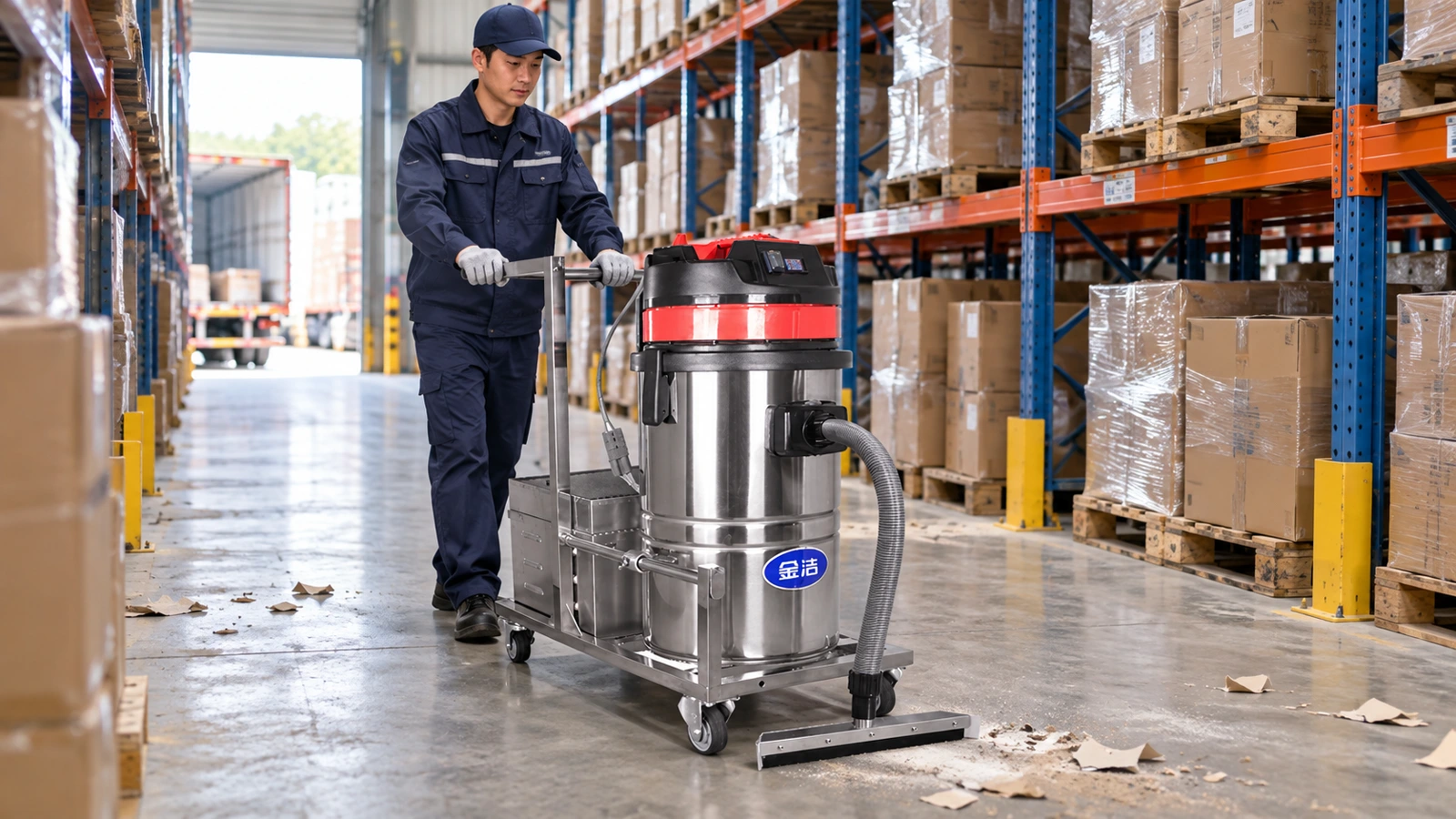
Jinjie JGY-3070
Currently presented as an industrial dust/debris vacuum. Only confirmed ordinary dry debris is discussed; model numbers establish no filter grade, hose suitability or continuous-duty rating.
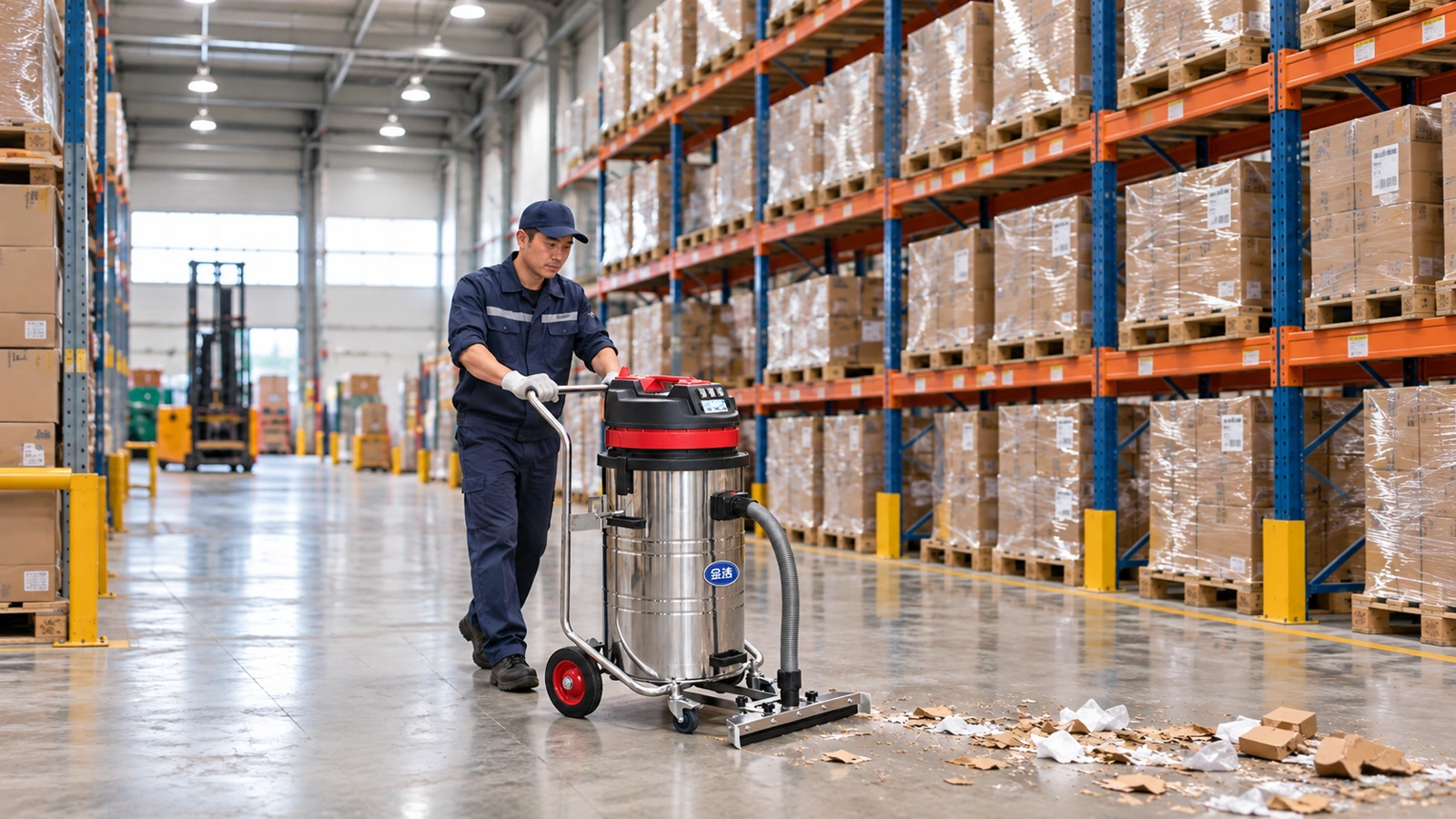
Jinjie JGY-3078P
Currently presented as an industrial dry/wet model. Check the floor tool and filter for ordinary warehouse packaging debris; this chapter confirms no metal-swarf or cutting-fluid application.
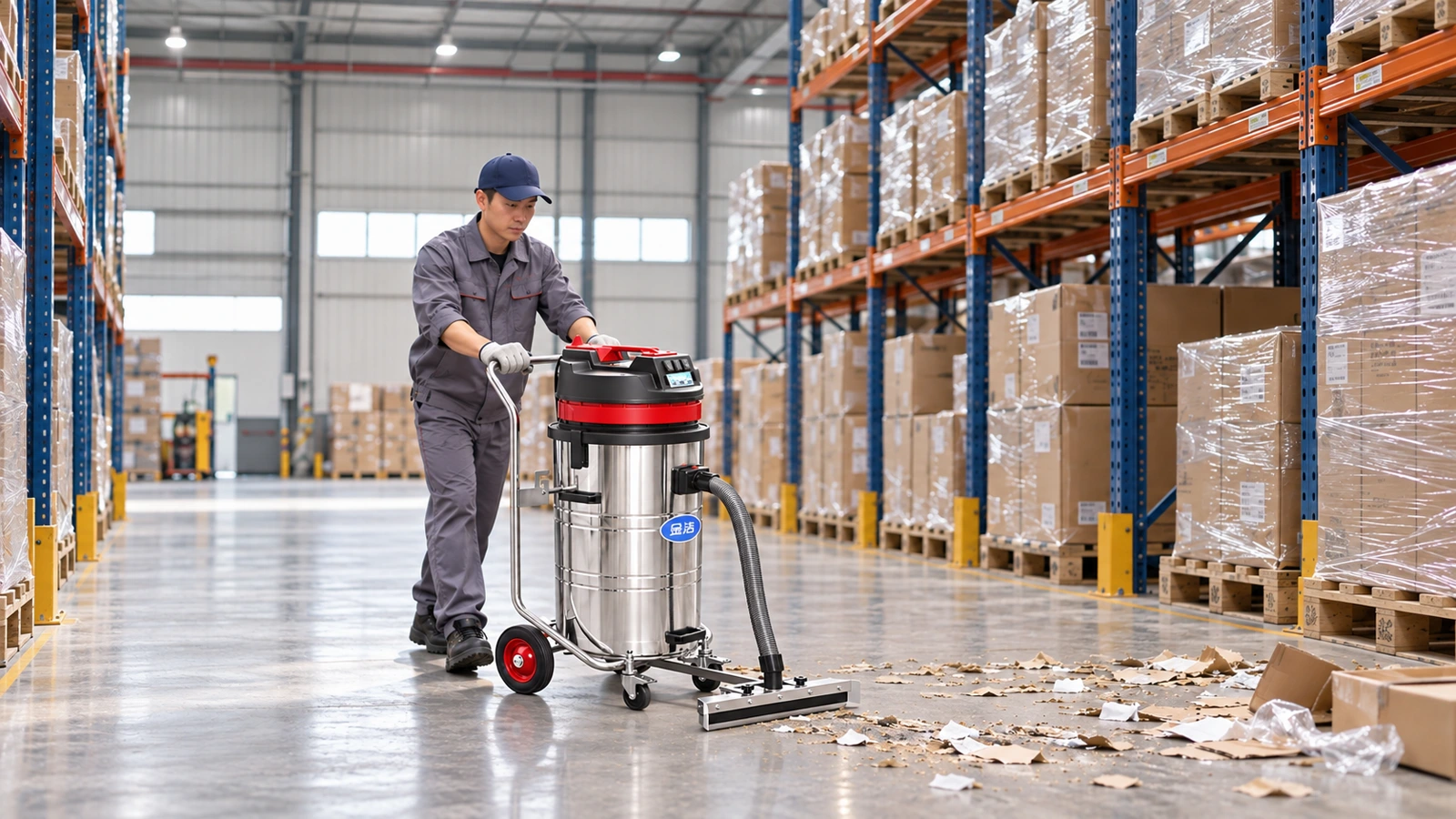
Jinjie JGY-3078BA
The route is jgy-3078a but the displayed model is JGY-3078BA. Assess general spot cleaning, not bulk metal-swarf or all-day heavy-duty service.
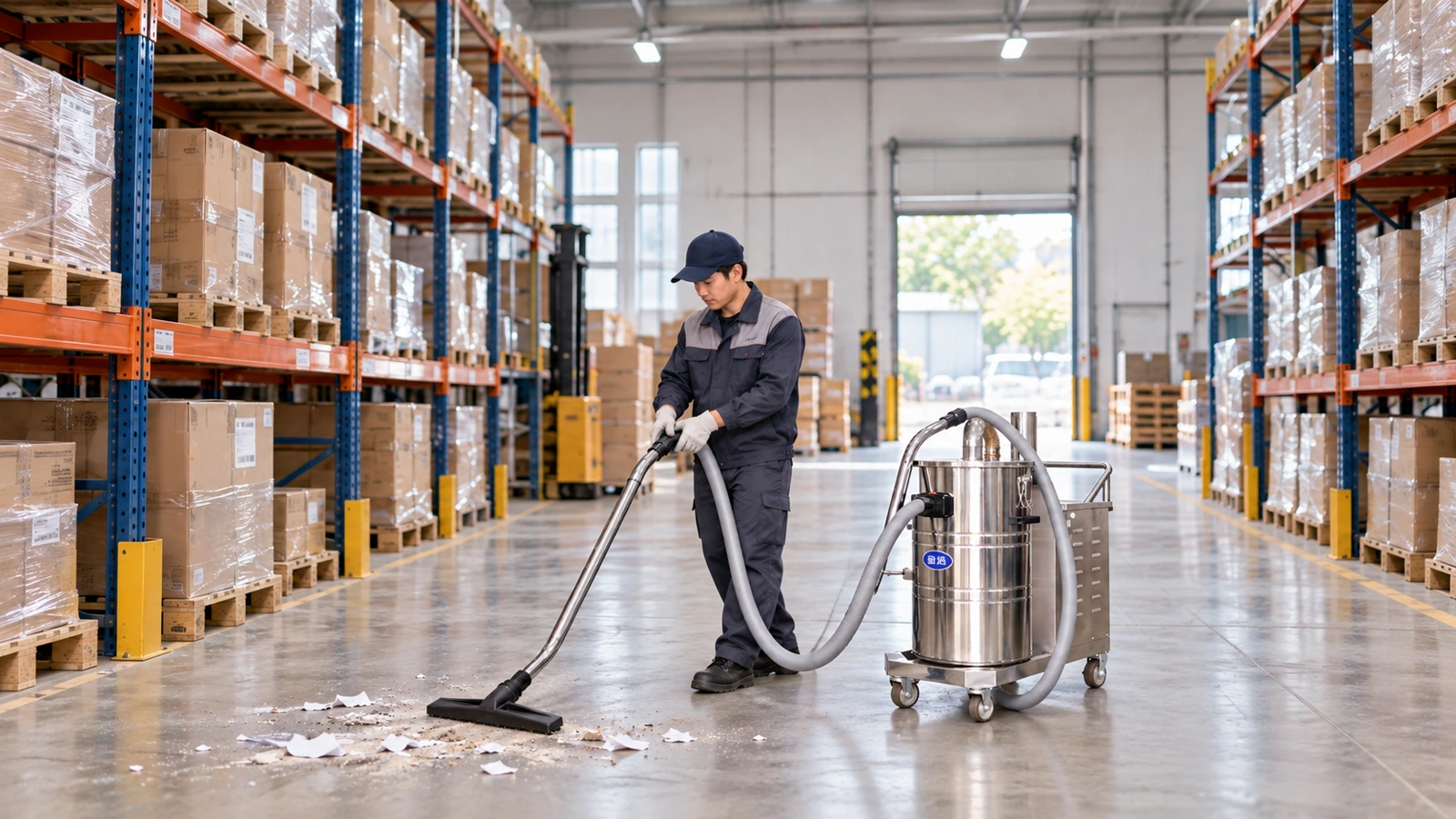
Jinjie JGY80-40
The current name describes a heavy-dust vacuum; it establishes no hazardous-dust class, explosion protection or mineral-dust suitability. This chapter concerns identified ordinary debris on perimeter floors.