
Main unit type and combination
Distinguish between brush washing and recovery, cleaning and dust collection, high-pressure rinsing, and communicate the division of labor between single machines or multiple devices.
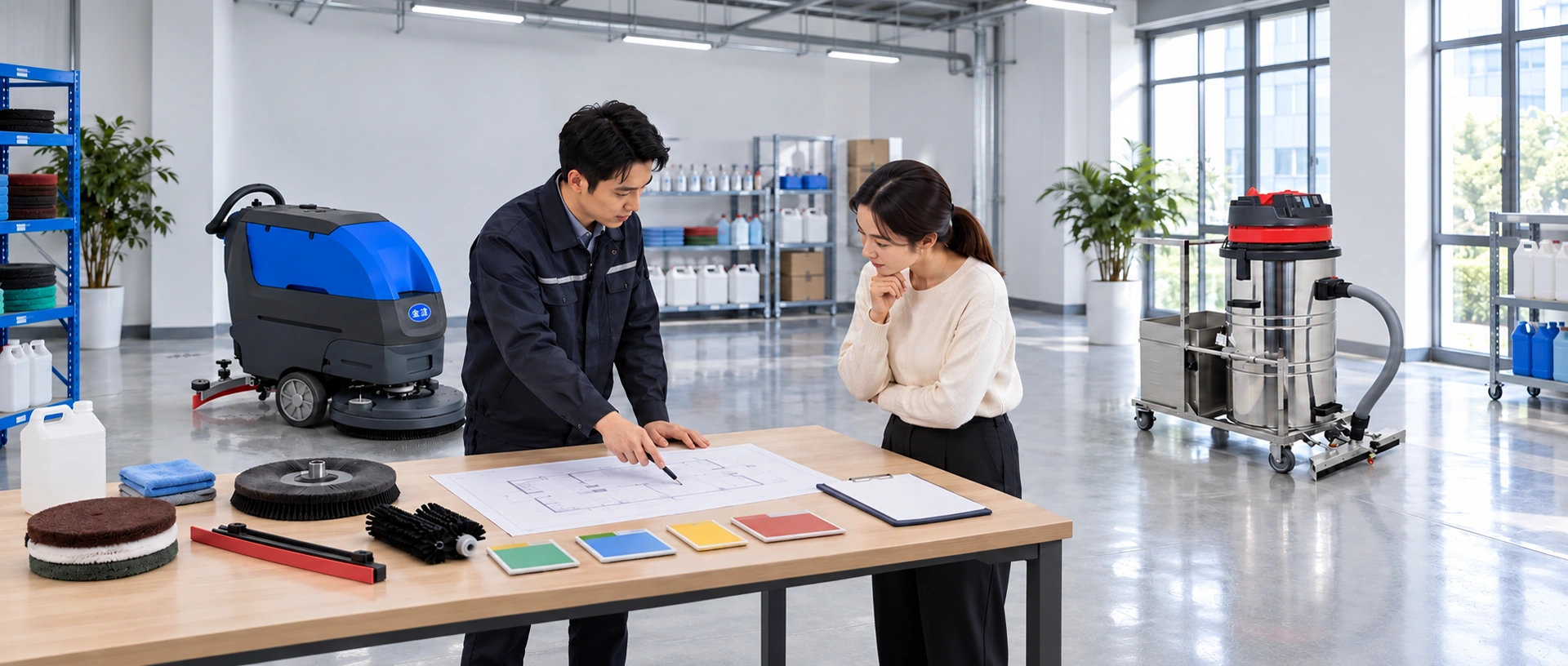
Use the consultation and survey to match cleaning tasks with equipment and staffing. Surfaces, soil, access and schedules affect machine and accessory choices. A site trial then checks whether the proposed setup fits.
Turn site requirements into equipment options that can be tried and compared.
Start with the service you need. Existing-equipment repairs, parts and rentals can be requested directly.
Distinguish between brush washing and recovery, cleaning and dust collection, high-pressure rinsing, and communicate the division of labor between single machines or multiple devices.
Check the compatibility of the brush roll, rubber strip, filter element, nozzle, and hose with the floor and dirt.
Plan staffing, shifts, replenishment, storage and maintenance together so the machine fits the daily routine.
Review the consultation and site inspection records to confirm the key cleaning tasks.
Communicate equipment type, candidate model, attachments, and job division.
Compare different configurations based on their applicability, operational arrangements, and cost comparison.
Test in representative areas; adjust or confirm the configuration based on the results.
A single machine or a combination solution can be proposed based on the task. It is necessary to explain the functions and selection priorities of different equipment.
Yes, combine on-site operation and effectiveness comparison to adjust the model, attachments, or work schedule.