
Zone areas, narrowest access, doorways and lift dimensions

Industry application: factory cleaning
Factory workshop and warehouse floor cleaning plan
For workshops, warehouses, loading entrances and logistics aisles: configure by dust, oil, chips, forklift routes and width.
This is an application plan, not a verified success case. Confirm models, quantities, chemicals and attachments through site assessment/trials.
Information required before purchase
Clarify the site before models, quantities and prices
Without this information, only equipment directions are given; an illustrative plan is not a fixed shopping list.
Floor/target material, contamination source and severity
Daily frequency, deadline, shifts and visitor/production avoidance windows
Power, refilling, wastewater, charging, storage and equipment transfer
Noise, slip safety, mixed traffic, chemicals and wastewater requirements
Existing machines, consumable stock, maintenance skills and acceptance criteria
Site challenges
Common workshop/warehouse cleaning challenges
Dust, oil and metal chips need different processes
Forklift routes/production zones cannot close for long
Match width, durability and continuous duty to the task
Suggested configuration
Combine equipment by task; one model does not cover every condition
Categories/models are discussion starting points; confirm site conditions before final configuration.
Scrubber-DryerWalk-behind, ride-on and autonomous scrubbers are selected by area and use conditions for garages, factories, retail/hospitals and estates.High-pressure washerCold-water, hot-water, explosion-protected and ultra-high-pressure equipment options are selected by target, soil and pressure needs for industrial equipment, vehicle facilities, properties and pipe scale. Specific suitability requires model confirmation.Industrial vacuum cleanerSelect wet/dry, explosion-protected, high-power and industrial extraction options by dust, volume and duty for production, machining, warehouses and construction. Verify the specific protected configuration.

Jinjie J-D5SL walk-behind scrubberCompact and manoeuvrable for shopping centres, hospitals, offices and underground parking, subject to site conditions.View model specifications

Jinjie J-2521D Pressure WasherFor 380 V sites needing greater soil-carrying water on muddy floors, equipment and construction vehicles. The stated 21 L/min exceeds J-2515D for wider/heavier flushing demands; verify site conditions.View model specifications

Jinjie JGY-80P industrial vacuumBattery industrial vacuums support rounds around workshops, warehouses and equipment without fixed sockets, emphasizing mobility.View model specifications
Application branches
Different soil, scale and shifts require different configurations even in similar sites
Choose the main approach for the site; use alternatives for access, power, transfer or duration limits.
Fine dust and footprints in electronics workshops
- Initial recommendation
- Antistatic/high-efficiency vacuum + lower-noise scrubber
- Alternative method
- Walk-behind for narrow aisles; ride-on for main routes
- Selection basis
- Vacuum before scrubbing to reduce particle scratching and airborne dust
Machining oil and metal chips
- Initial recommendation
- Industrial vacuum for chips + ride-on scrubber
- Alternative method
- Add pressure or manual pretreatment for heavy oil
- Selection basis
- Separate metal chips, oil/liquids and ordinary dust
Continuous warehouse forklift-aisle work
- Initial recommendation
- Large-capacity ride-on scrubber + mobile support
- Alternative method
- Rotate zones according to production shifts
- Selection basis
- Reduce refilling/emptying interruptions without disrupting logistics
Chemical selection
Choose chemicals by contamination and floor; do not use one everywhere
These are supporting options. Follow labels, safety data sheets and equipment manuals; trial compatibility inconspicuously.
Neutral low-foam floor cleaner
Application: routine epoxy, PVC and sealed-concrete cleaningPrefer low-residue formulas for electronics; verify antistatic-floor compatibility first
Industrial low-foam degreaser
Application: machining oil film, forklift marks and light/moderate cutting fluidPretreat by zone; do not put concentrated chemical directly into machines
Specialist adhesive/mark remover
Application: adhesive, stubborn shoe marks and local depositsTrial locally first; verify coatings do not dull or soften.
Safety note:Do not mix acids, alkalis, chlorine products or disinfectants. Reconfirm food, medical, electronics, antistatic-floor and wastewater requirements with site management.
Attachment selection
Match brushes, blades, nozzles, filters and hoses to each task
Attachments affect results, surface protection, recovery and downtime. Prepare wear-part/spares lists when purchasing machines.
Antistatic hose, HEPA filter and soft brush
Application: electronics, precision assembly and fine dustControl dust/static risks; verify dust explosion-protection class separately
Oil-resistant blades and medium brushes
Application: machining and forklift aislesBalance oil removal and wastewater recovery
Metal-chip tools / pre-separator
Application: metalworking chips and bulk particlesProtects primary filtration and facilitates separate solid/liquid disposal
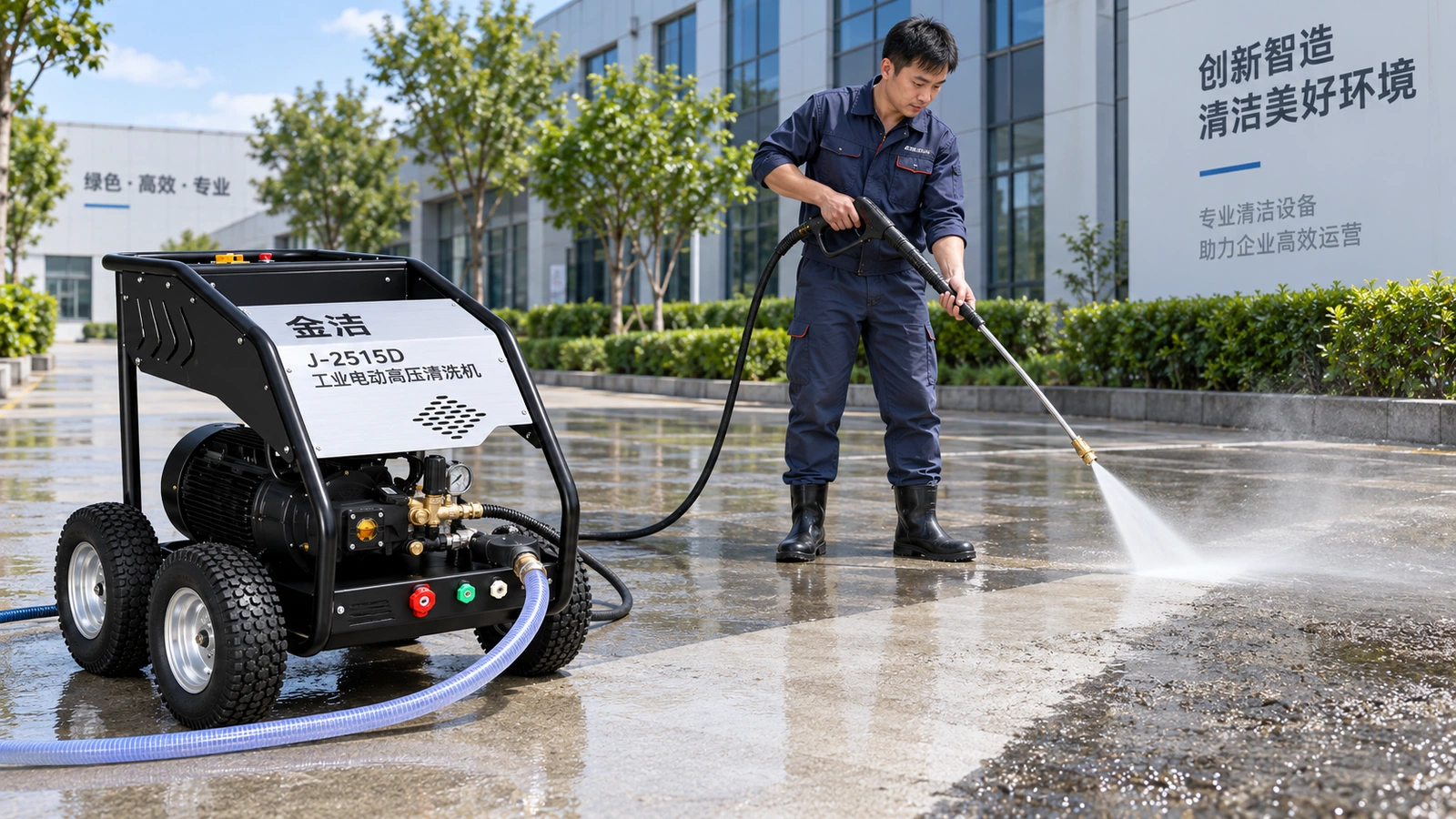
Jinjie J-2515D: single-lance factory hard-ground washing
Repeatedly scrubbing factory grime? Direct Jinjie J-2515D at the difficult spots
Equipment selection and operating reference for typical conditions.
Site background: why soil accumulates here
At powered factory sites, sand and wheel-borne dirt are unevenly distributed. Adherent soil at equipment edges, wall bases and passages often needs repeat attention. This typical plan targets local spots on water-compatible hard floors rather than rewashing the whole area.
Customer challenges: where the task gets difficult
- Local adherent soil remains after rinsing and can require repeated hand scrubbing at the same point.
- Scattered equipment/wall-edge points may be missed by broad floor-cleaning methods.
- Production and forklifts restrict cleaning windows; displaced wastewater also needs collection.
Why consider Jinjie J-2515D
Current J-2515D information lists 380 V industrial electric power, 15 L/min and a standard long lance. At fixed factory sites with matching utilities and drainage, this supports targeted water-jet washing. Material checks and trial cleaning determine suitability for adherent soil; pressure alone is insufficient.
Connect each problem with its working method
Customer problemEquipment function / conditionsSuggested approachPotential customer value
Customer problemRepeated scrubbing of local spots
Equipment functionStandard long pressure lance
ApproachTrial nozzle and distance, then wash the target spot
Potential valueSuitable water-jet tasks may reduce some repeated manual scrubbing
Customer problemWall bases and equipment surroundings are easily missed
Equipment functionDirected single-lance surface washing
ApproachMark washable areas, protect equipment electrics and inspect each point
Potential valueDefine cleaning boundaries and reduce unrelated wet areas
Customer problemWashing occupies production passages
Equipment functionConditions for fixed-point 380 V electric operation
ApproachArrange electricity, water, off-peak segregation and wastewater collection beforehand
Potential valueCoordinate cleaning/production handover; the machine does not automatically dispose of wastewater
Product quality and support: verify the actual configuration
Verify specific configuration: current model information lists a 7.5 kW copper-wound motor and an Italian AR-brand industrial ceramic-plunger pump. Check delivery lists and pump documents when purchasing; maintain inlet filtration, nozzles and hoses according to instructions.
Customer value: how to assess this plan
Target water-compatible soil with mechanical washing as a trialable alternative to some repeated hand scrubbing.
Define washable wall-base and equipment-perimeter areas first to reduce missed spots and unnecessary whole-zone rewashing.
Plan electricity, water, wastewater recovery and reopening together to clarify operating responsibilities after purchase.
Selection and consultation: explain the site first
With suitable 220 V power and routine small points, compare J-1612D. For wider-area soil transport, compare J-2521D only if supply and wastewater handling permit. For scrubbing with recovery, assess a scrubber separately.
Compare equipment:Jinjie J-1612D local-point washing · Jinjie J-2521D wider-area flushing. Related plan:Warehouse and logistics cleaning plan。
Submit site requirements for J-2515DView current model and configurationEnquire about rental conditions
Provide city, photos, material, soil, area, work window, utilities and wastewater destination. For rental, add start/duration; availability, configuration and price require confirmation.
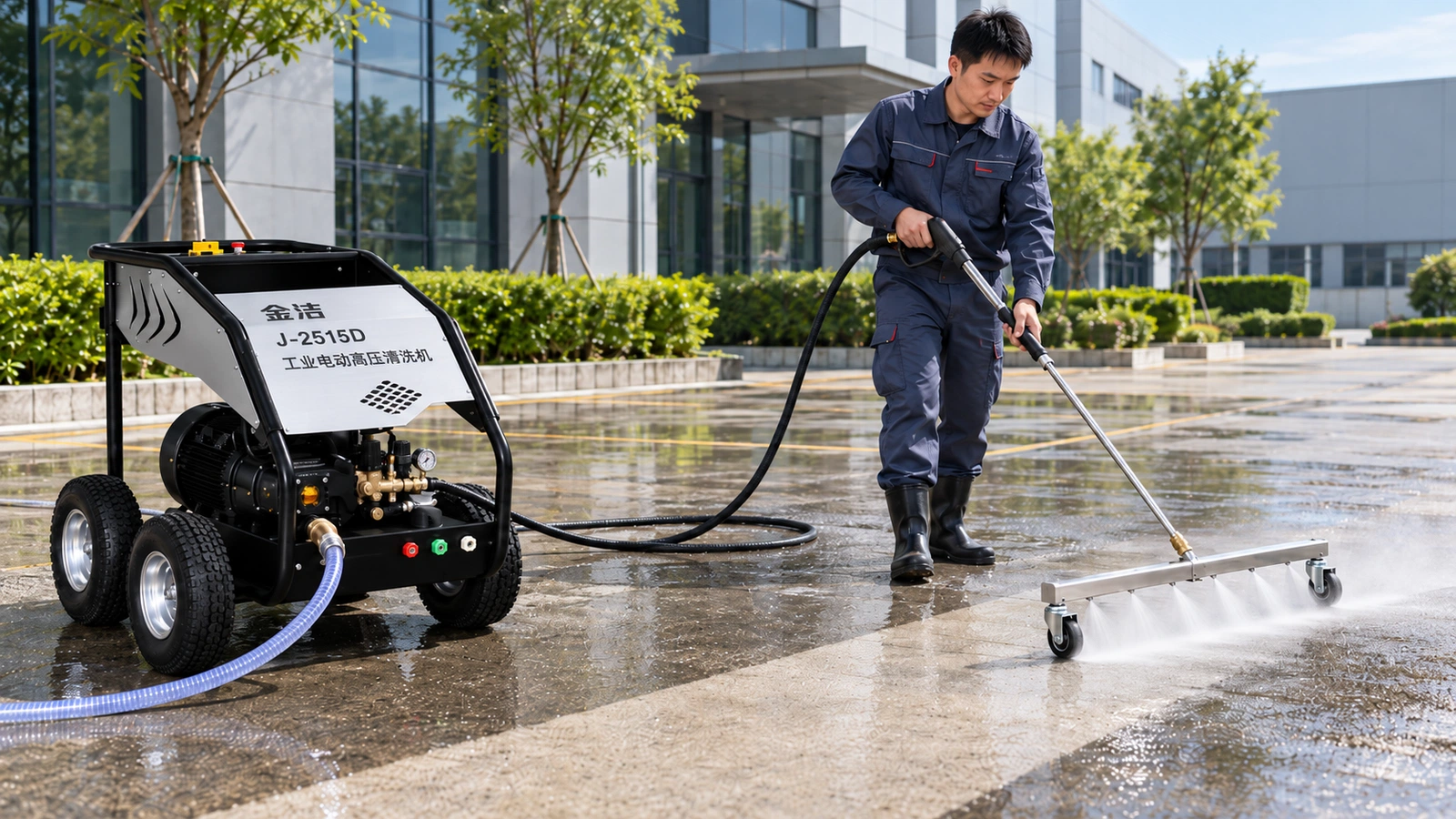
Jinjie J-2515D: optional multi-nozzle flushing
Sand still needs flushing after loosening? Assess the J-2515D optional flushing attachment
Equipment selection and operating reference for typical conditions.
Site background: why soil accumulates here
Removing loose mud and sand from hard factory floors also requires moving residue to a collection point. Where zoning and wastewater collection permit, assess flushing as an optional J-2515D attachment task.
Customer challenges: where the task gets difficult
- Scattered sand on wider ground remains in adjacent areas after spot washing.
- Following soil without a route can lead to repeatedly washing the same section.
- Expanding flushing without adequate supply and collection increases standing water.
Why consider Jinjie J-2515D
The current J-2515D page explicitly lists optional multi-nozzle flushing. Assess it for wider hard-floor flushing rather than assuming nozzle count, coverage or parallel operators. Verify 380 V power and water matching the listed 15 L/min; confirm attachment compatibility for the project.
Connect each problem with its working method
Customer problemEquipment function / conditionsSuggested approachPotential customer value
Customer problemSand is loosened but remains in the work zone
Equipment functionMulti-nozzle flushing is optional
ApproachVerify the attachment, then flush sections toward the agreed wastewater collection point
Potential valueLink washing with residue destination, avoiding aimless repeated rinsing
Customer problemWider ground needs repeated flushing
Equipment functionVerify flushing coverage against the actual attachment
ApproachTrial and observe residue, then determine zones and route
Potential valueSelect tools better matched to flushing without promising fixed productivity
Customer problemMore standing water after flushing
Equipment functionMatch machine water supply with site wastewater handling
ApproachLimit each work zone to actual water-supply and collection capacity
Potential valueIdentify inadequate facilities early to reduce post-purchase plan changes
Product quality and support: verify the actual configuration
Quality means a compatible machine/attachment combination. Current J-2515D records list an AR ceramic-plunger pump and industrial electric power, but not compatibility with every flushing assembly. Verify interfaces, nozzles, hoses and parts lists before ordering; maintain actual components rather than assuming universal accessories.
Customer value: how to assess this plan
Select attachments for the flushing task; avoid incompatible purchases based only on pictures or names.
Include residue destination in the route to coordinate section handovers with wastewater collection.
Prepare nozzle and hose checks for the supplied components to support maintenance.
Selection and consultation: explain the site first
Assess single-lance spot washing for local stubborn soil; compare an optional surface cleaner for close-to-floor treatment. If more soil-carrying water is needed, assess J-2521D with site utilities rather than simply adding simultaneous lances.
Compare equipment:Jinjie J-1612D local-point washing · Jinjie J-2521D wider-area flushing. Related plan:Warehouse and logistics cleaning plan。
Submit site requirements for J-2515DView current model and configurationEnquire about rental conditions
Provide city, photos, material, soil, area, work window, utilities and wastewater destination. For rental, add start/duration; availability, configuration and price require confirmation.
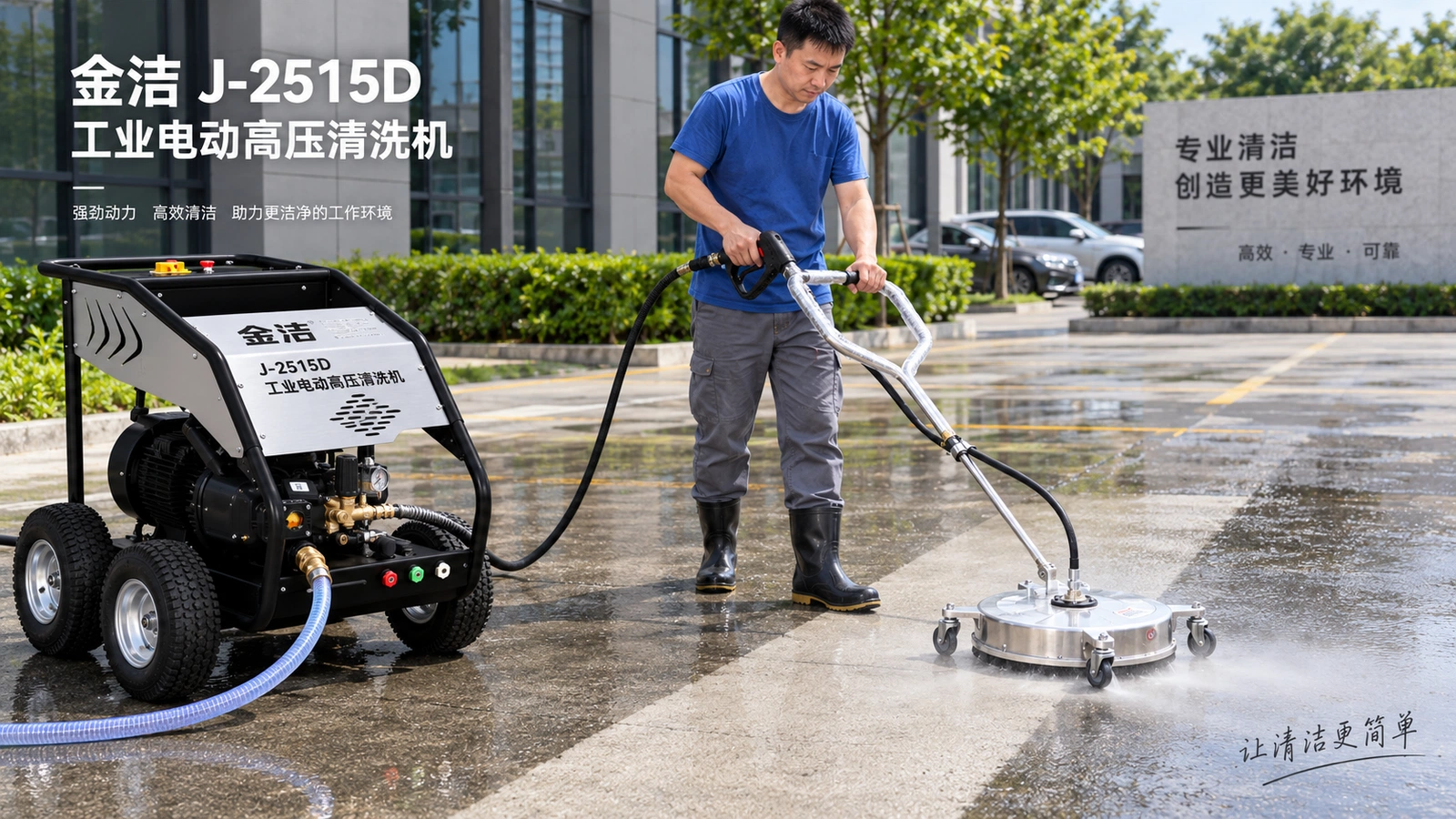
Jinjie J-2515D: optional surface-cleaner washing
Concentrated hard-surface cleaning? Assess the J-2515D optional surface cleaner
Equipment selection and operating reference for typical conditions.
Site background: why soil accumulates here
Some hard-floor tasks require surface-soil treatment, not merely flushing loose sand. Where material and utilities permit, assess a close-to-floor surface-cleaning attachment alongside the lance, using a small trial to decide its value.
Customer challenges: where the task gets difficult
- Surface-soil treatment must be distinguished from sand flushing.
- Materials, coatings and joints differ within one factory; attachments are not universally interchangeable without assessment.
- The term surface cleaner can be mistaken for automatic wastewater recovery and drying.
Why consider Jinjie J-2515D
The current J-2515D page lists a surface-cleaning attachment as optional for assessed hard-floor tasks. This is a surface-cleaning tool option, not scrubbing with water recovery. Check the listed 380 V/15 L/min machine together with the attachment, nozzles and site water supply.
Connect each problem with its working method
Customer problemEquipment function / conditionsSuggested approachPotential customer value
Customer problemTreat ground-surface soil in a concentrated manner
Equipment functionSurface cleaner is an optional attachment
ApproachConfirm compatibility, trial a representative area, then set the method
Potential valueAdds a method to compare for surface tasks, reducing blind tool selection
Customer problemDifferent materials require different treatment
Equipment functionSelect the machine, nozzles and attachments together
ApproachRecord coatings, joints and damaged zones separately; assess each type
Potential valueReduce rework from applying one method to every floor
Customer problemAccess still needs restoring after washing
Equipment functionSurface cleaning is not wastewater recovery
ApproachArrange separate wastewater collection, standing-water removal and slip checks
Potential valueAvoid omitting finishing equipment and staffing
Product quality and support: verify the actual configuration
Quality assessment must ask more than whether a surface cleaner is included. Verify the J-2515D pump/electric configuration and actual cleaner, nozzles, interfaces and machine compatibility. Include them in the configuration list for consistent maintenance and replenishment.
Customer value: how to assess this plan
Distinguish surface cleaning from flushing to match equipment and attachments to the actual objective.
Trial separate material zones first to reduce unsuitable attachment purchases and rework.
Include wastewater collection and reopening beforehand so buying a washing tool does not omit finishing tasks.
Selection and consultation: explain the site first
Compare the lance for adherent spots/corners and flushing attachments for loose sand. For routine flat-floor scrubbing and recovery, assess a suitable scrubber; this option does not replace all floor equipment.
Compare equipment:Jinjie J-1612D local-point washing · Jinjie J-2521D wider-area flushing. Related plan:Warehouse and logistics cleaning plan。
Submit site requirements for J-2515DView current model and configurationEnquire about rental conditions
Provide city, photos, material, soil, area, work window, utilities and wastewater destination. For rental, add start/duration; availability, configuration and price require confirmation.
Implementation steps
From assessment and trials to equipment delivery
Assess before/after cleaning, area covered per time, wastewater pickup, residue and consumable wear.
First collect dust and chips
Record selection reasoning, configuration limits, chemical/attachment combinations and site conditions requiring confirmation.
Then degrease and scrub/recover
Record selection reasoning, configuration limits, chemical/attachment combinations and site conditions requiring confirmation.
Plan refilling, emptying and maintenance around shifts
Record selection reasoning, configuration limits, chemical/attachment combinations and site conditions requiring confirmation.
Intended outcome
Main intended improvements
Acceptance and evidence
Validate with site records, not marketing claims
For a representative test area, record the initial condition, equipment, attachments, chemical dilution, time and finish at the same point. Agree the handover criteria using these records.
Project evidence and application references
View all casesCheck authenticity labels before using configuration/delivery references
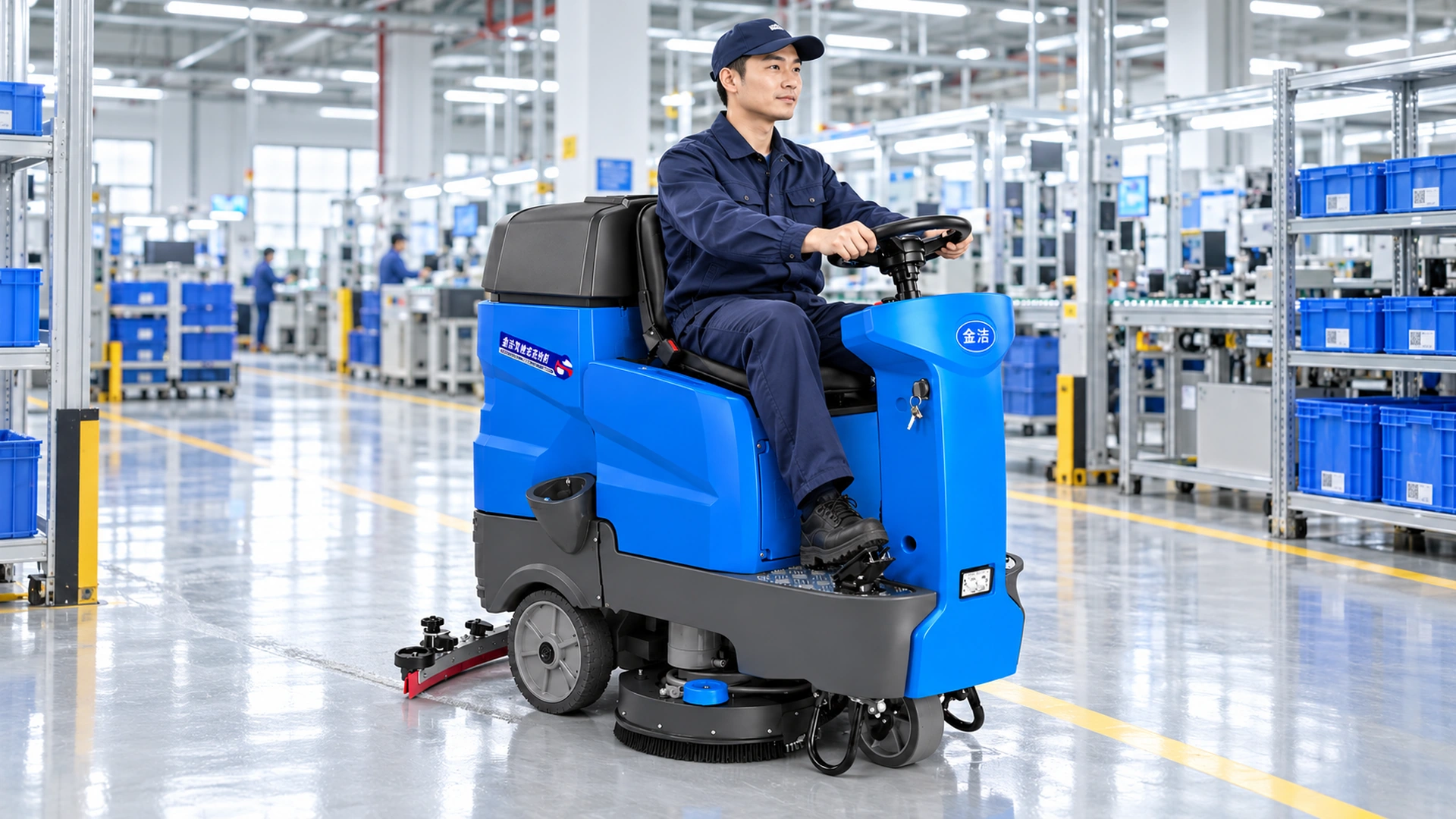
Project application reference
Factory Workshop Floor-Cleaning Plan
Ride-on scrubber for main workshop aisles, washing/recovery of routine dust and footprints.
Read the full article; contact us for a detailed plan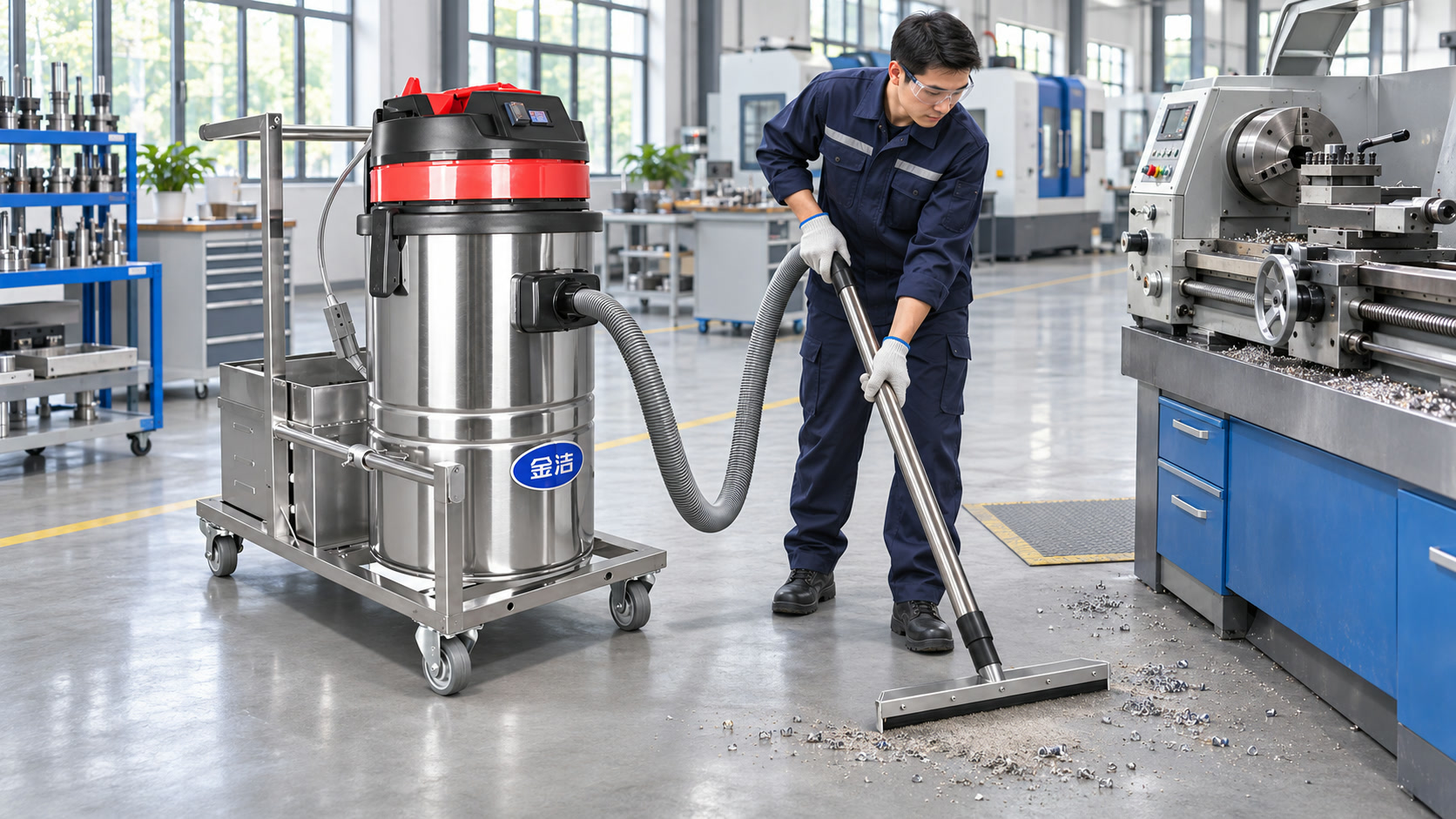
Project application reference
Industrial Dust and Metal-Chip Recovery Plan
Configure industrial vacuums/filters for dust, chips, grit and textile lint.
Read the full article; contact us for a detailed planEquipment selection
Should factory floors be swept, vacuumed or scrubbed directly?
Select by soil and process. Assess loose particles, dry powder and adherent dirt separately; a machine name does not replace site assessment.
Loose waste: check particles, access and collection methods before comparing sweepers.
Dry dust: identify material hazards/safety requirements before vacuum and filtration selection.
Adherent soil: assess material, precleaning, scrubbing and recovery.
J-XS1500For comparing ride-on sweeping; verify version/components against the actual machine.J-85BFFor comparing ride-on scrubbing options; select by access and water-service conditions.JGY80-40For comparing industrial vacuum options; hazardous-dust suitability is not assumed.
Is pre-sweeping needed before factory floor scrubbing?
Remove large particles, chips and bulk loose waste first to protect scrubbing/recovery; confirm the process through trials.
Can an ordinary industrial vacuum collect every dust type?
No. Combustible, explosive, toxic or hot materials require specialist equipment, filtration and safety checks; generic model names do not establish suitability.
FAQ
Factory workshop and warehouse floor cleaning planCommon questions
Who is this plan for?
Mainly factory workshops and warehouses; confirm area, routes, soil and shifts.
Can recommended configurations be copied directly?
No. Listed configurations establish a selection direction; verify access, utilities, operating duration and budget for final models.
What support can Wan Sheng Long provide?
Site discussions, selection, trial advice, training, consumables, parts and maintenance support are available.
Site-plan enquiry
Submit area, contamination and frequency
Wan Sheng Long advises on equipment direction, model comparison, trials, training and service based on site conditions.
Determine selection direction from the site problem
How should purchasing separate chip and oil tasks in workshops?
Collect loose material before floor scrubbing. Verify protection for hazardous dust; vacuuming and wet scrubbing are different capabilities.
Related knowledge
Visit the knowledge centre
Factory/warehouse floor-cleaning implementation, configuration and selection guidance
Explore the plan through site challenges, equipment combinations, steps and maintenance requirements.
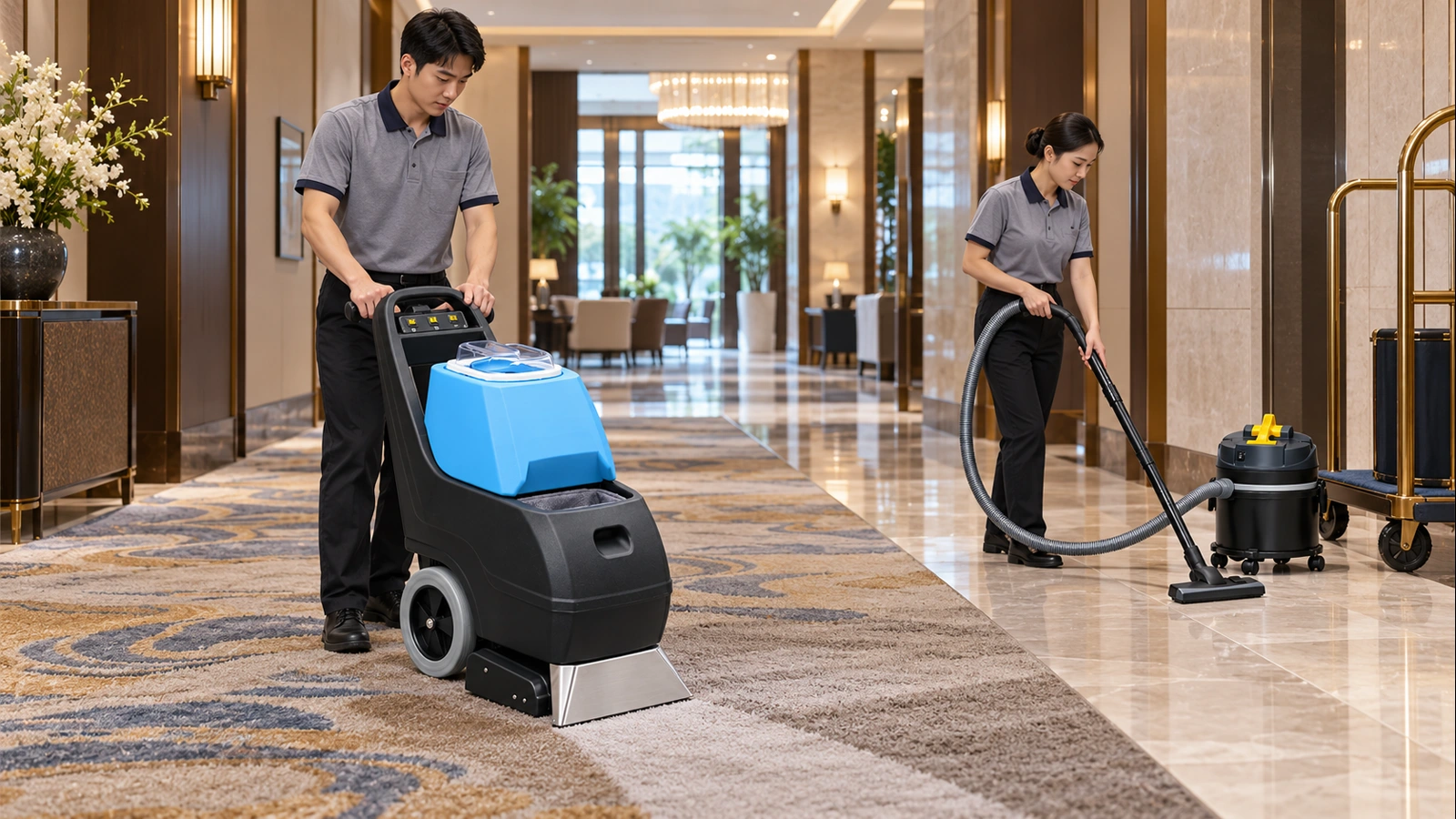
Planning cleaning equipment for hotels, offices and housekeeping companies
For hotels and commercial spaces, plan quiet-use vacuums, carpet cleaners, stone-care machines, escalator cleaners and consumables around noise needs, carpet/stone floors, lobbies, corridors, escalators and guest rooms.
Read article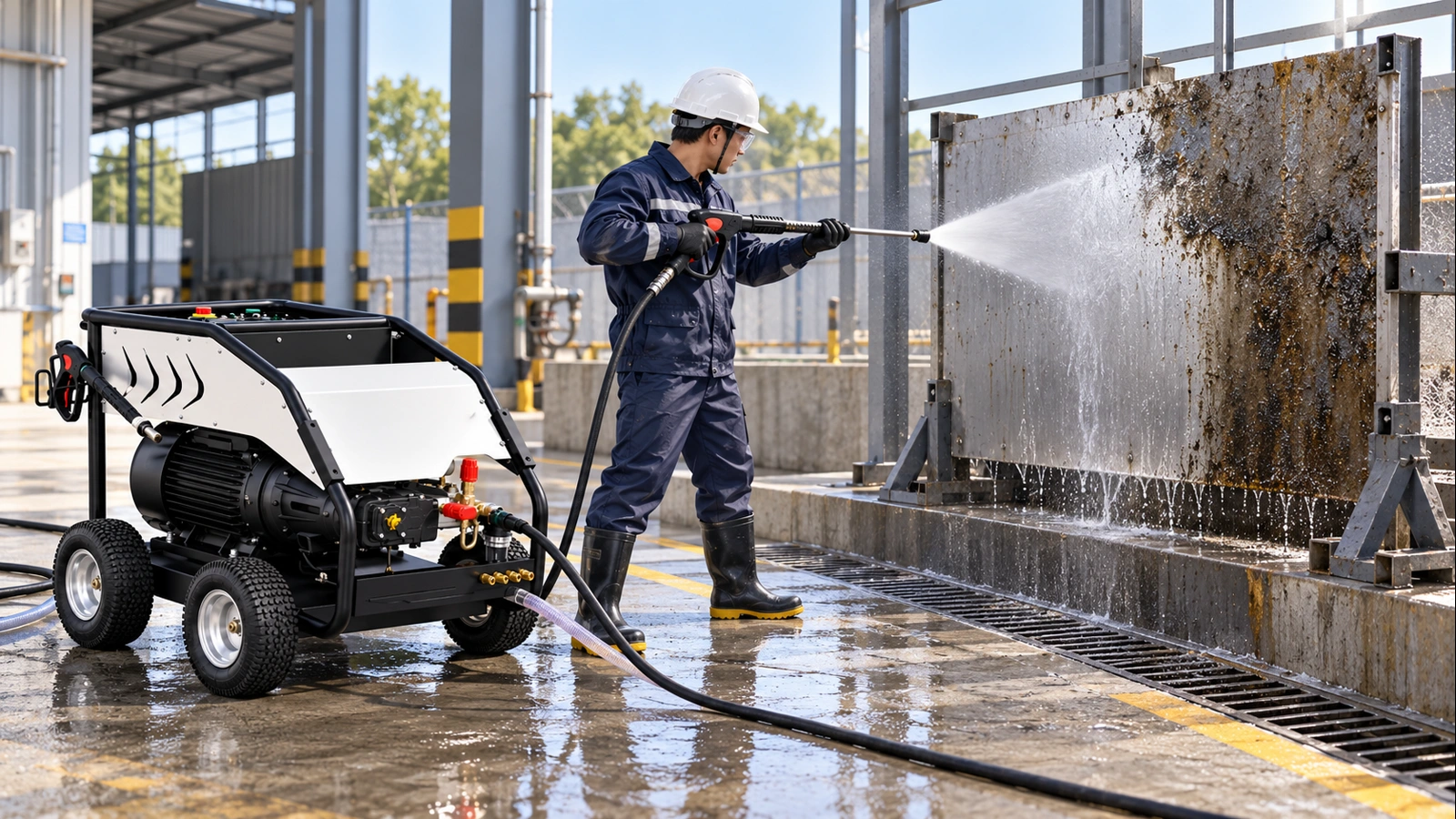
Pressure-cleaning applications: wall posters, road markings, equipment refurbishment and rust
Pressure, flow and nozzle combinations affect results. Match equipment and methods separately for wall posters, road markings, equipment refurbishment, coated roofing, rust and ship cleaning; suitability requires material and process assessment.
Read article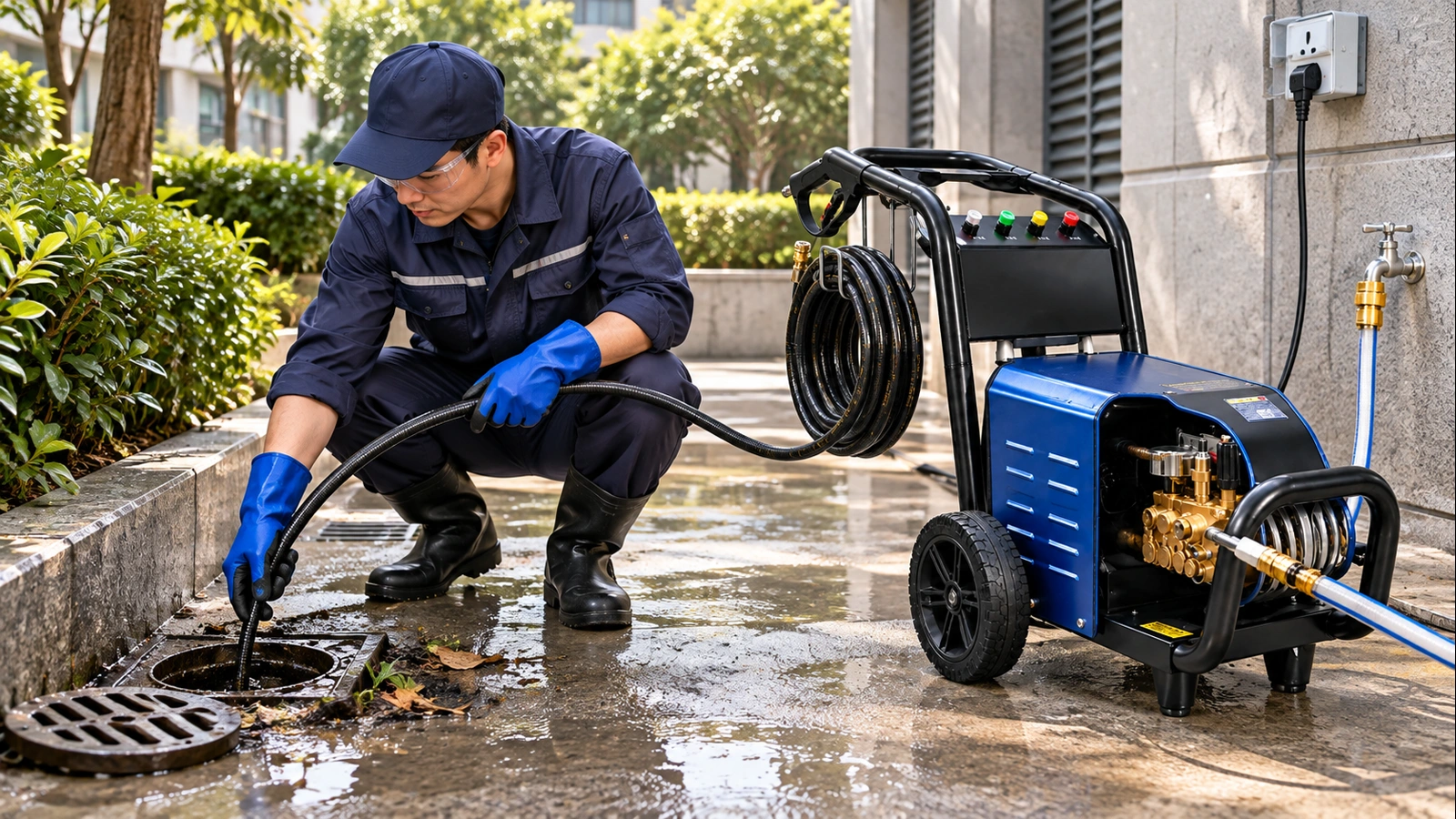
Choosing a jetter for 50mm and 75mm pipes: property applications for J-1020D
J-1020D pipe jetter pressure 100 bar (10 MPa)、flow 20 L/min、high-pressure hose 30 meters, suitable for property complexes, catering kitchens, building drainage and maintenance of small diameter blockages.
Read article
Configuring pressure-washing equipment in Zhuhai: assess the site before the model
Do not select pressure-washing equipment in Zhuhai by price alone. Confirm voltage, pressure, flow, water supply and protection before comparing 220 V, 380 V, petrol and high-flow options.
Read article
Zhuhai hotel/office equipment: inspect the site before choosing the model
Zhuji hotel office building commercial cleaning should not only select equipment based on price, but should focus on low noise, ease of training, stable consumables, and material protection when determining the configuration, and then match quiet vacuum cleaners, floor scrubbers, carpet machines, and cleaning agents.
Read article
Zhuhai drain equipment: inspect the site before choosing the model
Zhuji property management should not only select equipment based on price, but should confirm the configuration around pipe diameter, pipe length, elbows, clogging objects, and nozzle combinations, and then match J-1020D, J-1730H, J-2050H pipe jetters.
Read article