
Zone areas, narrowest access, doorways and lift dimensions

Industry application: warehouses, loading areas and forklift routes
Warehouse and logistics cleaning plan
Configure sweepers, scrubbers and vacuums by warehouse area, access, rack density, dust/packaging debris, forklift traffic, shifts and limited shutdown time.
This is an application plan, not a verified success case. Confirm models, quantities, chemicals and attachments through site assessment/trials.
Information required before purchase
Clarify the site before models, quantities and prices
Without this information, only equipment directions are given; an illustrative plan is not a fixed shopping list.
Floor/target material, contamination source and severity
Daily frequency, deadline, shifts and visitor/production avoidance windows
Power, refilling, wastewater, charging, storage and equipment transfer
Noise, slip safety, mixed traffic, chemicals and wastewater requirements
Existing machines, consumable stock, maintenance skills and acceptance criteria
Site challenges
Common warehouse/loading/forklift-route cleaning challenges
Confirm area, contaminants and shifts first
One machine cannot readily cover every site task
Consumables, maintenance and delivery boundaries are easily missed
Suggested configuration
Combine equipment by task; one model does not cover every condition
Categories/models are discussion starting points; confirm site conditions before final configuration.
Scrubber-DryerWalk-behind, ride-on and autonomous scrubbers are selected by area and use conditions for garages, factories, retail/hospitals and estates.Road sweepersWalk-behind, ride-on, large and autonomous sweepers are selected by road area, debris, dust and conditions for estates, factories, municipalities and scenic sites.High-pressure washerCold-water, hot-water, explosion-protected and ultra-high-pressure equipment options are selected by target, soil and pressure needs for industrial equipment, vehicle facilities, properties and pipe scale. Specific suitability requires model confirmation.

Jinjie J-D5SL walk-behind scrubberCompact and manoeuvrable for shopping centres, hospitals, offices and underground parking, subject to site conditions.View model specifications

Jinjie J-XS1250 ride-on sweeperCommon estate/factory-road model combining sweeping and dust pickup.View model specifications

Jinjie J-1612D Pressure WasherWith a 220 V supply, assess surface washing on courtyards, cars, residential paving, shopfronts, steps, walls and moss-covered areas. Flow is 12 L/min. Check the nameplate for working pressure and its unit. For drain jetting, compare J-1020D, J-1730H and J-2050H.View model specifications
Application branches
Different soil, scale and shifts require different configurations even in similar sites
Choose the main approach for the site; use alternatives for access, power, transfer or duration limits.
Area, access and work windows unconfirmed
- Initial recommendation
- Complete site survey and representative-area trials first
- Alternative method
- Incomplete data permits category directions, not final models/quantities
- Selection basis
- Do not copy other industries' or projects' setups to this site
Many combinations of contaminants and floors
- Initial recommendation
- Separate sweeping, vacuuming, scrubbing/recovery and pressure-washing zones
- Alternative method
- Trial compatibility for unknown materials/stubborn contamination first
- Selection basis
- Match equipment, chemicals and attachments to each cleaning target
Continuous shifts or transfers between zones required
- Initial recommendation
- Plan water service, charging, transport and spare wear parts
- Alternative method
- Reduce each shift's zone or add mobile support
- Selection basis
- Deliverability depends on the complete work cycle, not just machine specifications
Chemical selection
Choose chemicals by contamination and floor; do not use one everywhere
These are supporting options. Follow labels, safety data sheets and equipment manuals; trial compatibility inconspicuously.
Compatible low-foam cleaner
Application: confirmed compatible hard-floor daily cleaningDilute per label and trial inconspicuously first
Local pretreatment matched to contaminants
Application: oil, adhesive or special depositsLocal use only after confirming material, safety and wastewater disposal
Physical cleaning with water
Application: chemical-free or discharge-restricted tasksAdjust results through equipment, brushes, nozzles and passes
Safety note:Do not mix acids, alkalis, chlorine products or disinfectants. Reconfirm food, medical, electronics, antistatic-floor and wastewater requirements with site management.
Attachment selection
Match brushes, blades, nozzles, filters and hoses to each task
Attachments affect results, surface protection, recovery and downtime. Prepare wear-part/spares lists when purchasing machines.
Brushes, pickup tools or nozzles matched to the task
Application: different materials, particles and depositsControl cleaning intensity to protect surfaces
Blades, filters, hoses and seals
Application: recovery, filtration and continuous operationKeep model-based records to reduce missing-part downtime and cross-contamination
Warning, protection and onsite recovery components
Application: mixed traffic, chemicals or pressure washingInclude personnel safety, wastewater and reopening in delivery planning
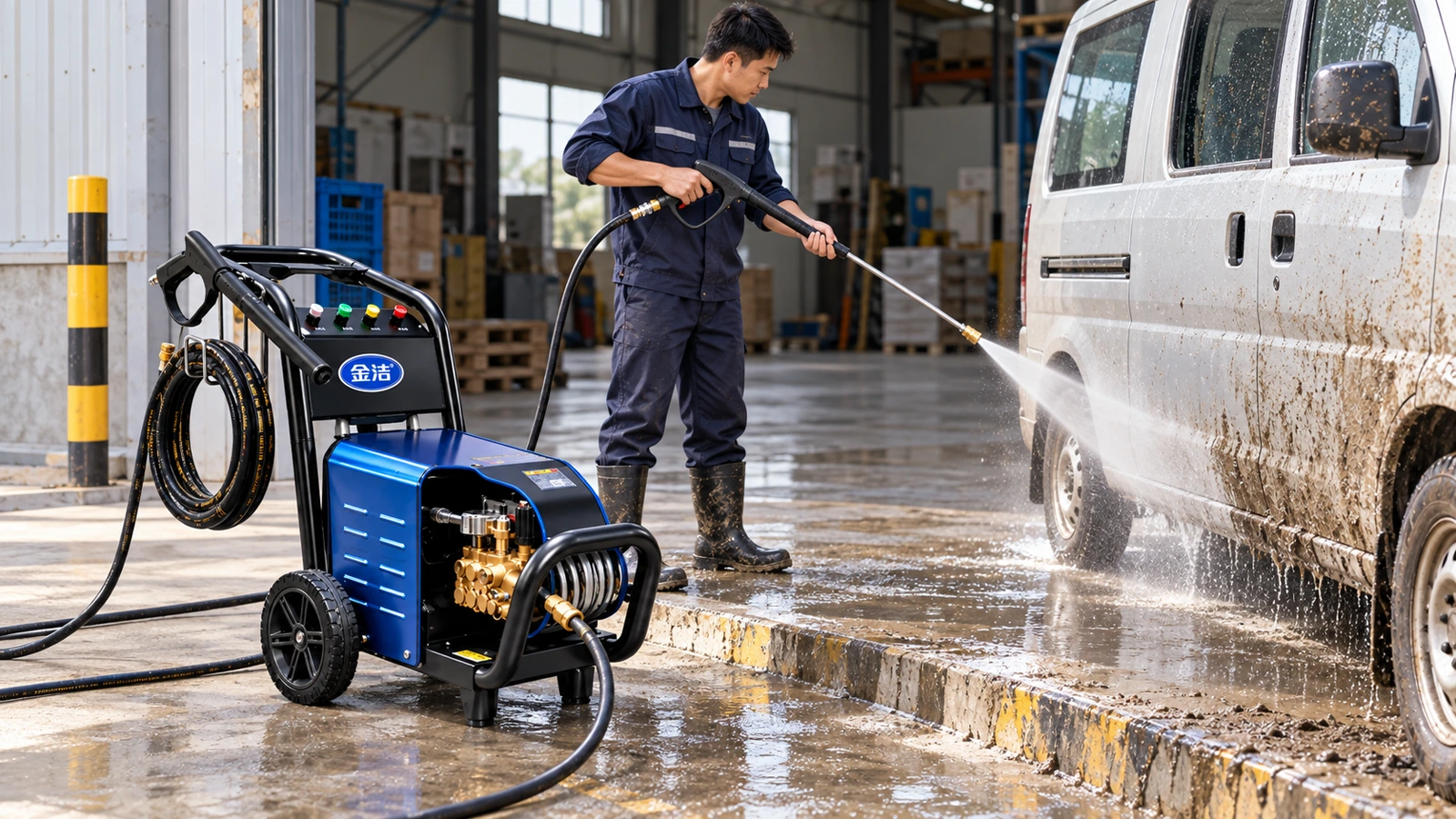
Jinjie J-1612D: warehouse entrance and vehicle-perimeter spot washing
Repeated entrance cleaning? Assess local washing with Jinjie J-1612D
Equipment selection and operating reference for typical conditions.
Site background: why soil accumulates here
Vehicles bring dust and mud to warehouse entrances and stopping points. The task may be local rather than the whole warehouse, but space among vehicles, goods and traffic routes requires planning. This is a typical need for J-1612D routine electric spot washing.
Customer challenges: where the task gets difficult
- Scattered dirt does not require unnecessarily wetting the whole warehouse.
- Parking and goods occupy space; washing routes require more than checking jet reach.
- Sensitive electrics, connectors and seals rule out indiscriminate whole-vehicle washing.
- Entrance puddles obstruct people/forklifts; finishing is equally important.
Why consider Jinjie J-1612D
Current J-1612D information lists 220 V electric power and 12 L/min; its accessory section lists a long high-pressure lance as standard. At entrances with suitable power and water, select around local cleaning points rather than total warehouse area. Voltage alone does not mean any outlet is suitable; check vehicle maintenance instructions for each part.
Connect each problem with its working method
Customer problemEquipment function / conditionsSuggested approachPotential customer value
Customer problemScattered entrance dust and sand
Equipment function220 V electric configuration and standard long lance
ApproachAfter electrical checks, direct washing at the actual spots
Potential valueKeep washing at the required points, reducing unrelated wet areas
Customer problemVehicle surroundings need protection
Equipment functionSingle lance for surfaces permitted to be washed
ApproachIdentify sensitive components and goods; protect before trial washing
Potential valueReduce rework from mistaking vehicle surroundings for whole-vehicle suitability
Customer problemConflict between loading and entrance standing water
Equipment functionInclude 12 L/min in supply/drainage assessment
ApproachArrange a local loading pause and wastewater/standing-water collection
Potential valueClarify cleaning/loading handovers; no automatic drying function
Product quality and support: verify the actual configuration
Current information lists a national-standard industrial precision ceramic-plunger pump and 10 m pressure hose. Verify these delivery items and prepare maintenance around actual lance, nozzles, hoses and inlet filtration.
Customer value: how to assess this plan
Start with local points rather than total warehouse area to avoid unnecessarily expanding wet work and shutdowns.
Identify washable and protected vehicle parts first to reduce rework from unsuitable cleaning.
Check facilities beforehand for the 220 V specification, 12 L/min and actual hoses to plan daily work and maintenance.
Selection and consultation: explain the site first
With fixed 380 V power and hard-floor/attachment tasks, compare J-2515D. For wider bays, compare J-2521D and its utility needs. For large flat-floor scrubbing and recovery, assess scrubbers separately.
Compare equipment:Jinjie J-2515D factory/attachment applications · Jinjie J-2521D wider-area flushing. Related plan:Factory workshop and warehouse floor cleaning plan。
Submit site requirements for J-1612DView current model and configurationEnquire about rental conditions
Provide city, photos, material, soil, area, work window, utilities and wastewater destination. For rental, add start/duration; availability, configuration and price require confirmation.
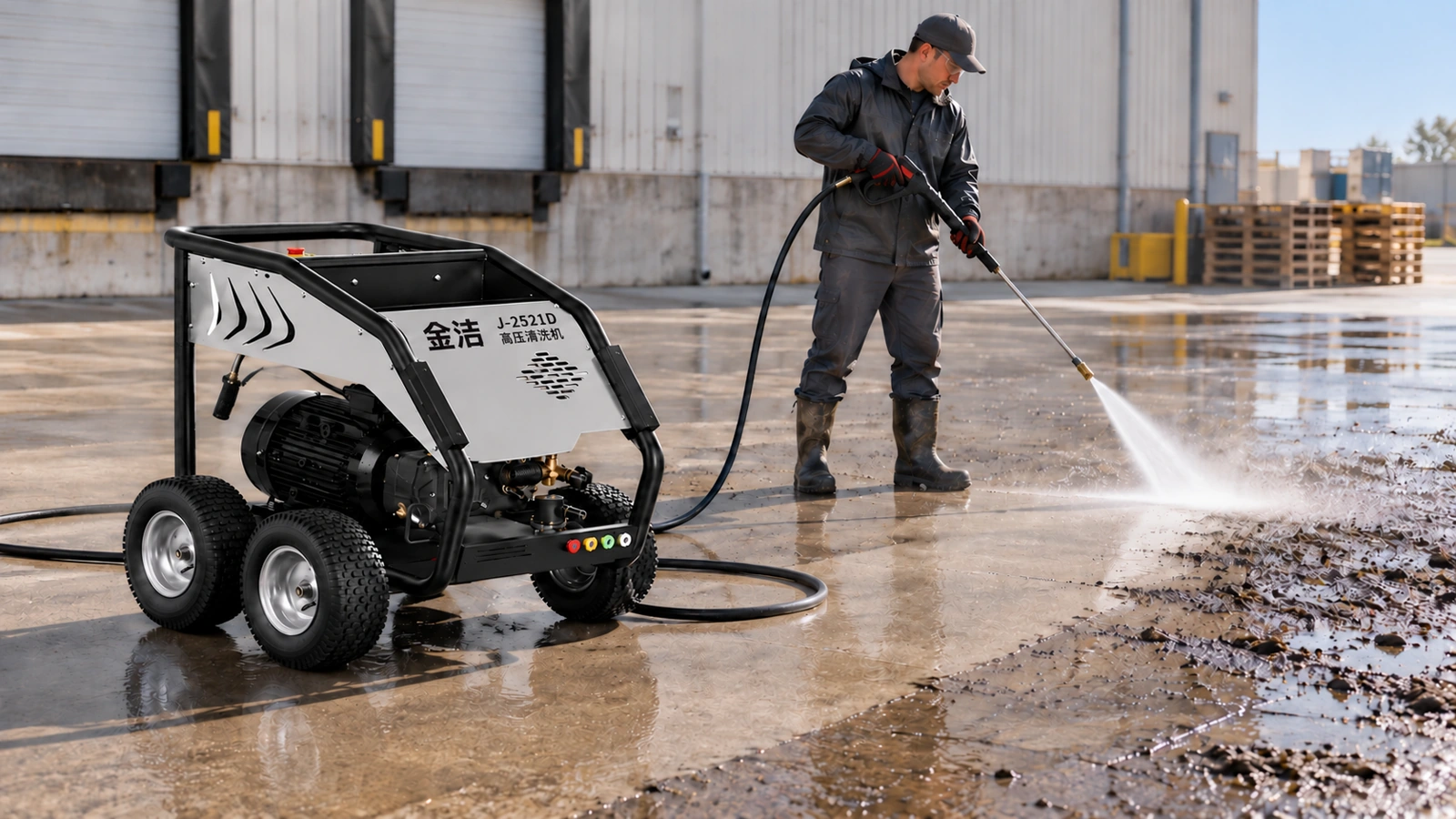
Jinjie J-2521D: loading yards and wide factory-road washing
Sand in loading yards? Prepare site conditions before choosing Jinjie J-2521D
Equipment selection and operating reference for typical conditions.
Site background: why soil accumulates here
Mud and sand follow vehicle routes across logistics loading yards and wide factory roads. After loosening dirt, move residues toward collection. Wider work makes continuous supply, wastewater handling and loading schedules central to selection.
Customer challenges: where the task gets difficult
- After loosening sand, residue still needs removal; water volume and destination matter as well as pressure.
- Wider areas require separate zones and off-peak scheduling for forklifts, trucks and pedestrians.
- Insufficient water or wastewater capacity interrupts concentrated washing.
- Protect goods, electrics and sensitive vehicle parts when expanding the washing zone.
Why consider Jinjie J-2521D
Current J-2521D information lists 21 L/min, 380 V industrial electric power and a standard long lance. Compared with the J-2515D page's 15 L/min, this is a real water-volume difference when assessing soil transport, and requires closer supply and wastewater checks.
Connect each problem with its working method
Customer problemEquipment function / conditionsSuggested approachPotential customer value
Customer problemWide-road sand and mud need flushing
Equipment functionCurrent 21 L/min flow specification
ApproachVerify continuous water and wastewater capacity, then flush zones toward collection
Potential valueMatch water volume to soil transport rather than pressure alone
Customer problemWashing competes with loading for space
Equipment function380 V industrial electric operation at fixed sites
ApproachPrepare electricity/water, pause loading lane by lane and hand over sections
Potential valueCoordinate cleaning and loading without fixed labour-time promises
Customer problemWider coverage may affect goods
Equipment functionStandard long pressure lance
ApproachControl the jet, protect goods/electrics and trial first
Potential valueReduce rework risk from unsuitable cleaning targets
Product quality and support: verify the actual configuration
Current information lists a 9.2 kW copper-wound motor, Italian AR ceramic-plunger pump and 15 m pressure hose. Verify each against the delivery list. Follow filtration, nozzle and hose checks to establish consistent maintenance for wider sites.
Customer value: how to assess this plan
Check the 21 L/min specification against actual supply and drainage to avoid discovering inadequate facilities after purchase.
Zone lanes and define handovers to clarify washing windows and reopening responsibilities.
Prepare hoses and maintenance consumables for real distance and target surfaces; do not plan capacity from unverified parallel lances.
Selection and consultation: explain the site first
Compare J-1612D for scattered entrances and J-2515D for fixed 380 V factory sites with 15 L/min and attachment needs. If supply/drainage are inadequate, change facilities or scheduling rather than increasing flow.
Compare equipment:Jinjie J-1612D local-point washing · Jinjie J-2515D factory/attachment applications. Related plan:Factory workshop and warehouse floor cleaning plan。
Submit site requirements for J-2521DView current model and configurationEnquire about rental conditions
Provide city, photos, material, soil, area, work window, utilities and wastewater destination. For rental, add start/duration; availability, configuration and price require confirmation.
Implementation steps
From assessment and trials to equipment delivery
Assess before/after cleaning, area covered per time, wastewater pickup, residue and consumable wear.
Collect site conditions
Record selection reasoning, configuration limits, chemical/attachment combinations and site conditions requiring confirmation.
Match equipment and models
Record selection reasoning, configuration limits, chemical/attachment combinations and site conditions requiring confirmation.
Confirm delivery and maintenance
Record selection reasoning, configuration limits, chemical/attachment combinations and site conditions requiring confirmation.
Intended outcome
Main intended improvements
Acceptance and evidence
Validate with site records, not marketing claims
For a representative test area, record the initial condition, equipment, attachments, chemical dilution, time and finish at the same point. Agree the handover criteria using these records.
Project evidence and application references
View all casesCheck authenticity labels before using configuration/delivery references
Project application reference
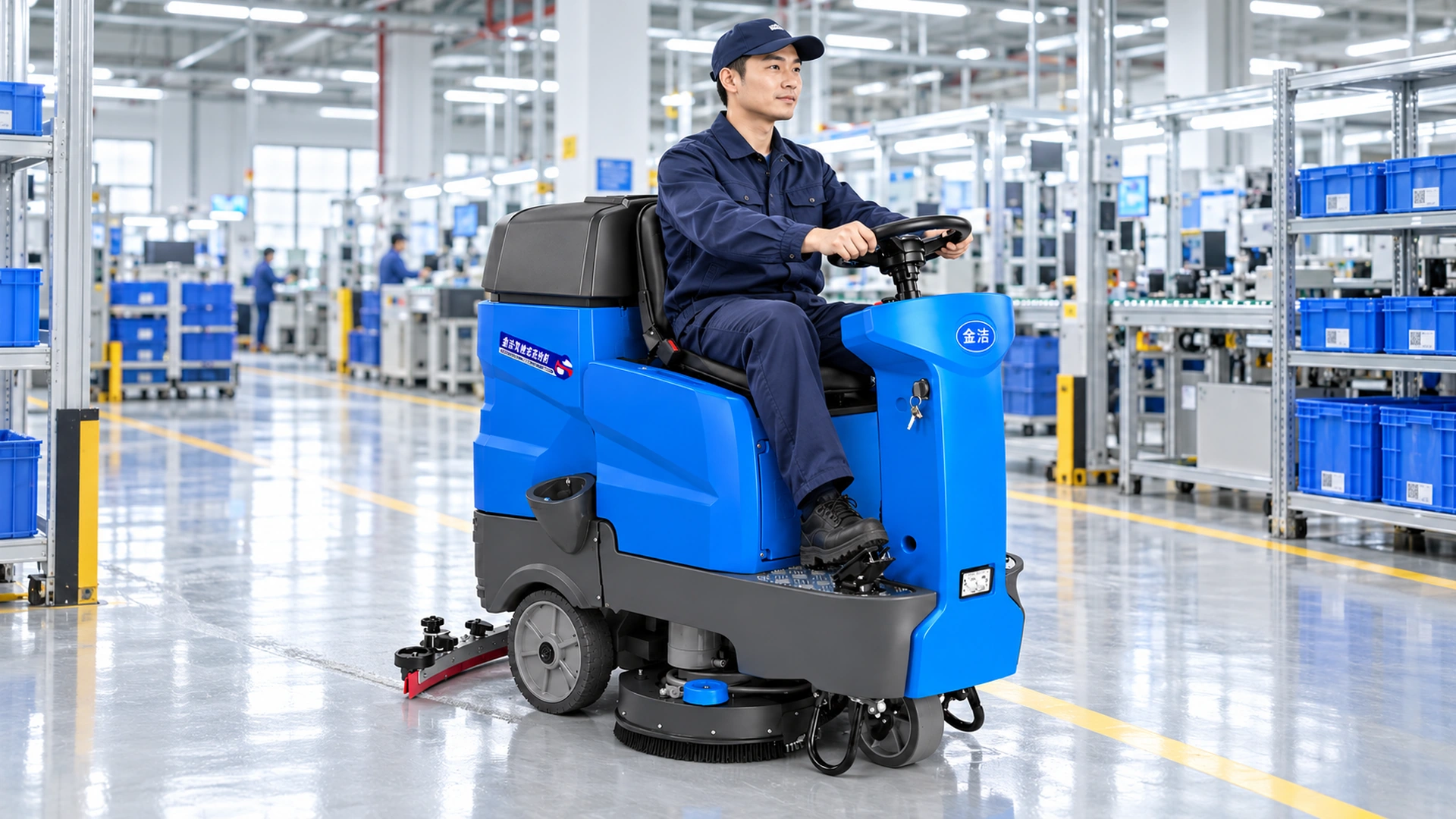
Factory Workshop Floor-Cleaning Plan
Ride-on scrubber for main workshop aisles, washing/recovery of routine dust and footprints.
Read the full article; contact us for a detailed plan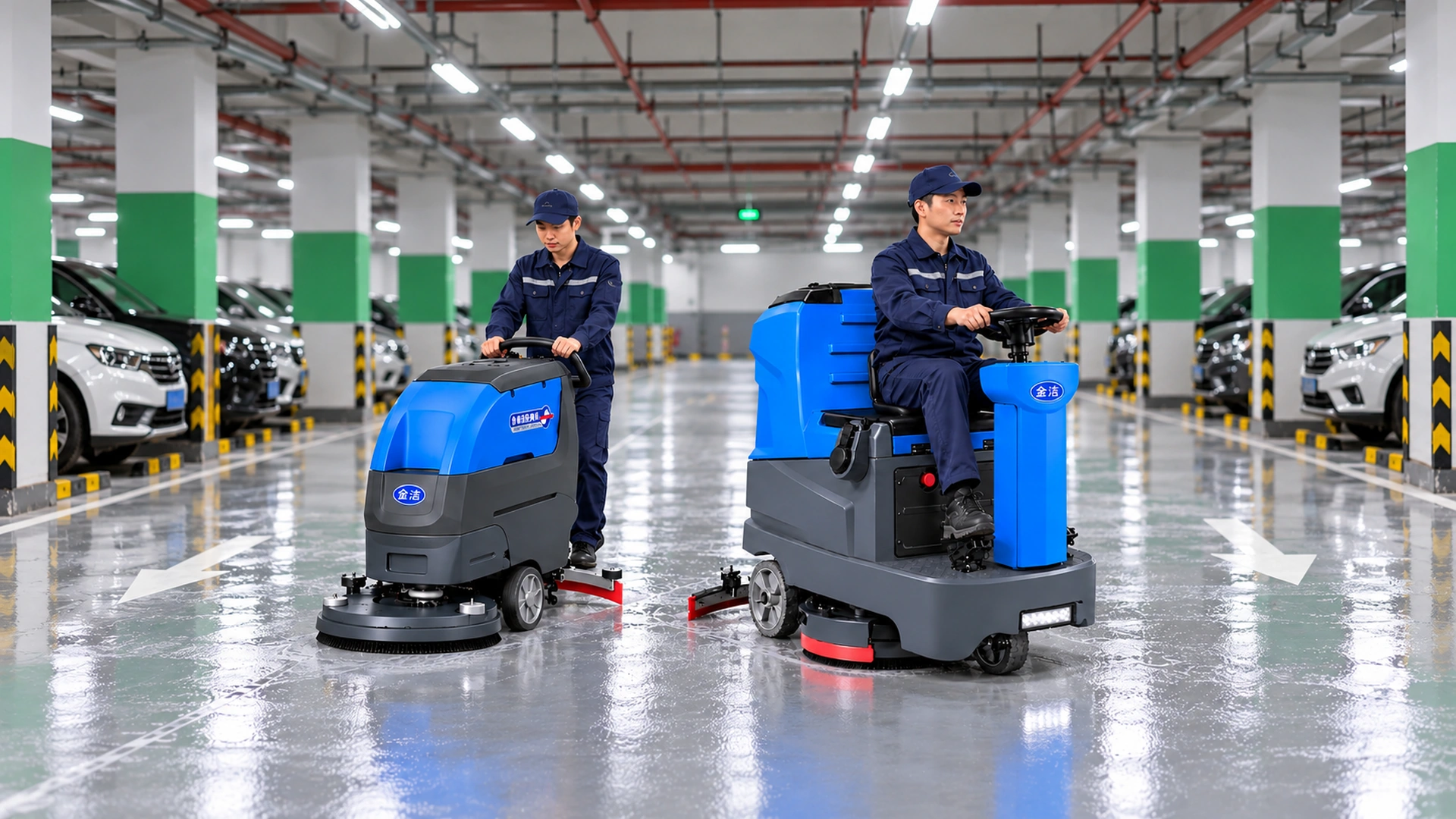
Project application reference
Property Underground Garage Cleaning Plan
A mix of walk-behind and ride-on scrubber-dryers for ramps, parking bays and main aisles.
Read the full article; contact us for a detailed planFAQ
Warehouse and logistics cleaning planCommon questions
Who is this plan for?
Mainly logistics warehouses, loading zones and forklift routes; confirm area, routes, soil and shifts.
Can recommended configurations be copied directly?
No. Listed configurations establish a selection direction; verify access, utilities, operating duration and budget for final models.
What support can Wan Sheng Long provide?
Site discussions, selection, trial advice, training, consumables, parts and maintenance support are available.
Site-plan enquiry
Submit area, contamination and frequency
Wan Sheng Long advises on equipment direction, model comparison, trials, training and service based on site conditions.
Related knowledge
Visit the knowledge centre
Warehouse/logistics cleaning implementation, equipment and selection guidance
Explore the plan through site challenges, equipment combinations, steps and maintenance requirements.
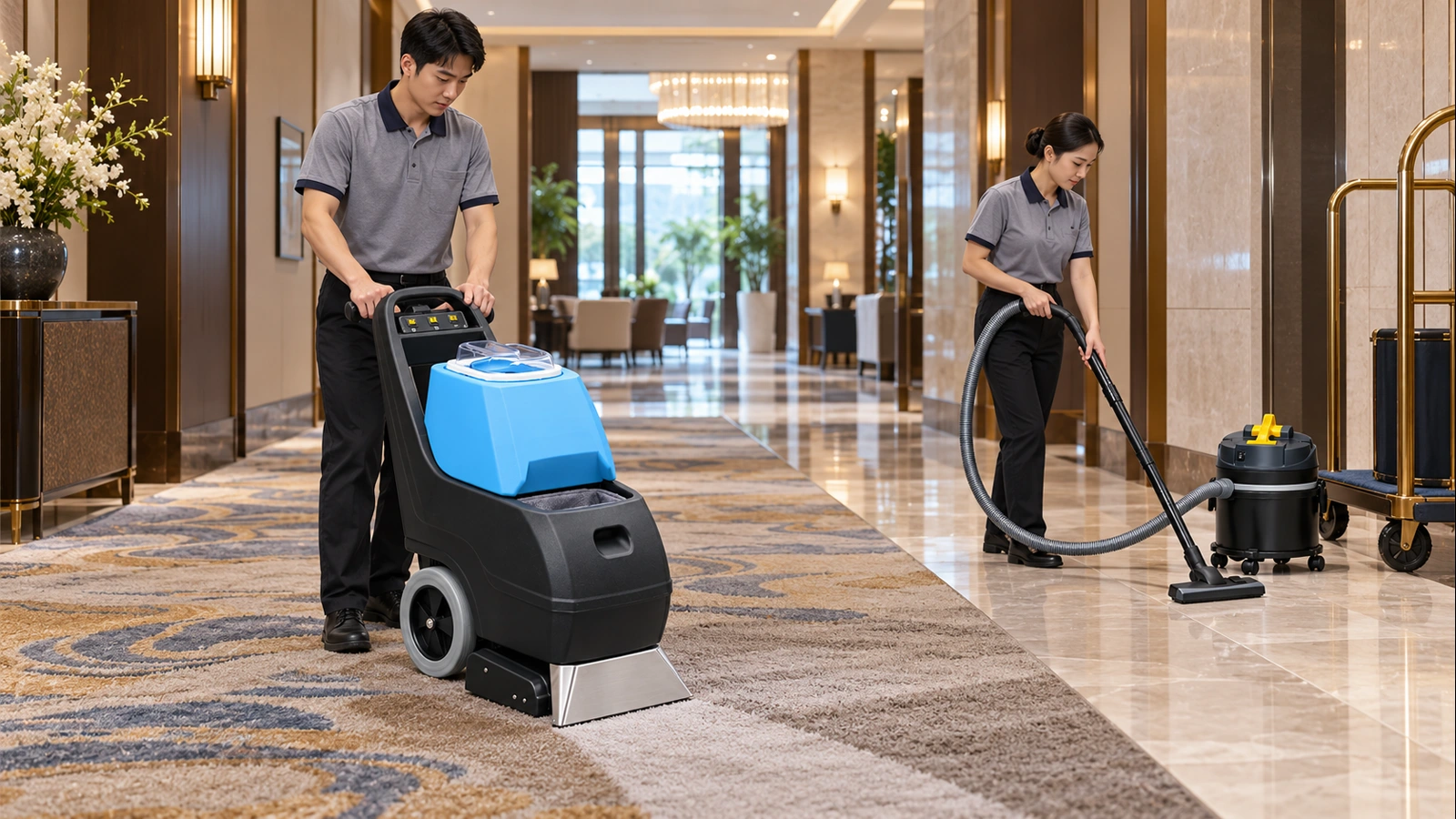
Planning cleaning equipment for hotels, offices and housekeeping companies
For hotels and commercial spaces, plan quiet-use vacuums, carpet cleaners, stone-care machines, escalator cleaners and consumables around noise needs, carpet/stone floors, lobbies, corridors, escalators and guest rooms.
Read article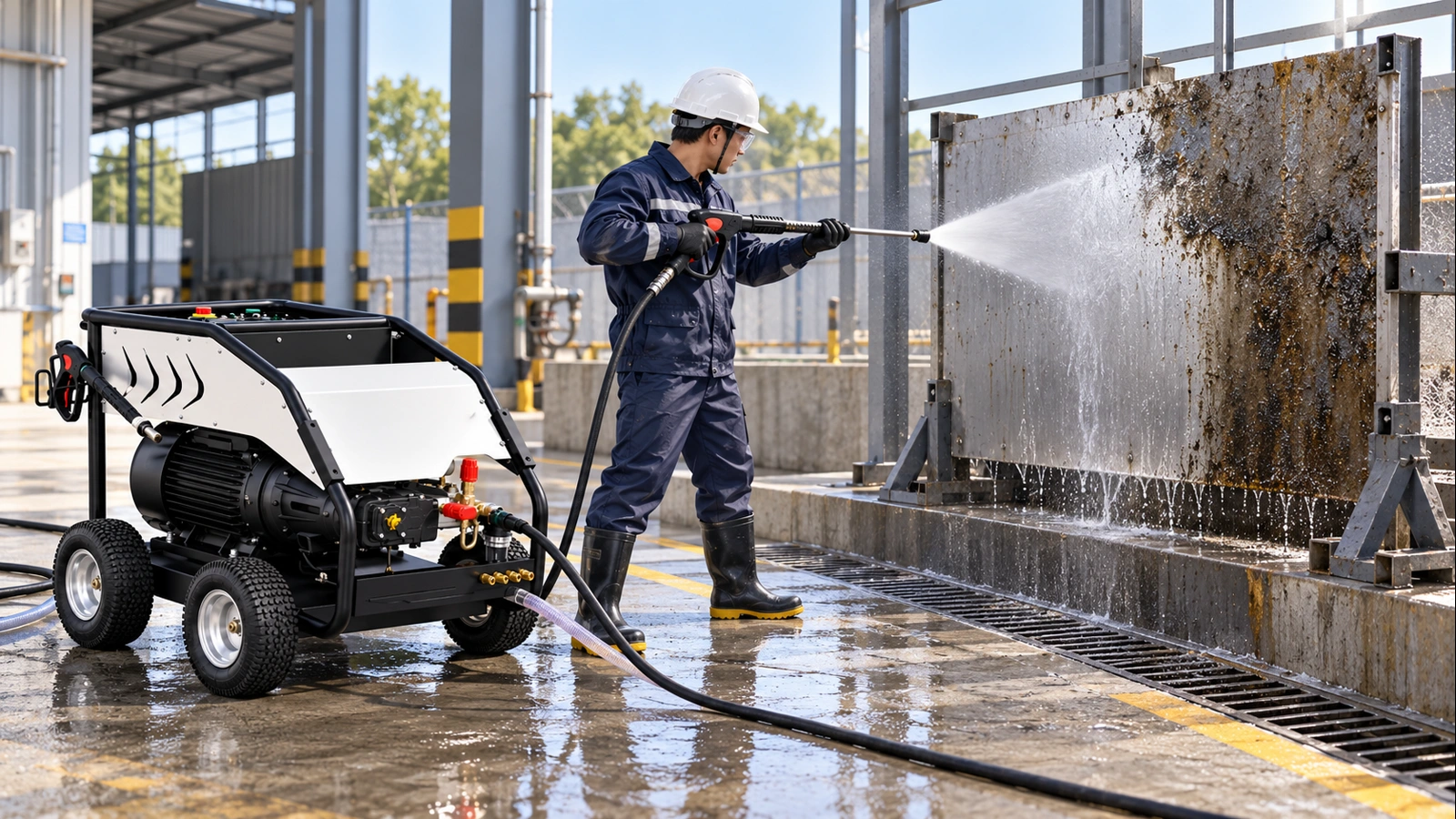
Pressure-cleaning applications: wall posters, road markings, equipment refurbishment and rust
Pressure, flow and nozzle combinations affect results. Match equipment and methods separately for wall posters, road markings, equipment refurbishment, coated roofing, rust and ship cleaning; suitability requires material and process assessment.
Read article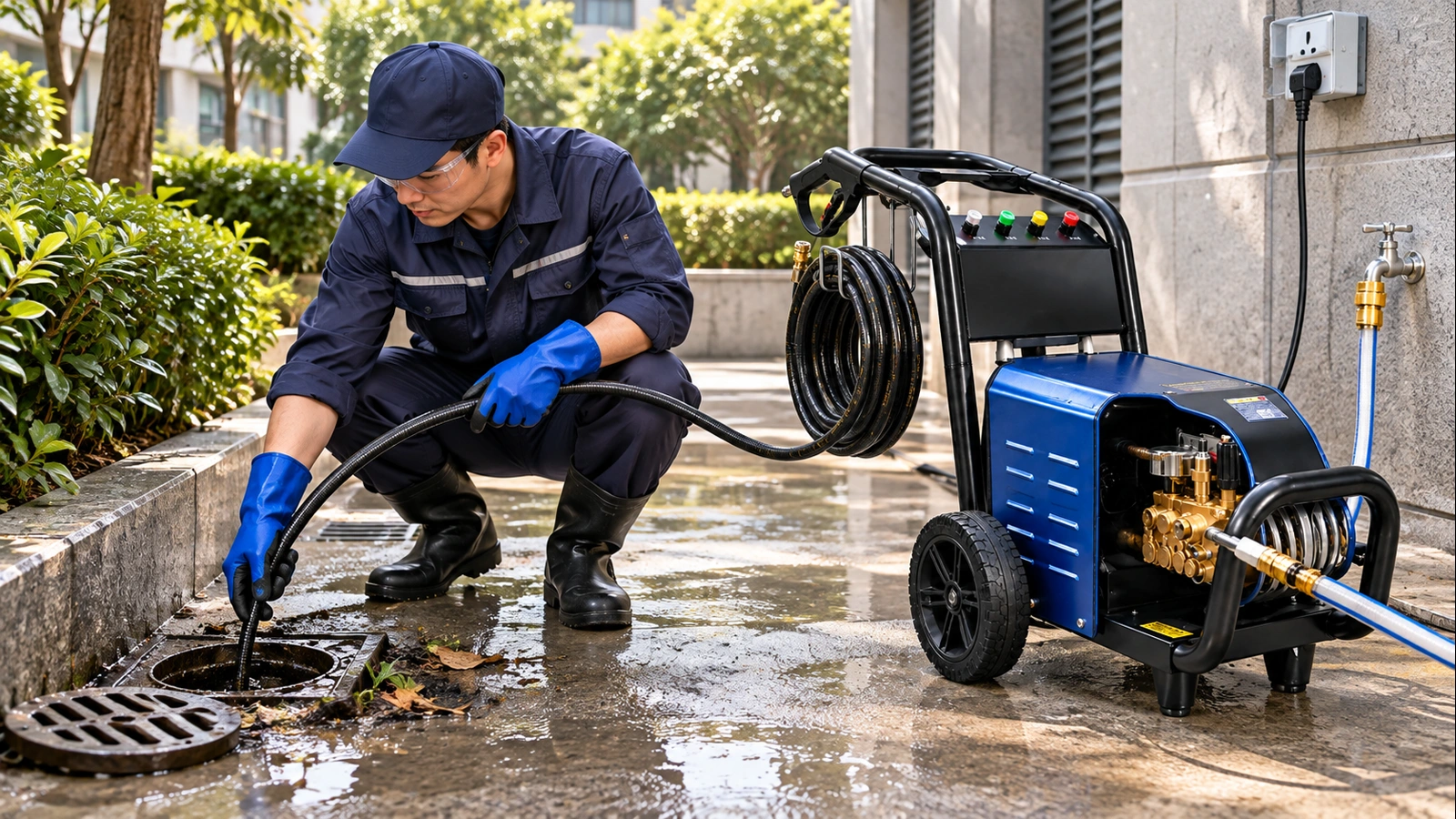
Choosing a jetter for 50mm and 75mm pipes: property applications for J-1020D
J-1020D pipe jetter pressure 100 bar (10 MPa)、flow 20 L/min、high-pressure hose 30 meters, suitable for property complexes, catering kitchens, building drainage and maintenance of small diameter blockages.
Read article
Configuring pressure-washing equipment in Zhuhai: assess the site before the model
Do not select pressure-washing equipment in Zhuhai by price alone. Confirm voltage, pressure, flow, water supply and protection before comparing 220 V, 380 V, petrol and high-flow options.
Read article
Zhuhai hotel/office equipment: inspect the site before choosing the model
Zhuji hotel office building commercial cleaning should not only select equipment based on price, but should focus on low noise, ease of training, stable consumables, and material protection when determining the configuration, and then match quiet vacuum cleaners, floor scrubbers, carpet machines, and cleaning agents.
Read article
Zhuhai drain equipment: inspect the site before choosing the model
Zhuji property management should not only select equipment based on price, but should confirm the configuration around pipe diameter, pipe length, elbows, clogging objects, and nozzle combinations, and then match J-1020D, J-1730H, J-2050H pipe jetters.
Read article