
Zone areas, narrowest access, doorways and lift dimensions

Industry application: property drain jetting
50 mm and 75 mm drain-jetting plan
Match J-1020D, J-1730H or other drain jetters to residential, kitchen, building and small-drain blockages.
This is an application plan, not a verified success case. Confirm models, quantities, chemicals and attachments through site assessment/trials.
Information required before purchase
Clarify the site before models, quantities and prices
Without this information, only equipment directions are given; an illustrative plan is not a fixed shopping list.
Floor/target material, contamination source and severity
Daily frequency, deadline, shifts and visitor/production avoidance windows
Power, refilling, wastewater, charging, storage and equipment transfer
Noise, slip safety, mixed traffic, chemicals and wastewater requirements
Existing machines, consumable stock, maintenance skills and acceptance criteria
Site challenges
Common property/small-drain challenges
Pipe diameters, bends, lengths and blockages differ substantially
Excess pressure may damage pipes; insufficient pressure may not clear them
Nozzles, hoses and water supply determine actual results
Suggested configuration
Combine equipment by task; one model does not cover every condition
Categories/models are discussion starting points; confirm site conditions before final configuration.

Jinjie J-1020D high-pressure pipe jetterElectric small-drain equipment for residential, food-service and building drain maintenance, including 50/75 mm pipes.View model specifications

Jinjie J-1730D high-pressure pipe jetterThe Jinjie J-1730D uses a 380 V electric drive and delivers 30 L/min. For property drains, greasy kitchen lines, factory branches or fixed commercial sites, assess the pipe, nozzle and rated working pressure and its unit before scheduling sustained use.View model specifications

Jinjie J-1535L high-pressure pipe jetterGasoline-powered high-pressure pipe jetter, suitable for property, municipal, and factory pipe flushing.View model specifications
Application branches
Different soil, scale and shifts require different configurations even in similar sites
Choose the main approach for the site; use alternatives for access, power, transfer or duration limits.
Short 50/75 mm domestic drain lines
- Initial recommendation
- Compact drain jetter + rear-jet propulsion nozzle
- Alternative method
- Use flexible short nozzles for more bends
- Selection basis
- Check pipe diameter, bends and hose passage first
Food grease and repeated blockages
- Initial recommendation
- Hot-water/high-flow machine + rotary degreasing nozzle
- Alternative method
- Mechanically open blockages before flushing out
- Selection basis
- Grease softening, removal and flushing must work together
Long main drains with sand and sludge
- Initial recommendation
- High-flow machine + penetrating/desilting nozzle
- Alternative method
- Work in sections with waste-recovery points
- Selection basis
- Flow and hose length matter more than pressure alone
Chemical selection
Choose chemicals by contamination and floor; do not use one everywhere
These are supporting options. Follow labels, safety data sheets and equipment manuals; trial compatibility inconspicuously.
Water-pressure drain jetting
Application: ordinary sludge, sand and loose blockagesPrefer physical clearing; verify downstream discharge and recovery
Pipe-compatible degreaser
Application: food-service grease pretreatmentFollow pipe compatibility/local drainage requirements; do not mix with acids or chlorine products
Enzyme maintenance cleaner
Application: periodic grease maintenance after drain clearingDoes not replace mechanical or high-pressure treatment of severe blockages
Safety note:Do not mix acids, alkalis, chlorine products or disinfectants. Reconfirm food, medical, electronics, antistatic-floor and wastewater requirements with site management.
Attachment selection
Match brushes, blades, nozzles, filters and hoses to each task
Attachments affect results, surface protection, recovery and downtime. Prepare wear-part/spares lists when purchasing machines.
Penetrating, rotary, desilting and chain nozzles
Application: different blockages and pipe diametersMatch nozzle to pipe diameter, pump flow and hose
Pressure hoses of different lengths/diameters and guide frames
Application: many bends or long drainsBalance propulsion, pressure loss and access
Filters, splash guards and pipe-mouth restraints
Application: continuous supply and safe workingProtects pump head and reduces back-spray injury risk
Implementation steps
From assessment and trials to equipment delivery
Assess before/after cleaning, area covered per time, wastewater pickup, residue and consumable wear.
Confirm diameter, length and previous pipe contents
Record selection reasoning, configuration limits, chemical/attachment combinations and site conditions requiring confirmation.
Match pressure, flow, nozzles and hoses
Record selection reasoning, configuration limits, chemical/attachment combinations and site conditions requiring confirmation.
Implement wastewater, safety and maintenance procedures
Record selection reasoning, configuration limits, chemical/attachment combinations and site conditions requiring confirmation.
Intended outcome
Main intended improvements
Acceptance and evidence
Validate with site records, not marketing claims
For a representative test area, record the initial condition, equipment, attachments, chemical dilution, time and finish at the same point. Agree the handover criteria using these records.
Project evidence and application references
View all casesCheck authenticity labels before using configuration/delivery references
FAQ
50/75 mm drain-jetting questions
Who is this plan for?
Mainly properties and small drains; confirm area, routes, contamination and work periods.
Can recommended configurations be copied directly?
No. Listed configurations establish a selection direction; verify access, utilities, operating duration and budget for final models.
What support can Wan Sheng Long provide?
Site discussions, selection, trial advice, training, consumables, parts and maintenance support are available.
Site-plan enquiry
Submit area, contamination and frequency
Wan Sheng Long advises on equipment direction, model comparison, trials, training and service based on site conditions.
Determine selection direction from the site problem
Why do drain entrances and bends affect equipment selection?
Check blockage, access and hose/nozzle matching as well as diameter. Hose length is not the effective clearing distance at every site.
Related knowledge
Visit the knowledge centre
50/75 mm drain-jetting implementation, configuration and selection guidance
Explore the plan through site challenges, equipment combinations, steps and maintenance requirements.
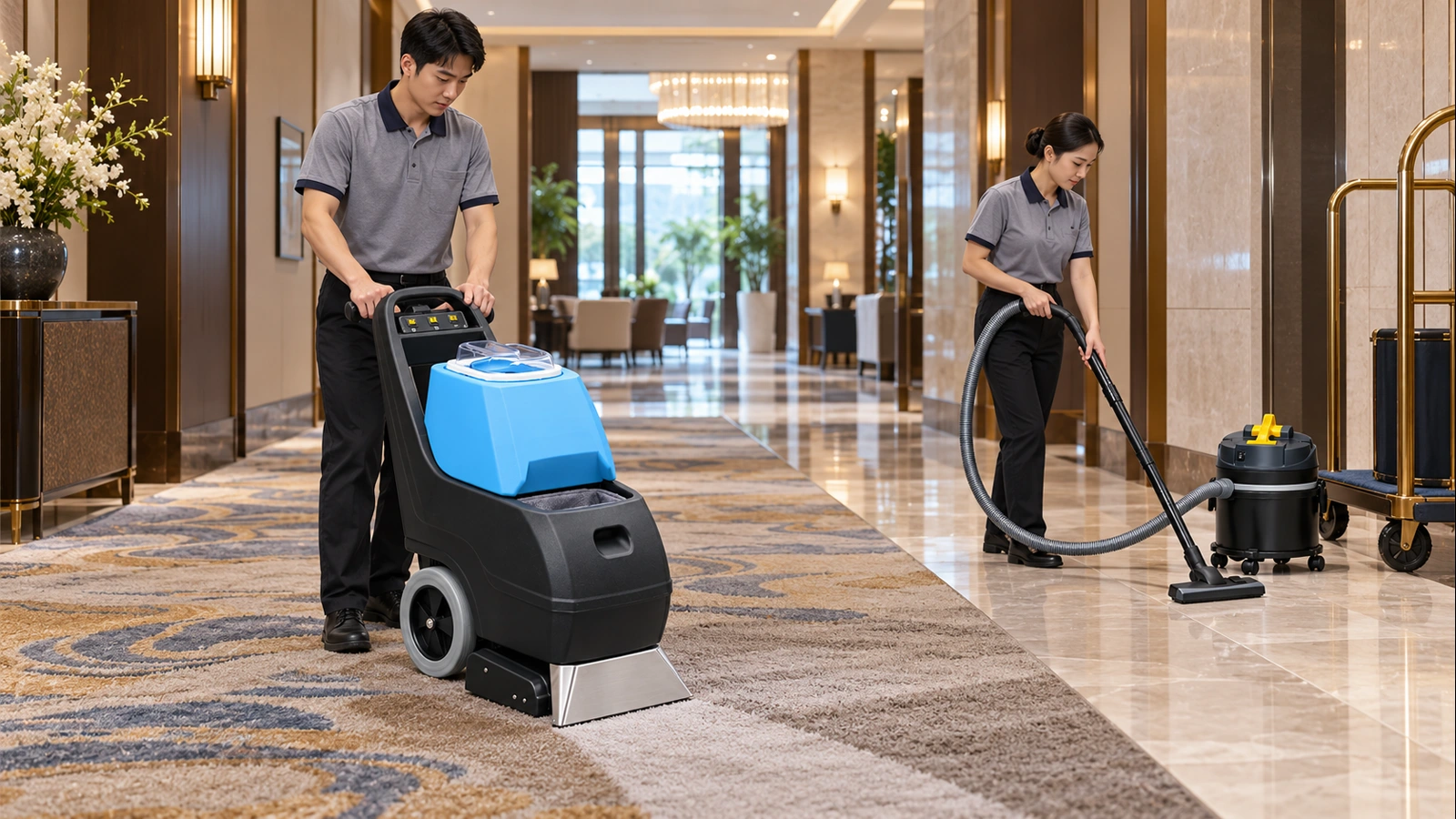
Planning cleaning equipment for hotels, offices and housekeeping companies
For hotels and commercial spaces, plan quiet-use vacuums, carpet cleaners, stone-care machines, escalator cleaners and consumables around noise needs, carpet/stone floors, lobbies, corridors, escalators and guest rooms.
Read article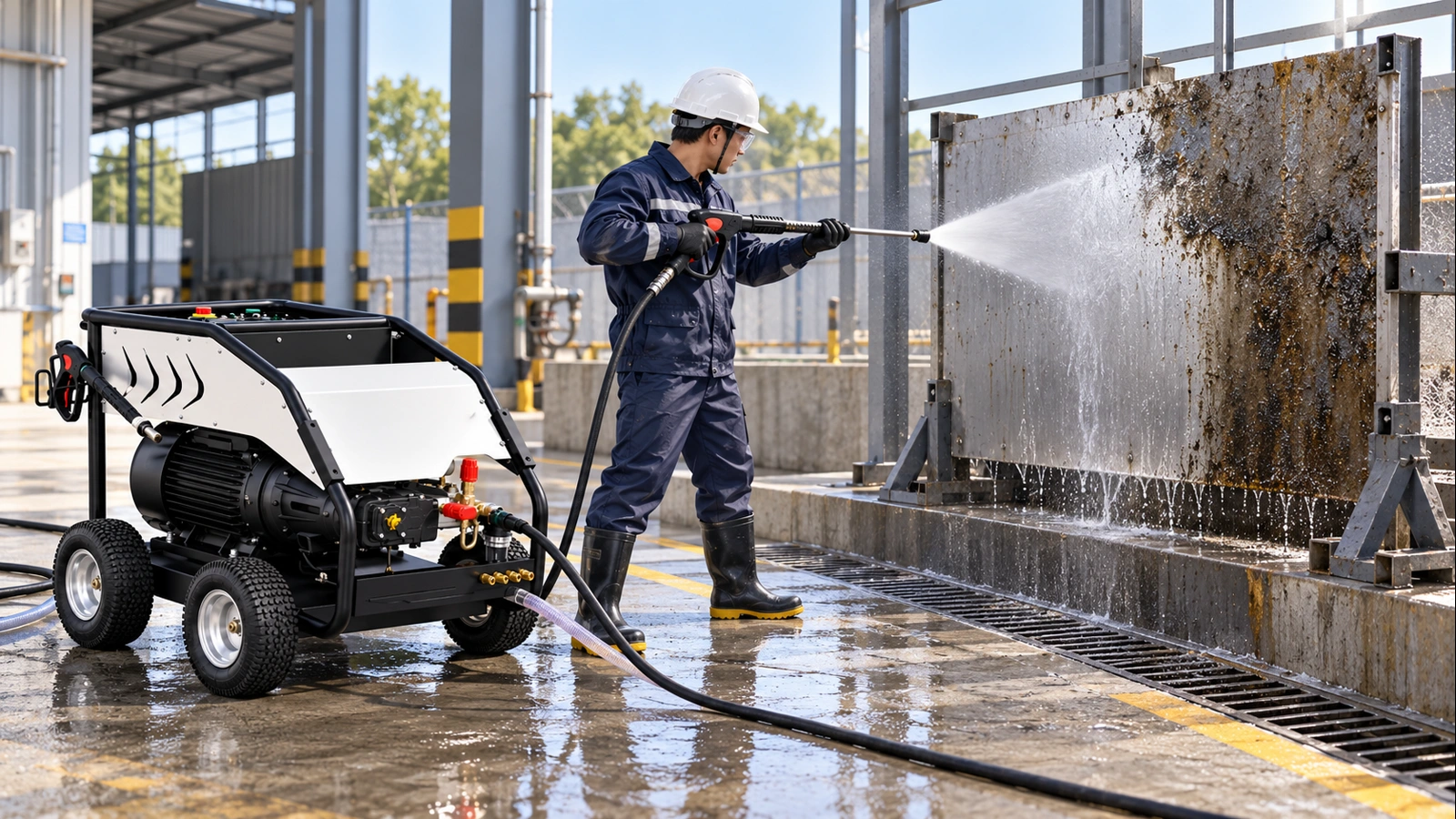
Pressure-cleaning applications: wall posters, road markings, equipment refurbishment and rust
Pressure, flow and nozzle combinations affect results. Match equipment and methods separately for wall posters, road markings, equipment refurbishment, coated roofing, rust and ship cleaning; suitability requires material and process assessment.
Read article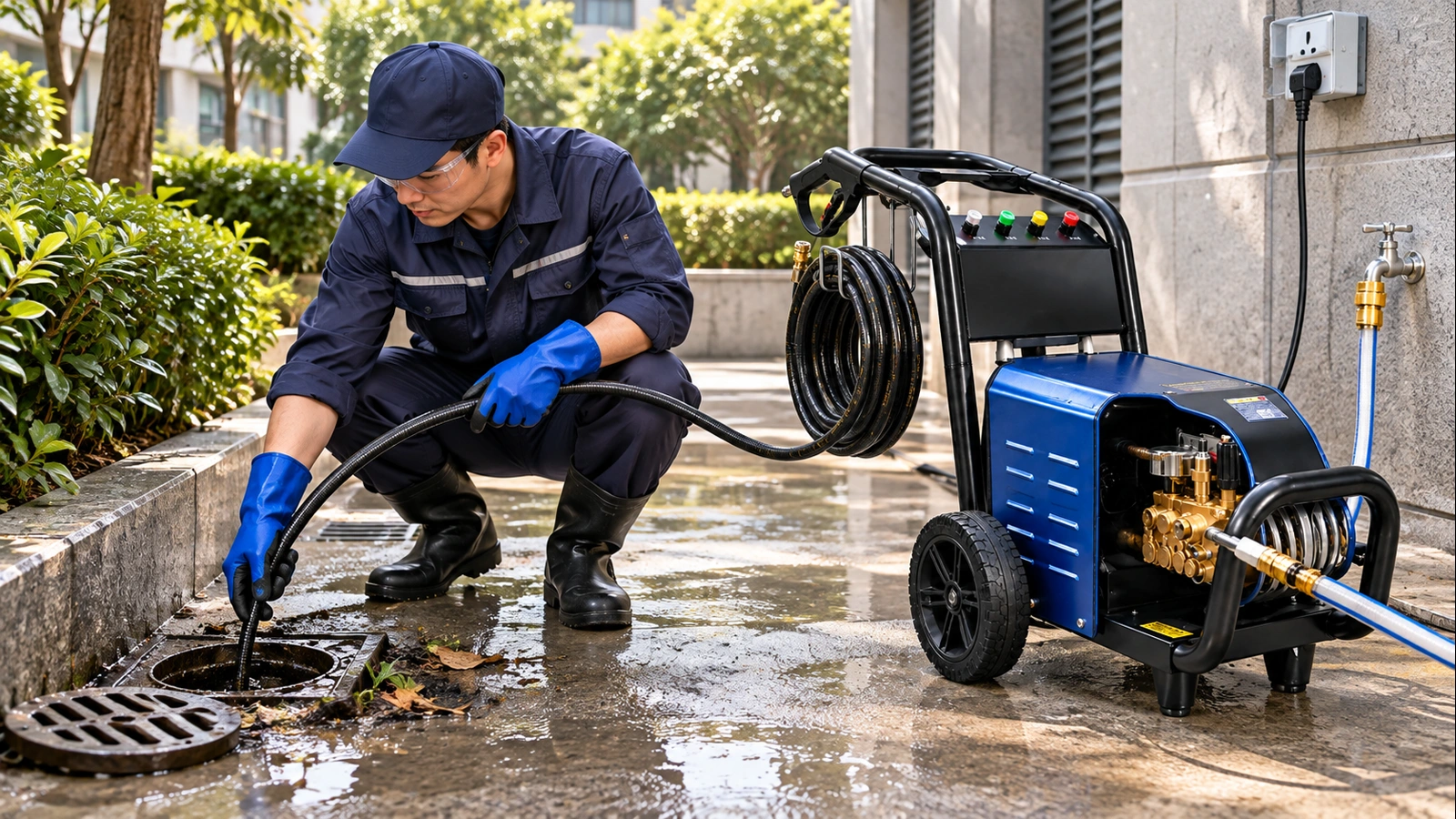
Choosing a jetter for 50mm and 75mm pipes: property applications for J-1020D
J-1020D pipe jetter pressure 100 bar (10 MPa)、flow 20 L/min、high-pressure hose 30 meters, suitable for property complexes, catering kitchens, building drainage and maintenance of small diameter blockages.
Read article
Configuring pressure-washing equipment in Zhuhai: assess the site before the model
Do not select pressure-washing equipment in Zhuhai by price alone. Confirm voltage, pressure, flow, water supply and protection before comparing 220 V, 380 V, petrol and high-flow options.
Read article
Zhuhai hotel/office equipment: inspect the site before choosing the model
Zhuji hotel office building commercial cleaning should not only select equipment based on price, but should focus on low noise, ease of training, stable consumables, and material protection when determining the configuration, and then match quiet vacuum cleaners, floor scrubbers, carpet machines, and cleaning agents.
Read article
Zhuhai drain equipment: inspect the site before choosing the model
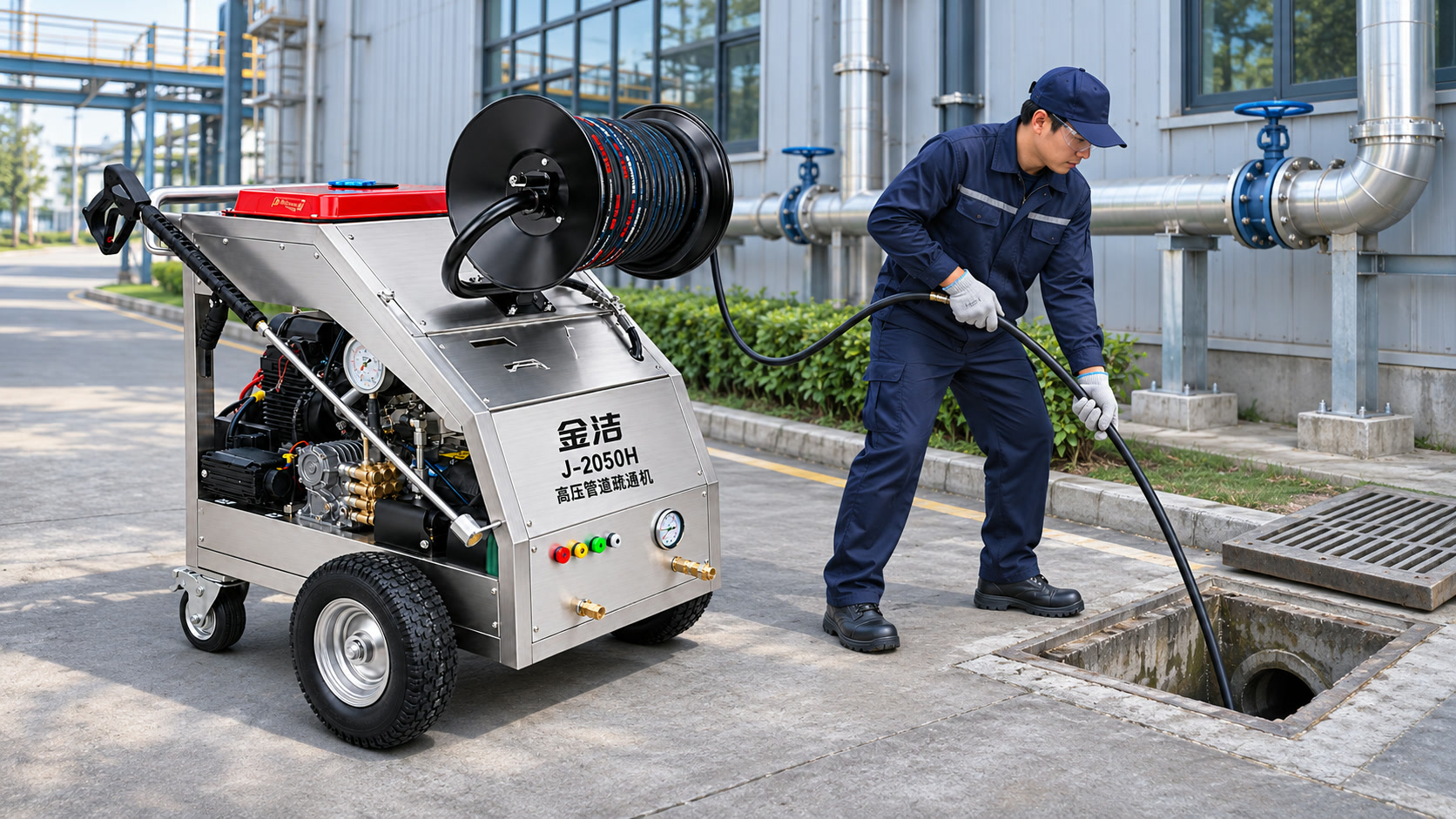
Zhuji property management should not only select equipment based on price, but should confirm the configuration around pipe diameter, pipe length, elbows, clogging objects, and nozzle combinations, and then match J-1020D, J-1730H, J-2050H pipe jetters.
Read article