
Zone areas, narrowest access, doorways and lift dimensions
Application plan: Shenzhen machining-workshop cleaning
Equipment plan for oily machining-workshop floors in Shenzhen
For machining floors in abrasive aggregate, epoxy or concrete: separate cutting fluid/oil/chips/dust and configure vacuum, scrubber, chemicals and oil-resistant attachments. This is an application reference, not a verified customer case.
Equipment selection guidance for typical machining conditions.

Information required before purchase
Clarify the site before models, quantities and prices
Without this information, only equipment directions are given; an illustrative plan is not a fixed shopping list.
Floor/target material, contamination source and severity
Daily frequency, deadline, shifts and visitor/production avoidance windows
Power, refilling, wastewater, charging, storage and equipment transfer
Noise, slip safety, mixed traffic, chemicals and wastewater requirements
Existing machines, consumable stock, maintenance skills and acceptance criteria
Site challenges
Common cleaning challenges in Shenzhen machining/metalworking and forklift-route production sites
Cutting fluid, lubricant and tyre marks are difficult to remove/recover consistently with water alone
Direct metal-chip entry may scratch floors, block recovery and accelerate blade wear
Abrasive-aggregate, epoxy and concrete floors differ in wear, porosity and chemical tolerance; trial first
Continuous production/shifts need coordinated equipment, water service, charging and manual support
Application configuration matrix
Configure for floor, contaminants and production windows, not one model for the whole workshop
A Shenzhen machining-workshop application reference, without authorized customer project names, original photos or acceptance records; not labelled a verified success case.
01
Abrasive-aggregate floor with metal chips/dust
Machine perimeters, main aisles and loading areas: ordinary dust, metal dust and chips
- Core equipment
- JGY-80P Industrial vacuum cleaner + J-D5SL Scrubber-Dryer
- Operating process
- Dry-collect chips/dust, then scrub/recover in small zones. Keep large particles out of recovery systems.
- Chemicals and attachments
- Metal-chip tools, filters, medium brushes and wear-resistant blades
- Rules for adding/reducing equipment
- Assess combustible, conductive or reactive dust separately; ordinary vacuum setups are not automatically suitable.

02
Epoxy floors with cutting-fluid oil film
Processing/forklift areas: cutting fluid, lubricants, tyre marks and water
- Core equipment
- J-D6SL ride-on scrubber + J-D5SL edge support
- Operating process
- Contain leaks and pretreat locally, then scrub/recover by aisle; trial chemical, brush and blade compatibility first.
- Chemicals and attachments
- Low-foam degreaser, oil-resistant blades, red/blue pads and warning signs
- Rules for adding/reducing equipment
- Reduce intensity for aged/peeling or chemically unverified coatings; repair before mechanical cleaning.

03
Heavy-soil points at equipment bases and drains
Isolatable equipment bases, drains and stubborn local deposits
- Core equipment
- J-1612D pressure washer + wastewater recovery equipment
- Operating process
- Isolate electricity, verify drainage/splash boundaries, spot-wash and promptly recover water.
- Chemicals and attachments
- Matched nozzles, pressure hoses, PPE and recovery hoses
- Rules for adding/reducing equipment
- Omit pressure washing where production equipment, electrics or floor tolerance prohibit it; use manual pretreatment and scrubbing/recovery instead.
Suggested configuration
Combine equipment by task; one model does not cover every condition
Categories/models are discussion starting points; confirm site conditions before final configuration.
Scrubber-DryerWalk-behind, ride-on and autonomous scrubbers are selected by area and use conditions for garages, factories, retail/hospitals and estates.Industrial vacuum cleanerSelect wet/dry, explosion-protected, high-power and industrial extraction options by dust, volume and duty for production, machining, warehouses and construction. Verify the specific protected configuration.High-pressure washerCold-water, hot-water, explosion-protected and ultra-high-pressure equipment options are selected by target, soil and pressure needs for industrial equipment, vehicle facilities, properties and pipe scale. Specific suitability requires model confirmation.

Jinjie JGY-80P industrial vacuumBattery industrial vacuums support rounds around workshops, warehouses and equipment without fixed sockets, emphasizing mobility.View model specifications

Jinjie J-D5SL walk-behind scrubberCompact and manoeuvrable for shopping centres, hospitals, offices and underground parking, subject to site conditions.View model specifications

Jinjie J-D6SL Ride-On Scrubber-DryerFor underground parking, logistics warehouses, main factory aisles, shopping-centre back areas and medium/large continuous routes. The Chinese source positions ride-on operation for broader continuous work than self-propelled walk-behind machines; J-D3L or J-D5SL may complement edge work. Actual output depends on the site.View model specifications

Jinjie J-1612D Pressure WasherWith a 220 V supply, assess surface washing on courtyards, cars, residential paving, shopfronts, steps, walls and moss-covered areas. Flow is 12 L/min. Check the nameplate for working pressure and its unit. For drain jetting, compare J-1020D, J-1730H and J-2050H.View model specifications
Application branches
Different soil, scale and shifts require different configurations even in similar sites
Choose the main approach for the site; use alternatives for access, power, transfer or duration limits.
Under 1,000 m² with narrow aisles
- Initial recommendation
- JGY-80P + J-D5SL
- Alternative method
- Manual magnetic pickup/scraping tools as support
- Selection basis
- Prioritize metal-chip separation, turning and edge coverage
1,000–3,000 m² with continuous main aisles
- Initial recommendation
- JGY-80P + J-D6SL + J-D5SL
- Alternative method
- Adjust compact-machine quantities by shifts
- Selection basis
- Main machine for continuous areas; compact machine around workstations
Heavy-oil points or local drains
- Initial recommendation
- Scrubber + local pretreatment
- Alternative method
- Add J-1612D only after safety conditions are met
- Selection basis
- Pressure equipment only at isolatable points with wastewater recovery
Chemical selection
Choose chemicals by contamination and floor; do not use one everywhere
These are supporting options. Follow labels, safety data sheets and equipment manuals; trial compatibility inconspicuously.
Neutral low-foam cleaner
Application: epoxy and routine light soilDilute per label and trial first
Low-foam industrial degreaser
Application: local pretreatment of cutting fluid, lubricant and tyre marksConfirm material compatibility, wastewater destination and operator protection
Water-only scrubbing/recovery
Application: chemical-restricted work or final rinseDoes not replace pretreatment of solid metal chips and heavy oil
Safety note:Do not mix acids, alkalis, chlorine products or disinfectants. Reconfirm food, medical, electronics, antistatic-floor and wastewater requirements with site management.
Attachment selection
Match brushes, blades, nozzles, filters and hoses to each task
Attachments affect results, surface protection, recovery and downtime. Prepare wear-part/spares lists when purchasing machines.
Metal-chip tools and filtration components
Application: segregated metal-chip/dust collectionKeep solids out of scrubbers and reduce airborne dust
Oil-resistant squeegee blades
Application: oily wastewater recoveryImprove floor contact/recovery; rotate or replace blades by wear
Medium-stiff brush / compatible pad
Application: different abrasive-aggregate/epoxy floorsSet intensity from trials to avoid scratching/gloss loss
Implementation steps
From assessment and trials to equipment delivery
Assess before/after cleaning, area covered per time, wastewater pickup, residue and consumable wear.
Inspect floor, area, access, contamination sources and dust hazards onsite
Record selection reasoning, configuration limits, chemical/attachment combinations and site conditions requiring confirmation.
Dry-collect chips/dust and separate recyclable metal first
Record selection reasoning, configuration limits, chemical/attachment combinations and site conditions requiring confirmation.
Trial low-foam degreaser, brushes and blades inconspicuously for compatibility
Record selection reasoning, configuration limits, chemical/attachment combinations and site conditions requiring confirmation.
Trial a small area and record coverage, recovery, drying and wear
Record selection reasoning, configuration limits, chemical/attachment combinations and site conditions requiring confirmation.
Work by production windows, with traffic separation and wastewater recovery
Record selection reasoning, configuration limits, chemical/attachment combinations and site conditions requiring confirmation.
Assess oil/water residue, floor damage and readiness to reopen
Record selection reasoning, configuration limits, chemical/attachment combinations and site conditions requiring confirmation.
Intended outcome
Main intended improvements
Acceptance and evidence
Validate with site records, not marketing claims
For a representative test area, record the initial condition, equipment, attachments, chemical dilution, time and finish at the same point. Agree the handover criteria using these records.
FAQ
Shenzhen machining-floor cleaning questions
Which equipment suits oily Shenzhen machining-workshop floors?
Assess oil thickness, chip size, area, access and floor. Generally collect dry chips/dust with JGY-80P or magnetic tools, then use J-D5SL/J-D6SL with trial-approved low-foam degreaser, oil-resistant blades and suitable brushes. Assess combustible/reactive dust hazards first.
Can scrubbers be used on abrasive-aggregate floors?
Yes, after checking dusting, cracks and hardness. Trial medium brushes/low-foam cleaner for routine care; repair severely dusting floors first to avoid aggregate loss and recovery-system abrasion.
Why should metal chips and cutting fluid not be scrubbed together directly?
Chips may scratch floors, block recovery and damage blades; cutting fluid also increases foam/slip risks. Separate solids first, trial degreaser/scrubbing, then scrub/recover.
Which cleaner and brush should be used on epoxy floors?
Start with low-foam, compatible neutral cleaner. Trial degreaser locally for light/moderate oil. Begin with gentler brushes/pads and expand only after confirming no gloss loss or coating softening.
How should equipment be chosen for a 1,000–3,000 m² workshop?
Check clear aisle width, obstacle density, shift window and refill/emptying distance. Consider J-D5SL in narrow zones and J-D6SL for continuous accessible areas, retaining industrial pickup for chips/dust. Set models/quantities from trials.
Do machining workshops need pressure washers?
Assess J-1612D or similar washers only at isolatable bases, drains or stubborn spots. Verify electrical isolation, splash, floor tolerance, wastewater and PPE. Pressure washing is not the default whole-workshop method.
How should oily-floor cleaning results be assessed?
Record residual oil/slip risk, water, missed edges, coverage per time, recovery, wear and reopening time, with matched before/after photo positions.
Can this configuration be ordered directly?
Do not copy directly. This is an application reference, not a fixed purchase list. Provide area, floor, soil, access, shifts, utilities and safety conditions, then verify with chemical samples and equipment trials.
Site-plan enquiry
Submit area, contamination and frequency
Wan Sheng Long advises on equipment direction, model comparison, trials, training and service based on site conditions.
Related knowledge
Visit the knowledge centre
Shenzhen machining-floor implementation, configuration and selection guidance
Explore the plan through site challenges, equipment combinations, steps and maintenance requirements.
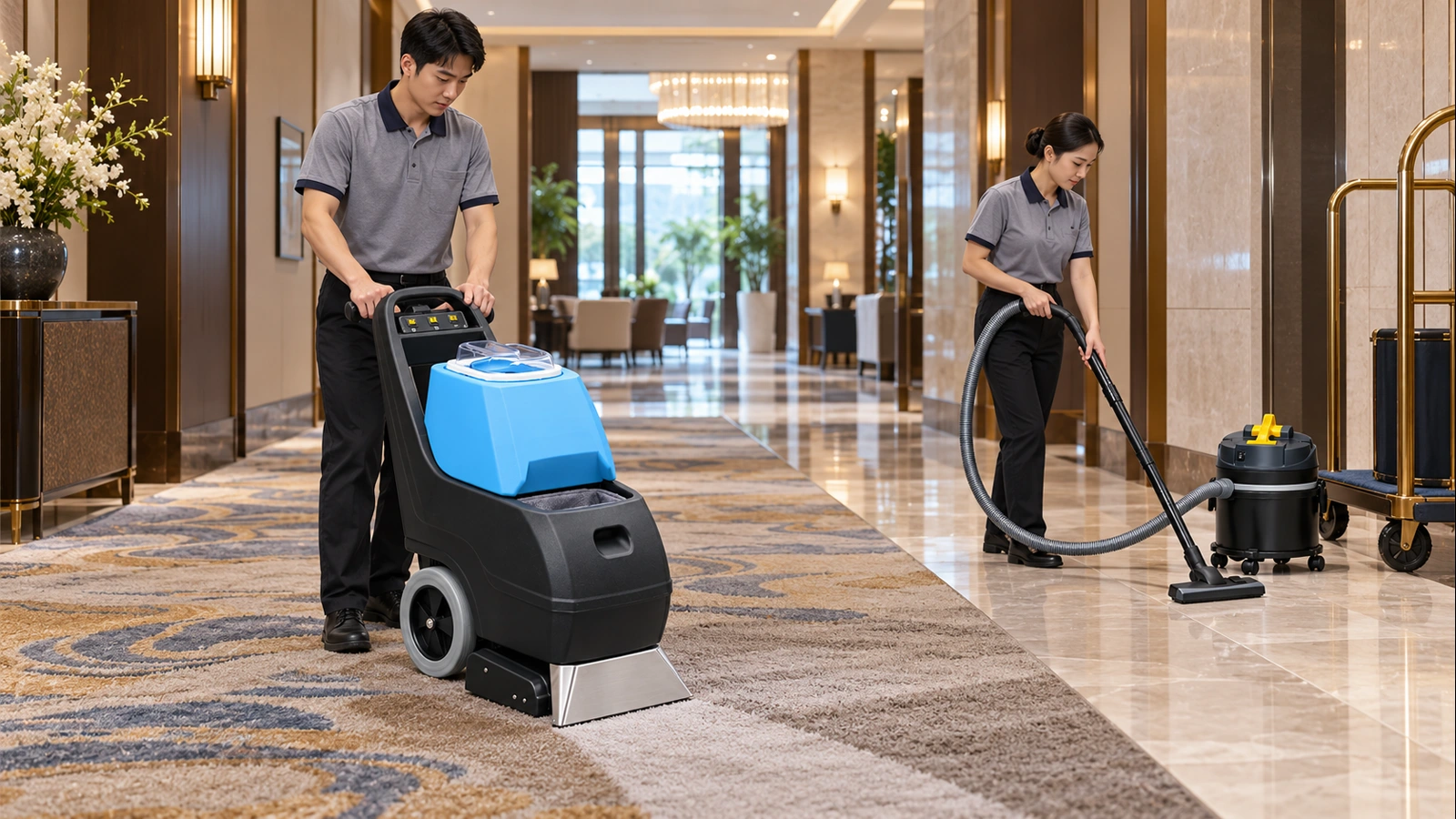
Planning cleaning equipment for hotels, offices and housekeeping companies
For hotels and commercial spaces, plan quiet-use vacuums, carpet cleaners, stone-care machines, escalator cleaners and consumables around noise needs, carpet/stone floors, lobbies, corridors, escalators and guest rooms.
Read article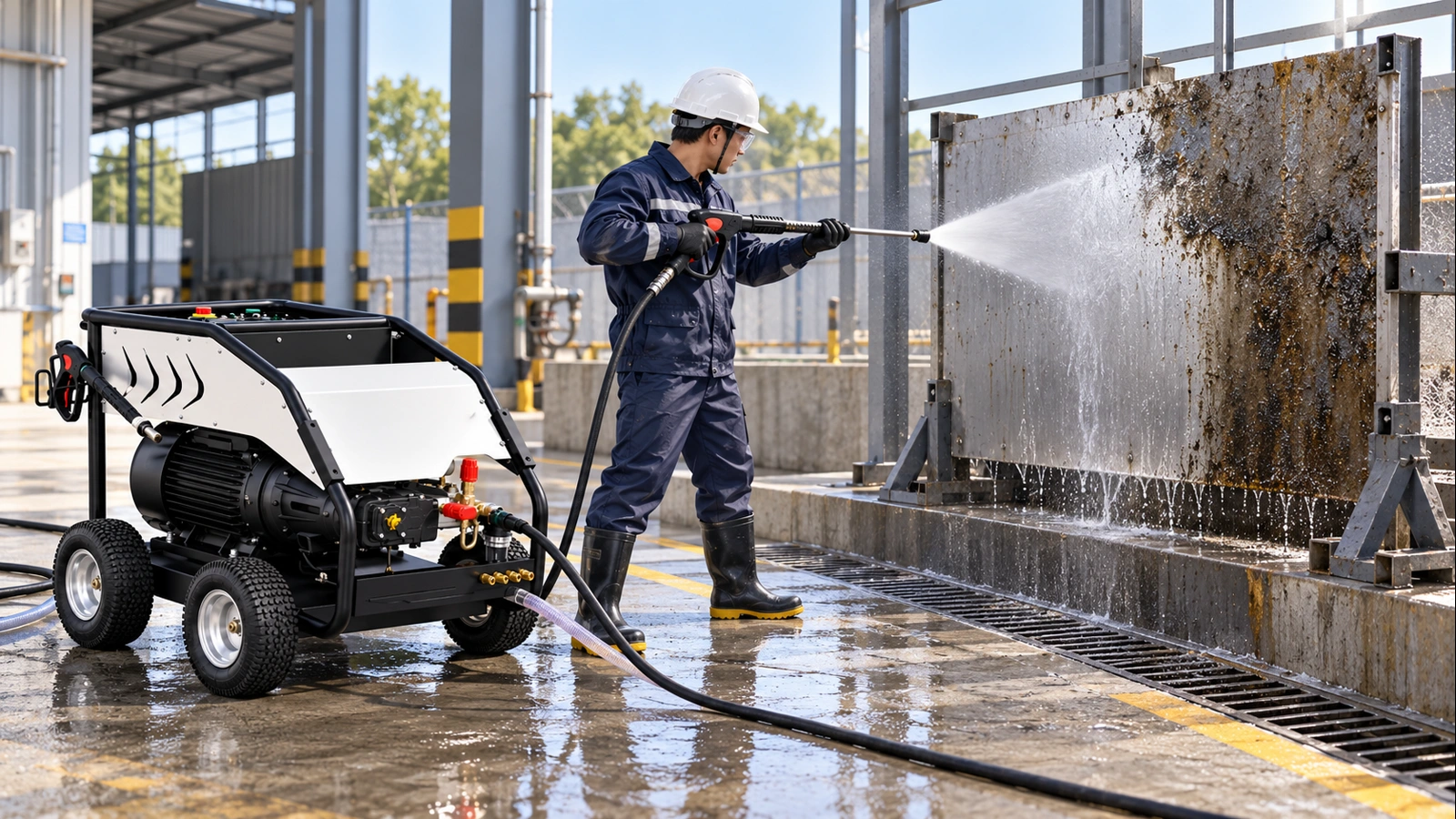
Pressure-cleaning applications: wall posters, road markings, equipment refurbishment and rust
Pressure, flow and nozzle combinations affect results. Match equipment and methods separately for wall posters, road markings, equipment refurbishment, coated roofing, rust and ship cleaning; suitability requires material and process assessment.
Read article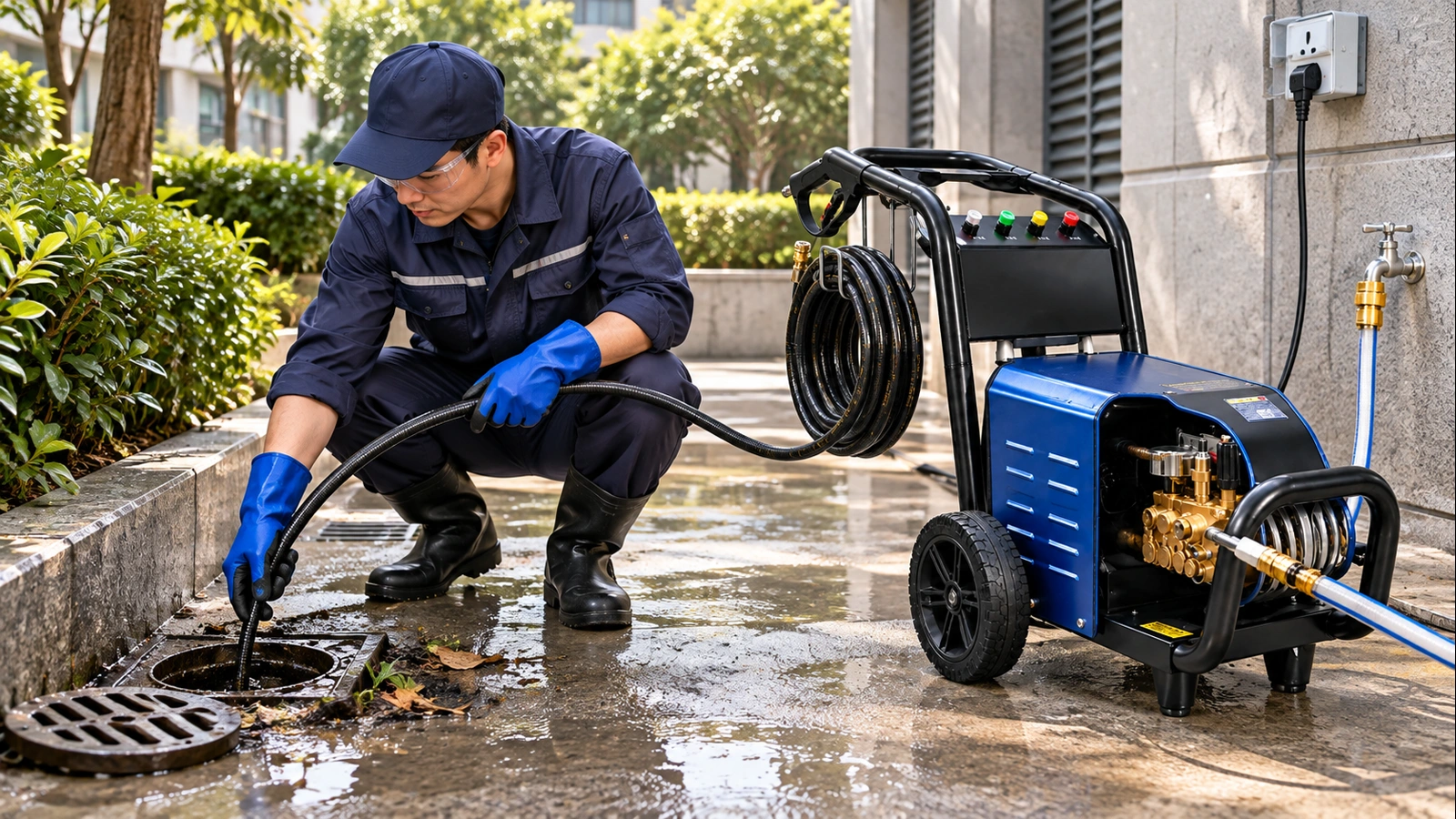
Choosing a jetter for 50mm and 75mm pipes: property applications for J-1020D
J-1020D pipe jetter pressure 100 bar (10 MPa)、flow 20 L/min、high-pressure hose 30 meters, suitable for property complexes, catering kitchens, building drainage and maintenance of small diameter blockages.
Read article
Configuring pressure-washing equipment in Zhuhai: assess the site before the model
Do not select pressure-washing equipment in Zhuhai by price alone. Confirm voltage, pressure, flow, water supply and protection before comparing 220 V, 380 V, petrol and high-flow options.
Read article
Zhuhai hotel/office equipment: inspect the site before choosing the model
Zhuji hotel office building commercial cleaning should not only select equipment based on price, but should focus on low noise, ease of training, stable consumables, and material protection when determining the configuration, and then match quiet vacuum cleaners, floor scrubbers, carpet machines, and cleaning agents.
Read article
Zhuhai drain equipment: inspect the site before choosing the model
Zhuji property management should not only select equipment based on price, but should confirm the configuration around pipe diameter, pipe length, elbows, clogging objects, and nozzle combinations, and then match J-1020D, J-1730H, J-2050H pipe jetters.
Read article