
Shenzhen cleaning equipment manufacturer · Jinjie
Autonomous Floor Scrubbers
Unmanned floor scrubbers are suitable for public areas with stable routes and high frequency of repetitive operations, taking on standardized floor cleaning through mapping, obstacle avoidance, and task management.

Recommended model for 3Confirm configuration based on site, operating conditions, and usage intensity
Equipment definition
What is an unmanned floor scrubber?
Unmanned floor scrubbers are suitable for public areas with stable routes and high frequency of repetitive operations, taking on standardized floor cleaning through mapping, obstacle avoidance, and task management.
Application range
What scenarios is the unmanned floor scrubber suitable for?
Selection method
How to choose the appropriate unmanned floor scrubber?
The product name is the same, but it does not mean that efficiency, capacity, power, and application boundaries are the same. It is recommended to confirm the following conditions in sequence.
Recommended equipment
What models are available for unmanned floor scrubbers?
The following models come from existing formal product data. Enter the detail page to view parameters, applications, videos, cases, and quotation entry.
Jinjie J-W70 Autonomous Scrubber
An autonomous scrubber-dryer for hotel lobbies, offices, shopping-centre passages, hospitals, schools, transport hubs, exhibition halls and defined factory aisles. Mapping, route planning and active obstacle avoidance support repetitive floor tasks, subject to deployment checks.
View model details
Jinjie CC1 four-in-one cleaning robot
Combined sweeping, scrubbing, recovery and pushing for indoor floors in malls, hospitals, hotels, offices, schools, food service and transport facilities.
View model details
Jinjie Allybot-C2 commercial cleaning robot
Combines scrubbing, vacuuming and dust mopping for indoor commercial spaces such as offices, hospitals, shopping centres, hotels, schools, restaurants, gyms and transport buildings, subject to site conditions.
View model details— FAQ
FAQ on unmanned floor scrubber selection
What scenarios is the unmanned floor scrubber suitable for?
Unmanned Floor Scrubbers are primarily suitable for hotels and office buildings, shopping malls and hospitals, transportation hubs and exhibition centers, and regularized factory channels. Actual models need to be confirmed based on area, passage, pollution, frequency, and on-site power conditions.
How to choose the right unmanned floor scrubber?
First, confirm the site size, cleaning object, type of contamination, frequency of operation, and delivery boundary, then compare the efficiency, capacity, pressure flow, or power configuration of the models.
Can the unmanned floor scrubber be arranged for trial operation?
For complex operating conditions, it is recommended to first provide on-site photos, videos, and basic parameters, and then communicate based on project conditions to see the machine, trial run, or effect verification.
Does Wan Sheng Long provide non-standard customization?
Support communication of non-standard design and delivery solutions based on the cleaning object, pressure, flow rate, power, piping, movement method, and safety requirements.
Is after-sales service and spare parts provided after purchase?
Wan Sheng Long provides operation training, consumables and accessories, maintenance and repair, and after-sales support. The specific scope is confirmed in the quotation and delivery plan.
Related categories
Continuing to compare types of floor scrubbers.
Walk-Behind Floor ScrubbersA walk-behind scrubber uses a rotating brush to clean the floor and recovers the wastewater on the same pass. It suits hard floors that need frequent cleaning in small to medium-sized areas with narrow aisles.
Ride-On Floor ScrubbersRide-on floor scrubbers combine scrubbing, water absorption, and walking drive, making them suitable for continuous operation on medium to large areas. They can reduce the physical strain on personnel and improve shift efficiency.
Compact Ride-On Floor ScrubbersA compact ride-on floor scrubber is suitable for areas ranging from 3000 to 10000 square meters, offering more ease of use than a hand-pushed model and easier navigation through parking spaces, shelves, and commercial corridors.
Large Ride-On Floor ScrubbersLarge ride-on floor scrubbers are suitable for 10000 square meters or more, or for continuous cleaning during long shifts. They reduce the need for water replenishment, wastewater discharge, and back-and-forth movements through a larger cleaning width, larger water tank capacity, and extended range.
All floor scrubbersReturn to the main category to view all products and complete category descriptions.
Related applications and selection guidance
Related knowledge
Visit the knowledge centre
Selection, application, and maintenance knowledge for unmanned sweeping machines
First understand the equipment type and applicable boundaries, then proceed to specific model comparisons.
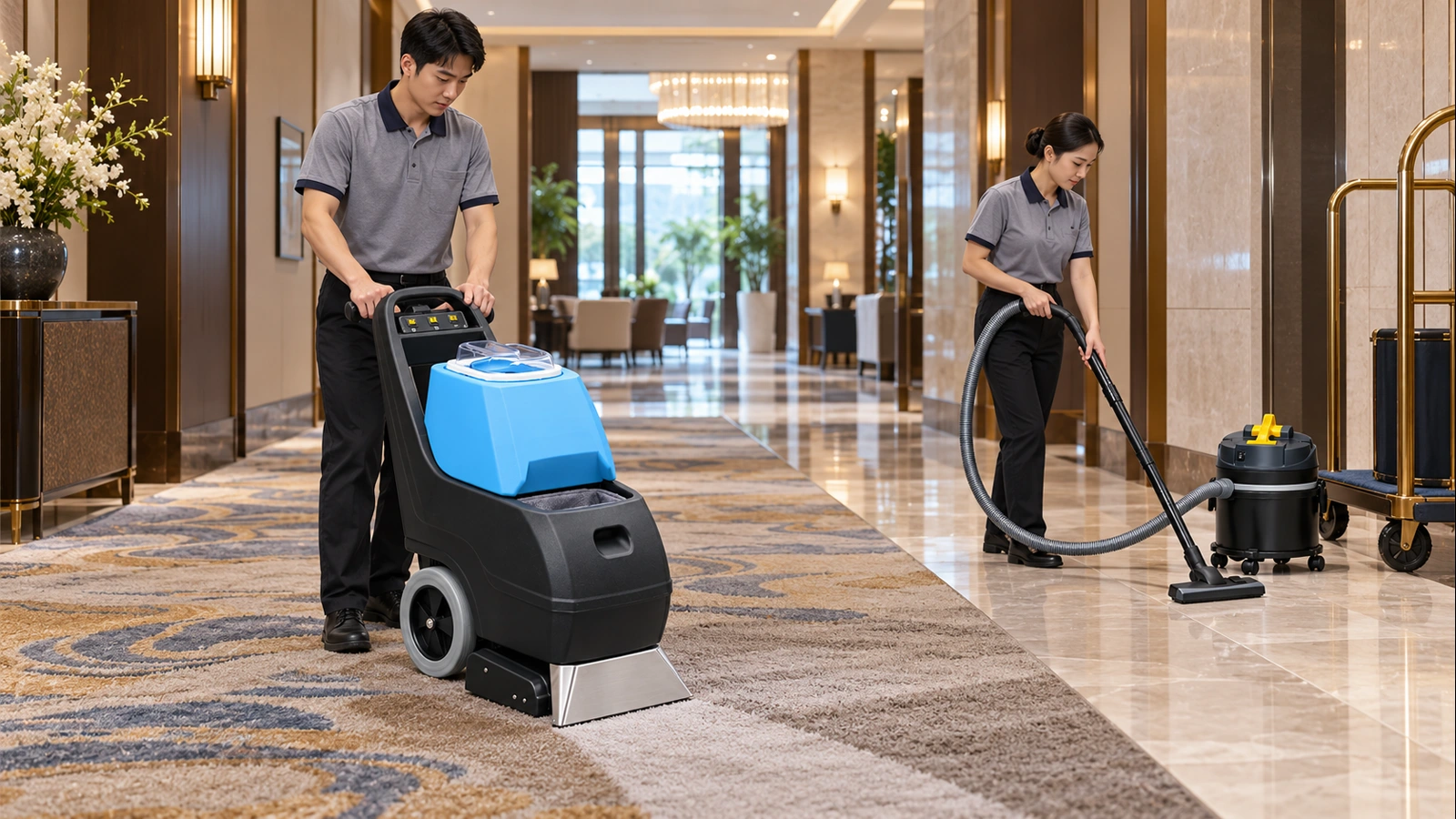
Planning cleaning equipment for hotels, offices and housekeeping companies
For hotels and commercial spaces, plan quiet-use vacuums, carpet cleaners, stone-care machines, escalator cleaners and consumables around noise needs, carpet/stone floors, lobbies, corridors, escalators and guest rooms.
Read article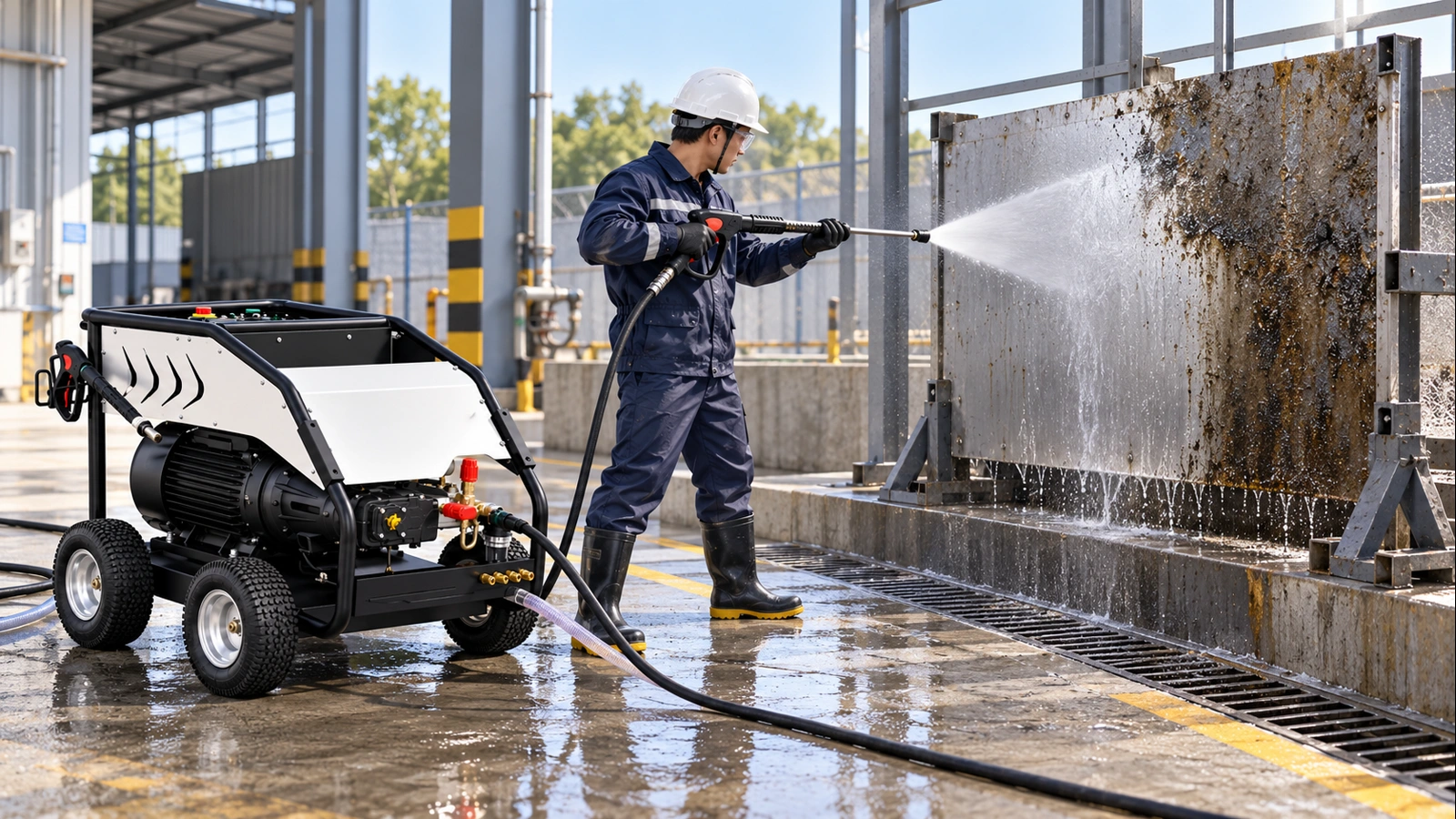
Pressure-cleaning applications: wall posters, road markings, equipment refurbishment and rust
Pressure, flow and nozzle combinations affect results. Match equipment and methods separately for wall posters, road markings, equipment refurbishment, coated roofing, rust and ship cleaning; suitability requires material and process assessment.
Read article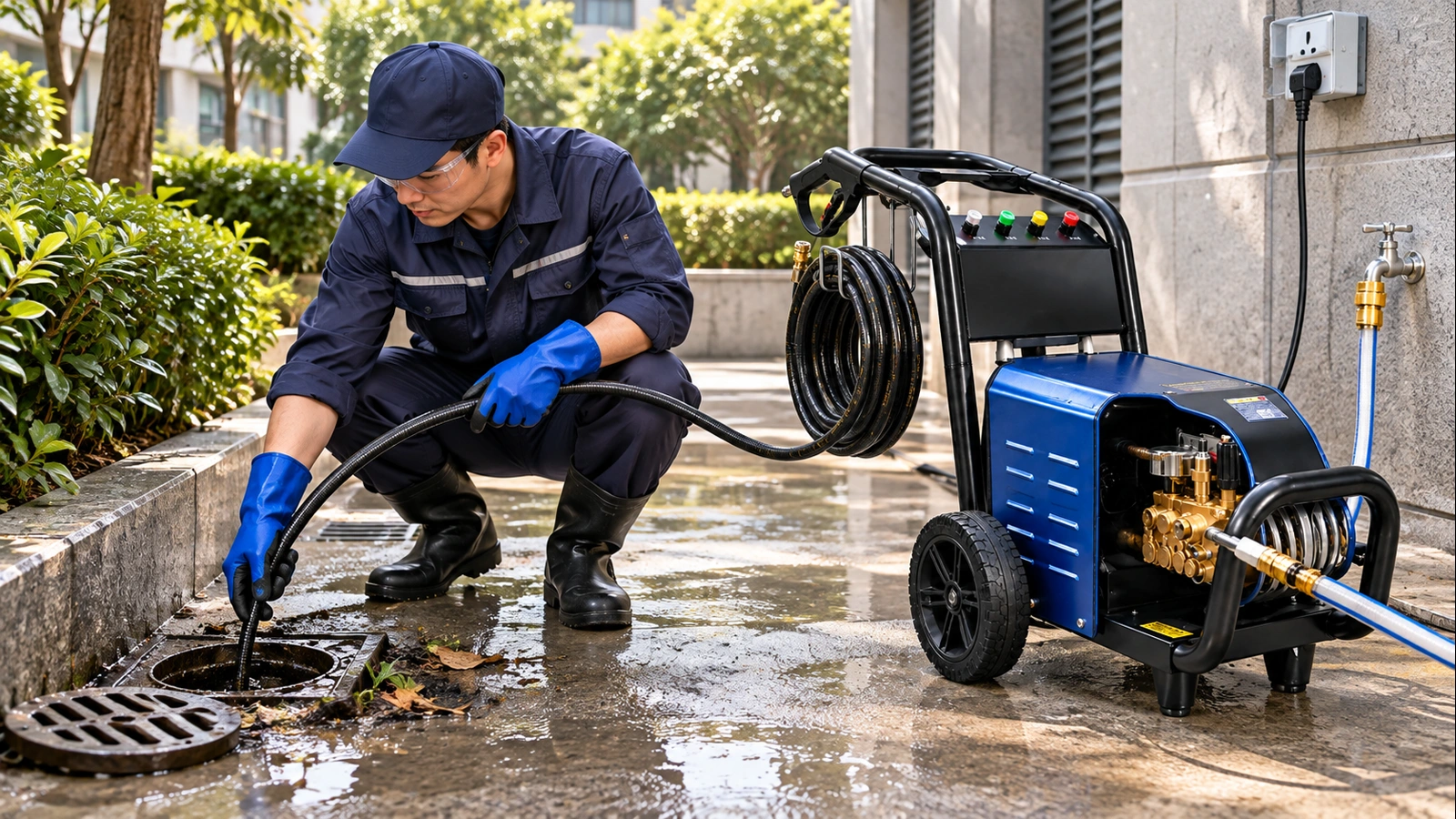
Choosing a jetter for 50mm and 75mm pipes: property applications for J-1020D
J-1020D pipe jetter pressure 100 bar (10 MPa)、flow 20 L/min、high-pressure hose 30 meters, suitable for property complexes, catering kitchens, building drainage and maintenance of small diameter blockages.
Read article
Configuring pressure-washing equipment in Zhuhai: assess the site before the model
Do not select pressure-washing equipment in Zhuhai by price alone. Confirm voltage, pressure, flow, water supply and protection before comparing 220 V, 380 V, petrol and high-flow options.
Read article
Zhuhai hotel/office equipment: inspect the site before choosing the model
Zhuji hotel office building commercial cleaning should not only select equipment based on price, but should focus on low noise, ease of training, stable consumables, and material protection when determining the configuration, and then match quiet vacuum cleaners, floor scrubbers, carpet machines, and cleaning agents.
Read article
Zhuhai drain equipment: inspect the site before choosing the model
Zhuji property management should not only select equipment based on price, but should confirm the configuration around pipe diameter, pipe length, elbows, clogging objects, and nozzle combinations, and then match J-1020D, J-1730H, J-2050H pipe jetters.
Read articleEquipment operation video
J-W70 autonomous scrubber operation reference
Observe indoor floor cleaning and movement. Check access, pedestrian traffic, water and wastewater arrangements and deployment conditions before selection.
J-W70 selection enquiry
Describe target, conditions and frequency to confirm the approach with the actual model.
Selection and quotation
Submit site conditions, confirm unmanned floor scrubber model
Provide area, corridor, pollution type, usage frequency, power, and budget information to help narrow down the model range.