

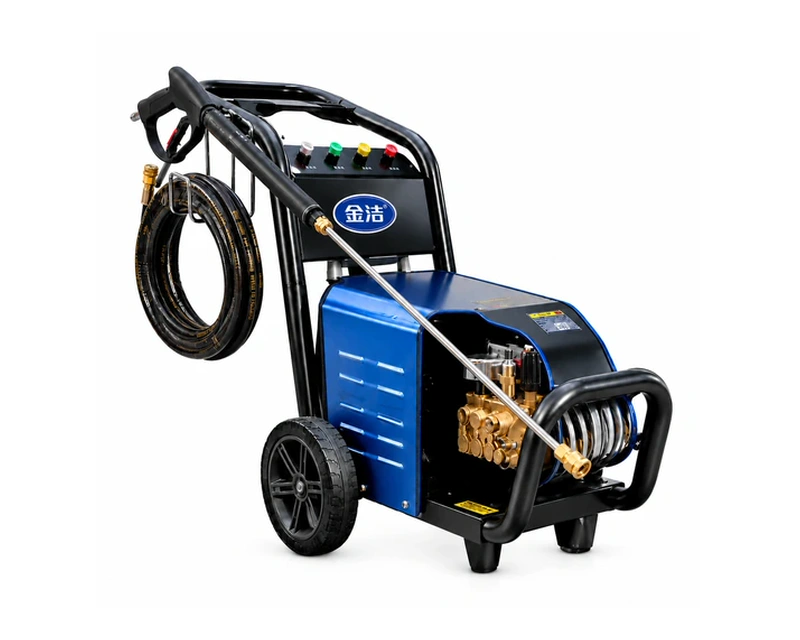
J-1612D
Electric
- Power source220 V electric
- Pressure160 bar
- Flow12 L/min
Suitable forResidential grounds; factory vehicle wash points; school and retail exteriors
Find products by model, equipment type or conditions.
14 models
Electric
Suitable forResidential grounds; factory vehicle wash points; school and retail exteriors

Petrol power
Suitable forOutdoor stone paving; loading bays and vehicle areas; site boundary walls
Electric / custom drive
Suitable forFixed industrial washing bays; mould-cleaning stations; heat-exchanger descaling

Petrol power
Suitable forRoad fixtures and property grounds; outdoor plant equipment; outdoor work sites
Electric
Suitable forPowered industrial hardstanding; equipment exteriors; vehicle wash bays
Electric
Suitable forWide factory and logistics routes; construction vehicles; commercial hardstanding
Electric
Suitable forAutomotive and mechanical parts; casting sand removal; heat-exchanger and tank descaling bays
Electric
Suitable forHeavy soiling in workshops; construction formwork; metal components
Electric
Suitable forConstruction equipment wash bays; foundry and mould stations; industrial equipment surfaces

Petrol power
Suitable forOpen-air vessel and dock equipment; outdoor machinery work areas

Petrol power
Suitable forOutdoor post-construction washdown; construction vehicles; roadside edges

Petrol power
Suitable forConstruction machinery; shipyard and port fixtures; bridge decks and guardrails
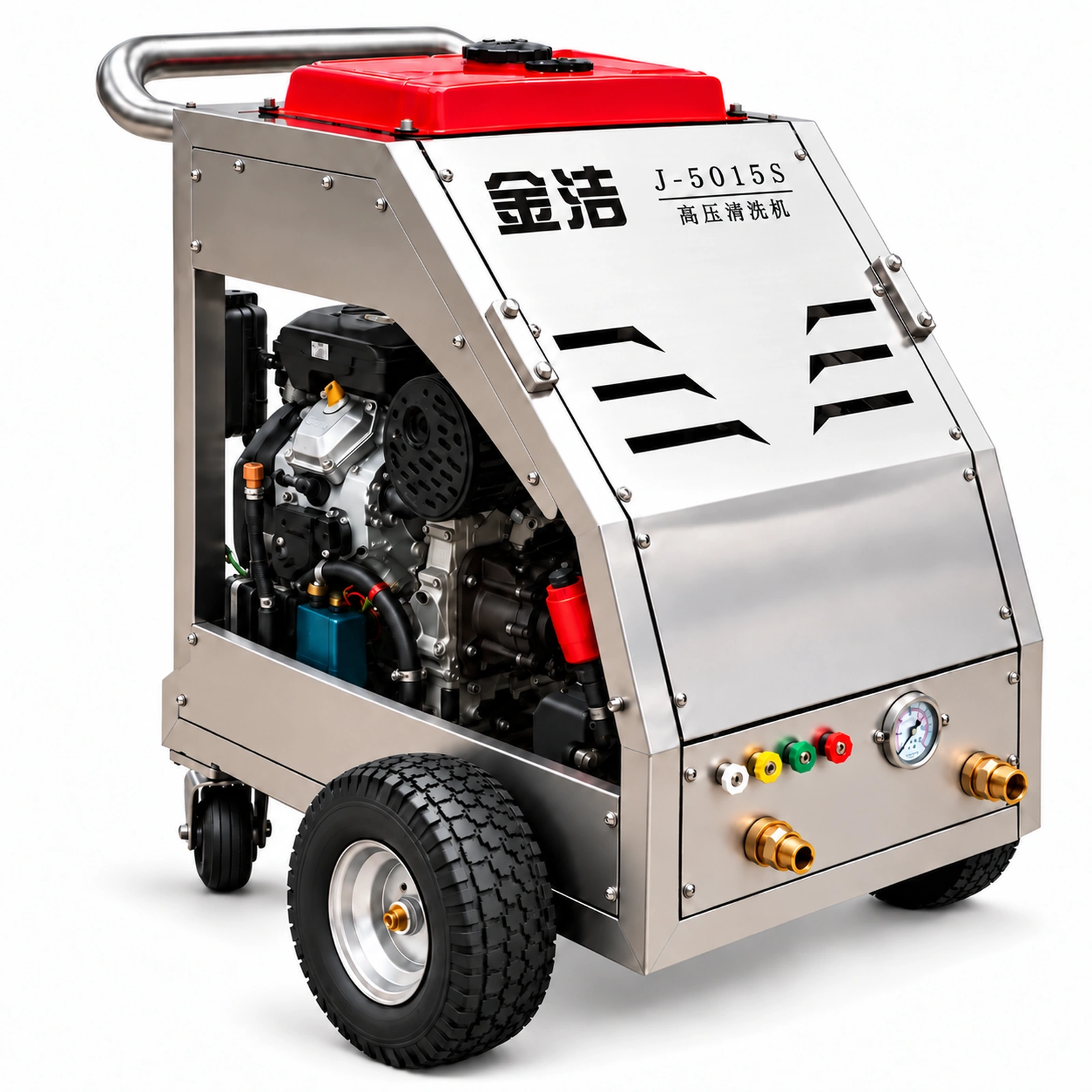
Petrol power
Suitable forOutdoor hard surfaces and fixtures; outdoor equipment; temporary worksites

Petrol power
Suitable forMining equipment surfaces; construction vehicles; municipal hardstanding
No matching products. Reset conditions or contact us.
Select up to three models to compare tasks and configurations.
No equipment selected.
Selection requires pressure, flow, power, contamination and continuous-duty needs to be considered together. Light property washing, factory equipment, outdoor projects and heavy equipment need different configurations.
Describe the object, dirt and utilities first; you need not start with MPa or L/min.
Check whether the site supports 220 V, 380 V or requires petrol power. Then select pressure and flow for the cleaning object and soil.
First select power, then compare pressure and flow, and finally confirm water supply, hose lengths and nozzles.
After selecting the power source, match pressure to soil adhesion and surface material, and compare flow against the required flushing volume. Higher pressure is not always better, and total machine flow is not the flow available to each gun.
Check supply capacity and connections for electric models. Petrol equipment is for suitably ventilated outdoor locations, not enclosed indoor areas. Confirm continuous water supply, wastewater disposal and material compatibility for all equipment.
Check the model nameplate, configuration and accessories. Trial critical cleaning conditions and access on site before purchase.
Start with the available 220 V, petrol or 380 V power source, then provide the cleaning object, soil photographs, water supply and continuous working time. Drawing on over 20 years of industry experience, we help shortlist equipment and identify configurations requiring confirmation.
Submit conditions to compare configurationsAssess surface tolerance, adhesion and surrounding protection before nozzles and distance. Trial fragile surfaces; pressure alone cannot guarantee removal.
Surface cleaning depends on material and jet coverage. Pipe work also depends on blockage, access, bends and contaminated-water drainage. Accessories and site arrangements differ between the two tasks.
Candidates cover different capability levels; confirm objects, contamination, water and safety for each task.
Review this model's introduction video for appearance, components and operation, then discuss selection using your site conditions.
Share site conditions and cleaning requirements to confirm configuration.
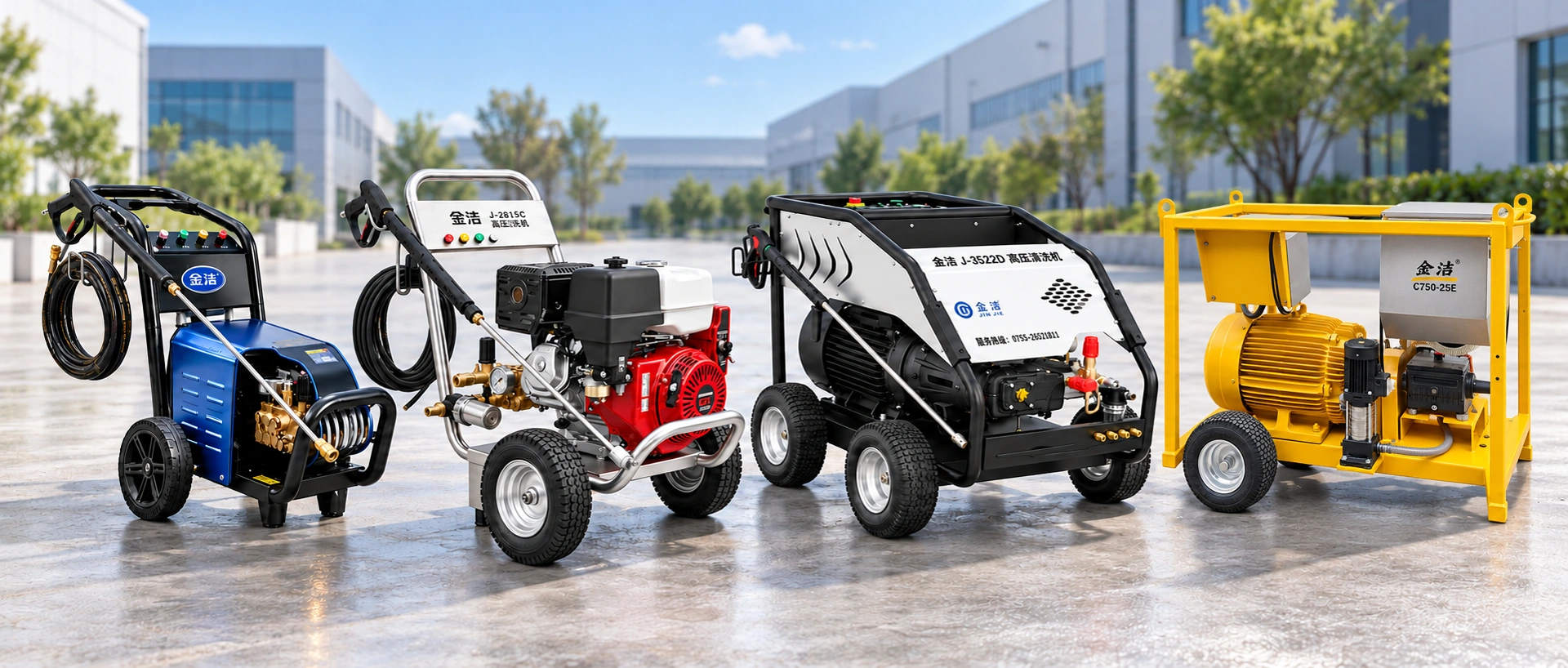
Cards show image, model, pressure/flow/power and role; consult details for full capability.
Pressure, flow and power jointly affect cleaning, continuous duty and site compatibility.
For light-to-medium property washing, assess 220 V access, stable water supply and surface safety.
Common medium/higher-pressure industrial, vehicle and outdoor tasks.
For more demanding industrial or outdoor work, compare 380 V/petrol options and 15/22 L/min flow configurations.
For heavy equipment and stubborn deposits, confirm material, nozzle distance, protection and water supply first.
Routine industrial and balanced washing where objects are defined and grit loads are moderate.
Emphasizes coverage and transport of grit or loose dirt.
Confirm power and ventilation before light/medium, fixed-industrial or outdoor-mobile selection.
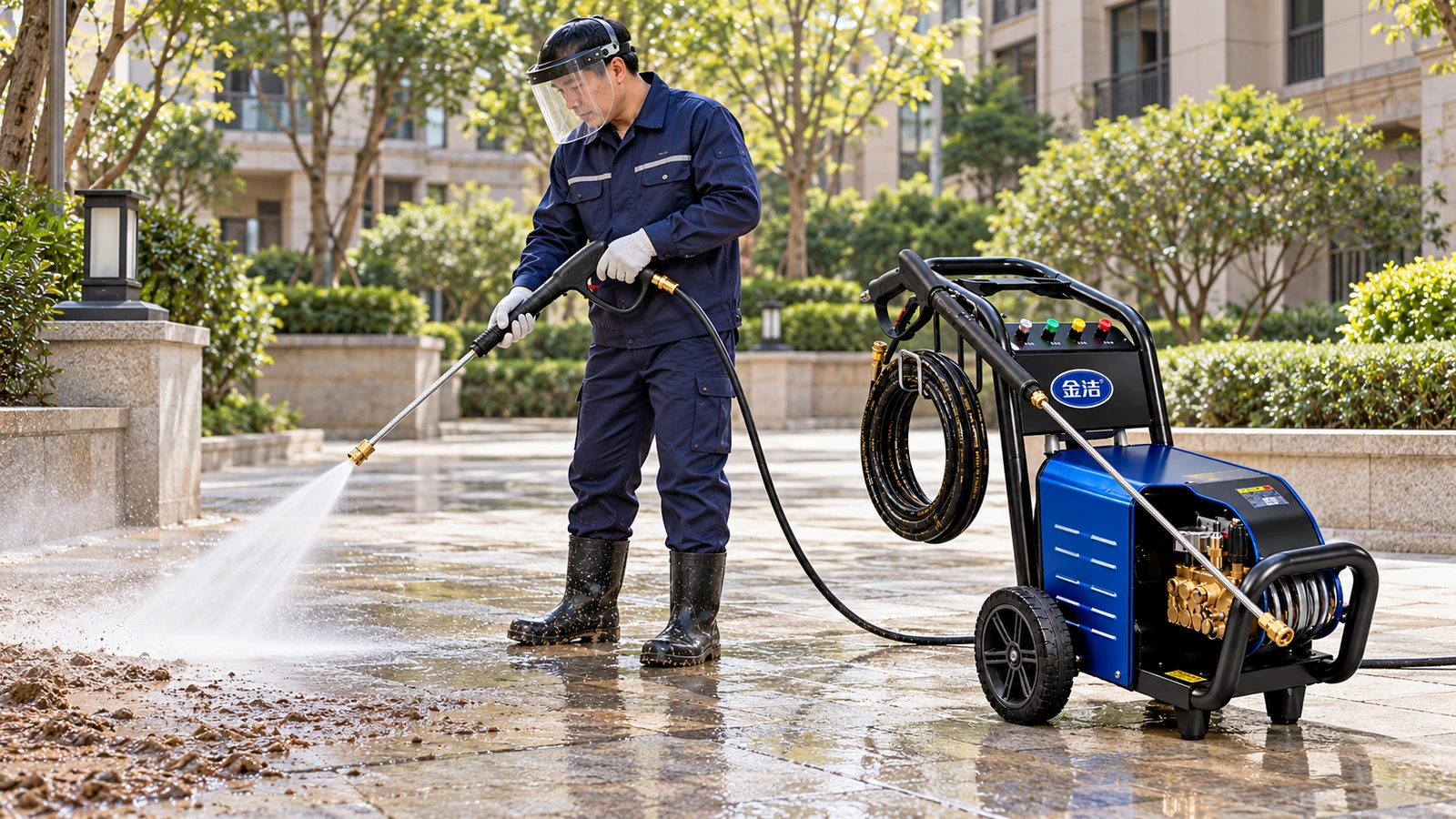
For light-to-medium mud, dust and exterior property washing, consider 220 V equipment after checking water supply and surface material.
Related model: J-1612DView equipment selection for this application →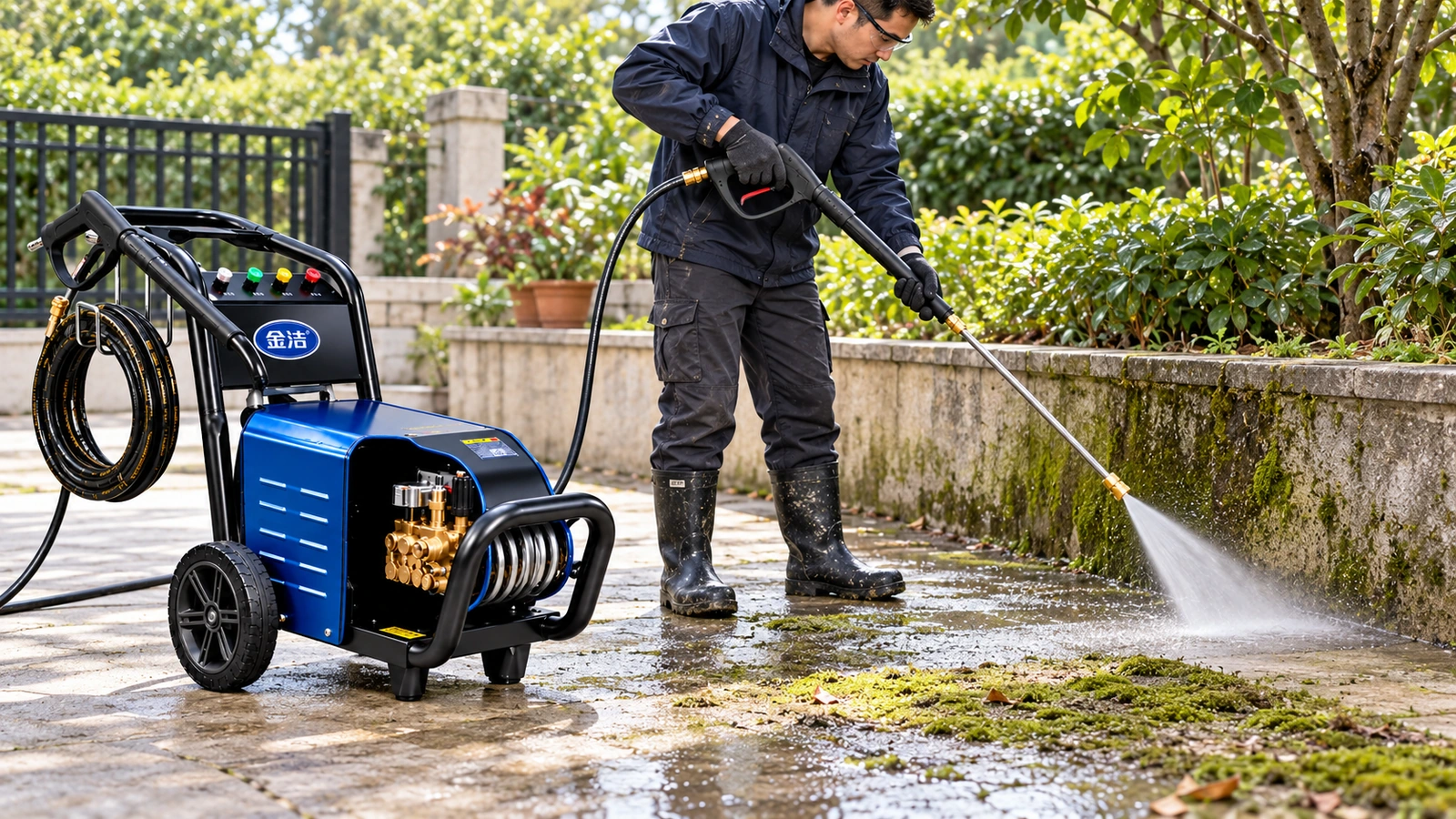
Assess moss adhesion, surface material and nozzle distance. Start with moderate pressure and avoid surface damage.
Related models: J-1612D / J-2515D / J-3515DView equipment selection for this application →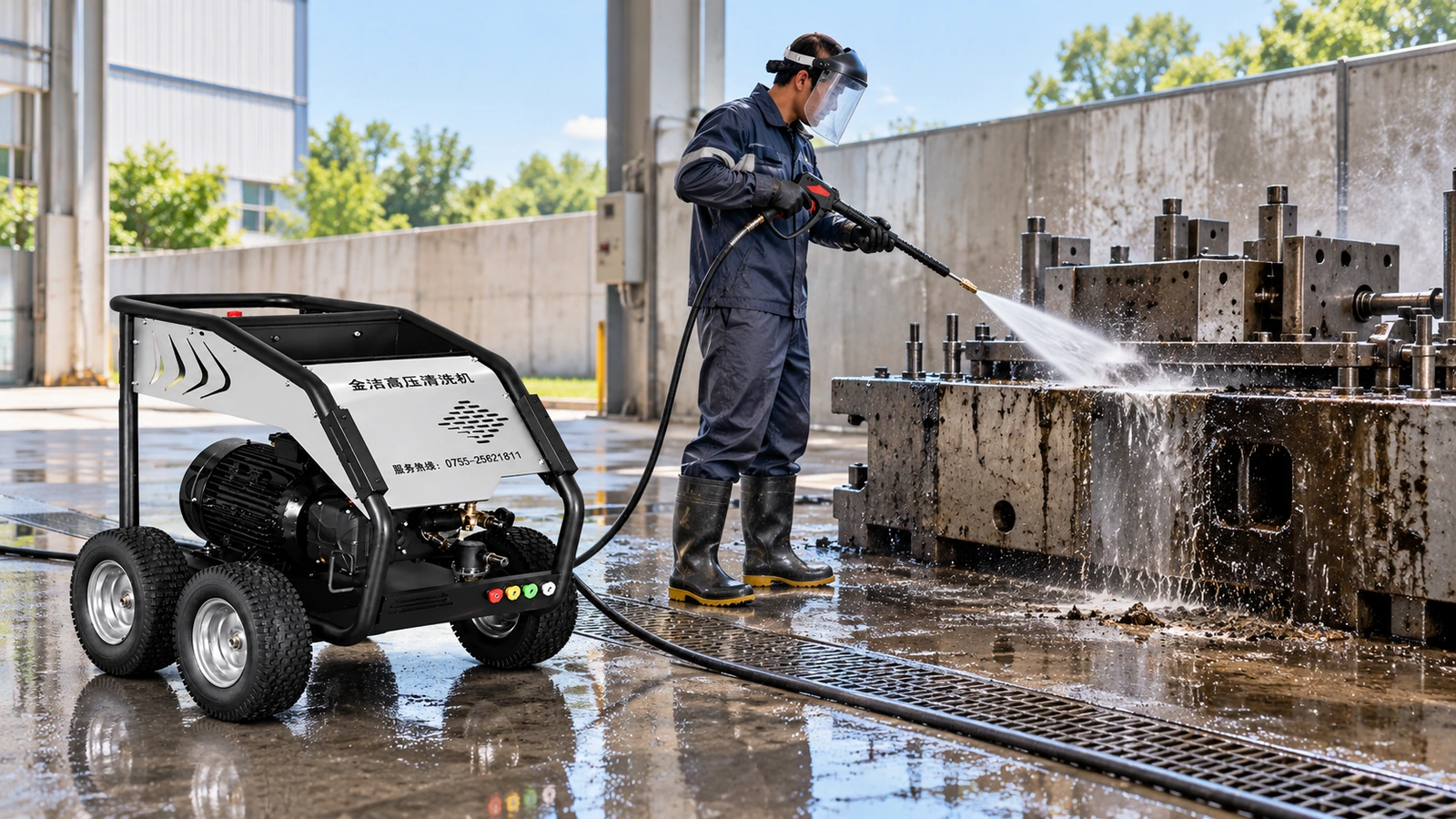
Compare 250bar(25MPa) for routine oil/mud and 350bar(35MPa) for more adherent deposits or heavier duty.
Related models: J-2515D / J-3515DView equipment selection for this application →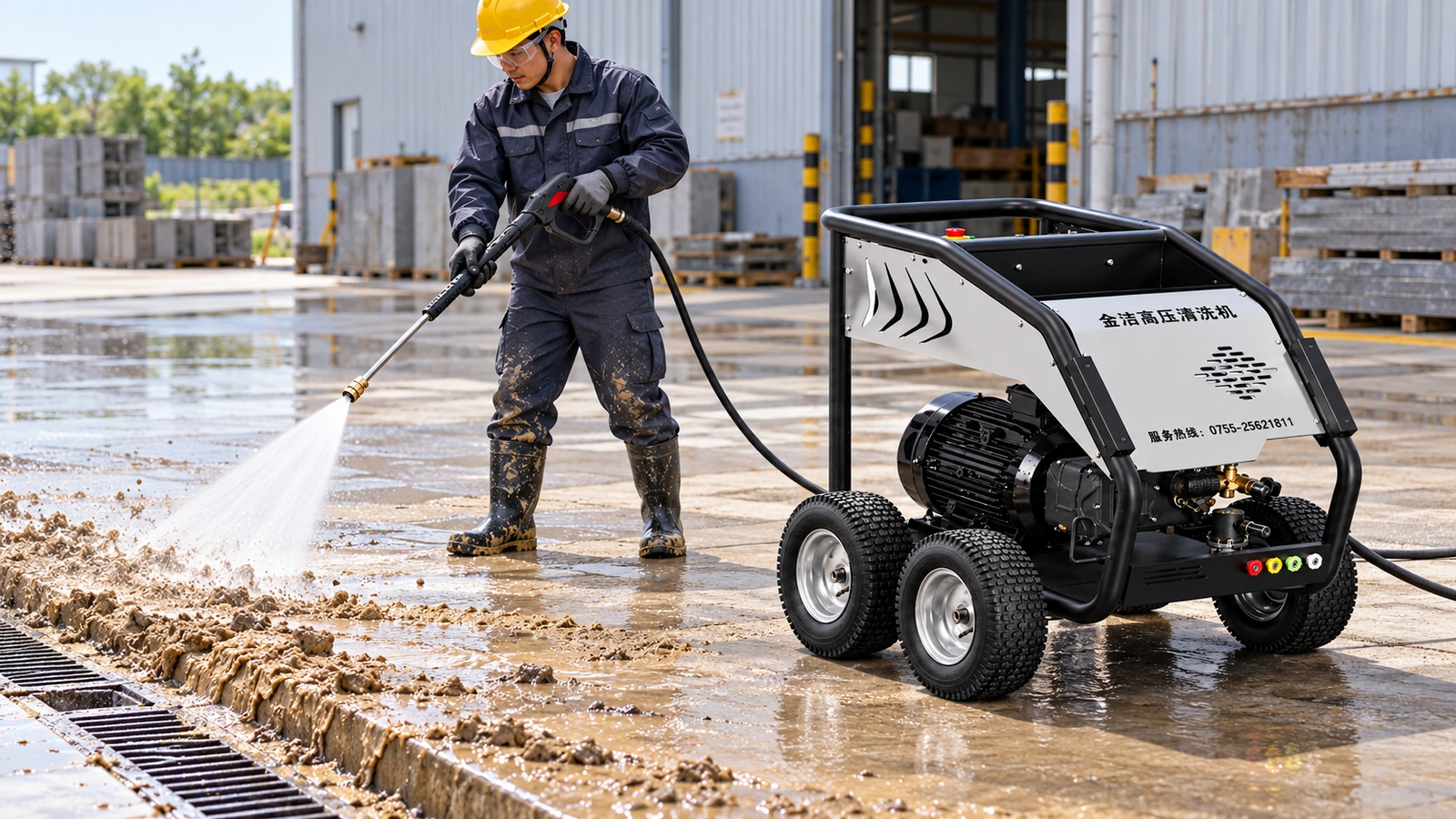
Assess flow, pressure, nozzles, distance and supply together for heavy loose contamination.
Related models: J-2521D / J-3522HView equipment selection for this application →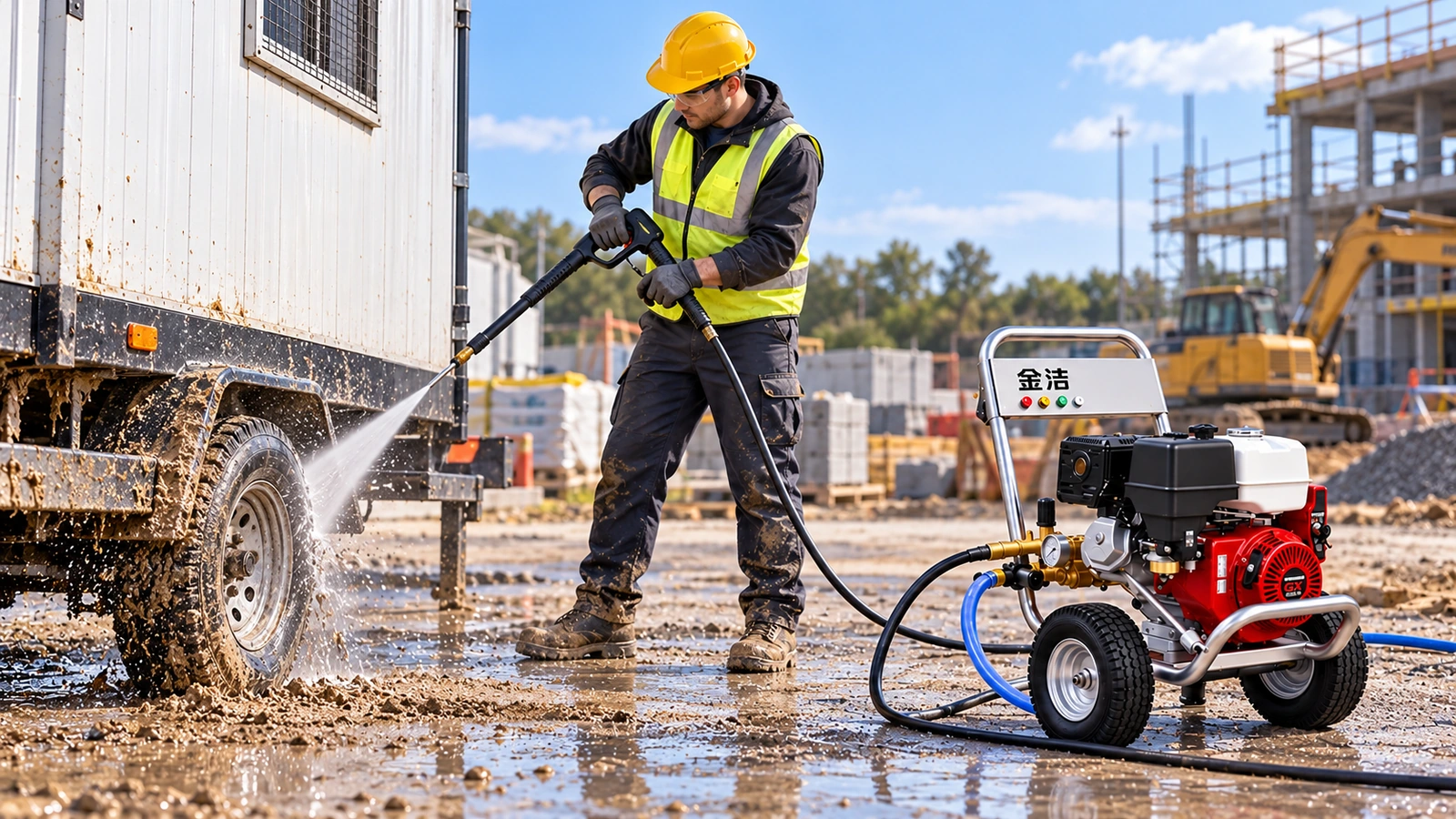
Petrol power can be assessed for outdoor construction, farm and temporary work; it must not operate indoors or where exhaust can accumulate.
Related models: J-2815C / J-2815H / J-3515HView equipment selection for this application →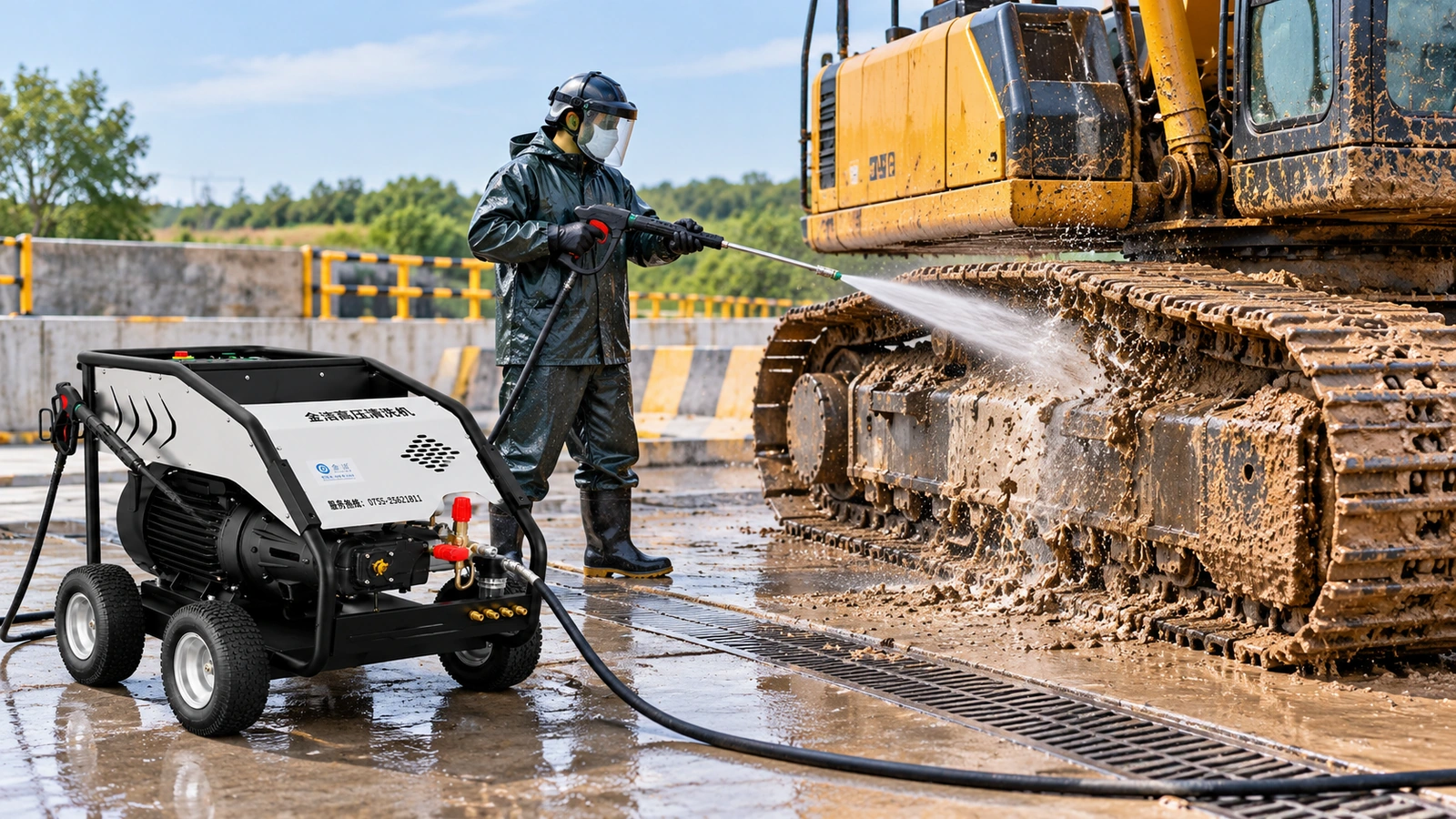
Consider the 500bar(50MPa) class only for heavy equipment, stubborn deposits or specialist industrial maintenance, after checking material and protection.
Related models: J-5022D / J-5015H / J-5022HView equipment selection for this application →| Assessment factor | Main influence | Selection reminder |
|---|---|---|
| Pressure | Jet impact and adherent-deposit removal capability. | Higher pressure requires closer material, distance, protection and damage-risk assessment. |
| Flow | Washing coverage and removal of grit or loose contamination. | Grit, large washing areas and difficult drainage need more than pressure assessment. |
| Nozzles | Fan, rotary, pipe-jetting or specialist nozzles. | At the same pressure/flow, nozzles substantially affect impact, coverage and safety boundaries. |
| Water supply | Supply stability, inlet volume and filtration. | Insufficient water can affect pressure, pump durability and continuous operation. |
| Contamination type | Grit, mud, moss, rust, old paint or mixed deposits. | Different contamination needs different pressure, flow, nozzles and distances; one model cannot cover every task. |
| Surface material | Concrete, stone, metal, coatings and vehicle paint. | Test fragile or coated surfaces first to avoid damage from high pressure. |
Relevant advantage:Ordinary electrical supply may be easier to access.
Suitable for:Property sites, smaller areas and routine light/medium washing.
Relevant advantage:More suited to assessed continuous work at fixed industrial sites.
Suitable for:Factories, workshops, engineering vehicles, equipment and factory hard floors.
Relevant advantage:No fixed electrical supply is needed, allowing outdoor relocation; safe petrol-engine positioning remains essential.
Suitable for:Construction, farms and outdoor sites without fixed power; petrol equipment must not operate indoors or where exhaust may accumulate.
Relevant advantage:No fixed electrical supply required; suited to mobile outdoor work.
Suitable for:Outdoor projects, factory grounds and sites without fixed electrical power; confirm ventilation, water supply and drainage.
Consider the first option when:With only 220 V and light/medium routine property washing, consider J-1612D first.
Compare another option:Where 380 V is available for frequent routine industrial/equipment washing, compare J-2515D.
Consider the first option when:Assess J-2515D for defined medium-soil industrial washing with moderate grit loads.
Compare another option:Compare J-2521D at 21 L/min where loose grit, coverage or dirt transport matters.
Consider the first option when:Where 250bar(25MPa) suits routine factory equipment or vehicle washing, compare J-2515D first.
Compare another option:For more stubborn deposits requiring greater jet impact, compare the 350bar(35MPa) J-3515D.
Consider the first option when:Consider the 350bar(35MPa) J-3515D as a starting point for more demanding industrial washing, subject to trials.
Compare another option:Assess the 500bar(50MPa) J-5022D for heavy equipment, stubborn deposits or specialist maintenance tasks.
Consider the first option when:Compare J-3515H for assessed outdoor 350bar(35MPa) / 15 L/min washing without fixed power.
Compare another option:For 350bar(35MPa) petrol tasks with greater grit-transport needs, compare J-3522H at 22 L/min.
Consider the first option when:Where 280bar(28MPa) / 15 L/min meets an outdoor mobile task, compare J-2815C/H; the source treats their core capability as equivalent.
Compare another option:Compare J-3515H where outdoor washing requires the 350bar(35MPa) pressure class.
The source identifies J-1612D with a Chinese-standard industrial ceramic precision-plunger pump, and other pressure washers with Italian AR-brand industrial ceramic precision-plunger pumps. Confirm each actual pump model against project configuration records.
Explosion-protection customization requires project assessment; without certification evidence, no Ex rating, certified protection or specific hazardous-zone suitability is claimed.
The source treats J-2815C and J-2815H as equivalent 280bar(28MPa) / 15 L/min outdoor petrol options; confirm appearance and supplied configuration for the project.
 Factory Workshop Floor-Cleaning PlanRide-on scrubbers with industrial vacuums for dust, oil and metal-chip tasks.
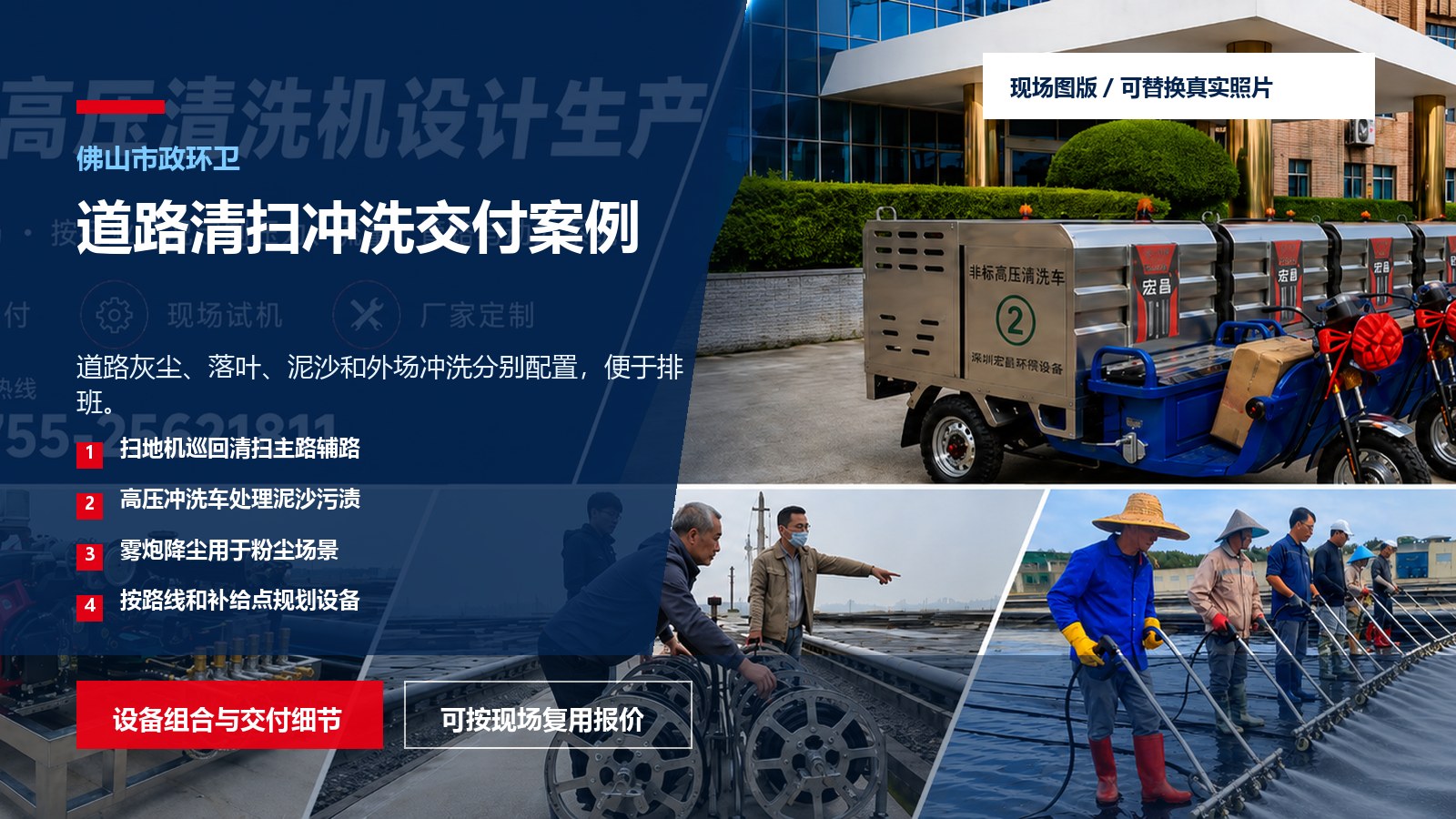 Municipal Road Sweeping and Dust-Control PlanCoordinate enclosed sweeping and pressure washing for road-cleaning rounds; actual productivity requires site confirmation.
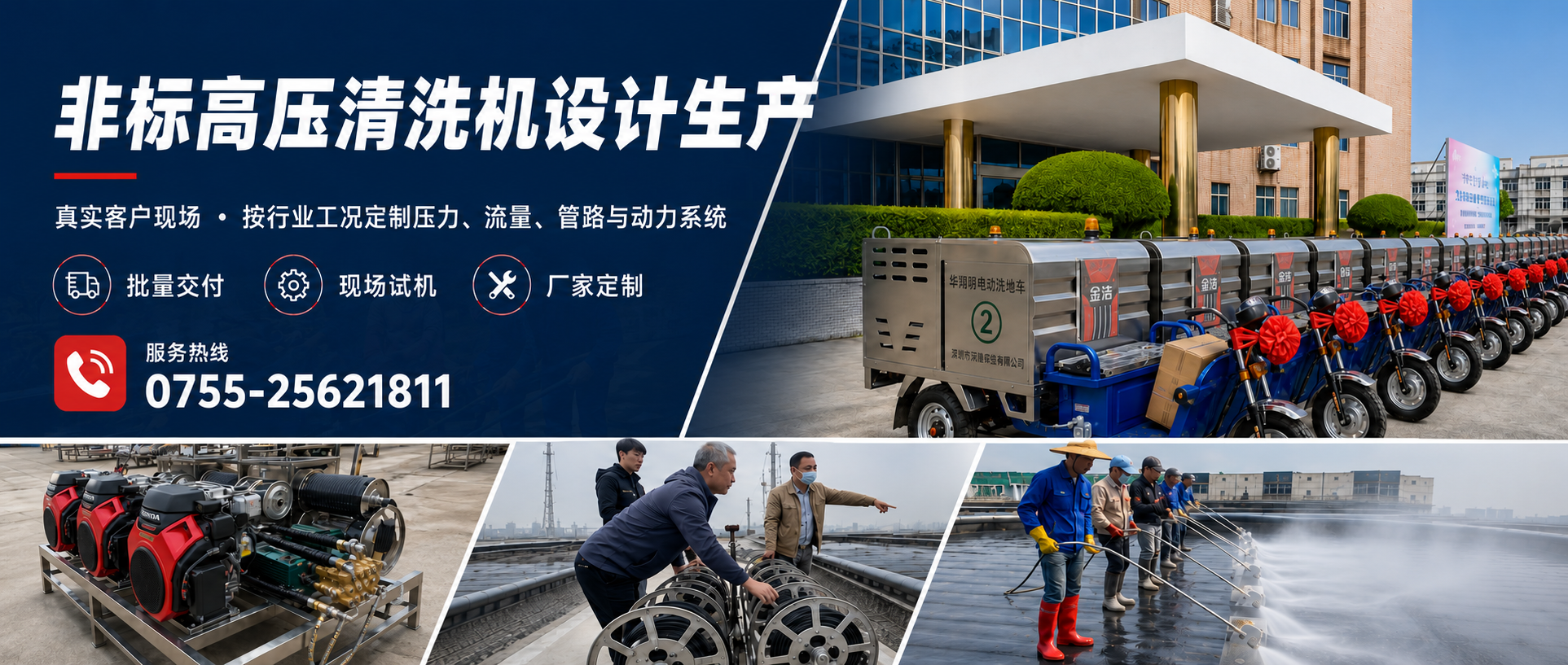 Custom Pressure-Washing System Application ReferenceCustomise a pressure-washing system around pressure, flow, spray workstations, line cycle and safety protection.
 How to match pressure and flow to a cleaning taskCompare flow and operating pressure for the same task.
 Configuring pressure-washing equipment in Zhuhai: assess the site before the modelDo not select pressure-washing equipment in Zhuhai by price alone. Confirm voltage, pressure, flow, water supply and protection before comparing 220 V, 380 V, petrol and high-flow options.Industrial pressure-washing application illustration; no verified removal test or customer delivery impliedFor Zhongshan pressure-washing applications, assess voltage, pressure, flow, water and protection before comparing 220V,380V,petrol and high-flow models. Price alone is insufficient.Industrial pressure-washing application illustration; no verified removal test or customer delivery impliedFor Huizhou pressure-washing applications, assess voltage, pressure, flow, water and protection before comparing 220V,380V,petrol and high-flow models. Price alone is insufficient.Foshan pressure-washing equipment: assess the site before selecting a modelFor Foshan pressure washing, assess voltage, pressure, flow, water supply and protection before comparing 220 V, 380 V, petrol and high-flow configurations.Industrial pressure-washing application illustration; no verified removal test or customer delivery impliedFor Dongguan pressure-washing applications, assess voltage, pressure, flow, water and protection before comparing 220V,380V,petrol and high-flow models. Price alone is insufficient.
Describe the object, dirt, distance and utilities before pressure/flow; pressure alone cannot predict results.
Stubborn deposits: assess surface tolerance, nozzle, distance and site trials together.
Carrying dirt away: assess flow, water supply and wastewater arrangements.
For long operating periods, verify rated duty, power supply and maintenance requirements.
Assess contamination, surface and nozzle conditions together. Test sensitive materials first; higher pressure does not mean greater efficiency in every application.
Provide the cleaning object, contamination, area, working distance, power and water supply, frequency and wastewater arrangements.
Low or fluctuating pressure, leaks or failure to start? Share the power type, nameplate and symptoms to discuss an inspection.
View pressure washer repair supportWashing equipment, floors or heavily soiled work areas? Share the surface, water supply and available power to discuss a rental setup.
View pressure washer rental optionsNo. Higher pressure increases impact and potential damage to coatings, stone, paint or fragile surfaces. Assess contamination, nozzles, distance and material together.
More flow can improve loose-deposit transport and coverage, but requires adequate supply, drainage and control. Routine equipment cleaning may not need maximum flow.
Assess 220 V for property sites, smaller premises and routine washing; assess 380 V for sustained work at fixed factories, workshops and vehicle-maintenance sites.
Petrol equipment can be assessed outdoors on construction/farm sites without fixed power; never operate it indoors or where exhaust can accumulate.
Assess moss adhesion and material first. Consider light-to-medium or moderate pressure, adjusting nozzle and distance rather than immediately using excessive pressure.
Possibly. Trial floors, stone, coatings, paint and aged concrete before setting pressure, nozzles and distance.
Insufficient water can destabilize pressure, increase pump load and interrupt cleaning. Confirm supply especially for high-flow models.
Assess 500bar(50MPa) for eligible heavy equipment, deposits or specialist maintenance requiring greater impact, with material tolerance and safety checked together.
Provide objects, pollutants, water, power, ventilation, materials and daily hours to narrow models.
Pressure alone does not determine cleaning suitability. Equipment grease, vehicle mud, factory floors and construction sites require combined assessment of pressure, flow, power, water and nozzles.
Oil, grit, rust, graffiti and loose dust need different methods. Define the object before cold/hot water or higher-intensity washing.
Consider 220 V for routine mobile tasks, 380 V for fixed industrial sites, and petrol for outdoor projects requiring mobility without fixed power.
Pressure acts on deposits; flow provides coverage and transport. Contractors and large factories should assess sustained capacity against shift workload.


