

J-1020D
Electric
- Power sourceElectric
- Pressure100 bar
- Flow20 L/min
Suitable forCommercial kitchens and floor-drain branches; property plant rooms; drains and gullies
Find products by model, equipment type or conditions.
11 products found
Electric
Suitable forCommercial kitchens and floor-drain branches; property plant rooms; drains and gullies
Electric
Suitable forPowered property drain sites; food-service drains; factory drain branches
Petrol power
Suitable forOutdoor residential drain sites; municipal storm and foul drains; factory branches
Petrol power
Suitable forOutdoor property drains; service-area drains; factory branches
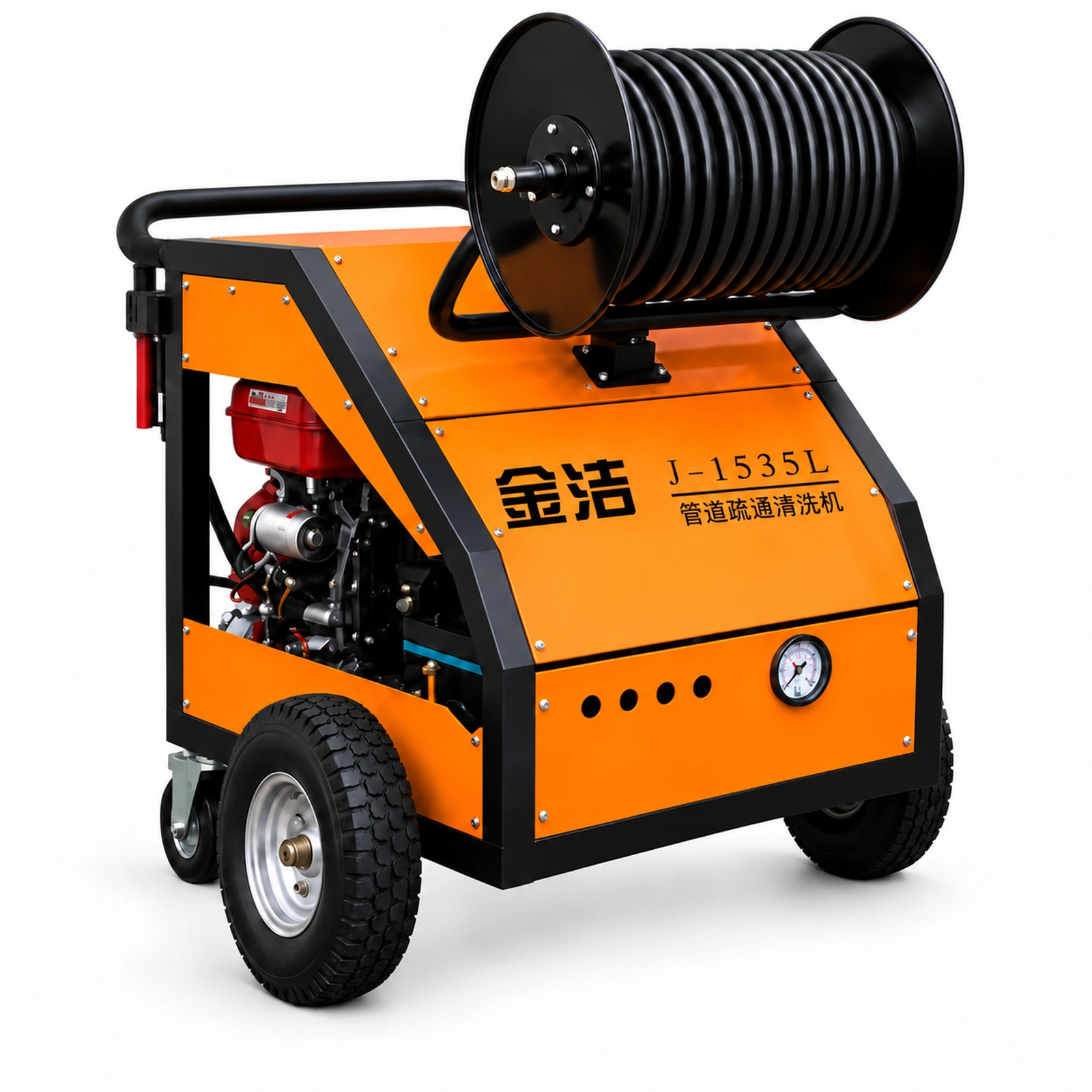
Petrol power
Suitable forProperty and commercial service drains; food-service branches; outdoor factory drain sites

Electric
Suitable forFactory drainage; garage hard floors; open channels
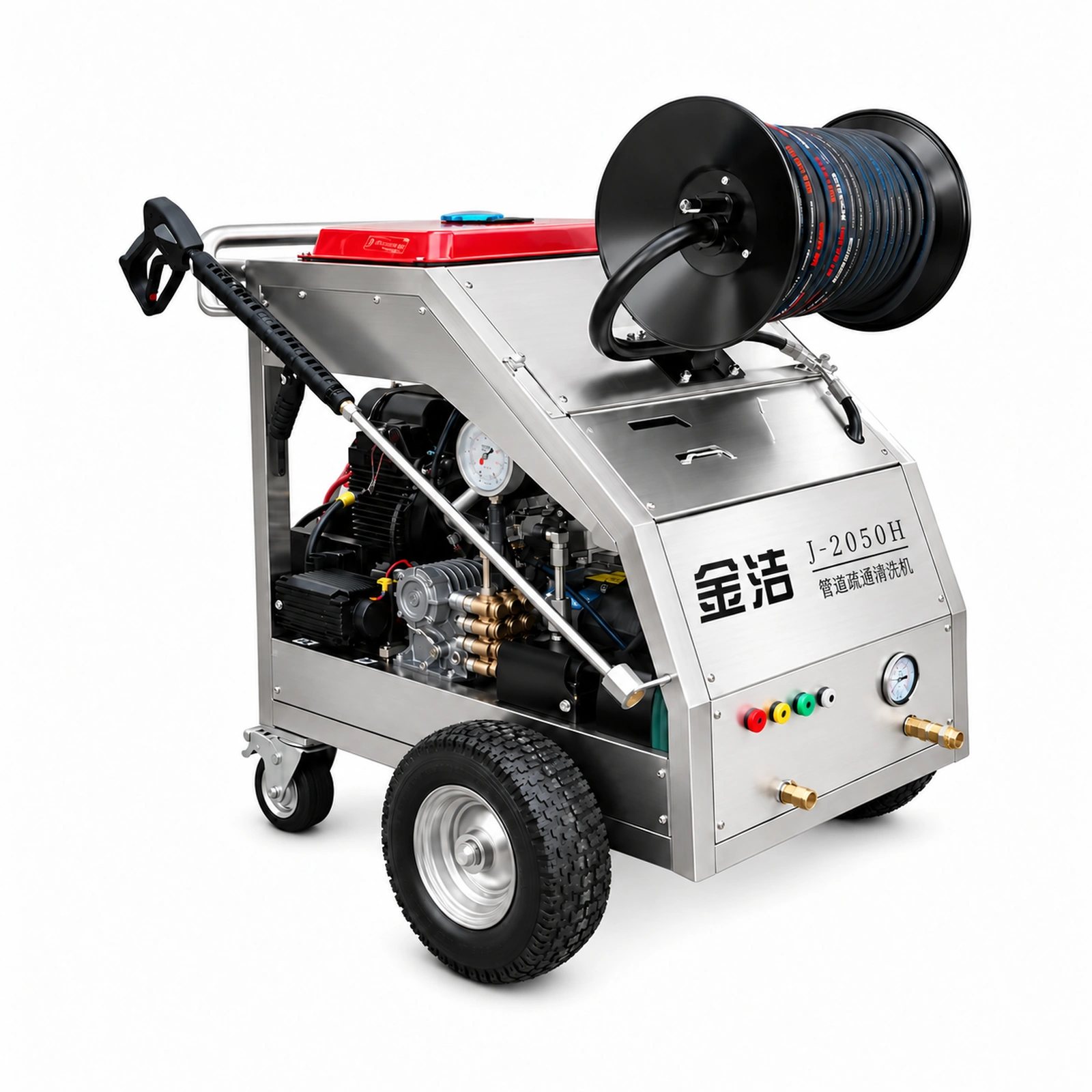
Petrol power
Suitable forMunicipal perimeter drainage; property mains; industrial drains
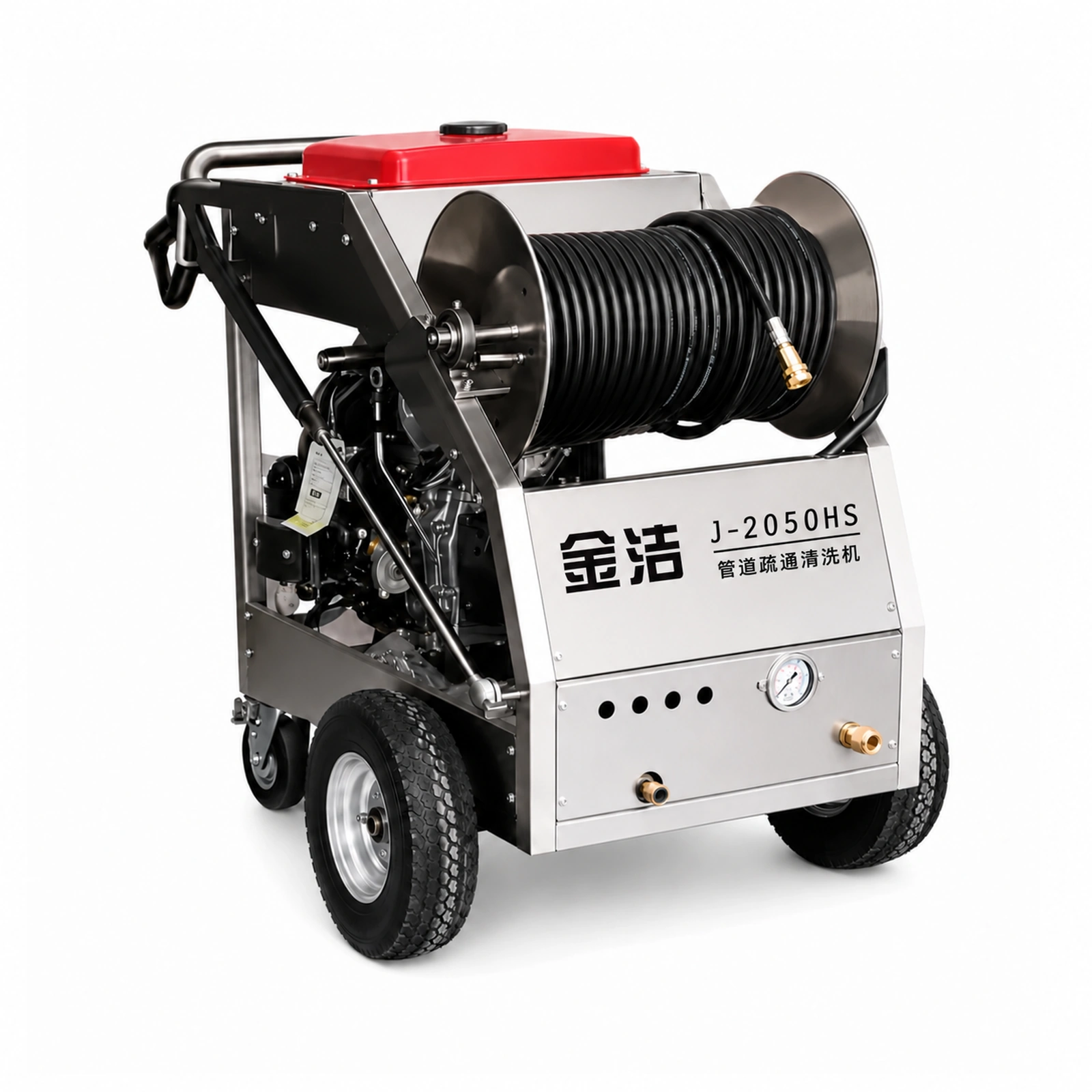
Petrol power
Suitable forOutdoor property manholes and drains; commercial service-area drains; factory and construction pipework
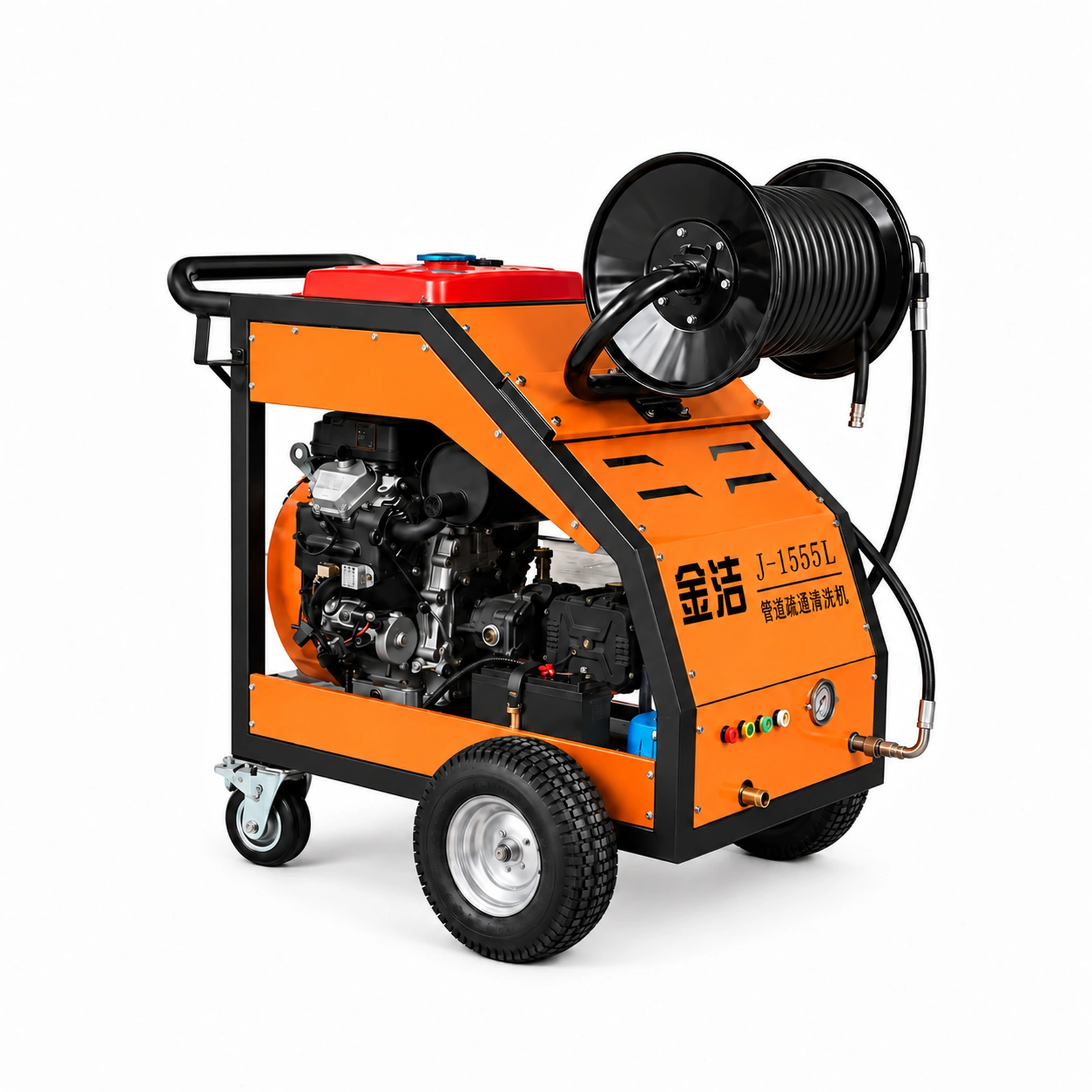
Petrol power
Suitable forProperty drainage mains; storm and foul drains; industrial and oily drains
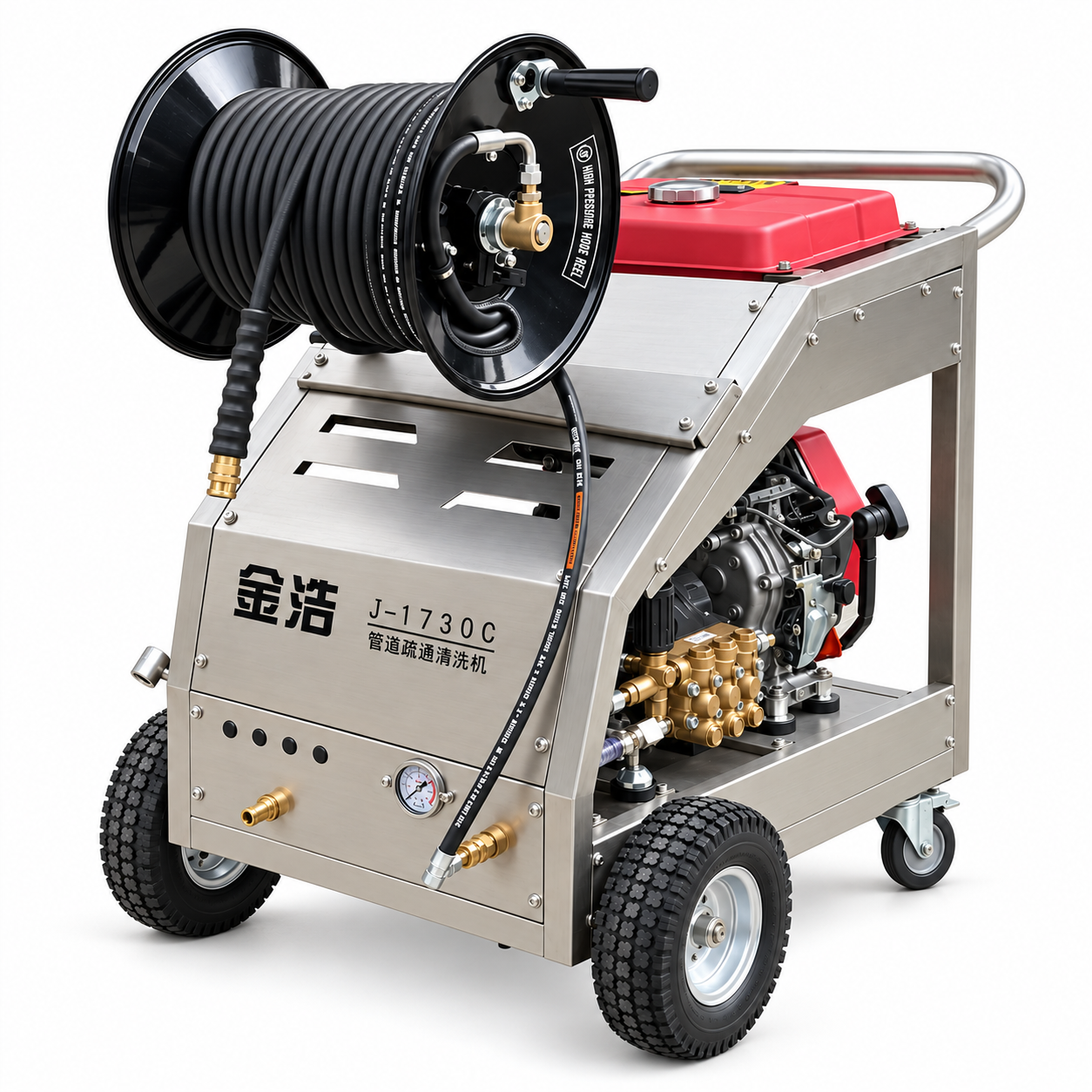
Diesel power
Suitable forOutdoor line flushing; outdoor auxiliary single-lance washing
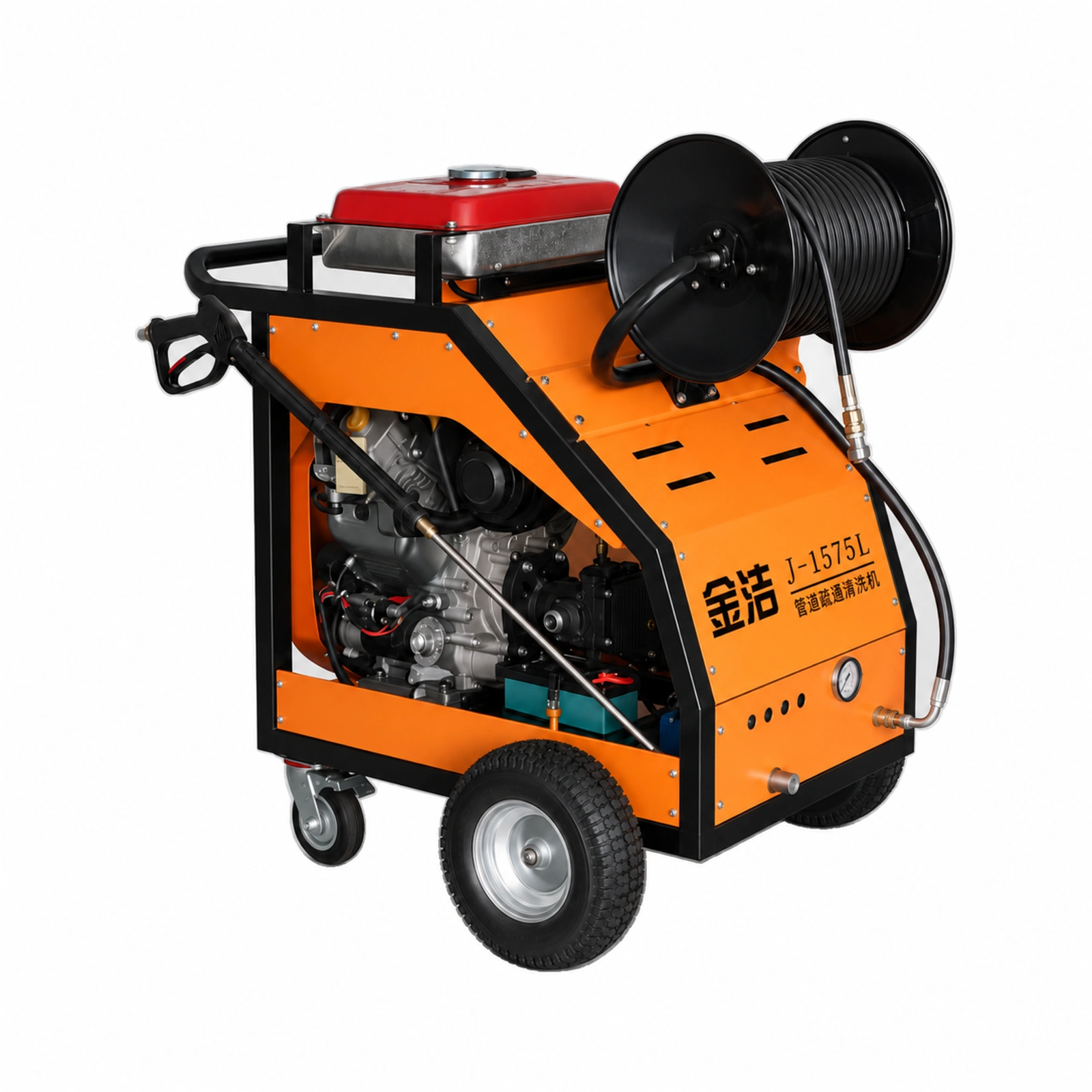
Petrol power
Suitable forMunicipal storm and foul networks; industrial drains; large property drainage works
No matching products. Reset conditions or contact us.
Select up to three models to compare tasks and configurations.
No equipment selected.
Blockages, sediment and pipe-wall deposits require different approaches. Consider pressure, flow, diameter, length, bends, nozzle and water supply together. Higher flow often helps carry sediment and loose debris away, but maximum flow is not appropriate for every pipe.
Start with blockage symptoms, pipe dimensions, bends, water and discharge conditions; pressure and flow can be assessed afterwards.
Loose deposits differ from collapsed pipes or lodged hard objects; diameter alone cannot select equipment.
Check diameter, length, bends, blockage, access, water and discharge; match pressure/flow with nozzles and hoses.
| Compare models | Why consider this category first? |
|---|---|
| J-1020D | 20 L/min electric maintenance option; confirm pipes and access conditions first. |
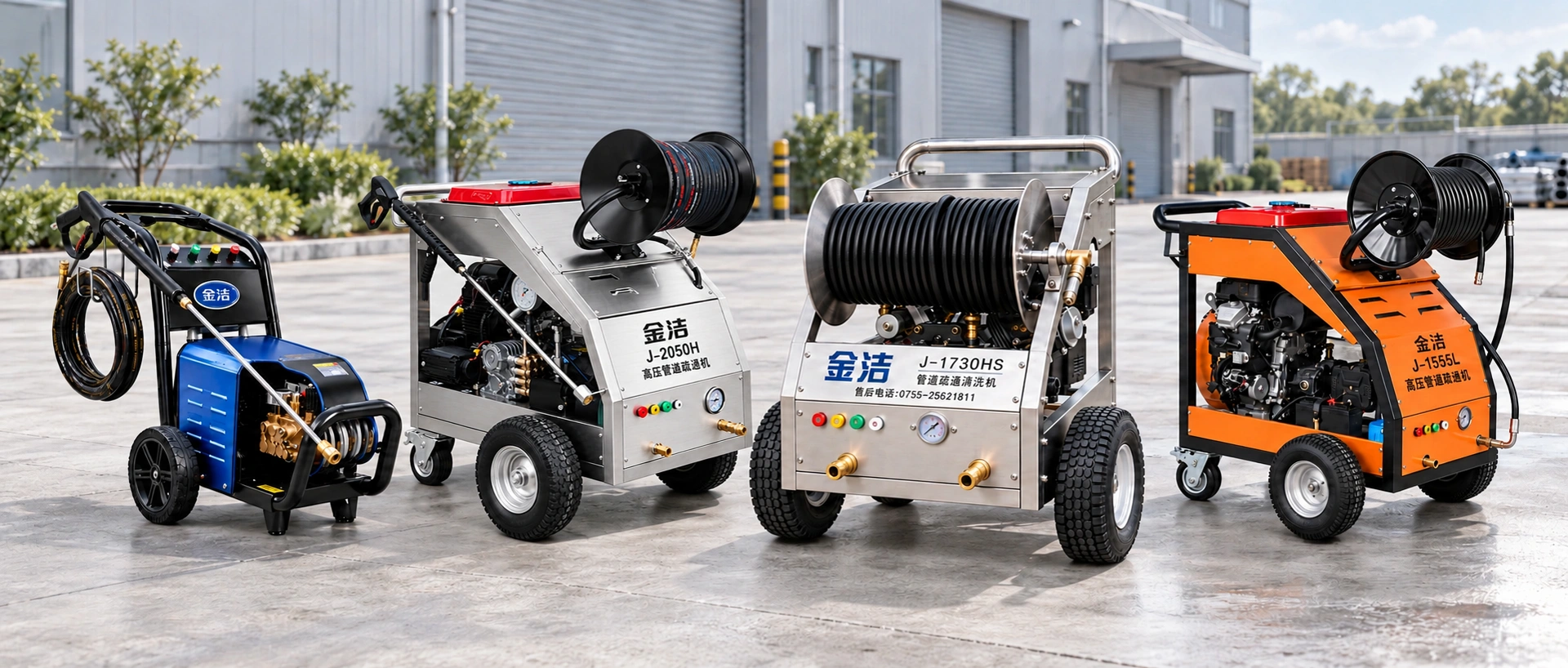
| J-1730H / HS、J-1535L | 30–35 L/min options; H/HS structures differ and historical power-source fields remain to be verified. |
| J-1555L / J-2050H | Compare 55 L/min and 50 L/min pressure/flow combinations; do not infer H-model power from historical fields. |
| J-1575L | 75 L/min platform: assess jetting, 10-nozzle flushing and multi-gun requirements separately. |
Carrying debris away and applying greater surface impact are different needs. Pressure, nozzle, actual hose layout and water supply jointly affect the result.
Hose length is not effective reach. Collapsed pipes, roots and hard obstructions need specialist assessment; no fixed maximum diameter or bend count is promised.
Check the model nameplate, configuration and accessories. Trial critical cleaning conditions and access on site before purchase.
Provide pipe dimensions, blockage, bends, chamber photos, water/discharge and concurrent operators. We draw on over 20 years of experience and identify items requiring confirmation.
Submit conditions to compare configurationsConfirm diameter, length, bends and blockage. Collapsed pipes or lodged hard objects need different methods from flushable deposits; check power, continuous water and discharge.
Separate pipe jetting, floor flushing and multi-gun tasks. Check water, manifolds, nozzles and hoses; indicative split flow is not a fixed per-gun pressure promise or permission for simultaneous full-load duties.
A high-pressure machine can connect several spray guns through a matched distribution assembly for simultaneous washing. Selection depends on each gun's flow and cleaning performance during joint operation, rather than the number of connections alone.
Tell us the simultaneous operator count, soil type, floor or equipment material, and each hose length. Sediment flushing, heavy-soil removal and routine floor washing place different demands on each gun.
Confirm continuous water supply and the available power source, then match total flow, distributor, high-pressure hoses and nozzles. Pressure alone does not determine the usable gun count.
Operate the planned number of guns together and check each line's flow, pressure and cleaning performance. Confirm the gun count and delivery configuration through site assessment or a trial.
A 30 L/min rating, for example, is the total machine flow shared between the connected guns. Pressure is not simply divided by the number of guns. Confirm the usable gun count together with nozzles, hose lengths, water supply and soil conditions.
| Model | Whole-machine pressure rating | Total machine flow, shared between all lines |
|---|---|---|
| J-2515D | 250bar(250bar(25MPa)) | 15L/min |
| J-2521D | 250bar(250bar(25MPa)) | 21L/min |
| J-2815C | 280bar(280bar(28MPa)) | 15L/min |
| J-2815H | 280bar(280bar(28MPa)) | 15L/min |
| J-3515H | 350bar(350bar(35MPa)) | 15L/min |
| J-3522H | 350bar(350bar(35MPa)) | 22L/min |
| J-5015H | 500bar(500bar(50MPa)) | 15L/min |
| J-5022H | 500bar(500bar(50MPa)) | 22L/min |
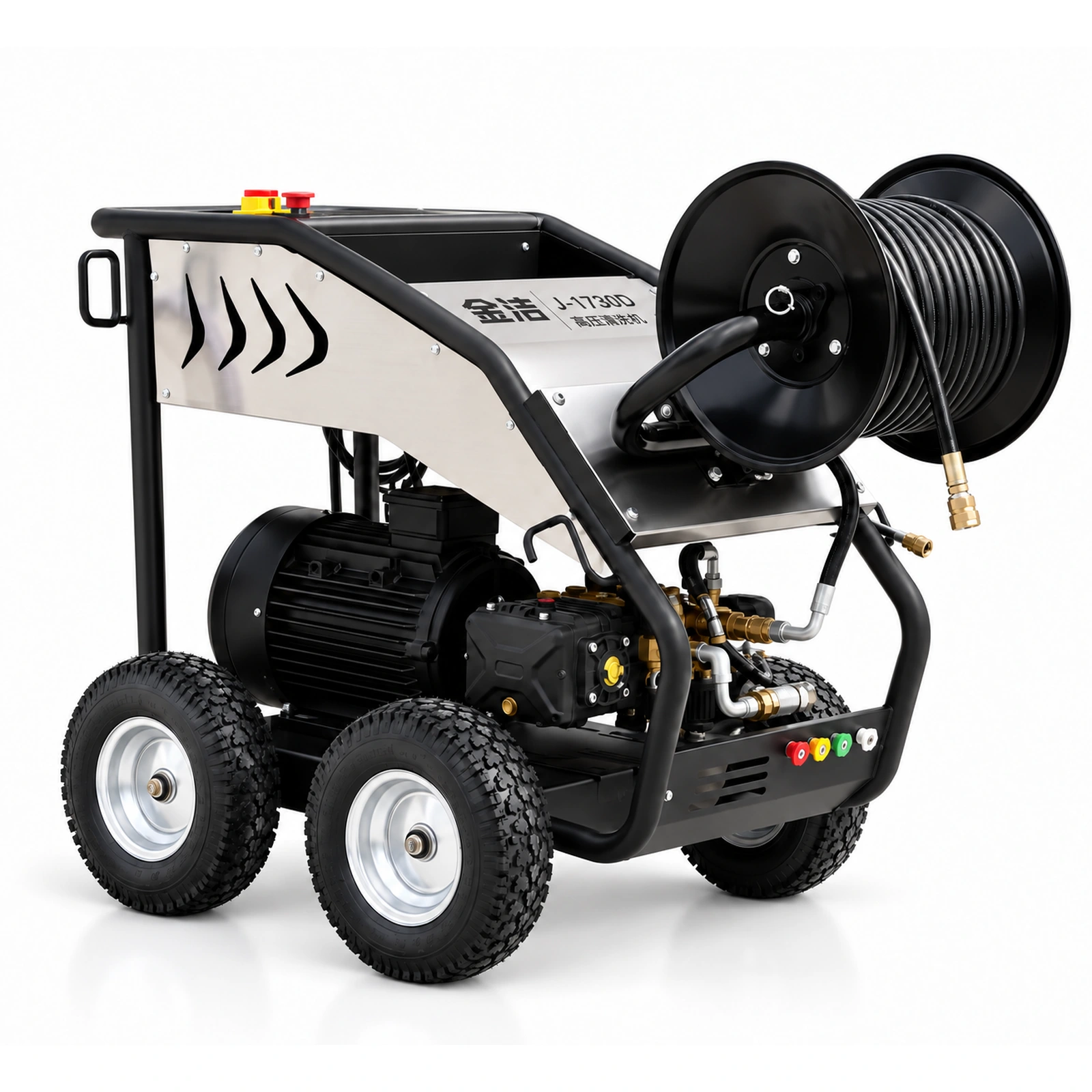
| J-1730D | 170bar(170bar(17MPa)) | 30L/min |
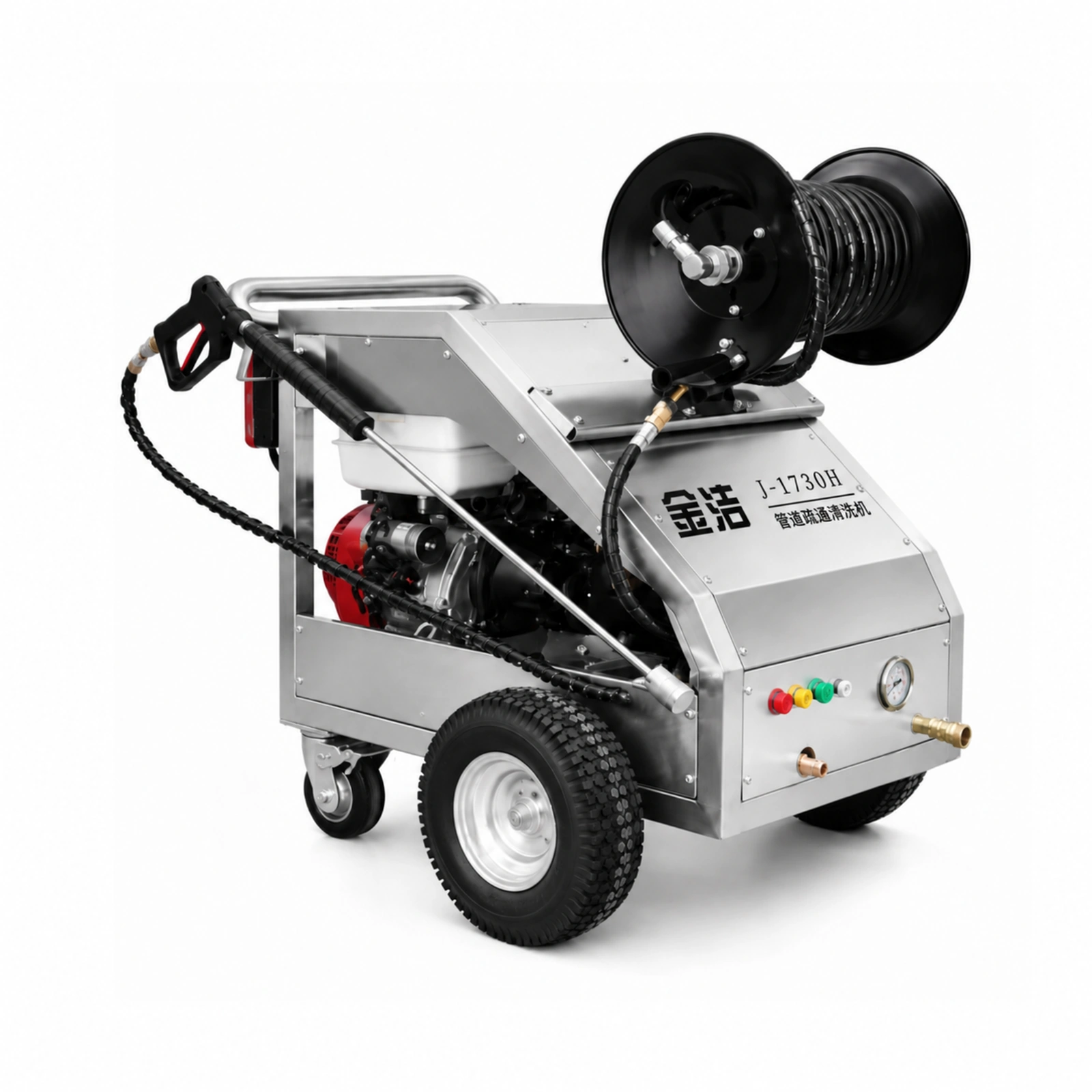
| J-1730H | 170bar(170bar(17MPa)) | 30L/min |
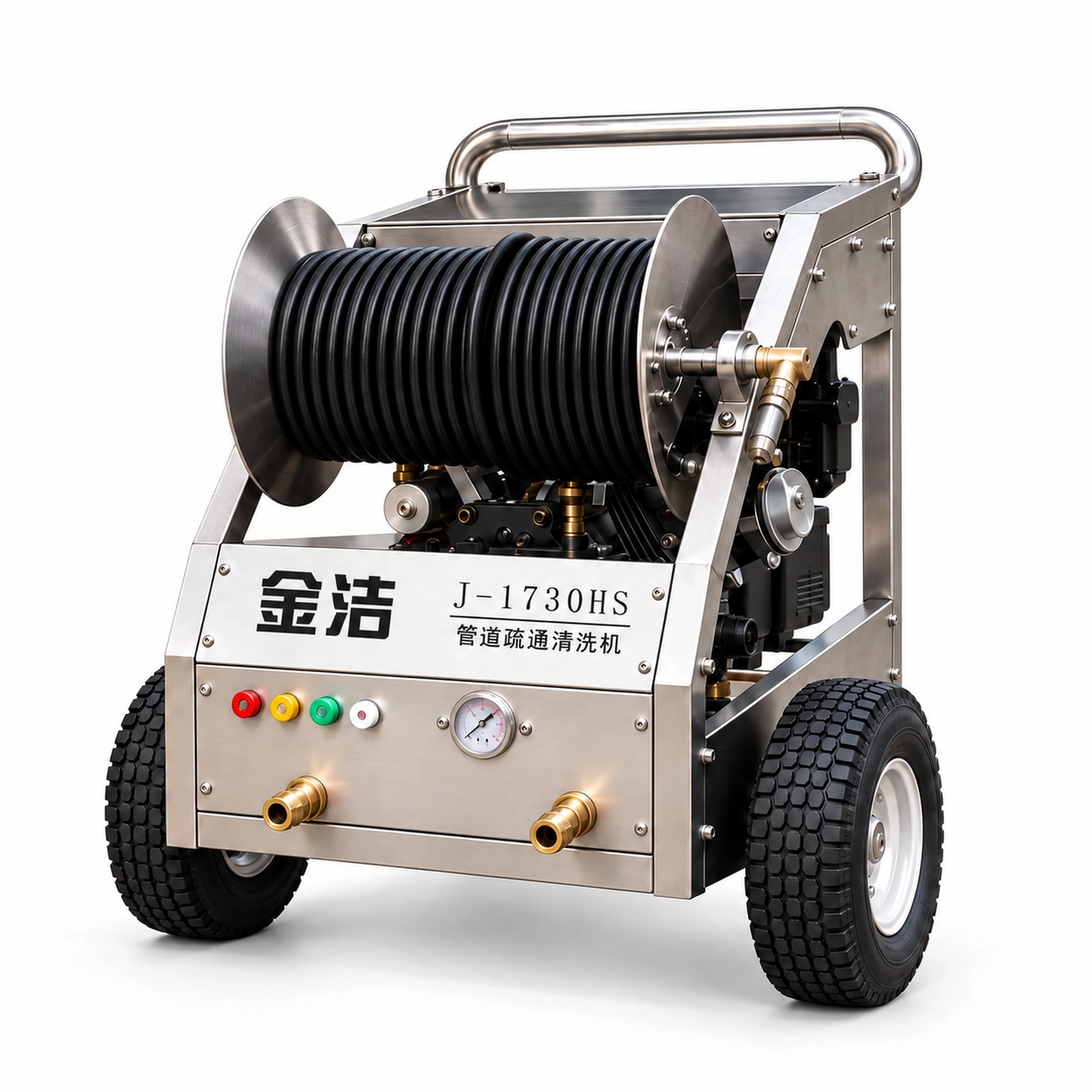
| J-1730HS | 170bar(170bar(17MPa)) | 30L/min |
| J-1535L | 150bar(150bar(15MPa)) | 35L/min |
| J-1555L | 150bar(150bar(15MPa)) | 55L/min |
| J-1575L | 150bar(150bar(15MPa)) | 75L/min |
| J-2050D | 200bar(200bar(20MPa)) | 50L/min |
| J-2050H | 200bar(200bar(20MPa)) | 50L/min |
| J-2050HS | 200bar(200bar(20MPa)) | 50L/min |
These are whole-machine specifications, not the output of each gun during simultaneous operation. The final quotation and configuration list determine whether the distributor, additional hoses and spray guns are included.
Candidates span flow, power and desilting tasks. Pipe diameters are references requiring site confirmation.
See this model's appearance and operation. Confirm pipe diameter, length, bends, blockage and water for jetting tasks.
Share site conditions and cleaning requirements to confirm configuration.
See equipment components and operation; confirm pipe dimensions, blockage, water and drainage for the task.
Provide pipe and site conditions to compare configurations.
Cards show image, model, pressure, flow, power and role; consult details for full configuration.
Pressure affects impact and pipe-wall washing; flow carries loose grit/sludge; diameter and bends affect difficulty.
Primarily affects nozzle impact, deposit removal and pipe-wall washing; higher is not always better.
For ordinary drain sediment, sludge and debris; verify length, bends and nozzles.
Emphasizes grit/sludge transport alongside nozzle impact and pipe-wall washing.
For professional high-flow desilting; confirm water, drainage, working space and hose configuration.
Assess electric equipment at suitable fixed sites and petrol outdoors without fixed power. Petrol engines must not be used indoors or where exhaust can accumulate.
Confirm blockage, length, bends and nozzles; references are not fixed maximum-diameter promises.
| Model | Pipe-diameter reference |
|---|---|
| J-1020D | Primarily DN50–100 reference; assess 100–150 on site. |
| J-1535L | Primarily DN75–150 reference; assess approximately DN200 on site. |
| J-1555L | DN100–250 reference |
| J-1575L | DN150–300 reference |
| J-2050H | DN100–250 reference |
| J-1730H | No precise DN range asserted; assess the site and configuration. |
Assess diameter, blockage and length; compare J-1020D for routine smaller-drain maintenance.
Compare: J-1020D / J-1535LFlow matters for loose-deposit transport, alongside nozzle reaction, pressure and water supply.
Compare: J-1555L / J-1575LMore water can support sludge transport, but drainage and recovery must be confirmed.
Compare: J-1555L / J-1575LJet action may affect pipe-wall deposits; results depend on pressure, angle, distance and contamination.
Compare: J-2050HFor long lines, assess hose length, pressure loss, nozzle thrust, recovery and handling.
Compare: J-1730H / J-2050HAssess nozzle structure, hose flexibility, propulsion and actual bends; no unverified fixed bend-count promise is made.
Compare: J-1535L / J-1555L| Assessment factor | Main influence | Selection reminder |
|---|---|---|
| Pipe diameter | Larger pipes generally require greater water flow and debris-carrying capacity. | Diameter alone is insufficient; assess blockage, pipe length, bends and nozzle configuration. |
| Pipe length | Long pipes increase demands on nozzle advancement, hose recovery and pressure stability. | Confirm pressure-hose length, pressure loss, nozzle thrust and working space. |
| Bends | More bends increase hose-flexibility and nozzle-design requirements. | No fixed maximum number of bends is promised; assess bend radius and pipe condition. |
| Blockage material | Oily sludge, grit, silt, debris and adherent deposits require different methods. | Loose dirt emphasizes transport; adherent deposits also need jet-impact and nozzle-angle assessment. |
| Water supply | High-flow equipment requires particular attention to inlet volume and continuous water supply. | Insufficient water can affect jet stability, pump durability and continuous desilting. |
Pressure affects jet impact, deposit removal and pipe-wall washing. Compare pressure and nozzle angles for adherent deposits.
Flow affects water volume and loose-deposit transport; heavy grit also needs adequate water and drainage.
Results also depend on nozzles, diameter, length, bends, water and blockage; one number is insufficient.
Prioritize the first option when:Compare J-1020D for assessed smaller property drains and light/medium routine blockages.
Compare the alternative model:Compare J-1535L where grit/sludge and sustained water delivery matter.
Also confirm:Pipe diameter, length, bends, nozzle, water supply and blockage type.
Prioritize the first option when:Consider J-1535L for assessed ordinary drain grit/debris tasks.
Compare the alternative model:Compare J-1555L where grit volume and transport requirements increase.
Also confirm:Pipe diameter, length, bends, nozzle, water supply and blockage type.
Prioritize the first option when:Consider J-1555L first for many high-flow desilting assessments.
Compare the alternative model:Compare J-1575L for larger pipes, severe sediment or professional desilting.
Also confirm:Pipe diameter, length, bends, nozzle, water supply and blockage type.
Prioritize the first option when:Compare J-1555L where water volume and grit transport are priorities.
Compare the alternative model:Compare J-2050H where both pipe-wall washing and desilting matter.
Also confirm:Pipe diameter, length, bends, nozzle, water supply and blockage type.
Prioritize the first option when:Confirm power, ventilation, water and movement before choosing the power type.
Compare the alternative model:Check each J-1730H and J-2050H machine's nameplate and ordered power configuration. Petrol-powered equipment must be used outdoors in open, ventilated locations.
Also confirm:Pipe diameter, length, bends, nozzle, water supply and blockage type.
Prioritize the first option when:Compare J-1575L where grit/sludge transport is the assessed priority.
Compare the alternative model:Compare J-2050H where jet impact and pipe-wall washing are both required.
Also confirm:Pipe diameter, length, bends, nozzle, water supply and blockage type.
Pipe diameter is an engineering selection reference only. Confirm blockage material, line length, bends and nozzle configuration; it is not a fixed maximum unblocking diameter.
The source lists J-1730H at 170bar(17MPa), 30 L/min, Honda GX390, Italian AR ceramic precision-plunger pump and 304 stainless frame; no precise DN range is asserted.
External pressure-washing suitability and results depend on compatible guns, nozzles, hoses and connections.
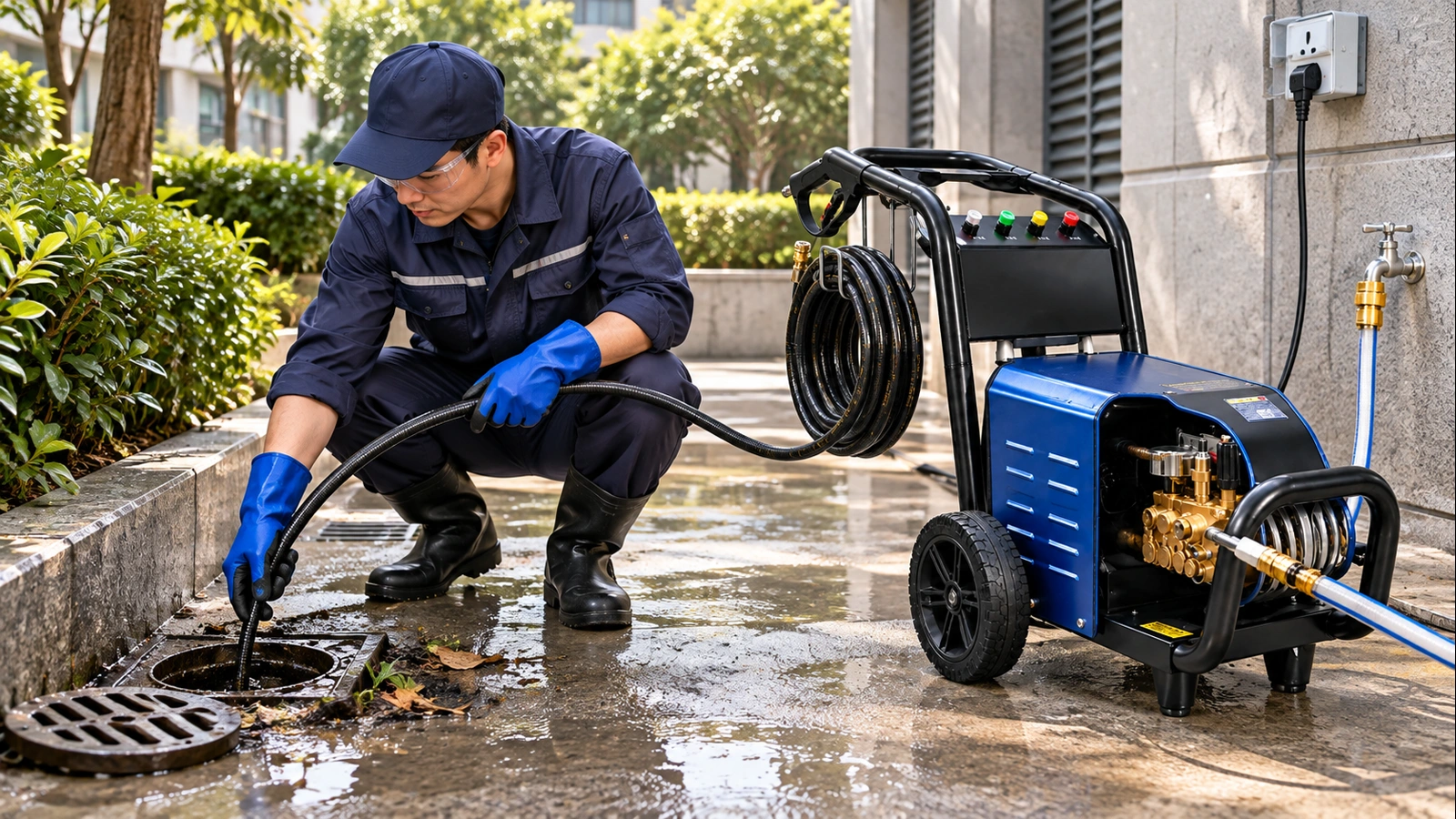 Choosing a jetter for 50mm and 75mm pipes: property applications for J-1020DThe current source lists J-1020D at100bar(10MPa),20L/min with a30m hose for property drainage, restaurant kitchens, building drains and small-pipe blockages. Confirm pipe, nozzle and site compatibility before selection.
 Selecting a drain jetter: pressure, flow, hose length, nozzles and pipe diameterDrain jetting should not be selected by maximum pressure alone. Flow, hose length, nozzle angle and blockage material also affect suitability.Zhuhai drain equipment: inspect the site before choosing the modelZhuhai property drain selection should consider diameter, length, bends, blockage and nozzle combination before comparing J-1020D, J-1730H and J-2050H, not price alone.Zhongshan property drain equipment: assess the site before selecting a modelFor Zhongshan property drains, assess diameter, length, bends, blockage and nozzles before comparing J-1020D, J-1730H and J-2050H; price alone is insufficient.Small-pipe drain-cleaning illustration; exact machine model unverified, article discusses J-1020DFor Huizhou property drain cleaning, assess pipe diameter/length, bends, blockage and nozzles before comparing J-1020D, J-1730H and J-2050H drain jetters. Price alone is insufficient.Foshan property drain equipment: assess the site before selecting a modelFor Foshan property drains, assess diameter, length, bends, blockage and nozzles before comparing J-1020D, J-1730H and J-2050H; price alone is insufficient.
Pipe diameter is only one selection factor. Confirm distance, blockage material, bends, water supply and power before matching the nozzle and hose.
Confirm actual internal diameter, pipe material, distance and number of bends.
Identify grease, sludge or foreign objects and describe existing blockages and maintenance.
Confirm water points, wastewater handling and power before pressure, flow and tools.
No. Model, nozzle and hose selection also depends on distance, blockage, bends and water. Compare model configurations, then submit site conditions for confirmation.
Separate the object from attachment use. Flushing bars are optional and do not prove suitability for every in-pipe task.
No. Pressure affects jet impact and pipe-wall washing, but excessive pressure may be unsuitable. Assess diameter, material, blockage, nozzle and operating distance together.
Not necessarily. More flow can carry grit, sludge and loose dirt, but needs greater water supply, drainage and operating control. Small pipes and routine maintenance may not need maximum flow.
For DN100, compare flow ranges such as J-1020D, J-1535L and J-1555L, then confirm blockage, length, bends and nozzle configuration.
Compare flow, nozzle reaction, water and drainage rather than simply raising pressure; assess J-1555L/J-1575L high-flow directions where appropriate.
Yes. Longer pipes require attention to hose length, pressure loss, nozzle propulsion, retrieval and entry conditions.
Assess nozzle structure, hose flexibility, propulsion and bend radius rather than pressure/flow alone.
Jets may wash pipe-wall deposits, but results depend on pressure, nozzle angle, distance, contamination and pipe material.
Rear-facing nozzle jets usually create forward thrust while washing pipe walls and carrying debris out. Advancement depends on nozzle design, flow and pipe conditions.
Provide diameter, length, bends, blockage, water and access to narrow jetter options.
Pipe diameter, bends, blockage material and working distance make drain cleaning challenging. Verify nozzle, pressure-hose length, power source and drainage together.
Grease, grit, kitchen drainage and old pipe deposits need task-specific forward, rear or multi-angle jets.
Small/short pipes emphasize access and mobility; long runs, heavy blockages and continuous work also require flow, reels and power assessment.
Ongoing nozzle, hose, filter, training and spare-part support matters beyond a single clearing task and may reduce downtime or repeated dismantling.