
Zone areas, narrowest access, doorways and lift dimensions

Industry application: municipal roads and estate exteriors
Municipal road and estate outdoor sweeping/washing plan
Configure sweeping, washing, dust suppression and waste collection by road area, waste and work organization.
这份方案可作为选型参考。我们会结合现场评估和试机情况,与您核对设备型号、数量、清洁剂和附件。
选型前需要了解什么
了解您的现场,一起确定设备配置
欢迎把您已掌握的现场情况发给我们。这些信息能帮助我们缩小选型范围,并进一步核对设备数量、附件和报价。
Floor/target material, contamination source and severity
Daily frequency, deadline, shifts and visitor/production avoidance windows
Power, refilling, wastewater, charging, storage and equipment transfer
Noise, slip safety, mixed traffic, chemicals and wastewater requirements
Existing machines, consumable stock, maintenance skills and acceptance criteria
Site challenges
Common municipal-road/estate-exterior cleaning challenges
Road width and leaf/grit/dust distribution vary substantially
Combine sweeping, washing and waste-transport schedules
Outdoor runtime, dust suppression and safety warnings are demanding
Suggested configuration
Combine equipment by task; one model does not cover every condition
Categories/models are discussion starting points; confirm site conditions before final configuration.
Road sweepersWalk-behind, ride-on, large and autonomous sweepers are selected by road area, debris, dust and conditions for estates, factories, municipalities and scenic sites.Municipal cleaning equipmentCombine waste collection, road washing, sweeping and transport equipment for area, roads and sanitation needs in municipal, property, scenic-site and township applications.High-pressure washerCold-water, hot-water, explosion-protected and ultra-high-pressure equipment options are selected by target, soil and pressure needs for industrial equipment, vehicle facilities, properties and pipe scale. Specific suitability requires model confirmation.

Jinjie J-XS1450 ride-on sweeperBetter considered for industrial/property/school roads, parking and factory exteriors. Wider coverage than J-XS1250 targets longer roads and more frequent rounds.View model specifications

Jinjie JC-500JY three-wheel pressure water-sweeping vehicleCombined pressure water-sweeping and washing for road dust, kerbs, plazas and estate rounds.View model specifications

Jinjie JC-1800 four-wheel pressure-washing vehicleFour-wheel pressure-washing vehicle for municipal roads, plazas, factory exteriors and large estates.View model specifications
Application branches
Different soil, scale and shifts require different configurations even in similar sites
Choose the main approach for the site; use alternatives for access, power, transfer or duration limits.
Side roads, pavements and estate branches
- Initial recommendation
- Three-wheel washing vehicle + compact sweeper
- Alternative method
- Use manual sweeping and pressure spot-washing in narrow zones
- Selection basis
- Balance access, leaves and grit pickup
Main roads, plazas and long shifts
- Initial recommendation
- Enclosed four-wheel sweeper + four-wheel pressure-washing vehicle
- Alternative method
- Add dust-suppression spray/water during dusty seasons
- Selection basis
- Increase capacity, runtime and driver protection
Waste receiving points and transport routes
- Initial recommendation
- Four-wheel waste-transport vehicle + washing equipment
- Alternative method
- Add enclosed containers/transfer bins for waste volume
- Selection basis
- Coordinate sweeping, washing and waste transport as a complete cycle
Chemical selection
Choose chemicals by contamination and floor; do not use one everywhere
These are supporting options. Follow labels, safety data sheets and equipment manuals; trial compatibility inconspicuously.
Water or low-foam neutral cleaner
Application: road dust and ordinary mud flushingControl water/recovery first; keep chemicals out of storm drains
Road-compatible degreaser
Application: local oil in parking/maintenance areasBarrier the area and collect wastewater; no uncontrolled broad discharge
Deodorizer/disinfectant
Application: waste points and transfer facilitiesRemove waste and wash first, then apply per label; never mix chemicals
Safety note:Do not mix acids, alkalis, chlorine products or disinfectants. Reconfirm food, medical, electronics, antistatic-floor and wastewater requirements with site management.
Attachment selection
Match brushes, blades, nozzles, filters and hoses to each task
Attachments affect results, surface protection, recovery and downtime. Prepare wear-part/spares lists when purchasing machines.
Side/main brushes and dust-suppression nozzles
Application: leaves, grit and road dustChange brushes/spray arrangements for particle size and season
Fan/rotary nozzles and pressure reel
Application: kerbs, spots and distant point washingImprove edge coverage while controlling impact
Enclosed waste container, warning lights and reversing camera
Application: road collection and mixed trafficReduce drips and improve continuous-work safety
Equipment operation video
JC-500S three-wheel washing operation reference
Observe movement and road/public-facility washing. Select refill routes and working attachments for actual conditions and delivered configuration.
JC-500S selection enquiry
Describe target, conditions and frequency to confirm the approach with the actual model.
Implementation steps
From assessment and trials to equipment delivery
Assess before/after cleaning, area covered per time, wastewater pickup, residue and consumable wear.
Separate equipment for main roads, side roads and plazas
Record selection reasoning, configuration limits, chemical/attachment combinations and site conditions requiring confirmation.
Configure sweeping/washing for actual waste types
Record selection reasoning, configuration limits, chemical/attachment combinations and site conditions requiring confirmation.
Plan refilling, tipping and round schedules
Record selection reasoning, configuration limits, chemical/attachment combinations and site conditions requiring confirmation.
Intended outcome
Main intended improvements
Acceptance and evidence
Validate with site records, not marketing claims
For a representative test area, record the initial condition, equipment, attachments, chemical dilution, time and finish at the same point. Agree the handover criteria using these records.
Project evidence and application references
View all casesCheck authenticity labels before using configuration/delivery references

Project application reference
Municipal Road Sweeping and Dust-Control Plan
J-WX2400R enclosed sweeper for municipal-road and estate-main-road rounds.
Read the full article; contact us for a detailed plan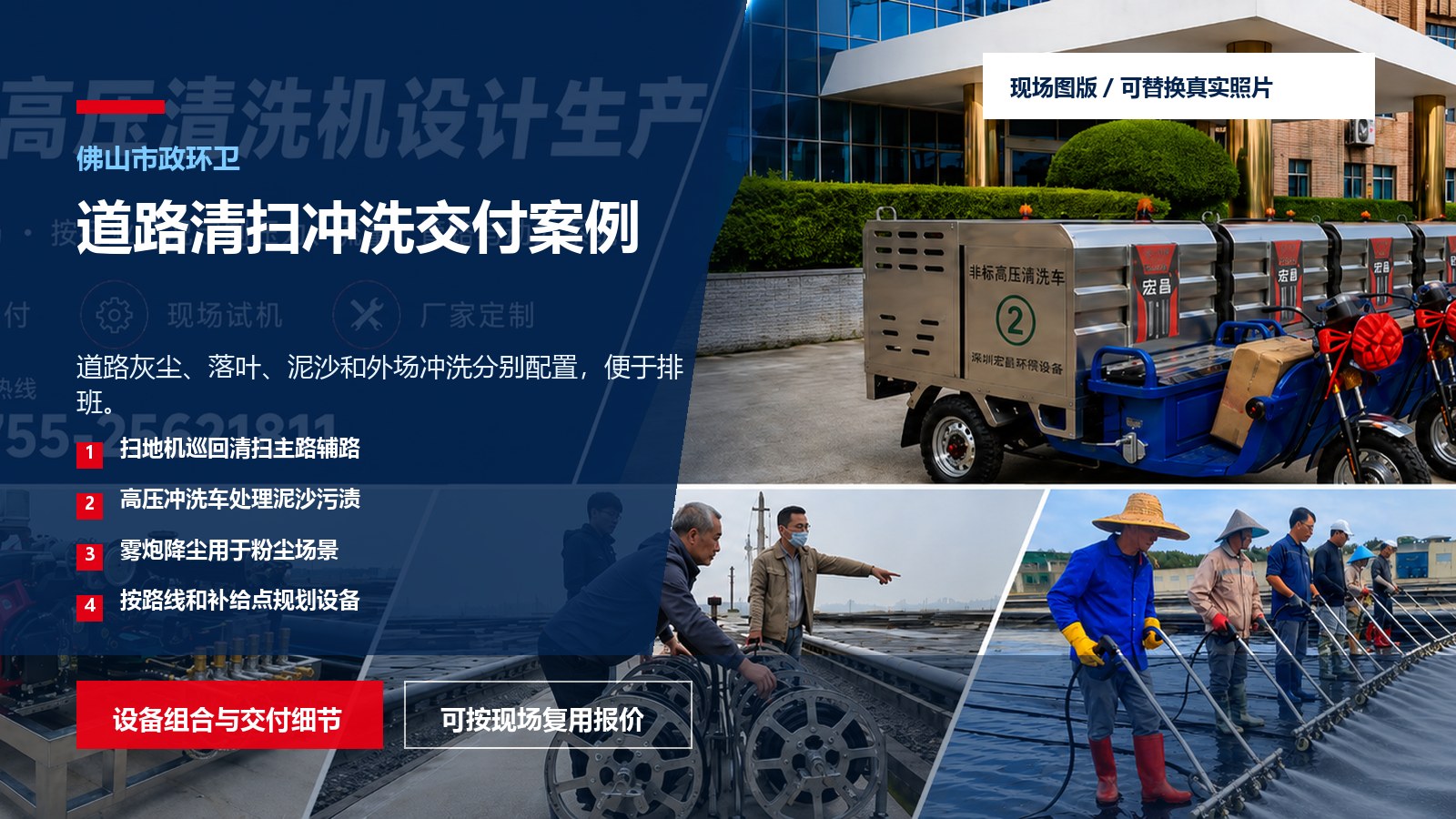
Project application reference
Landscape sanitation and waste-transport plan
Leaf collectors, chippers and transport vehicles for leaves, branch volume reduction and bins.
Read the full article; contact us for a detailed planFAQ
Municipal/estate outdoor cleaning questions
Who is this plan for?
Mainly municipal roads and estate outdoor areas; confirm area, routes, soil and shifts.
怎样确认设备配置适合我的场地?
请先核对通道宽度、供电供水、连续作业时间和预算,再根据试机情况确定型号。
What support can Wan Sheng Long provide?
Site discussions, selection, trial advice, training, consumables, parts and maintenance support are available.
Site-plan enquiry
Submit area, contamination and frequency
Wan Sheng Long advises on equipment direction, model comparison, trials, training and service based on site conditions.
Determine selection direction from the site problem
How does routine road sweeping differ from temporary estate cleanup?
Road rounds need traffic, tipping and boundary checks; temporary tasks need transfer and changing-obstacle assessment. Verify roads before comparing machines.
Related knowledge
Visit the knowledge centre
Municipal/estate outdoor cleaning implementation, configuration and selection guidance
Explore the plan through site challenges, equipment combinations, steps and maintenance requirements.

买一台扫地机容易,难得的是十年后还有人帮您把车用好
两家清洁服务公司和一家物业公司分别使用万盛隆扫地机10年、11年和11年半后,各复购一台金洁J-XS2100。看看扫地机的长期性价比如何体现在配件、维护和每一班作业里。
Read article
Planning cleaning equipment for hotels, offices and housekeeping companies
For hotels and commercial spaces, plan quiet-use vacuums, carpet cleaners, stone-care machines, escalator cleaners and consumables around noise needs, carpet/stone floors, lobbies, corridors, escalators and guest rooms.
Read article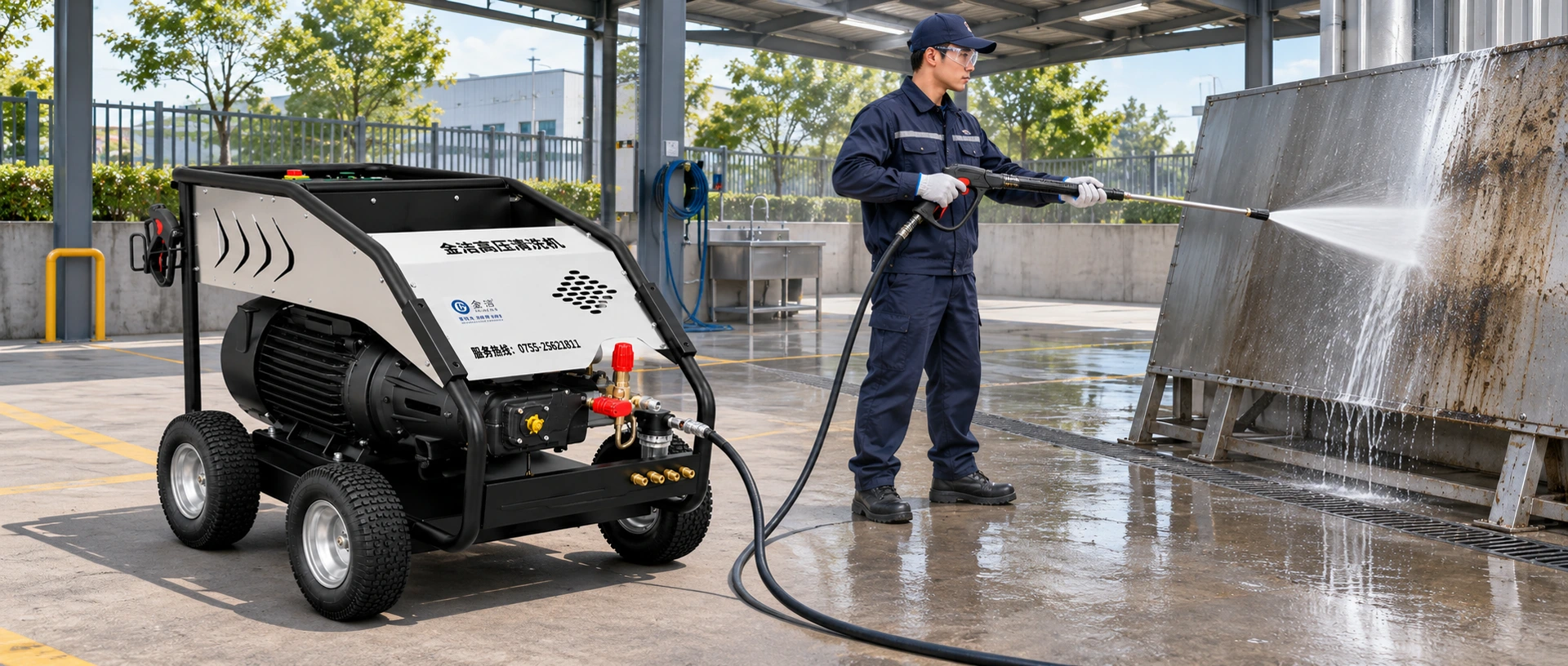
Pressure-cleaning applications: wall posters, road markings, equipment refurbishment and rust
Pressure, flow and nozzle combinations affect results. Match equipment and methods separately for wall posters, road markings, equipment refurbishment, coated roofing, rust and ship cleaning; suitability requires material and process assessment.
Read article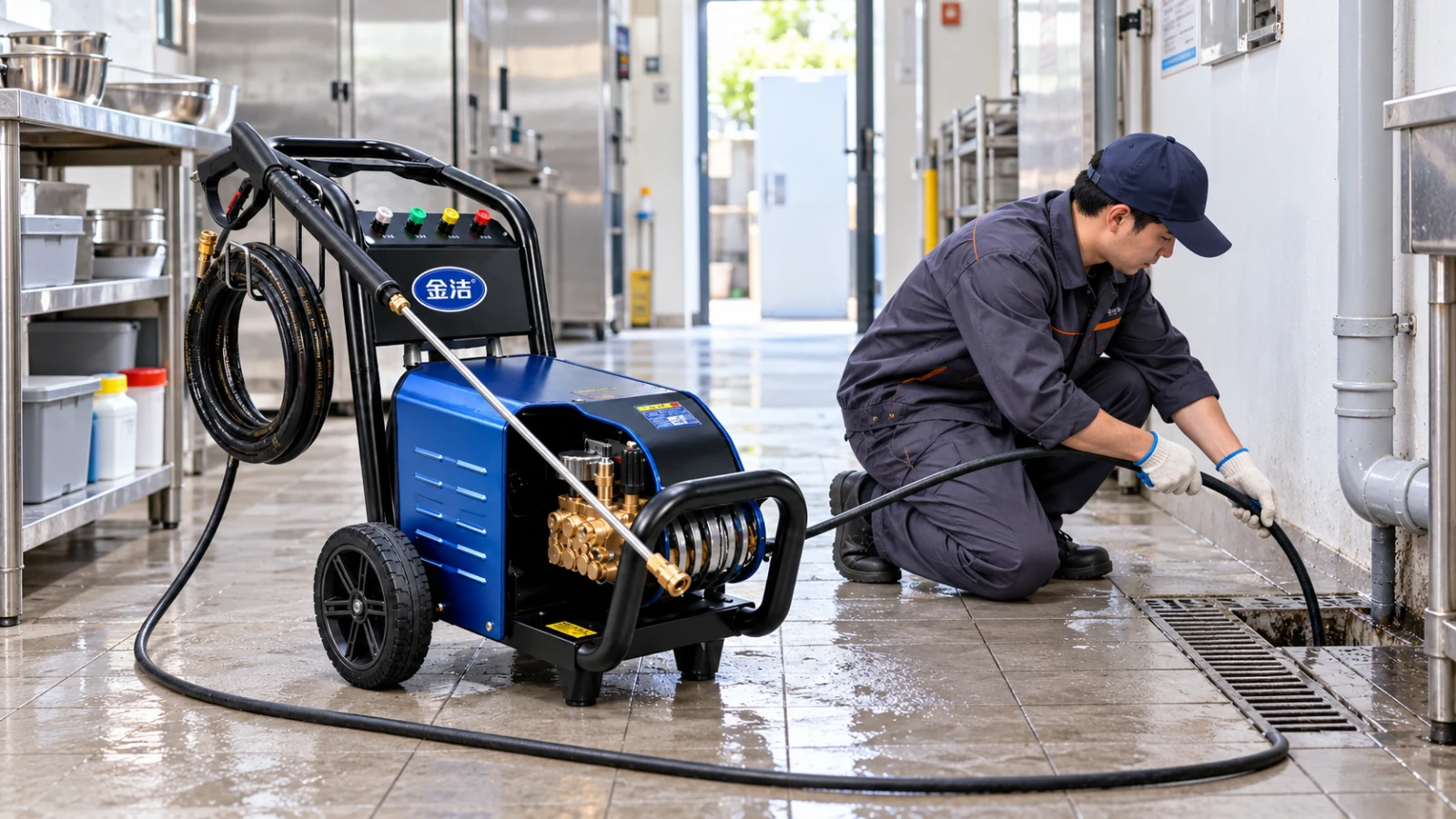
Choosing a jetter for 50mm and 75mm pipes: property applications for J-1020D
J-1020D pipe jetter pressure 100 bar (10 MPa)、flow 20 L/min、high-pressure hose 30 meters, suitable for property complexes, catering kitchens, building drainage and maintenance of small diameter blockages.
Read article
Configuring pressure-washing equipment in Zhuhai: assess the site before the model
Do not select pressure-washing equipment in Zhuhai by price alone. Confirm voltage, pressure, flow, water supply and protection before comparing 220 V, 380 V, petrol and high-flow options.
Read article
Zhuhai hotel/office equipment: inspect the site before choosing the model
Zhuji hotel office building commercial cleaning should not only select equipment based on price, but should focus on low noise, ease of training, stable consumables, and material protection when determining the configuration, and then match quiet vacuum cleaners, floor scrubbers, carpet machines, and cleaning agents.
Read article