
Selected model: Jinjie J-2050H
Typical application · Equipment selectionOutdoor property drain access-point jetting
Jinjie J-2050H
Coordinating water volume, the waste-removal route and access can reduce rework from pressure-only selection. Suitable equipment and services support a more continuous maintenance task, with time and overall cost assessed on site.
01 · What makes this task difficult?
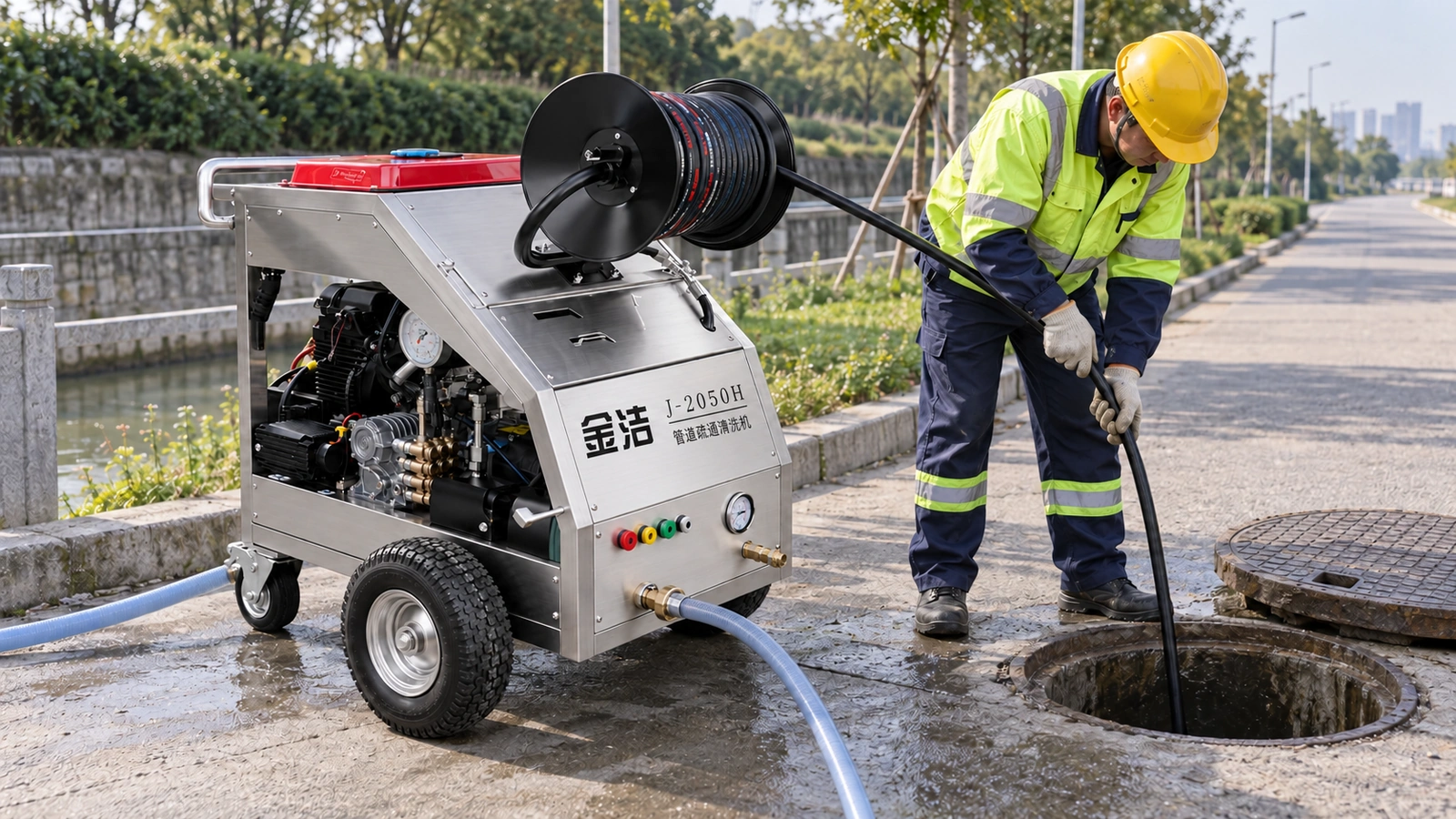
At open outdoor drainage access, loose sediment must be loosened and transported along a confirmed recovery path. Dispersed access, uncertain downstream collection and inadequate supply matter as much as pressure. The access image proves neither bore, contents nor safe isolation.
Access points lack fixed power
Site the unit only in suitable open outdoor space; check air intakes and routes
Loosened sediment still needs removal
Verify sustained supply and downstream collection first
Access and pressure hose create risks
No chamber entry; trained personnel assess staged work
02 · Why consider this Jinjie machine?
Assess J-2050H for the current higher-flow outdoor maintenance direction, matching nozzles with continuous supply and collection. Verify its own power and hose configuration rather than converting flow into reach or multi-gun capacity.
Current petrol positioning
Site the unit only in suitable open outdoor space; check air intakes and routes
Assess mobility together with operating limits
The page's 50 L/min flow direction
Verify sustained supply and downstream collection first
Do not equate disruption with completed clearance
Manual, compatible nozzle and segregation
No chamber entry; trained personnel assess staged work
Coordinate access, equipment and people
Jinjie J-2050H · Current information lists 200bar(20MPa), 50 L/min and petrol power. Do not borrow HS materials or another model's pipe-size range. A flushing bar is project-specific optional equipment.
03 · A better cleaning workflow and customer value
Coordinating water volume, the waste-removal route and access can reduce rework from pressure-only selection. Suitable equipment and services support a more continuous maintenance task, with time and overall cost assessed on site.
Assess mobility together with operating limits
Access points lack fixed power · Site the unit only in suitable open outdoor space; check air intakes and routes
Do not equate disruption with completed clearance
Loosened sediment still needs removal · Verify sustained supply and downstream collection first
Coordinate access, equipment and people
Access and pressure hose create risks · No chamber entry; trained personnel assess staged work
Match tools, the material and the working route before comparing labour, time, consumables and maintenance costs. The potential value depends on suitable conditions and correct operation; no fixed saving or damage-free result is promised.
No chamber entry. Petrol mobility is not underground-garage or hazardous-petrochemical suitability. A 50 L/min figure guarantees no bore, length or blockage capability, and ordinary engine/pump construction is not explosion protection. H/HS materials and accessories remain separate.
Working method, evidence and original professional analysis
Task-specific equipment selection
Open outdoor drain access: assess J-2050H supply and waste recovery
Site, material and contamination
At open outdoor drainage access, loose sediment must be loosened and transported along a confirmed recovery path. Dispersed access, uncertain downstream collection and inadequate supply matter as much as pressure. The access image proves neither bore, contents nor safe isolation.
Equipment basis and model differences
Current J-2050H information lists 200bar(20MPa), 50 L/min and petrol power as a high-flow direction for open outdoor work with adequate supply and disposal. It differs from 380 V J-2050D and does not inherit J-1730HS's 304 reel specification. Invent no pipe-size/nozzle range; assess the pipe, sediment, bends and accessories first.
Model configuration and selection
Check model-specific configurations against the machine and order before purchase.
| Model | Current basis and limits |
|---|---|
| J-2050H | Current information lists 200bar(20MPa), 50 L/min and petrol power. Do not borrow HS materials or another model's pipe-size range. A flushing bar is project-specific optional equipment. |
| Site problem | Equipment / conditions | Suggested method | Potential value |
|---|---|---|---|
| Access points lack fixed power | Current petrol positioning | Site the unit only in suitable open outdoor space; check air intakes and routes | Assess mobility together with operating limits |
| Loosened sediment still needs removal | The page's 50 L/min flow direction | Verify sustained supply and downstream collection first | Do not equate disruption with completed clearance |
| Access and pressure hose create risks | Manual, compatible nozzle and segregation | No chamber entry; trained personnel assess staged work | Coordinate access, equipment and people |
Working method, accessories and site supply
- Confirm bore, material, bends, length, deposits, contents and downstream route. Do not continue a recommendation for unidentified hazards or suspected structural damage.
- Place the engine in open outdoor space away from doors, windows and air intakes. Do not operate indoors, underground or in exhaust-trapping semi-enclosures.
- Check supply, pressure hose, rated compatible nozzle, hose handling and wastewater route. Confirm accessories by order; trained staff follow instructions and stop for abnormalities.
- Stop and depressurise before hose recovery and inspection. Record waste destination and drainage; make no measured-output or reach claim without evidence.
Limits and safety
No chamber entry. Petrol mobility is not underground-garage or hazardous-petrochemical suitability. A 50 L/min figure guarantees no bore, length or blockage capability, and ordinary engine/pump construction is not explosion protection. H/HS materials and accessories remain separate.
Questions for this task
Prepare site information
Provide pipe/access details, deposits, supply capacity, engine location, downstream recovery, work window and actual configuration list.
FAQ
Does higher flow guarantee suitability for longer pipes?
No. Bore, bends, nozzle, waste and recovery path still matter.
Does an outdoor engine permit running the hose into any indoor site?
No. Exhaust, hose route, indoor contents and personnel protection require separate assessment.
Does J-2050H inherit HS materials?
No. Verify reel and frame materials against this model's actual documentation.
What site information is needed for selection?
Provide pipe/access details, deposits, supply capacity, engine location, downstream recovery, work window and actual configuration list.
Select equipment for the actual site
Provide pipe/access details, deposits, supply capacity, engine location, downstream recovery, work window and actual configuration list.
Jinjie J-2050H · Selection enquiryCompare application plansModels and original application images
Compare each model against its own configuration and the actual route, material and site services.
Jinjie J-1730HS
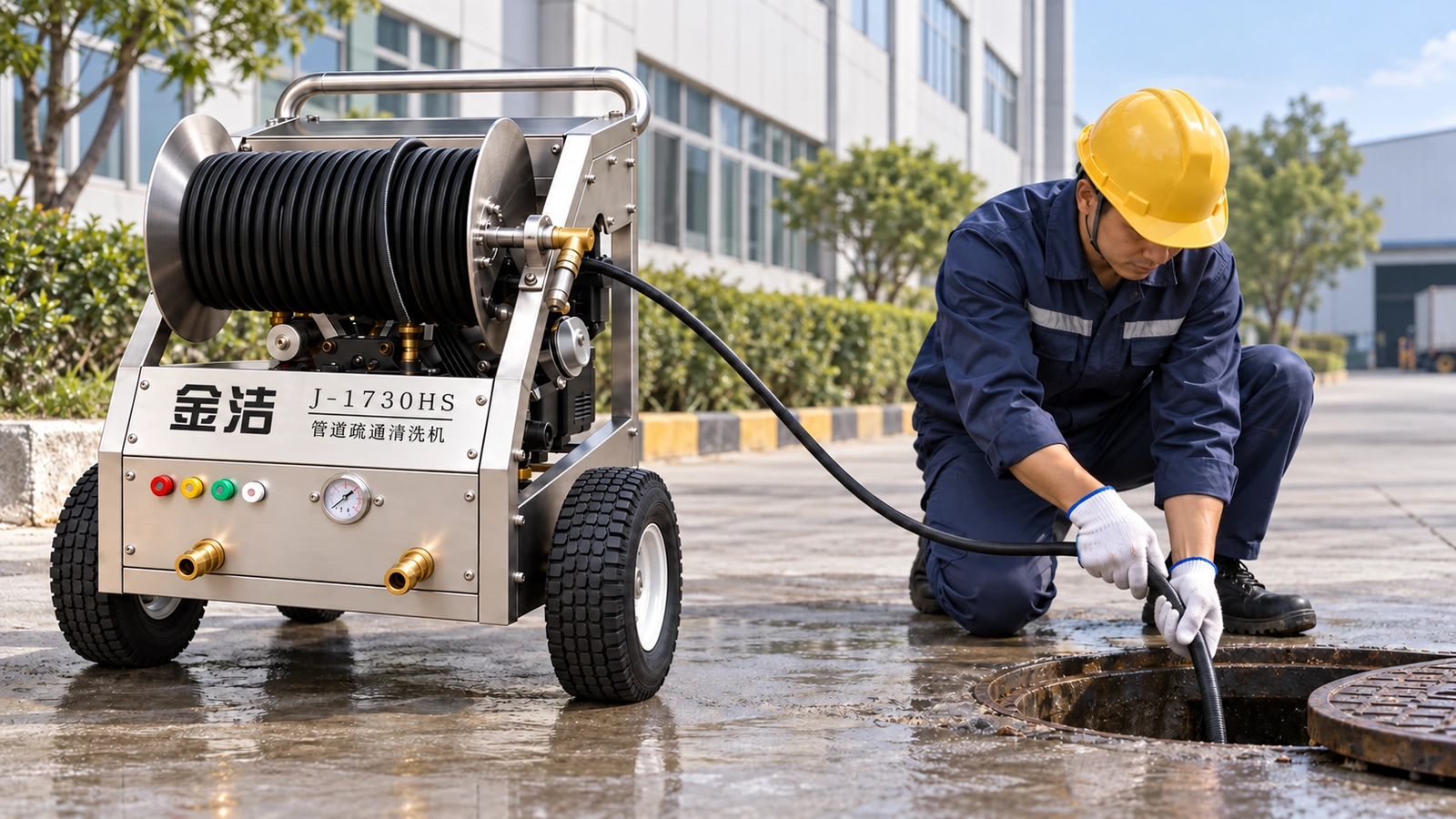
Continued hose feeding and sand-blockage removal

Jinjie J-1730H
Plan J-1730H tasks around its water-jet system and actual hose-reel configuration, using the H machine without borrowing HS appearance or material claims. Match the nozzle, hose and site supply before comparing feeding or local-washing workflows.
Jinjie J-2050H
Current model
Current information lists 200bar(20MPa), 50 L/min and petrol power. Do not borrow HS materials or another model's pipe-size range. A flushing bar is project-specific optional equipment.
Jinjie J-2050HS
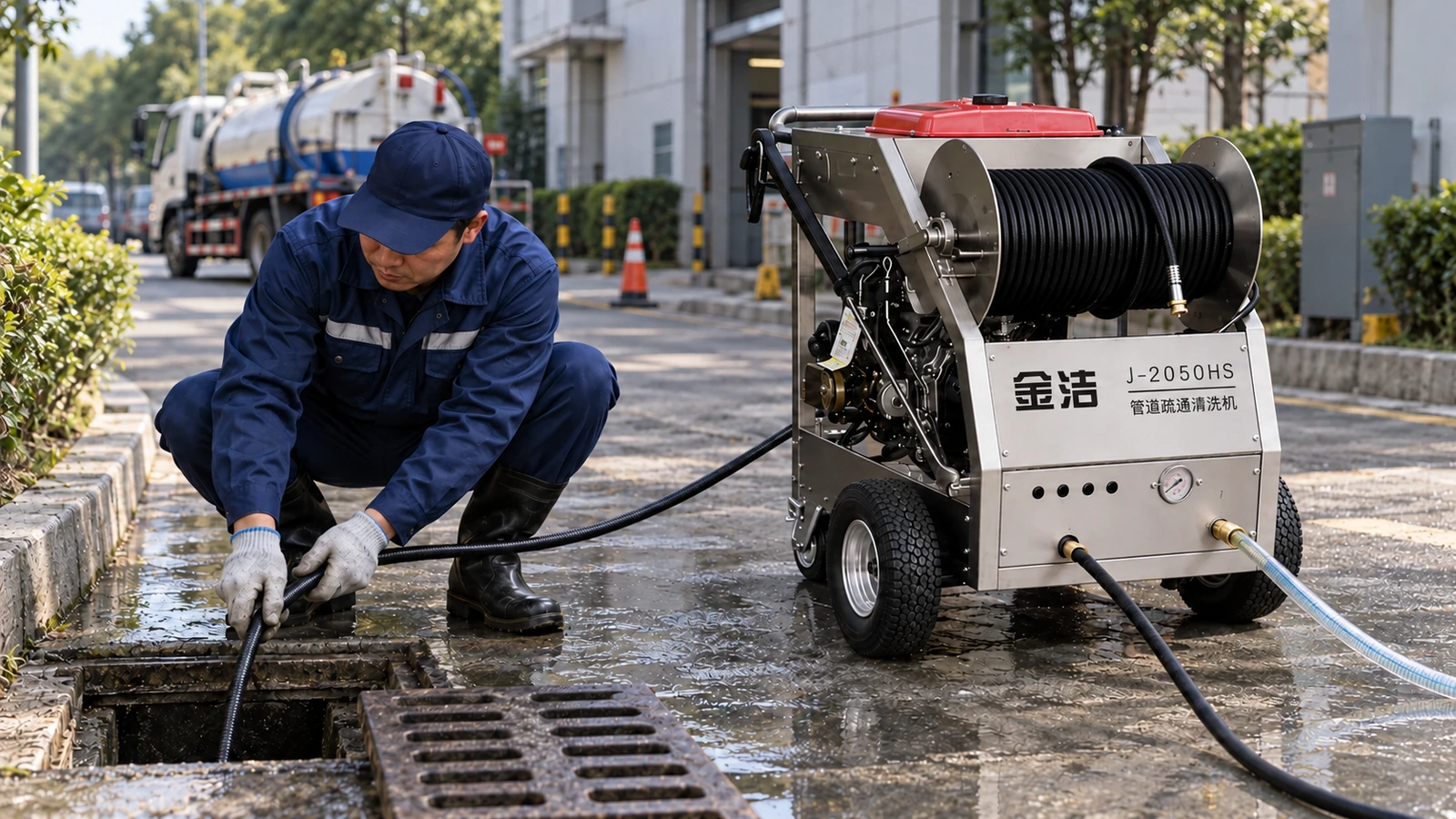
Model information positions J-2050HS for gasoline higher-flow jetting and auxiliary washing. Verify pipe nozzles, lances and optional bars separately rather than inferring accessory output from machine flow. A 304 component description is not a whole-304 fram…
Jinjie J-1535L
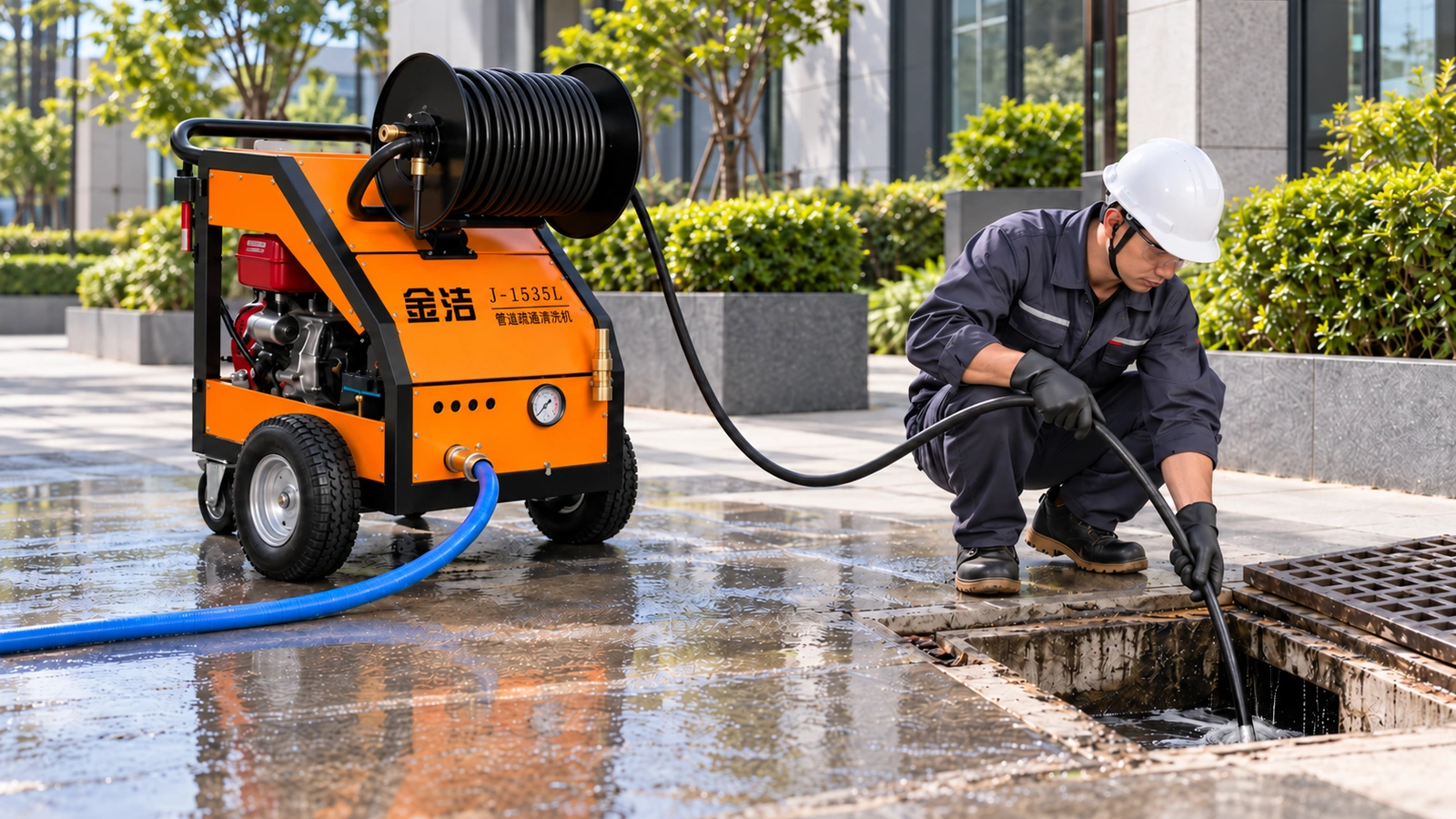
Assess the current gasoline machine’s stated 150bar(15MPa) and 35 L/min for ordinary outdoor drain access. A 30 m hose is not guaranteed reach. Confirm nozzle, bore, bends and downstream collection before feeding; do not enter the chamber.
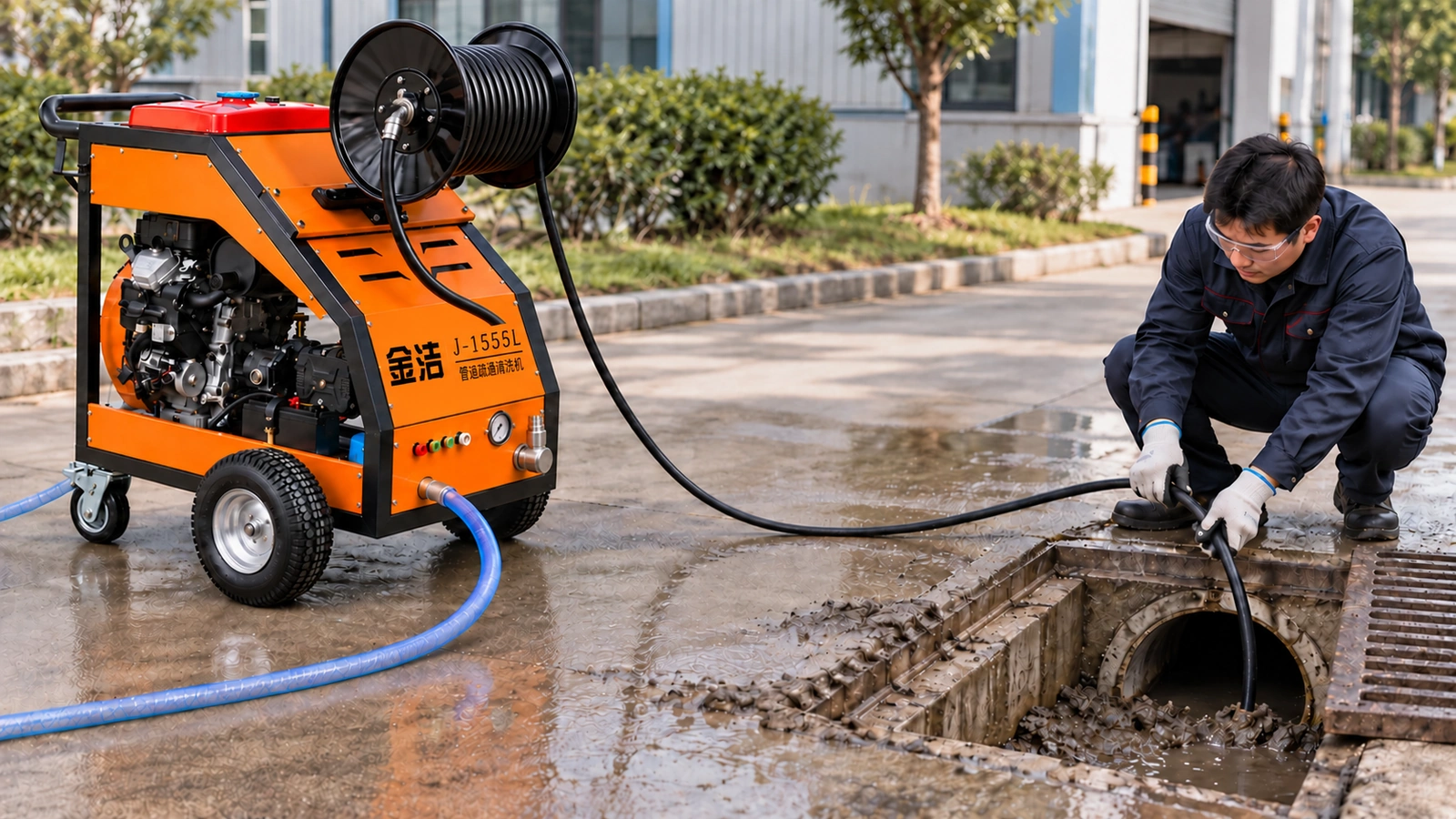
Jinjie J-1555L
Use the stated 150bar(15MPa) and 55 L/min machine flow to assess loose-sediment transport and supply, not to infer pipe or multi-gun output from the historical 35 L/min lance note. Verify bore, bends, nozzle, collapse and disposal; keep gasoline power outdoors.
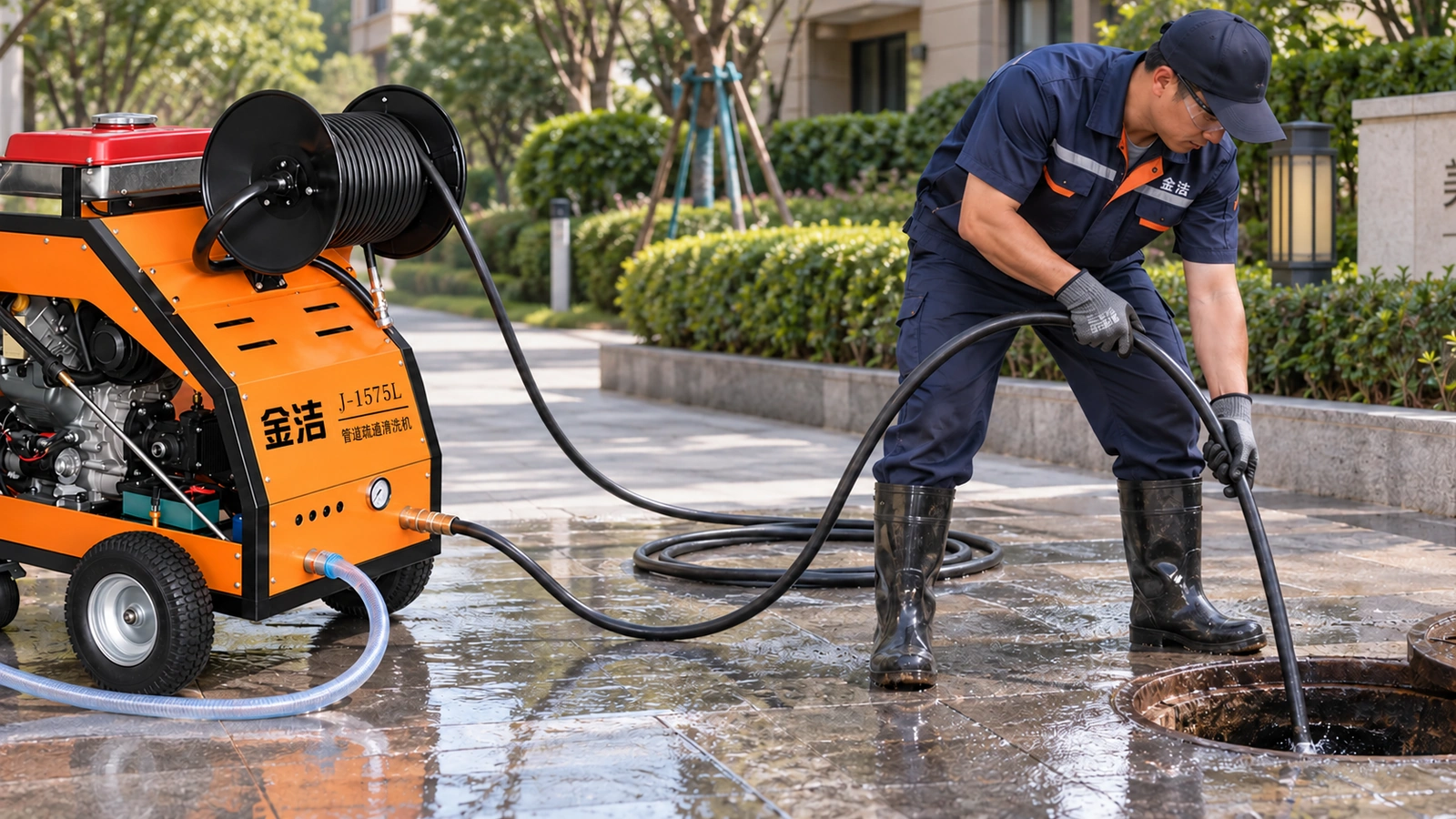
Jinjie J-1575L
Internal hose feeding and lance rinsing around an access point are different tasks. Each scene retains its own image and is never presented as a ten-nozzle bar. Machine flow of 75 L/min does not establish lance or per-nozzle output. Verify bore, bends, nozzle…