
Selected model: Jinjie JGY-2078SA
Typical application · Equipment selectionOffice and meeting-room carpets: dry vacuuming is not extraction washing
Jinjie JGY-2078SA
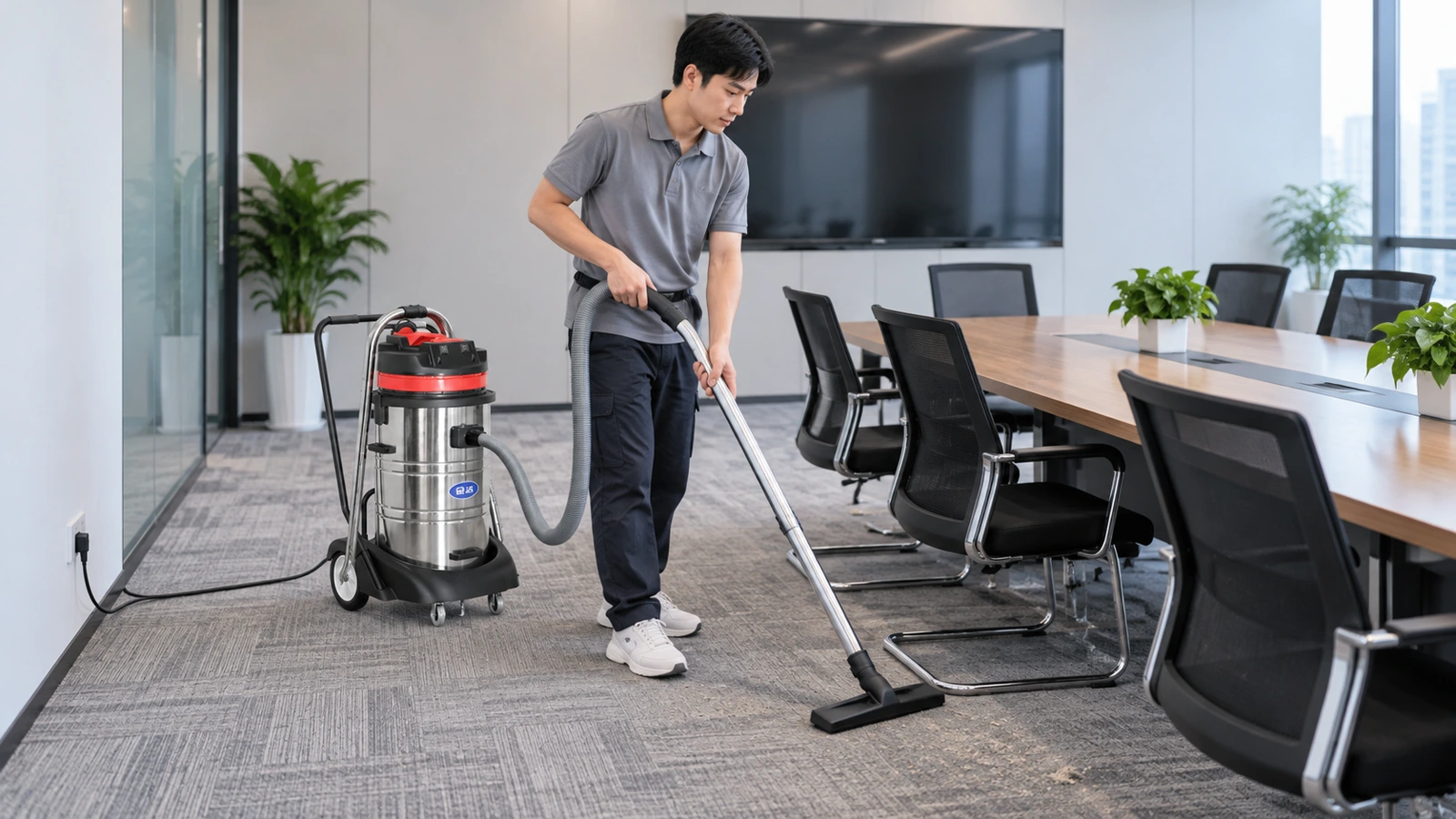
Use a suitable pickup tool for ordinary dry debris on carpets and office areas, reducing repeated tracking while protecting fibres, furniture and cable areas.
01 · What makes this task difficult?
Office carpets, meeting-room furniture areas and hotel carpet corridors collect dust, paper and ordinary dry particles carried by shoes. Chair legs, table clearances, cords and occupancy constrain work. Bonded drink stains, wet carpet and wastewater require different treatment.
Furniture restricts access
Remove larger objects and clean planned rows after checking tools
Cleaning overlaps occupancy
Use off-peak sections and keep cords out of open routes
Dry soil mixes with drink stains
Identify the soil and assess stain treatment/material separately
02 · Why consider this Jinjie machine?
A suitable pickup tool can collect ordinary dry debris from carpets and office areas with less particle transfer from sweeping, matched to the machine’s actual tools and filtration.
Actual carpet head and crevice tool
Remove larger objects and clean planned rows after checking tools
Organise edges separately from main aisles
Cord and route management
Use off-peak sections and keep cords out of open routes
Reduce ad hoc moving and crossing
Distinguish dry pickup from extraction
Identify the soil and assess stain treatment/material separately
Avoid assigning all carpet care to vacuuming
Jinjie JGY-2078SA · Currently presented as a commercial dry/wet vacuum. Verify actual floor tools and filters for dry carpet or hard-floor work; the quiet-model description is not noise-test certification.
03 · A better cleaning workflow and customer value
Use a suitable pickup tool for ordinary dry debris on carpets and office areas, reducing repeated tracking while protecting fibres, furniture and cable areas.
Organise edges separately from main aisles
Furniture restricts access · Remove larger objects and clean planned rows after checking tools
Reduce ad hoc moving and crossing
Cleaning overlaps occupancy · Use off-peak sections and keep cords out of open routes
Avoid assigning all carpet care to vacuuming
Dry soil mixes with drink stains · Identify the soil and assess stain treatment/material separately
Match tools, the material and the working route before comparing labour, time, consumables and maintenance costs. The potential value depends on suitable conditions and correct operation; no fixed saving or damage-free result is promised.
Dry vacuuming is not disinfection, certified mite removal or extraction deep-cleaning. Liquid pickup needs its own filter-changeover and protection checks. Product naming guarantees no noise value, and standing water requires separate assessment rather than these dry-pickup steps.
Working method, evidence and original professional analysis
Task-specific equipment selection
Office and meeting-room carpets: dry vacuuming is not extraction washing
Site, material and contamination
Office carpets, meeting-room furniture areas and hotel carpet corridors collect dust, paper and ordinary dry particles carried by shoes. Chair legs, table clearances, cords and occupancy constrain work. Bonded drink stains, wet carpet and wastewater require different treatment.
Equipment basis and model differences
For CL70-2C, only dry-carpet illustrations enter this chapter under its current office dry/wet positioning. Check JGY-2078SA commercial dry/wet tools, filtration and power individually. Confirm dry-pickup suitability with actual accessories and a carpet trial; a quiet-model description promises no certified noise level, zero disturbance or deep stain removal.
Model configuration and selection
Check model-specific configurations against the machine and order before purchase.
| Model | Current basis and limits |
|---|---|
| CL70-2C | The current page lists 220 V, an 8 m cord and dry/wet tools. This chapter covers dry floor work only; verify wet pickup setup and differences from CL70-2 separately. |
| JGY-2078SA | Currently presented as a commercial dry/wet vacuum. Verify actual floor tools and filters for dry carpet or hard-floor work; the quiet-model description is not noise-test certification. |
| Site problem | Equipment / conditions | Suggested method | Potential value |
|---|---|---|---|
| Furniture restricts access | Actual carpet head and crevice tool | Remove larger objects and clean planned rows after checking tools | Organise edges separately from main aisles |
| Cleaning overlaps occupancy | Cord and route management | Use off-peak sections and keep cords out of open routes | Reduce ad hoc moving and crossing |
| Dry soil mixes with drink stains | Distinguish dry pickup from extraction | Identify the soil and assess stain treatment/material separately | Avoid assigning all carpet care to vacuuming |
Working method, accessories and site supply
- Check carpet material/condition, cables and occupancy. Pause ordinary dry pickup for wet or unidentified contamination.
- Fit the specified dry filter and suitable carpet head. Verify whether crevice/brush tools are standard on the model list; do not improvise connections.
- Protect sockets and furniture; trial along furniture rows and observe head resistance, carpet surface and exhaust.
- Stop to empty collection components and maintain filters, then inspect debris and routes before handover.
Limits and safety
Dry vacuuming is not disinfection, certified mite removal or extraction deep-cleaning. Liquid pickup needs its own filter-changeover and protection checks. Product naming guarantees no noise value, and standing water requires separate assessment rather than these dry-pickup steps.
Questions for this task
Prepare site information
Provide carpet photos/material, main dry soil, furniture layout, sockets and cord controls, occupancy times and actual accessory list.
FAQ
Do remaining carpet stains mean the vacuum is ineffective?
Not necessarily. Bonded stains differ from removable dry particles; assess spotting or extraction against carpet and soil.
Does dry/wet naming mean water can be collected immediately?
No. Verify the actual wet setup under the manual; these dry-pickup steps do not authorise liquids.
Does office use prove a low-noise rating?
No. Noise figures and conditions need evidence, and work should still be scheduled considerately.
What site information is needed for selection?
Provide carpet photos/material, main dry soil, furniture layout, sockets and cord controls, occupancy times and actual accessory list.
Select equipment for the actual site
Provide carpet photos/material, main dry soil, furniture layout, sockets and cord controls, occupancy times and actual accessory list.
Jinjie JGY-2078SA · Selection enquiryCompare application plansModels and original application images
Compare each model against its own configuration and the actual route, material and site services.
Jinjie CL10
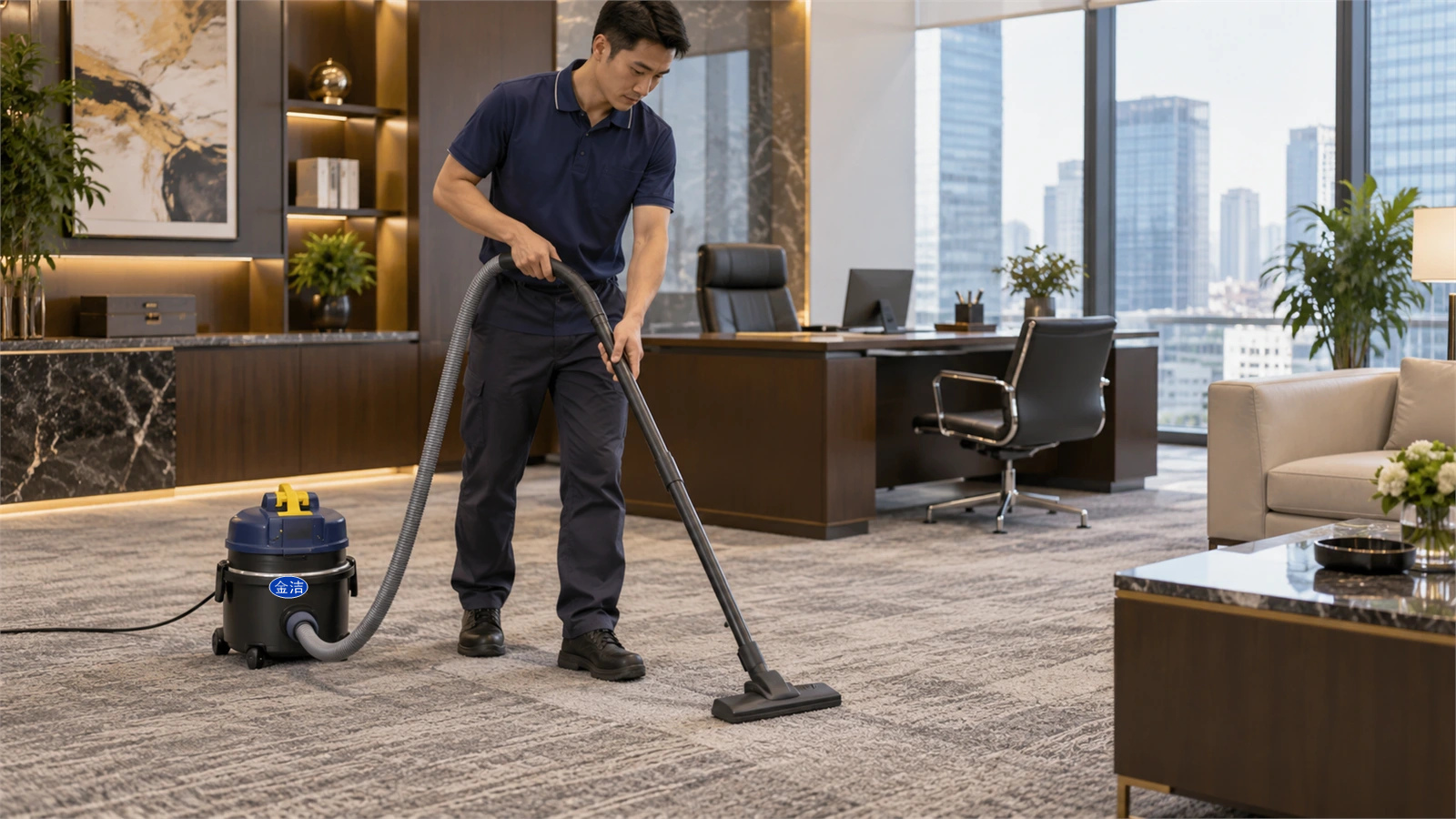
This model is intended for indoor everyday dry vacuuming. Suitable tools collect light debris from carpets and compatible hard floors, not liquids, hazardous dust or heavy industrial waste. Check suction units and test conditions before selection.
Jinjie CL60-2
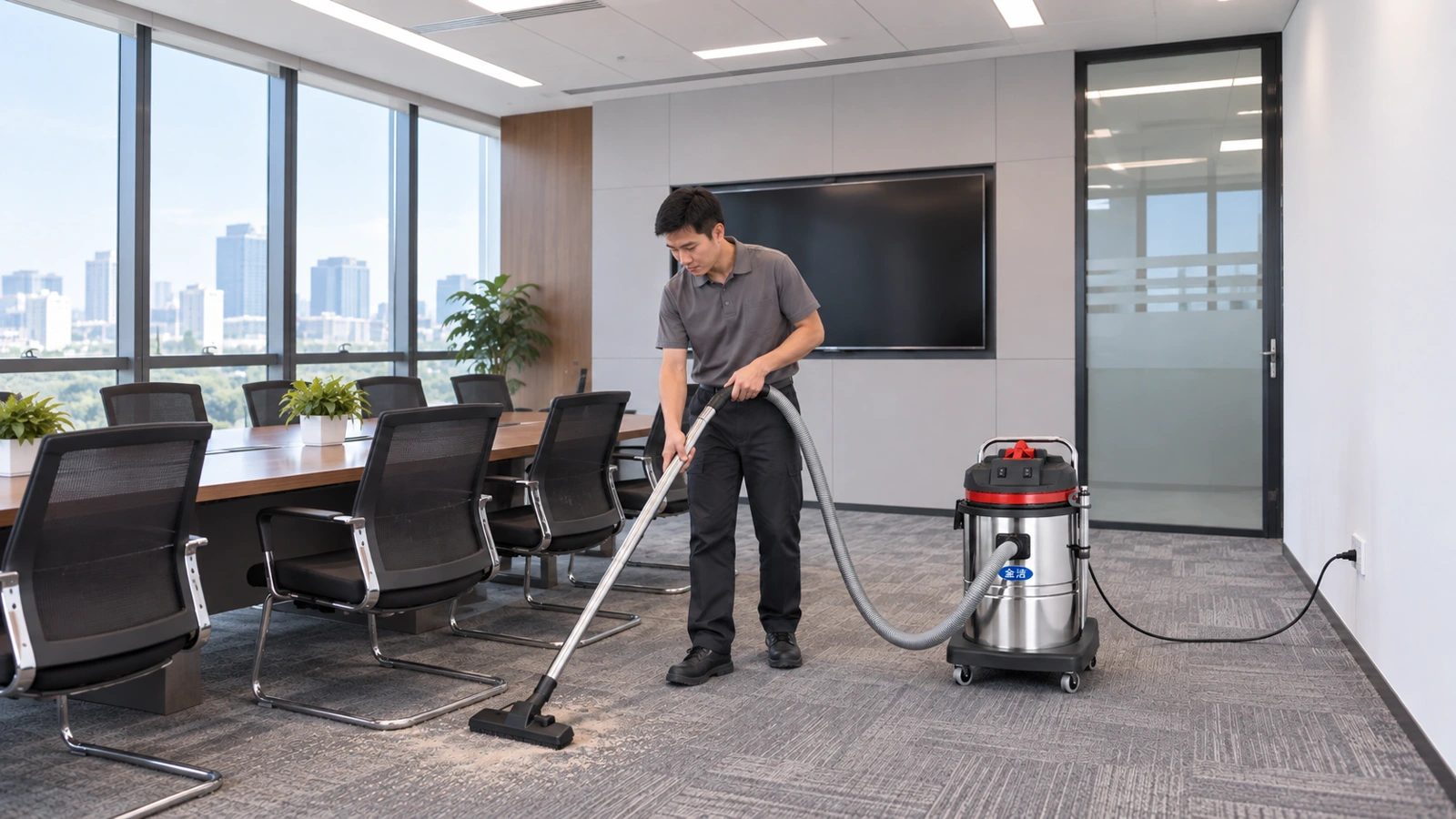
This scene covers ordinary dry debris only, with carpet or hard-floor tools and suitable dry filtration. Wet-pickup configuration and power variants remain unverified and are not claimed here.
Jinjie CL70-2C
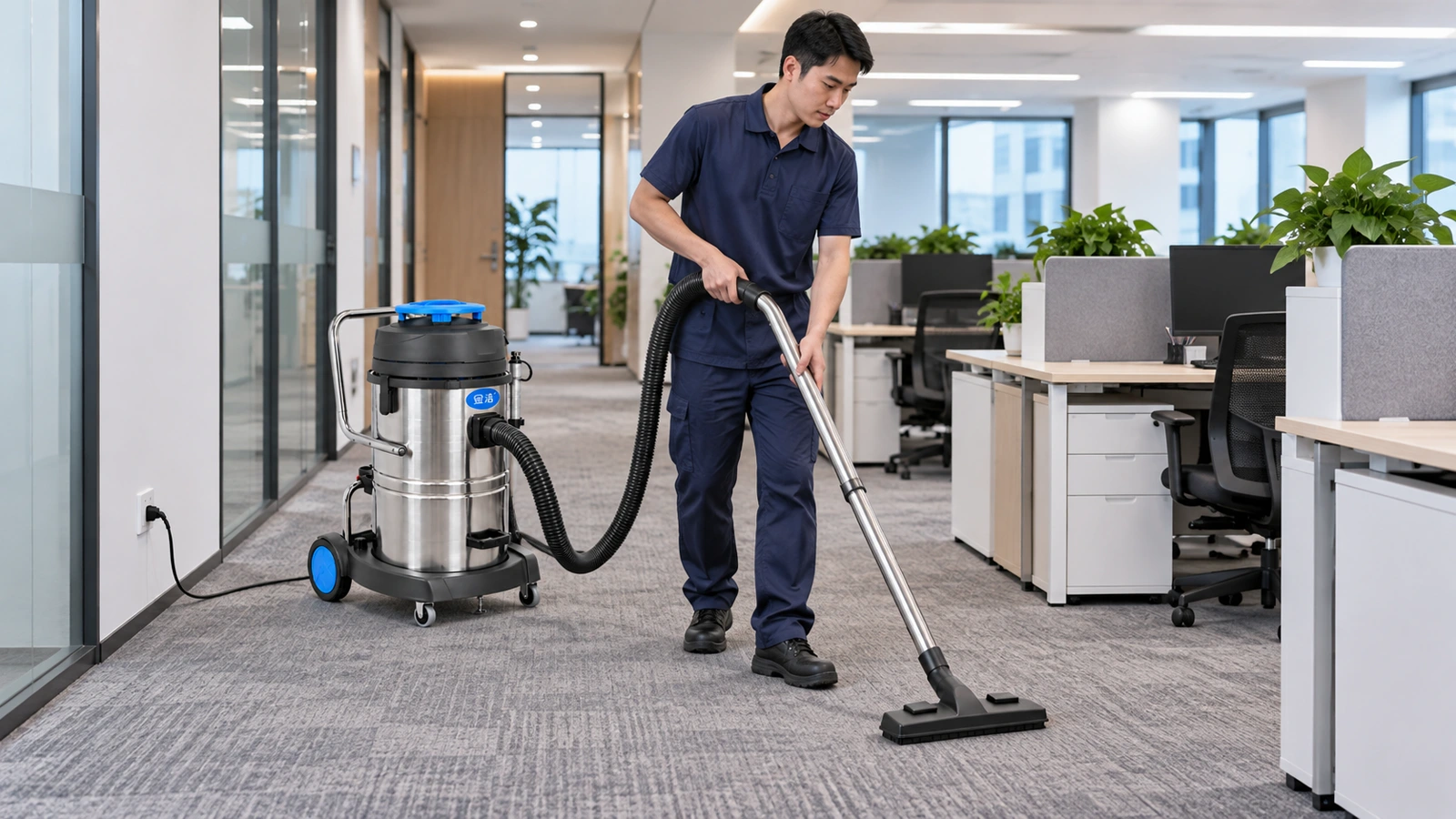
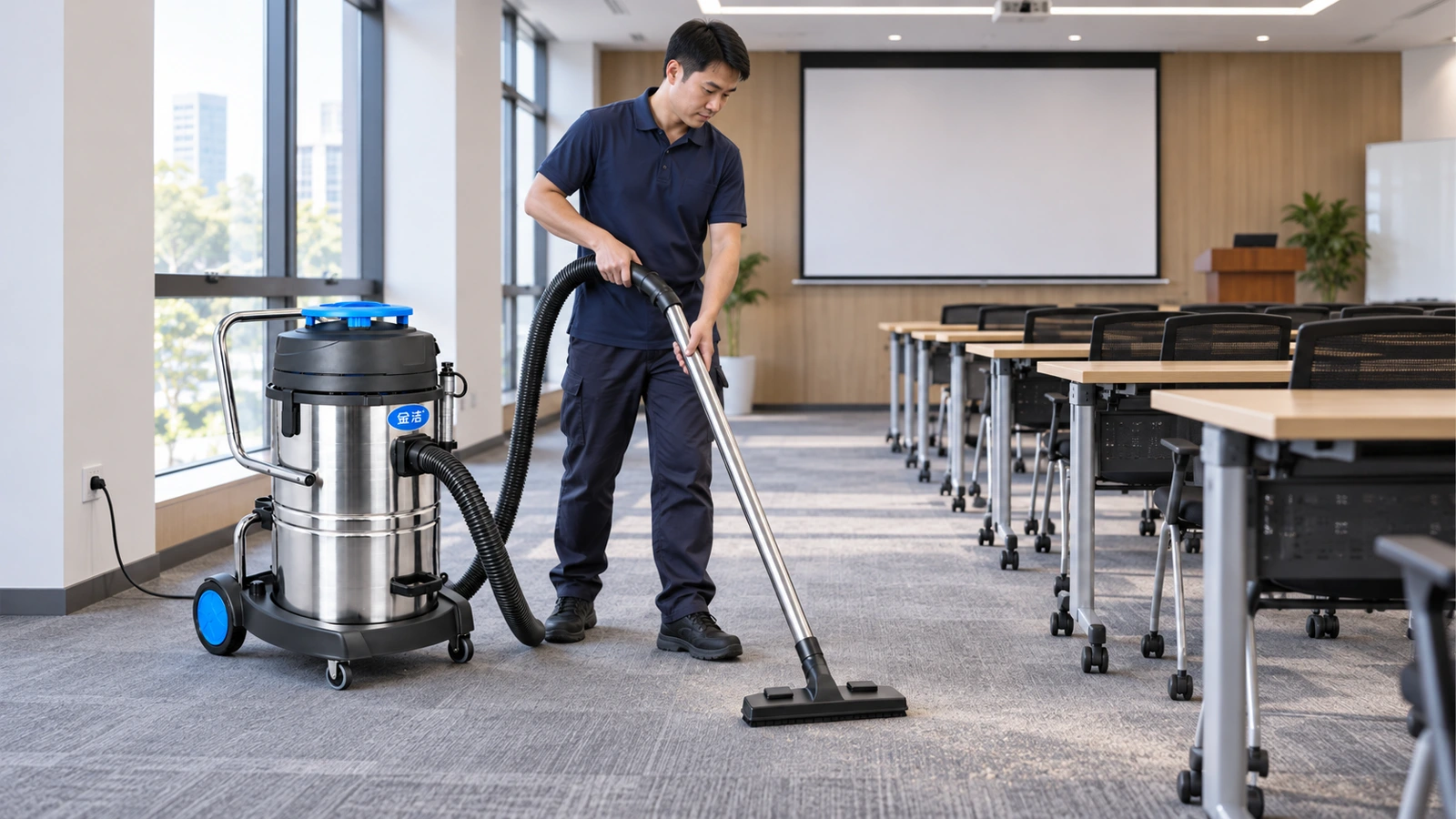
The current page lists 220 V, an 8 m cord and dry/wet tools. This chapter covers dry floor work only; verify wet pickup setup and differences from CL70-2 separately.
Jinjie CL70-2C
The current page lists 220 V, an 8 m cord and dry/wet tools. This chapter covers dry floor work only; verify wet pickup setup and differences from CL70-2 separately.
Jinjie JGY-2078SA
Current model
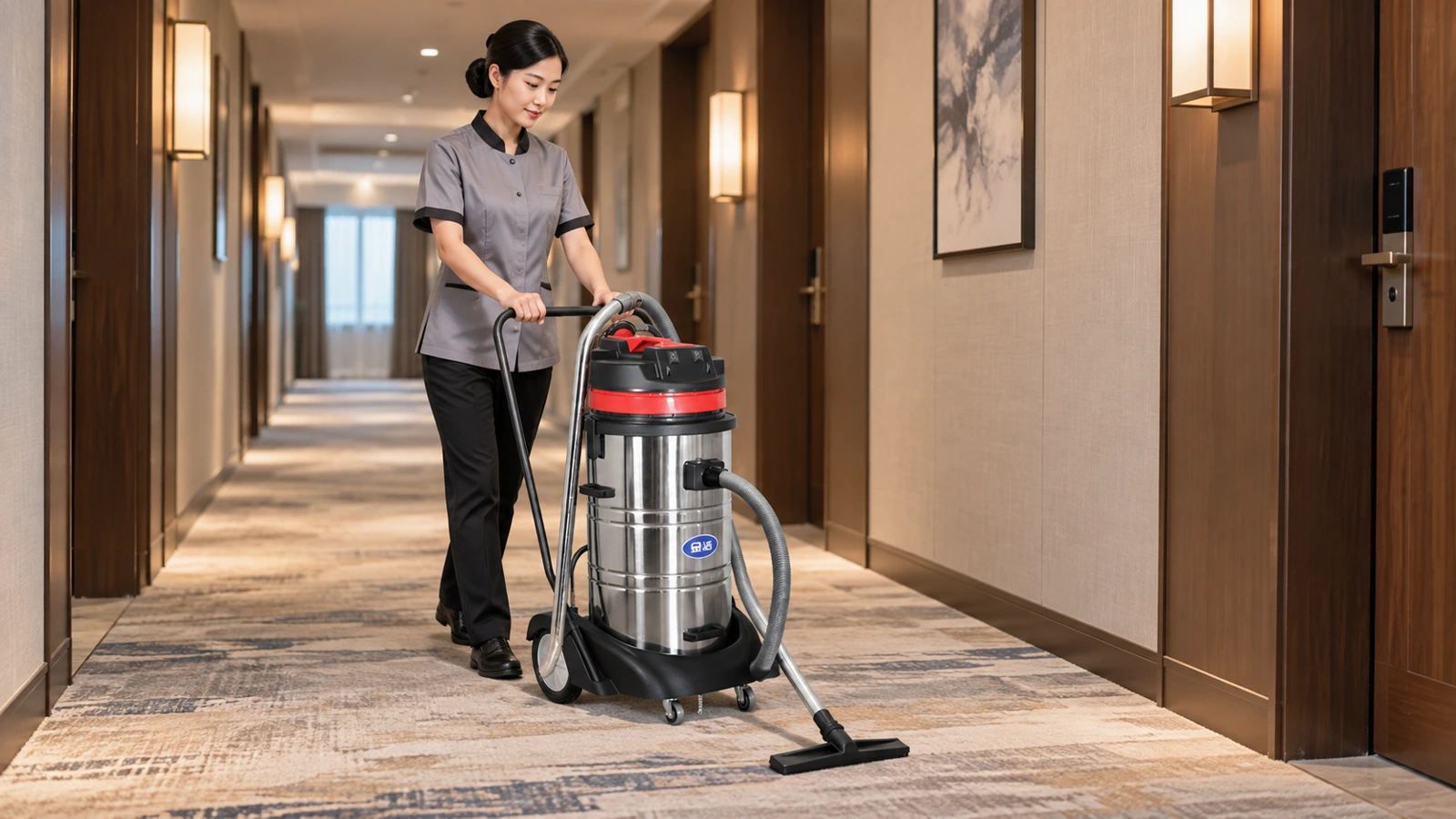
Currently presented as a commercial dry/wet vacuum. Verify actual floor tools and filters for dry carpet or hard-floor work; the quiet-model description is not noise-test certification.
Jinjie JGY-2078SA
Currently presented as a commercial dry/wet vacuum. Verify actual floor tools and filters for dry carpet or hard-floor work; the quiet-model description is not noise-test certification.