
Selected model: Jinjie J-85BF
Typical application · Equipment selectionWarehouse and production-access floor cleaning
Jinjie J-85BF
Coordinated scrubbing and recovery can reduce repeated mopping and soil tracking. Correct pads, detergent and trials help protect compatible finishes. Routes and filling arrangements can reduce rework and unnecessary disruption; assess time and cost against actual shifts.
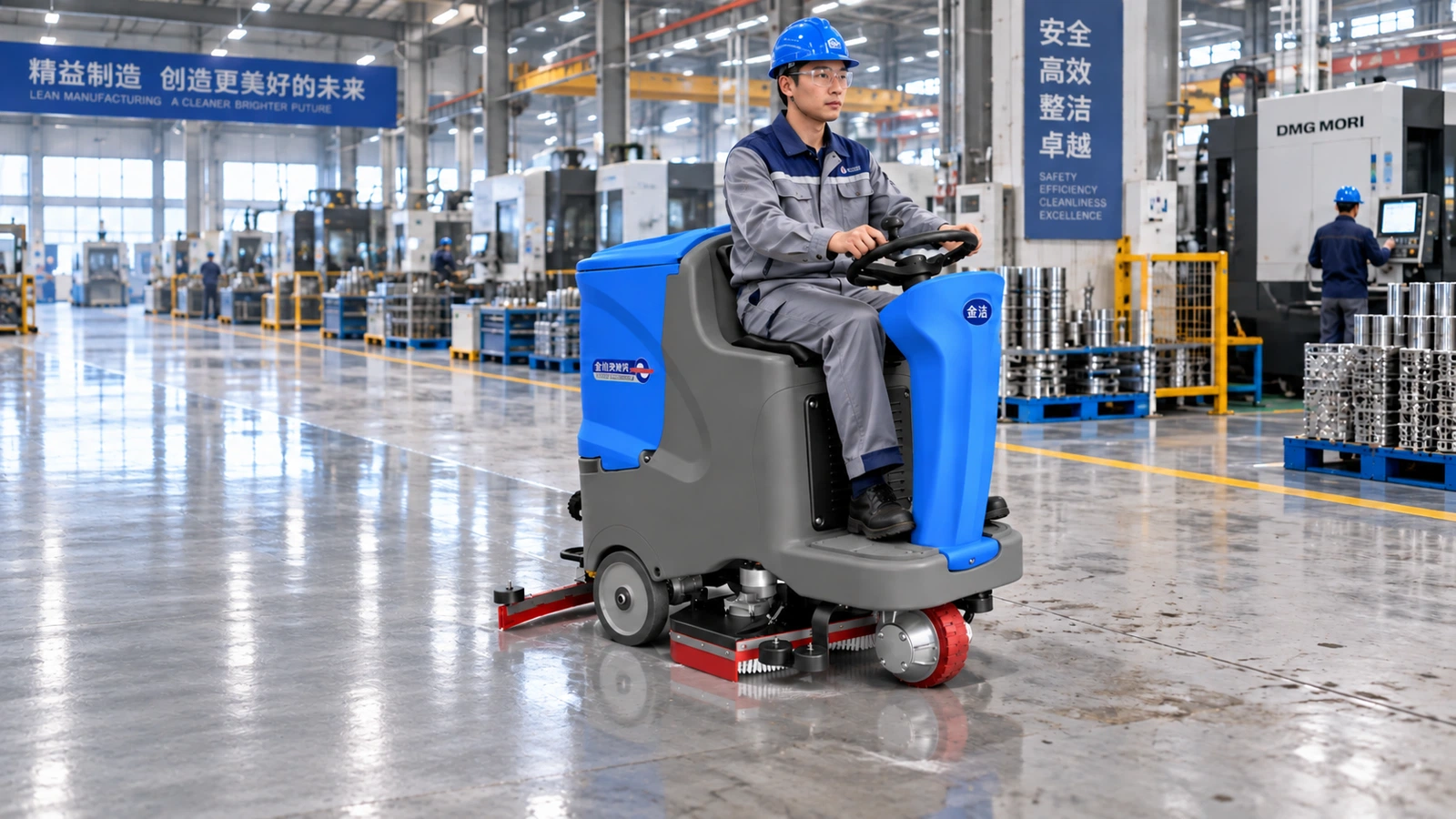
01 · What makes this task difficult?
Foot marks, tracked grit and bonded soil need different treatment. Furniture, shelving, equipment or foot traffic limit the cleaning window. Collect grit first, then scrub and recover sectionally, inspecting residual water before reopening.
Soil and site routes need different handling
Identify soil and material, then plan trials and sectional handover
Tools and supply affect continuity
Verify this model’s tools, supply and waste collection, without borrowing another model’s figures
Protect surfaces and people
Protect sensitive areas and inspect results before reopening
02 · Why consider this Jinjie machine?
J-85BF: Front-wheel drive and twin-brush cleaning support planned warehouse main aisles. Separate forklifts and stock, then organise filling and emptying; ride-on construction does not establish slope capability.
J-85BF current working configuration
Identify soil and material, then plan trials and sectional handover
Reduce unnecessary repeat cleaning
Model-compatible tools and site services
Verify this model’s tools, supply and waste collection, without borrowing another model’s figures
Organise labour and working time
Material compatibility, isolation and finishing checks
Protect sensitive areas and inspect results before reopening
Manage damage and rework risks
Jinjie J-85BF · Front-wheel drive and twin-brush cleaning support planned warehouse main aisles. Separate forklifts and stock, then organise filling and emptying; ride-on construction does not establish slope capability.
03 · A better cleaning workflow and customer value
Coordinated scrubbing and recovery can reduce repeated mopping and soil tracking. Correct pads, detergent and trials help protect compatible finishes. Routes and filling arrangements can reduce rework and unnecessary disruption; assess time and cost against actual shifts.
Reduce unnecessary repeat cleaning
Soil and site routes need different handling · Identify soil and material, then plan trials and sectional handover
Organise labour and working time
Tools and supply affect continuity · Verify this model’s tools, supply and waste collection, without borrowing another model’s figures
Manage damage and rework risks
Protect surfaces and people · Protect sensitive areas and inspect results before reopening
Match tools, the material and the working route before comparing labour, time, consumables and maintenance costs. The potential value depends on suitable conditions and correct operation; no fixed saving or damage-free result is promised.
Use on level wet-cleanable hard floors after pad and detergent trials. Collect grit, separate traffic, protect stock and equipment, and inspect residual water before reopening. Assess slopes, clearance and electrical configuration for the current model; no fixed productivity or water-free finish is promised.
Working method, evidence and original professional analysis
Task-specific equipment selection
Logistics parks and warehouse areas | J-85BF selection and value
Site, material and contamination
Foot marks, tracked grit and bonded soil need different treatment. Furniture, shelving, equipment or foot traffic limit the cleaning window. Collect grit first, then scrub and recover sectionally, inspecting residual water before reopening.
Equipment basis and model differences
Front-wheel drive and twin-brush cleaning support planned warehouse main aisles. Separate forklifts and stock, then organise filling and emptying; ride-on construction does not establish slope capability.
Model configuration and selection
Check model-specific configurations against the machine and order before purchase.
| Model | Current basis and limits |
|---|---|
| J-85BF | Front-wheel drive and twin-brush cleaning support planned warehouse main aisles. Separate forklifts and stock, then organise filling and emptying; ride-on construction does not establish slope capability. |
| Site problem | Equipment / conditions | Suggested method | Potential value |
|---|---|---|---|
| Soil and site routes need different handling | J-85BF current working configuration | Identify soil and material, then plan trials and sectional handover | Reduce unnecessary repeat cleaning |
| Tools and supply affect continuity | Model-compatible tools and site services | Verify this model’s tools, supply and waste collection, without borrowing another model’s figures | Organise labour and working time |
| Protect surfaces and people | Material compatibility, isolation and finishing checks | Protect sensitive areas and inspect results before reopening | Manage damage and rework risks |
Working method, accessories and site supply
- Map racks, pallets, forklift crossings and stock moisture boundaries.
- Trial brushes, detergent, recovery and wheel marks on a representative patch.
- Recover by zone and inspect water; do not direct wastewater toward stock or storm drains.
Limits and safety
Use on level wet-cleanable hard floors after pad and detergent trials. Collect grit, separate traffic, protect stock and equipment, and inspect residual water before reopening. Assess slopes, clearance and electrical configuration for the current model; no fixed productivity or water-free finish is promised.
Questions for this task
Prepare site information
Provide forklift routes, stock boundaries, wheel-mark photos and service/charging points.
FAQ
Can cleaning simply follow a working forklift?
Use separate zones and handover windows rather than improvised following.
Is theoretical output enough for shift planning?
Include access, servicing, turns, pre-cleaning and finishing.
How can I use this illustration to plan a trial?
Use the illustration as an example of the work area. Check the floor, access and working clearance on your site, then confirm suitability in a trial.
Why select the configuration for this specific model?
Front-wheel drive and twin-brush cleaning support planned warehouse main aisles. Separate forklifts and stock, then organise filling and emptying; ride-on construction does not establish slope capability.
Are fixed savings or damage-free results guaranteed?
No. Assess material, soil, tools and site conditions, then trial and measure actual time and overall cost. The original professional safety limits remain applicable.
What site information is needed for selection?
Provide forklift routes, stock boundaries, wheel-mark photos and service/charging points.
Select equipment for the actual site
Provide forklift routes, stock boundaries, wheel-mark photos and service/charging points.
Jinjie J-85BF · Selection enquiryCompare application plansModels and original application images
Compare each model against its own configuration and the actual route, material and site services.
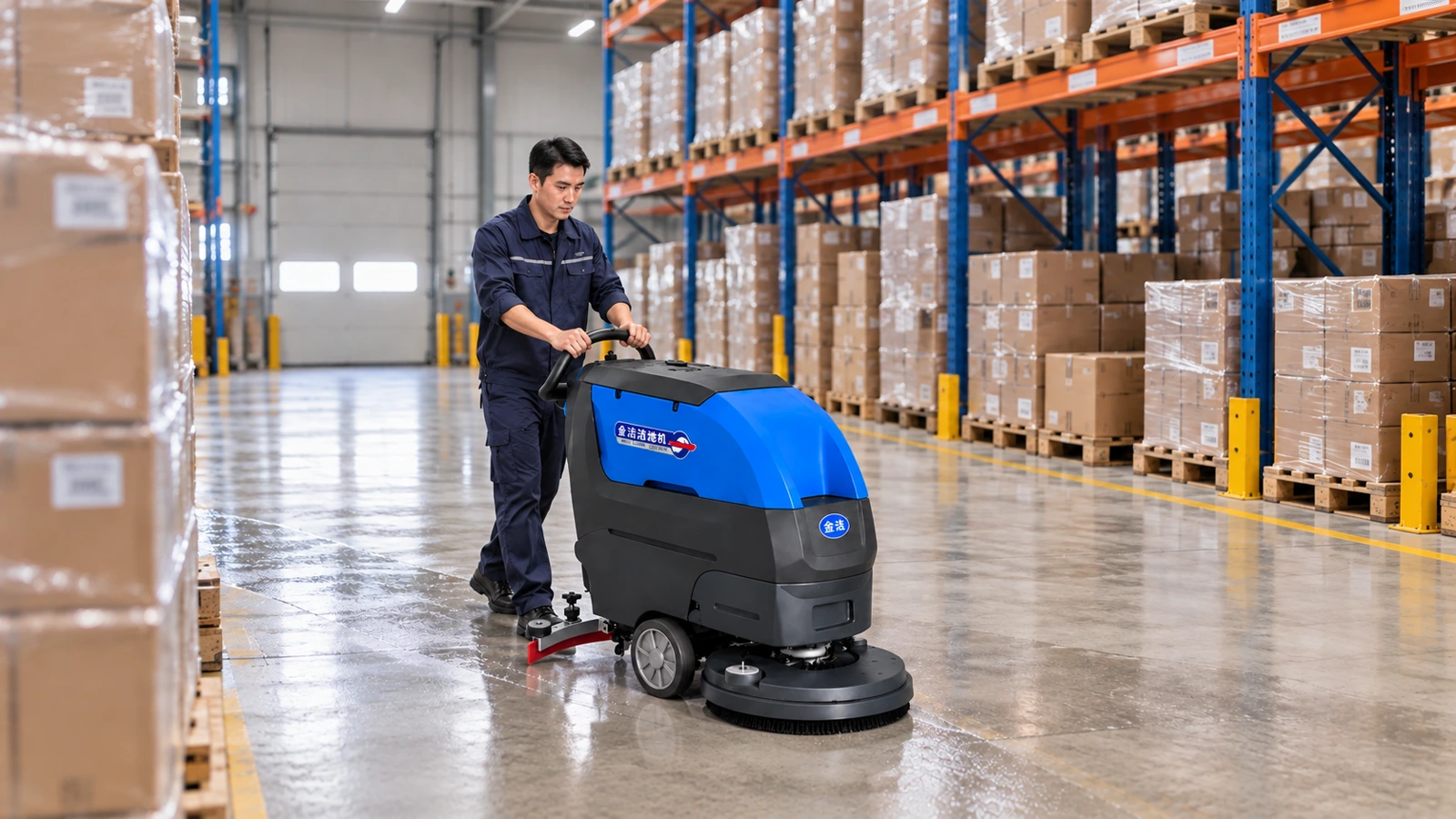
Jinjie J-D3L
The J-D3L illustration supports discussion of attended narrow-aisle work and recovery checks. Verify its brush, power and dimensions rather than borrowing J-D3C or ride-on specifications.
Jinjie J-85BF
Current model
Front-wheel drive and twin-brush cleaning support planned warehouse main aisles. Separate forklifts and stock, then organise filling and emptying; ride-on construction does not establish slope capability.
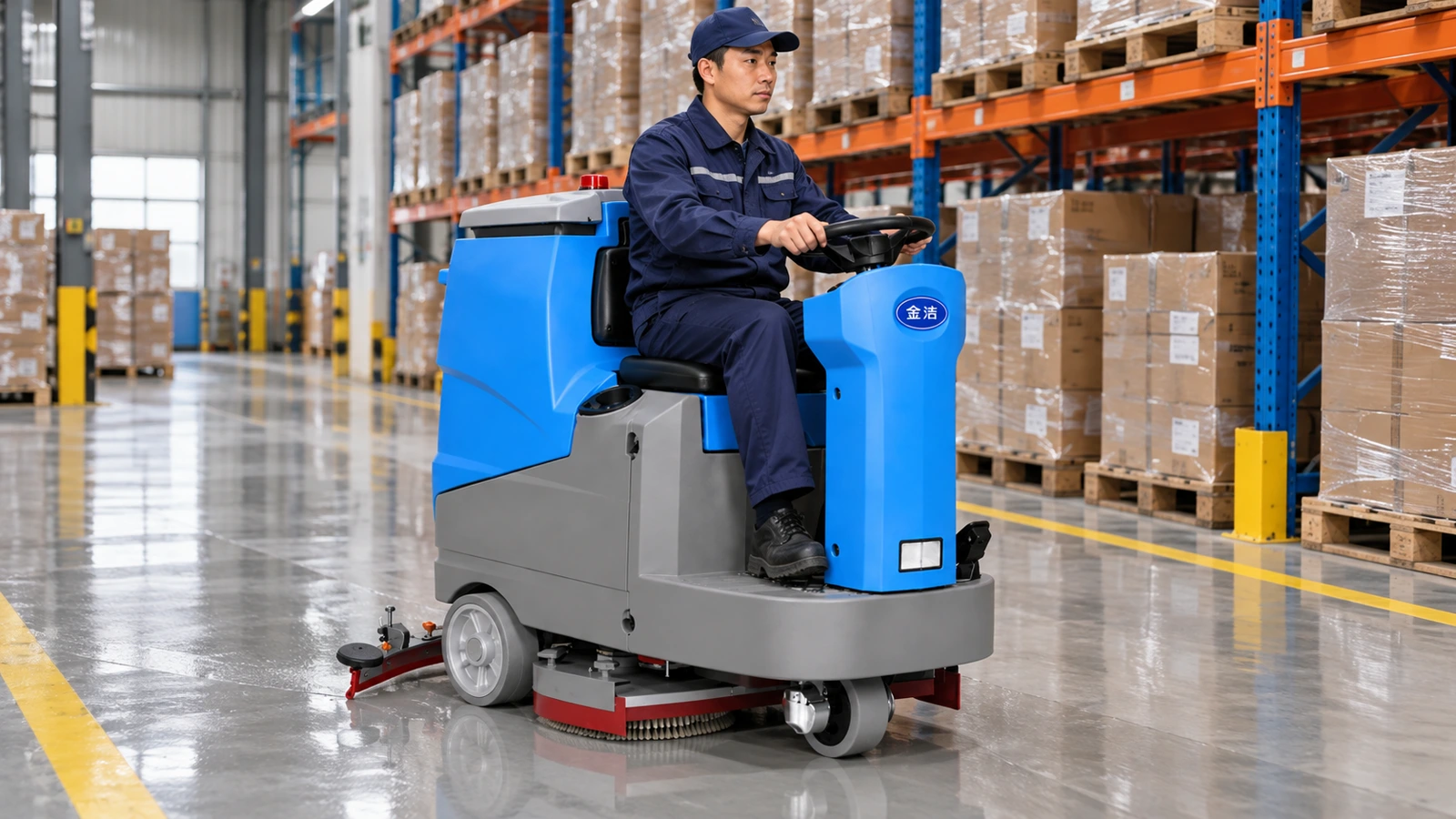
Jinjie J-D8SL mm
The associated J-D8SL and J-920B illustrations concern ride-on warehouse work. Verify clearance, turns, servicing and charging; squeegee width or theoretical output does not guarantee access or onsite throughput.
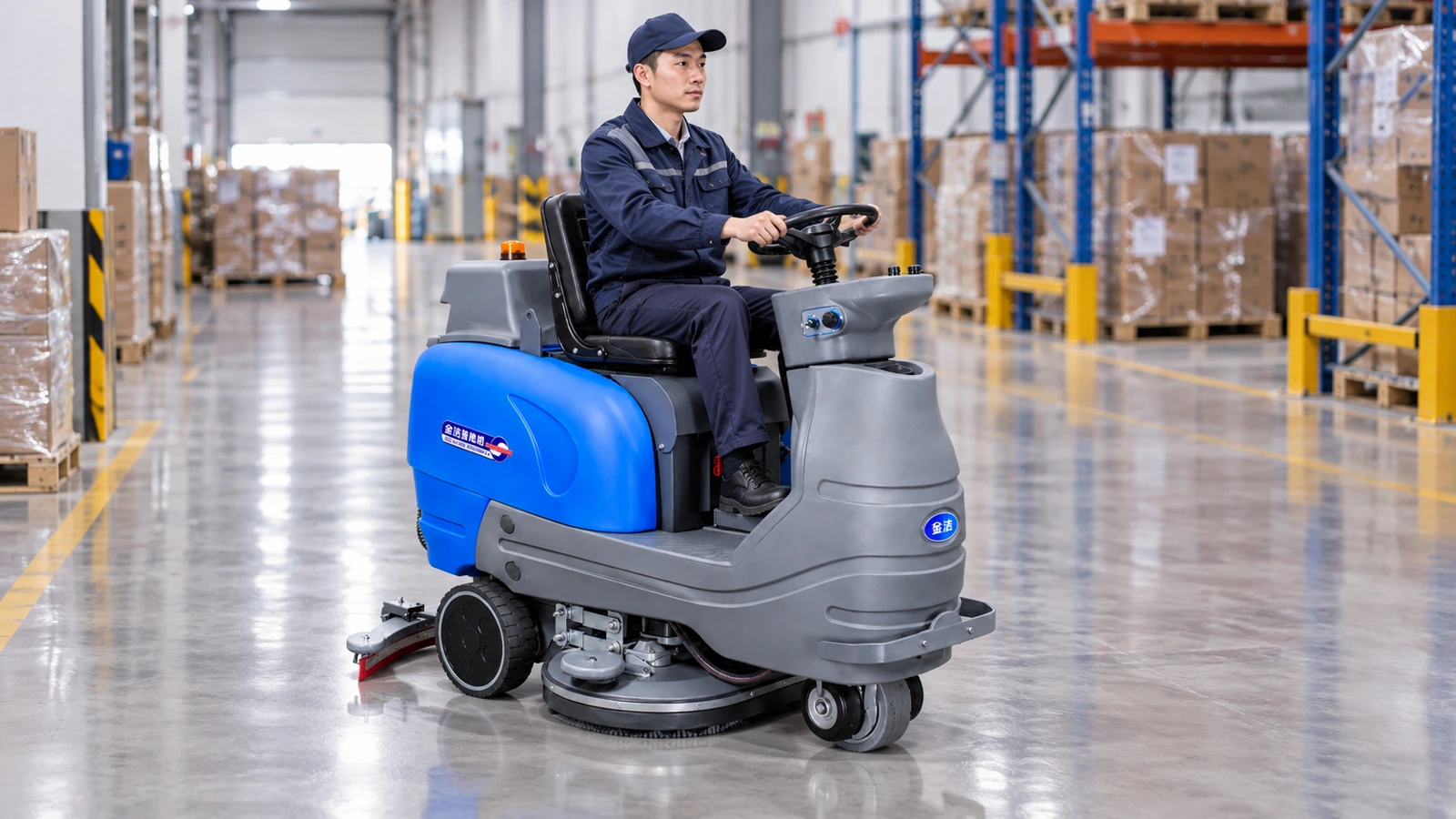
Jinjie J-920B
The associated J-D8SL and J-920B illustrations concern ride-on warehouse work. Verify clearance, turns, servicing and charging; squeegee width or theoretical output does not guarantee access or onsite throughput.
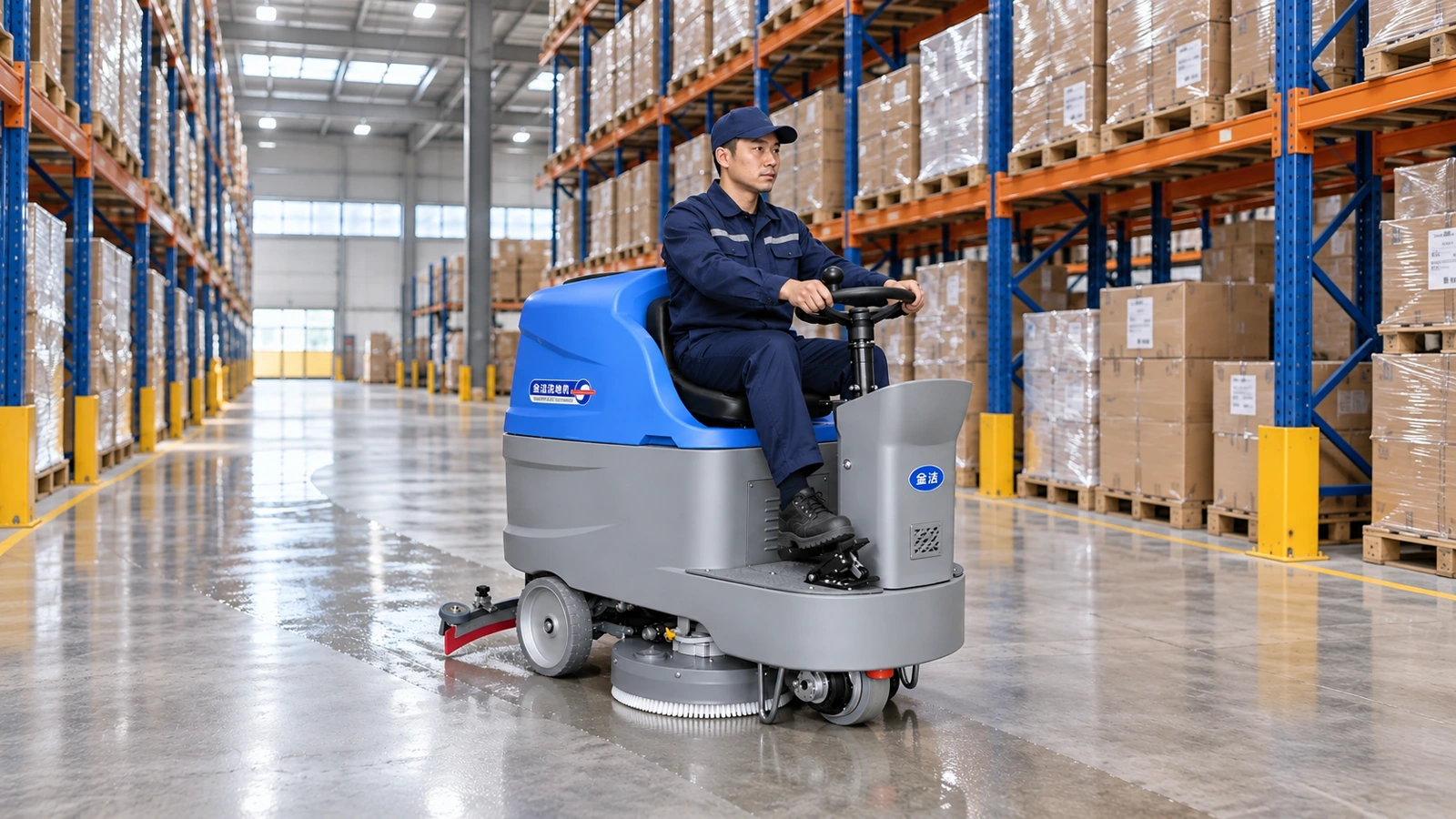
Jinjie J-960B
Assess the current larger ride-on scrubbing and recovery configuration for broad continuous routes, including squeegee clearance and turns. This guidance concerns level floors; slope conditions remain unverified.
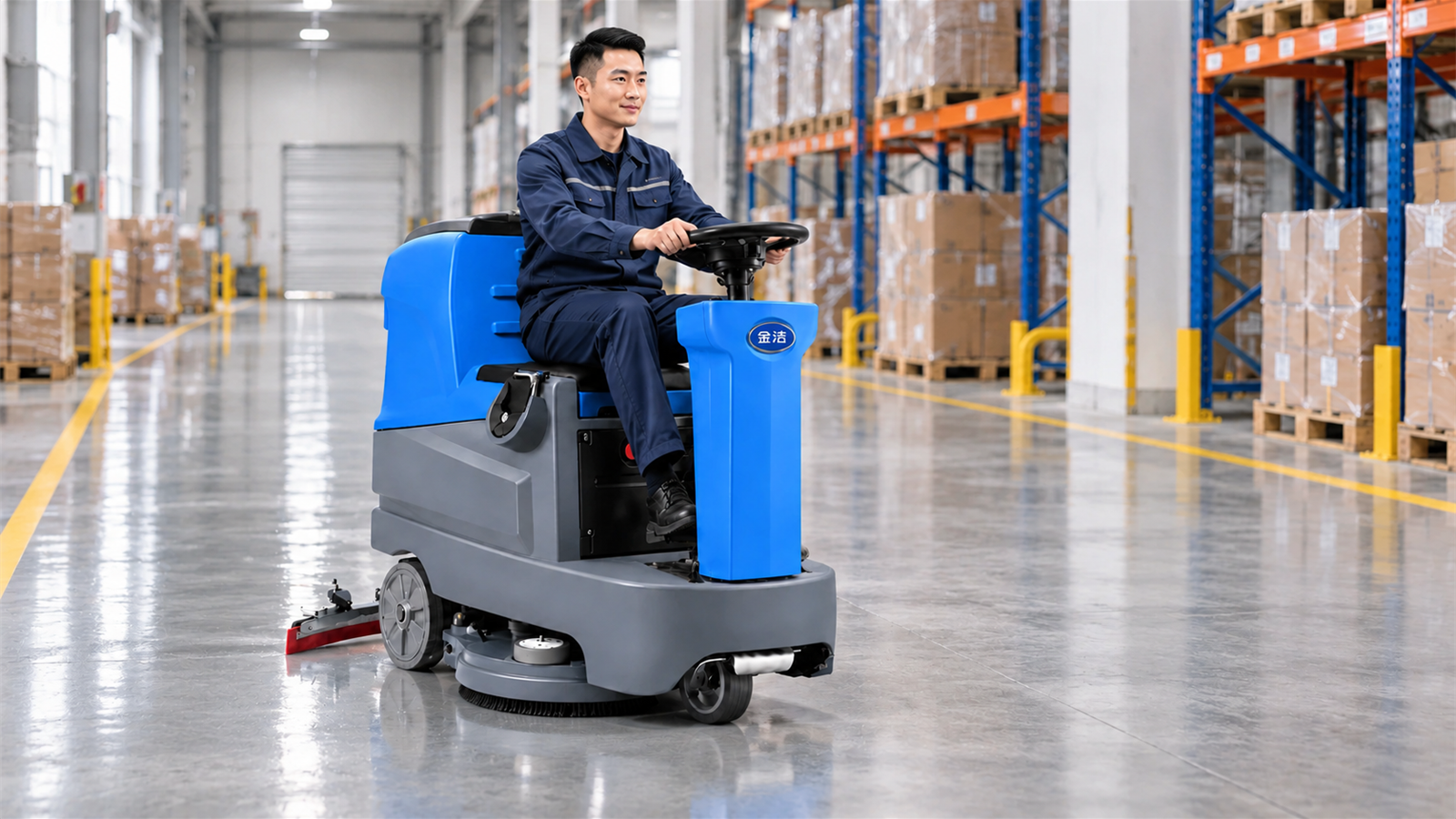
Jinjie J-D6SL ride-on scrubber
J-D6SL serves continuous warehouse hard-floor routes that accommodate ride-on equipment. Compared with narrow-aisle walk-behind machines, check turns, stock protection and forklift isolation; it is not a universal narrow-aisle choice.