
Selected model: Jinjie J-1555L
Typical application · Equipment selectionOptional flushing bars: verify ratings rather than promising output by nozzle count
J-1555L
With compatible accessories and sufficient supply and disposal, coordinate flushing routes with collection to reduce blind tool changes and unnecessary passes. Assess equipment and labour costs against the actual scope.
01 · What makes this task difficult?
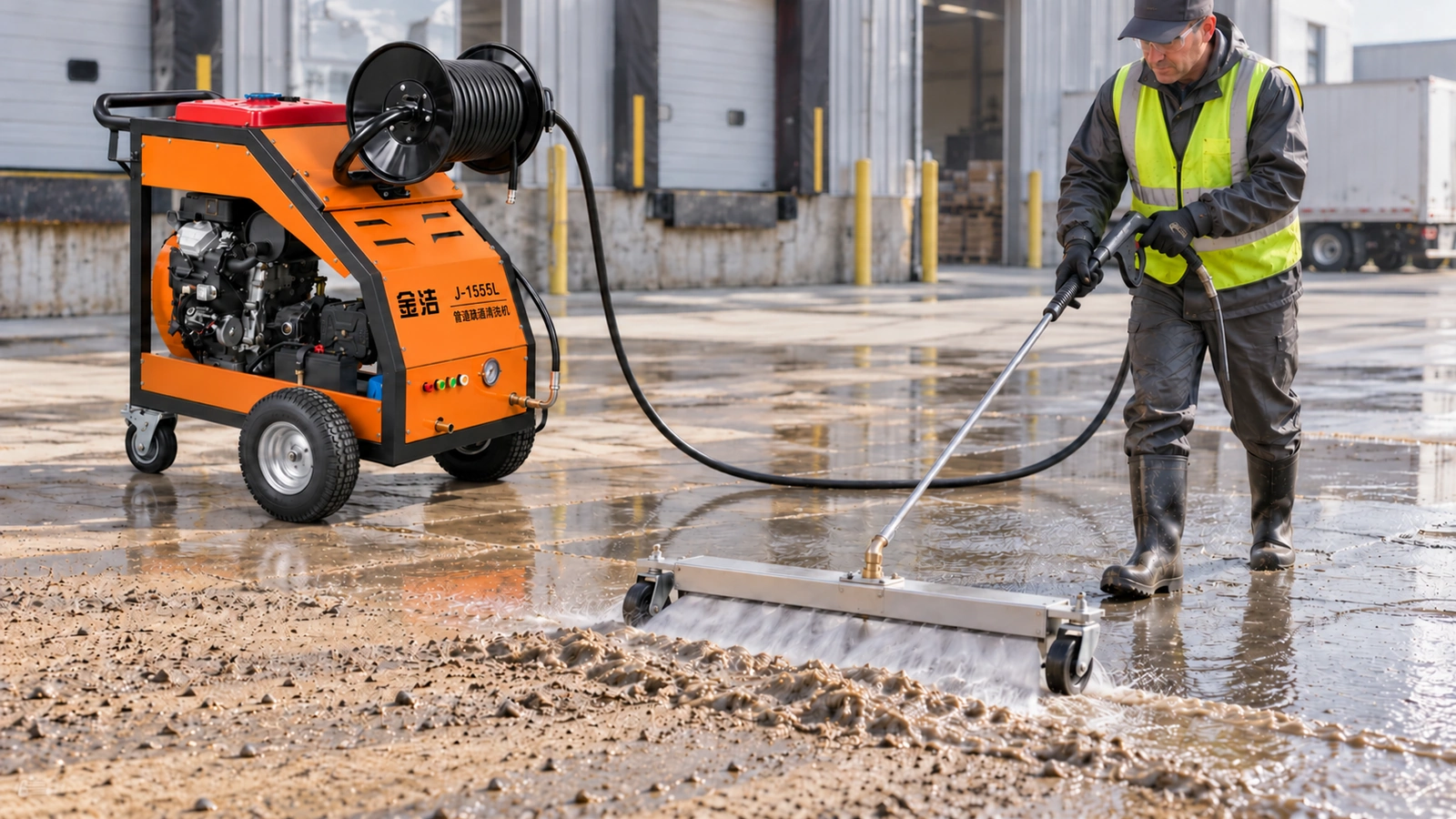
Mud and bonded deposits vary in thickness. Raising pressure blindly may scatter loose soil or damage coatings, seals and nearby objects. Remove bulk soil, trial approved surfaces, then plan spray direction and wastewater collection.
Loose sediment needs organised collection
Trial toward collection before defining routes and coverage
Accessory and machine ratings may differ
Verify the configuration and supply instead of guessing from nozzle count
02 · Why consider this Jinjie machine?
J-1555L: Distinguish the stated 55 L/min machine flow from the historical 35 L/min lance note, whose conditions remain unresolved. Match the lance or optional bar to actual nozzle, regulation, supply and connections rather than inferring multi-gun output. Protect the material, ventilate gasoline power outdoors and collect runoff.
J-1555L current working configuration
Trial toward collection before defining routes and coverage
Reduce repeated scattering and unnecessary travel
Rated pressure, flow and connection compatibility
Verify the configuration and supply instead of guessing from nozzle count
Reduce rework from incompatible tools
J-1555L · Distinguish the stated 55 L/min machine flow from the historical 35 L/min lance note, whose conditions remain unresolved. Match the lance or optional bar to actual nozzle, regulation, supply and connections rather than inferring multi-gun output. Protect the material, ventilate gasoline power outdoors and collect runoff.
03 · A better cleaning workflow and customer value
With compatible accessories and sufficient supply and disposal, coordinate flushing routes with collection to reduce blind tool changes and unnecessary passes. Assess equipment and labour costs against the actual scope.
Reduce repeated scattering and unnecessary travel
Loose sediment needs organised collection · Trial toward collection before defining routes and coverage
Reduce rework from incompatible tools
Accessory and machine ratings may differ · Verify the configuration and supply instead of guessing from nozzle count
Match tools, the material and the working route before comparing labour, time, consumables and maintenance costs. The potential value depends on suitable conditions and correct operation; no fixed saving or damage-free result is promised.
A multi-nozzle bar is optional. Verify rated pressure, flow, connections, nozzles and water arrangements; nozzle count and machine flow do not establish individual output. Trial compatible surfaces, keep gasoline power outdoors, collect runoff and segregate people.
Working method, evidence and original professional analysis
Task-specific equipment selection
Higher-flow flushing for targeted ground-sand removal | J-1555L selection and value
Site, material and contamination
Mud and bonded deposits vary in thickness. Raising pressure blindly may scatter loose soil or damage coatings, seals and nearby objects. Remove bulk soil, trial approved surfaces, then plan spray direction and wastewater collection.
Equipment basis and model differences
Distinguish the stated 55 L/min machine flow from the historical 35 L/min lance note, whose conditions remain unresolved. Match the lance or optional bar to actual nozzle, regulation, supply and connections rather than inferring multi-gun output. Protect the material, ventilate gasoline power outdoors and collect runoff.
Model configuration and selection
Check model-specific configurations against the machine and order before purchase.
| Model | Current basis and limits |
|---|---|
| J-1555L | Distinguish the stated 55 L/min machine flow from the historical 35 L/min lance note, whose conditions remain unresolved. Match the lance or optional bar to actual nozzle, regulation, supply and connections rather than inferring multi-gun output. Protect the material, ventilate gasoline power outdoors and collect runoff. |
| Site problem | Equipment / conditions | Suggested method | Potential value |
|---|---|---|---|
| Loose sediment needs organised collection | J-1555L current working configuration | Trial toward collection before defining routes and coverage | Reduce repeated scattering and unnecessary travel |
| Accessory and machine ratings may differ | Rated pressure, flow and connection compatibility | Verify the configuration and supply instead of guessing from nozzle count | Reduce rework from incompatible tools |
Working method, accessories and site supply
- Verify the assembly · Have the supplier confirm ratings, nozzles and connections against actual working conditions. Until confirmed, discuss only; do not operate.
- Check surface and disposal · Assess water-compatible material, joints, soil and waste recovery; segregate people and vehicles.
- Trained trial · Trial only the confirmed assembly under its instructions, observing reaction, residues and collection; stop for abnormalities.
- Stop and maintain · Stop and release pressure before disassembly, nozzle changes or blockage removal.
Limits and safety
A multi-nozzle bar is optional. Verify rated pressure, flow, connections, nozzles and water arrangements; nozzle count and machine flow do not establish individual output. Trial compatible surfaces, keep gasoline power outdoors, collect runoff and segregate people.
Questions for this task
Prepare site information
Provide surface/joint and soil photos, area, access times, supply/recovery route, actual power and configuration list.
FAQ
Can output be calculated from the number of pictured nozzles?
No. Flow, nozzle, surface, soil and route affect results.
Is a multi-outlet bar the same as multiple operators with guns?
No. These are different assemblies requiring separate flow-division, accessory and safety verification.
Why select the configuration for this model?
Distinguish the stated 55 L/min machine flow from the historical 35 L/min lance note, whose conditions remain unresolved. Match the lance or optional bar to actual nozzle, regulation, supply and connections rather than inferring multi-gun output. Protect the material, ventilate gasoline power outdoors and collect runoff.
Does the image prove a delivery or measured result?
Use the illustration as an example of the work area. Check the floor, access and working clearance on your site, then confirm suitability in a trial.
How should actual value be assessed?
Validate material, soil, tools, supply and safety under this model’s instructions, then record actual work, human support and maintenance resources. Fixed savings are not promised.
What site information is needed for selection?
Provide surface/joint and soil photos, area, access times, supply/recovery route, actual power and configuration list.
Select equipment for the actual site
Provide surface/joint and soil photos, area, access times, supply/recovery route, actual power and configuration list.
J-1555L · Selection enquiryCompare application plansModels and original application images
Compare each model against its own configuration and the actual route, material and site services.
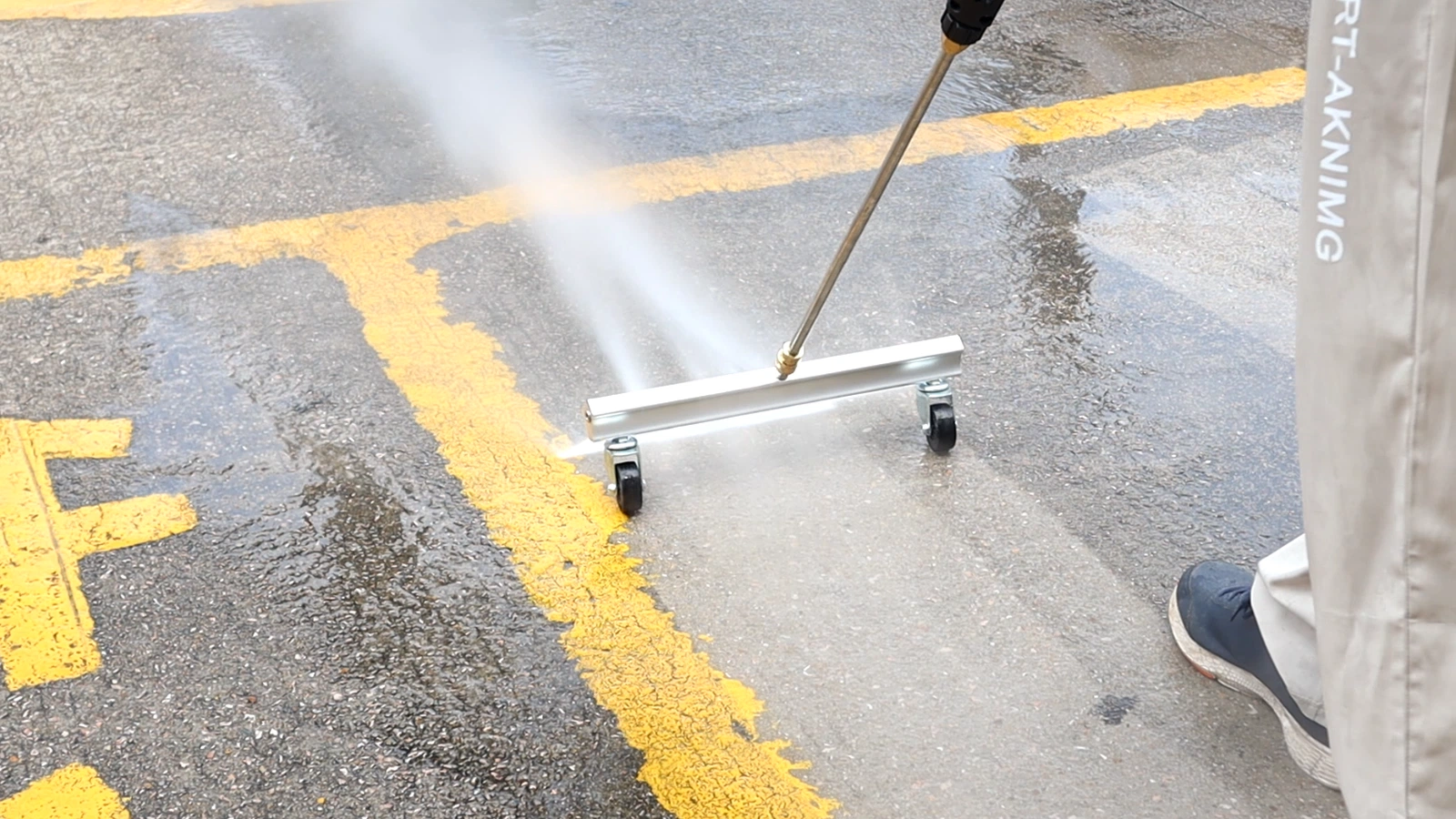
Jinjie J-2815H
Broader floor flushing to carry away loose sediment
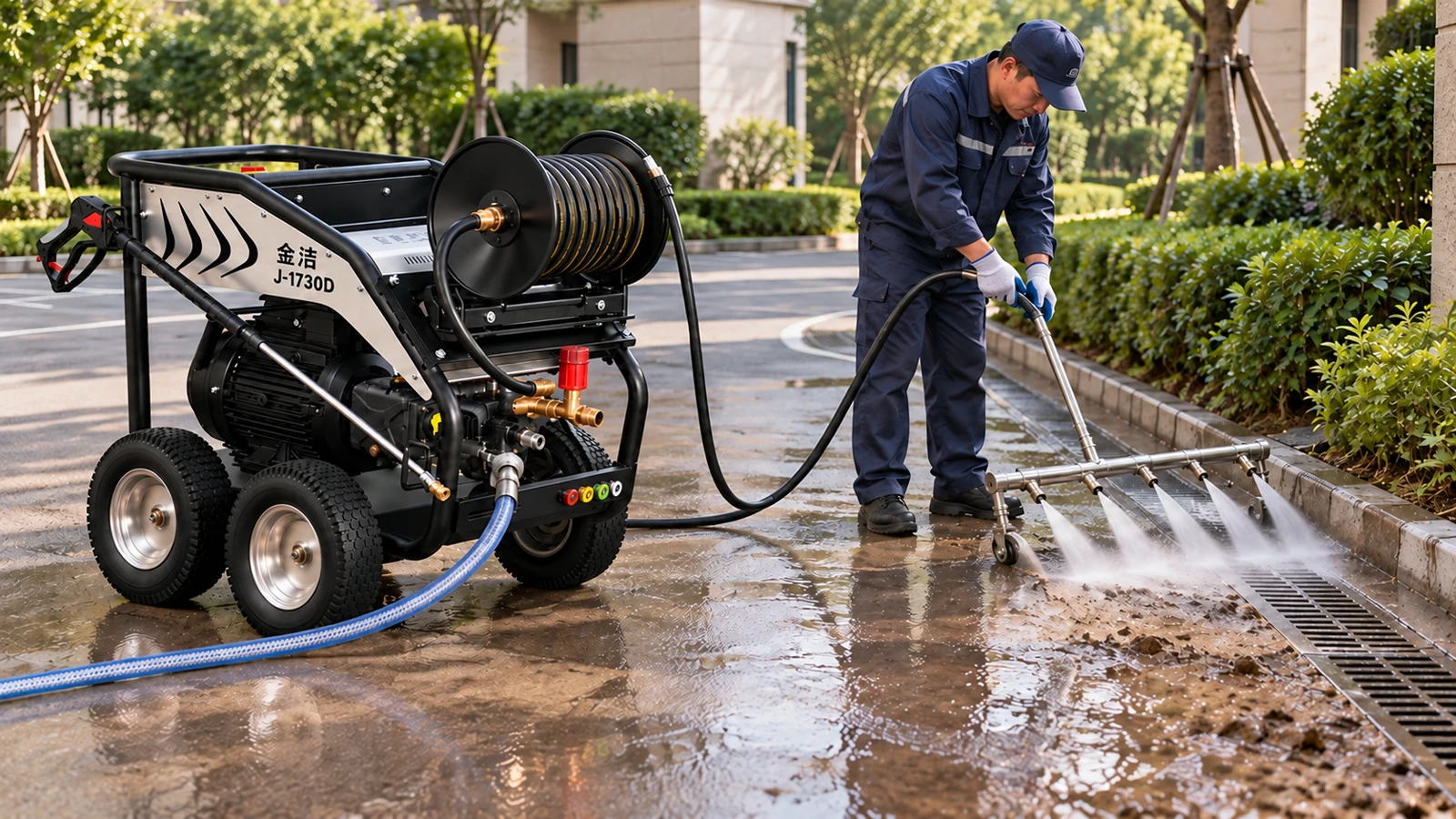
Jinjie J-1730D
Multi-outlet flushing for large-area coverage
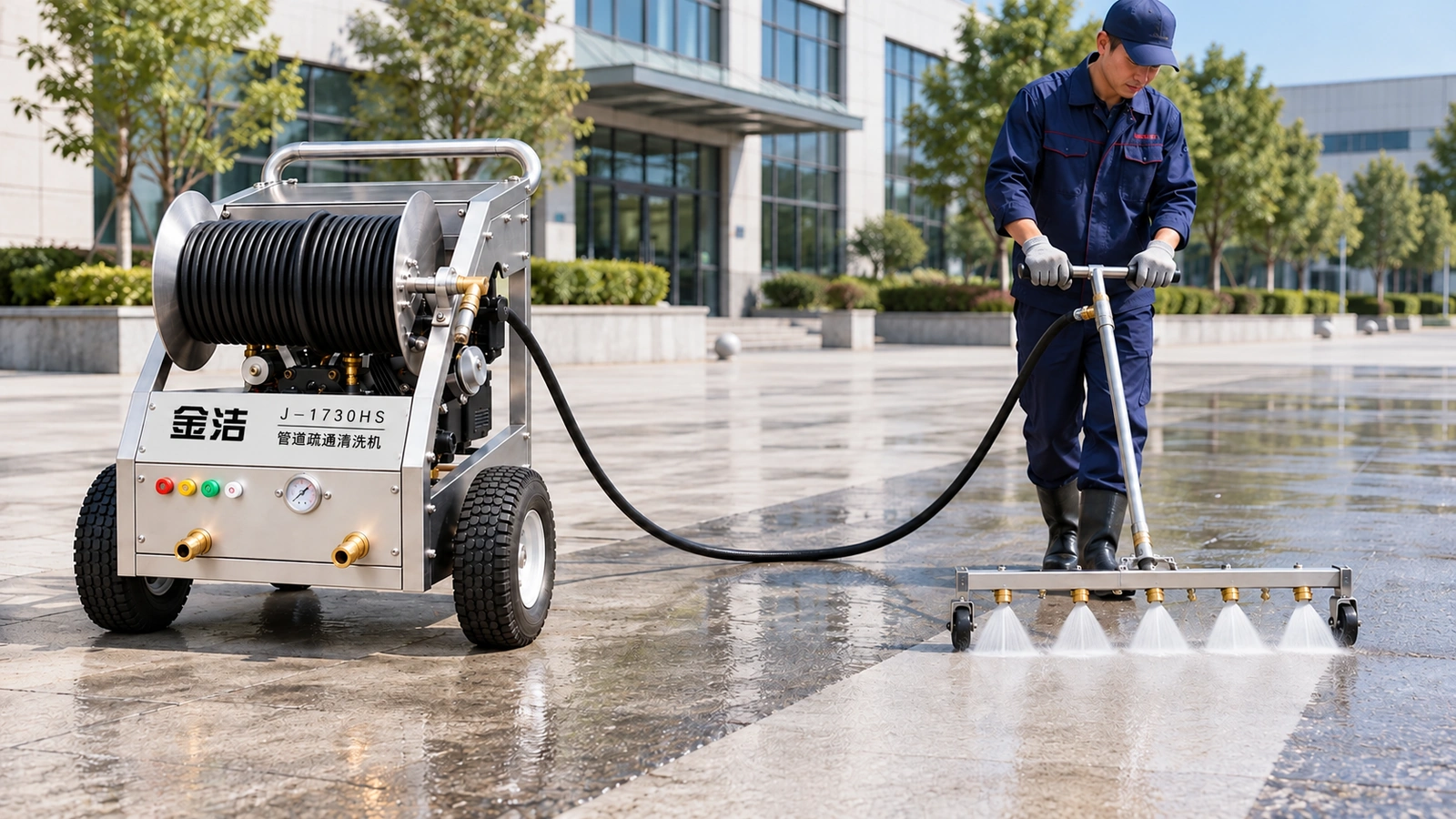
Jinjie J-1730HS
Broaden coverage per pass and reduce repeat washing
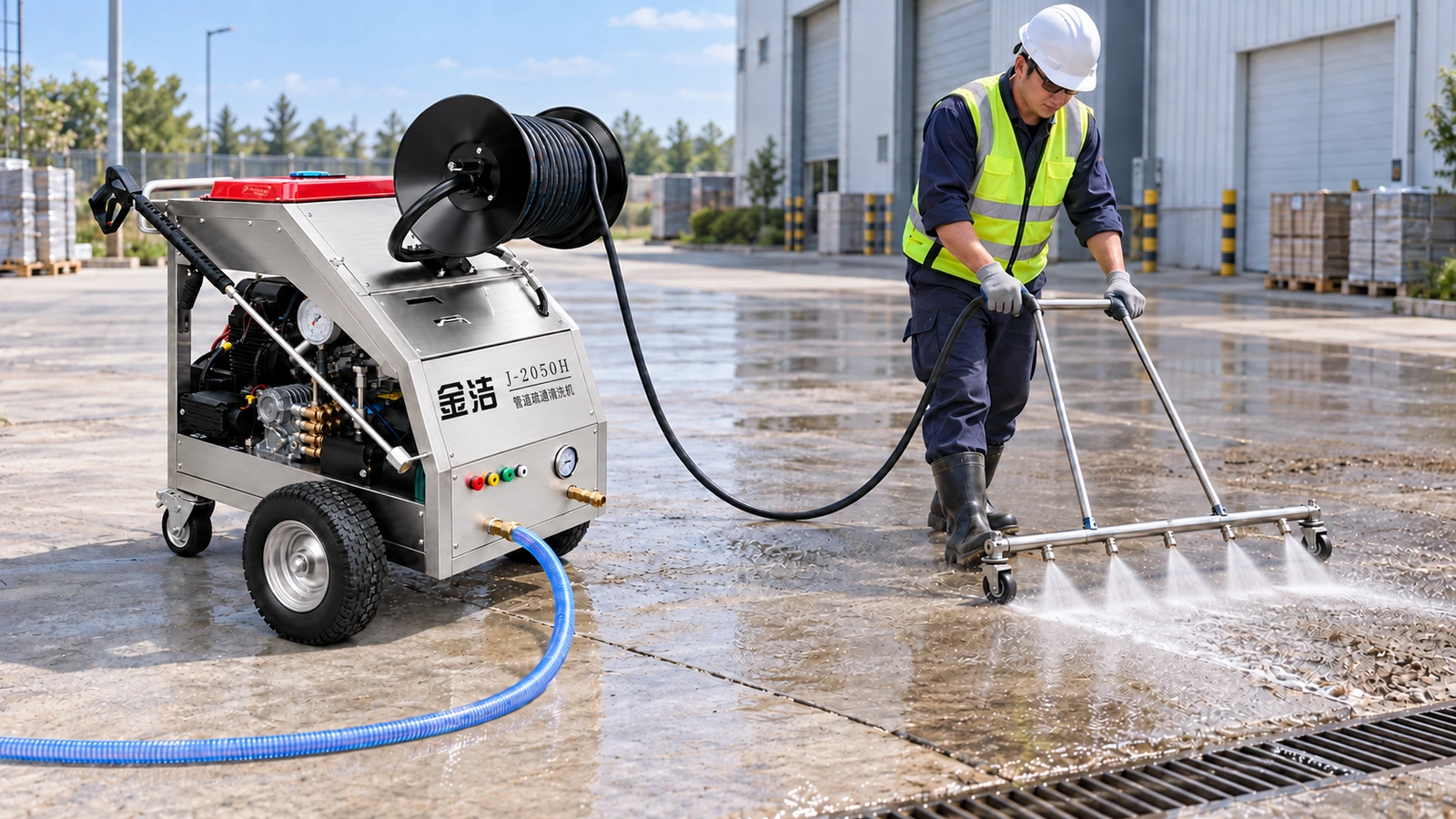
Jinjie J-2050H
Outdoor broad-area flushing coverage
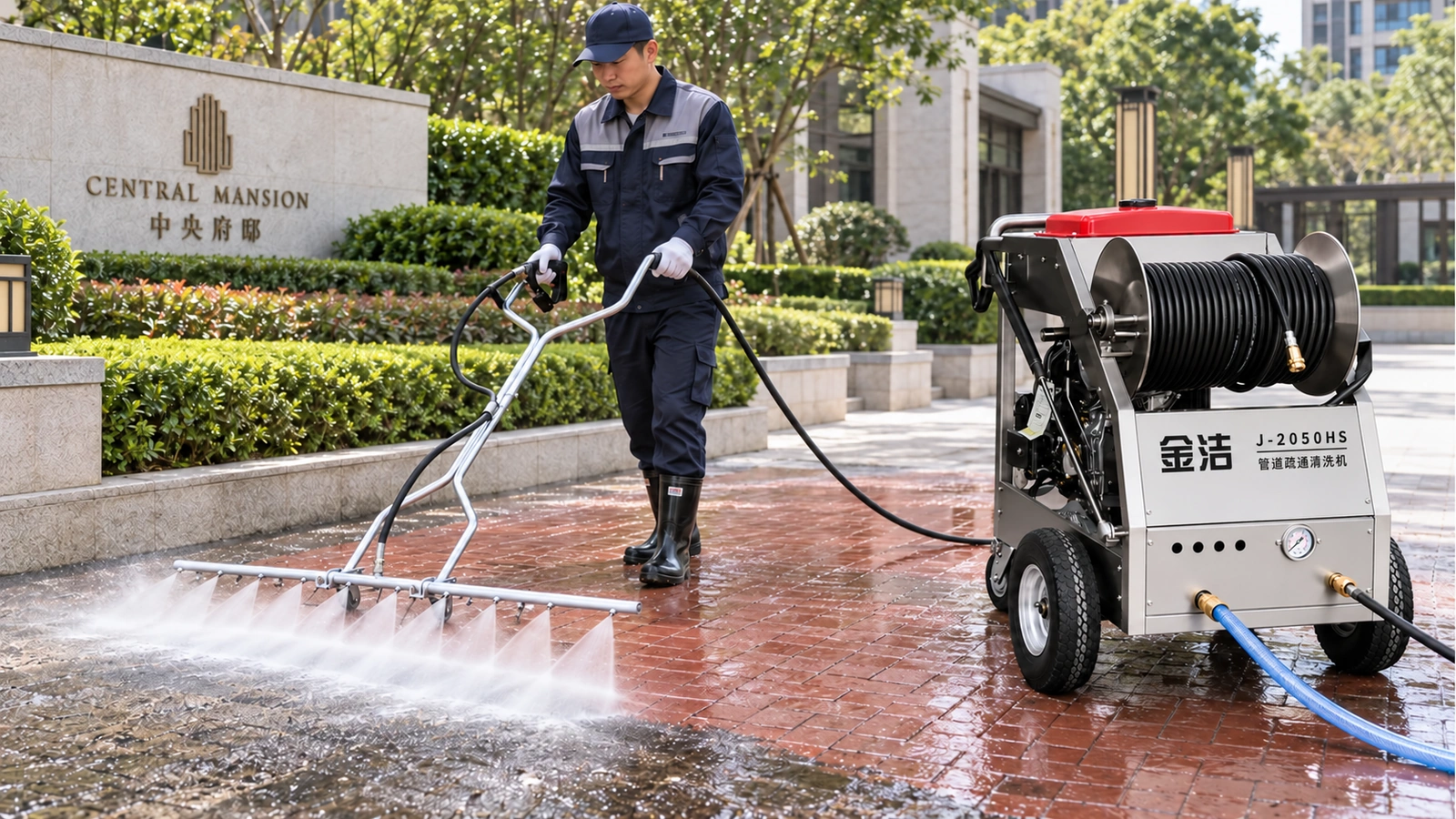
Jinjie J-2050HS
Model information positions J-2050HS for gasoline higher-flow jetting and auxiliary washing. Verify pipe nozzles, lances and optional bars separately rather than inferring accessory output from machine flow. A 304 component description is not a whole-304 fram…
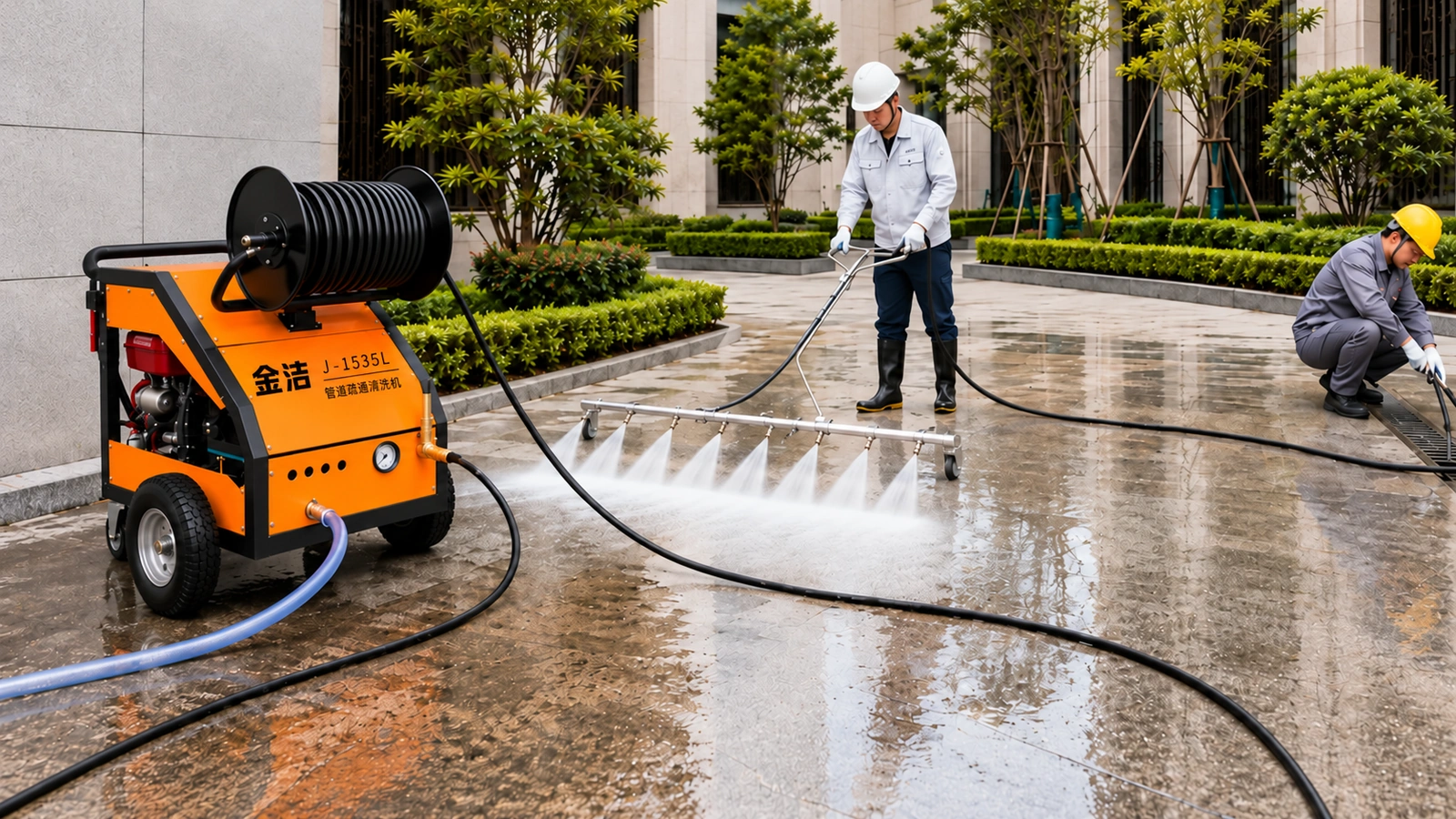
Jinjie J-1535L
Select this gasoline model’s lance and optional multi-nozzle bar separately. Machine flow of 35 L/min does not establish every nozzle’s output or coverage. Hose length is not effective reach; use only in open outdoor conditions with assessed supply and wastew…
Jinjie J-1555L
Current model
Distinguish the stated 55 L/min machine flow from the historical 35 L/min lance note, whose conditions remain unresolved. Match the lance or optional bar to actual nozzle, regulation, supply and connections rather than inferring multi-gun output. Protect the …
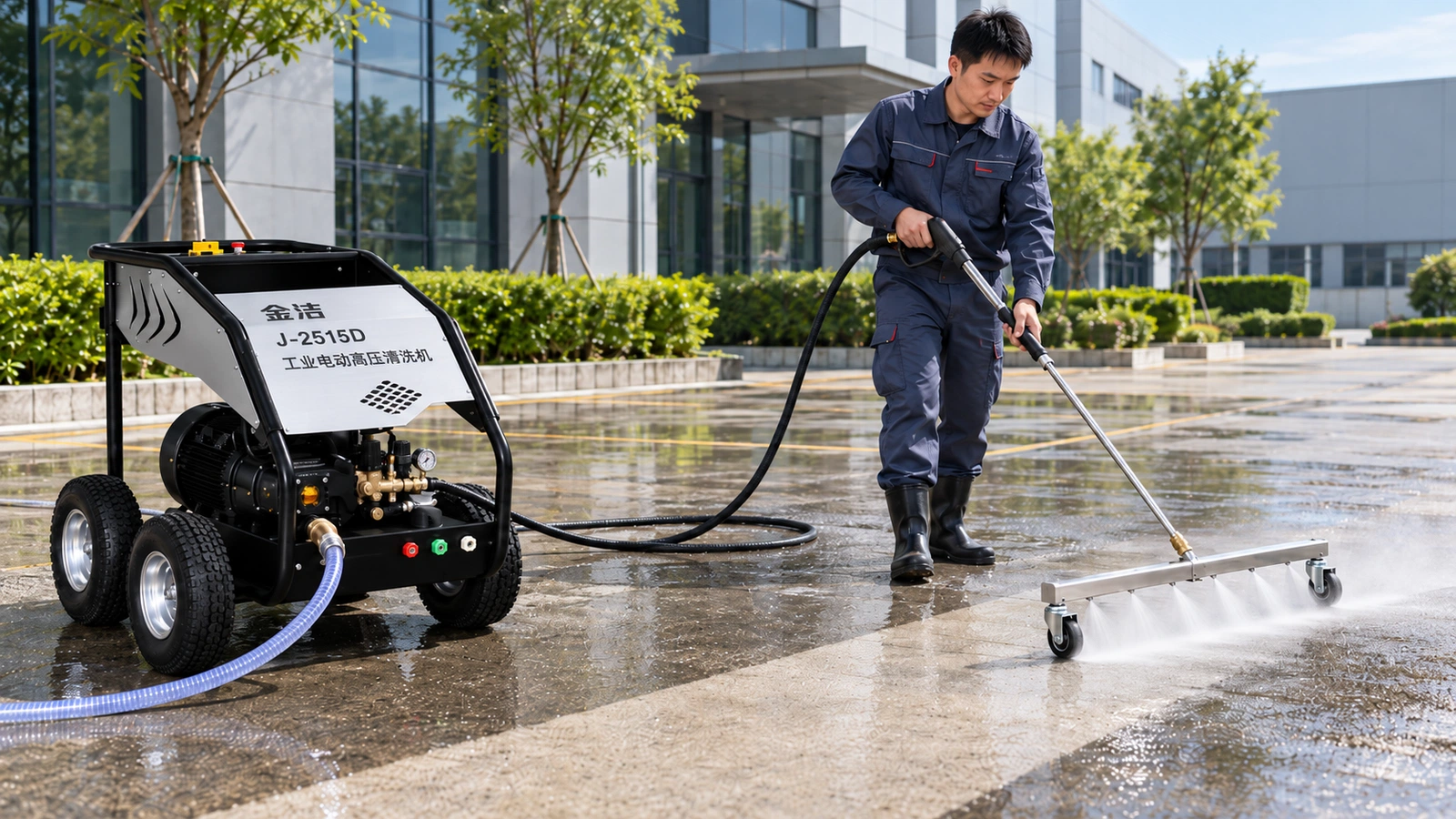
Jinjie J-2515D
Broader floor flushing to carry away loose sediment