
Selected model: Jinjie J-2515D
Typical application
Optional flushing bars: verify ratings rather than promising output by nozzle count
Jinjie J-2515D
Application guidance on Broader floor flushing to carry away loose sediment, including equipment selection, working conditions and practical value.
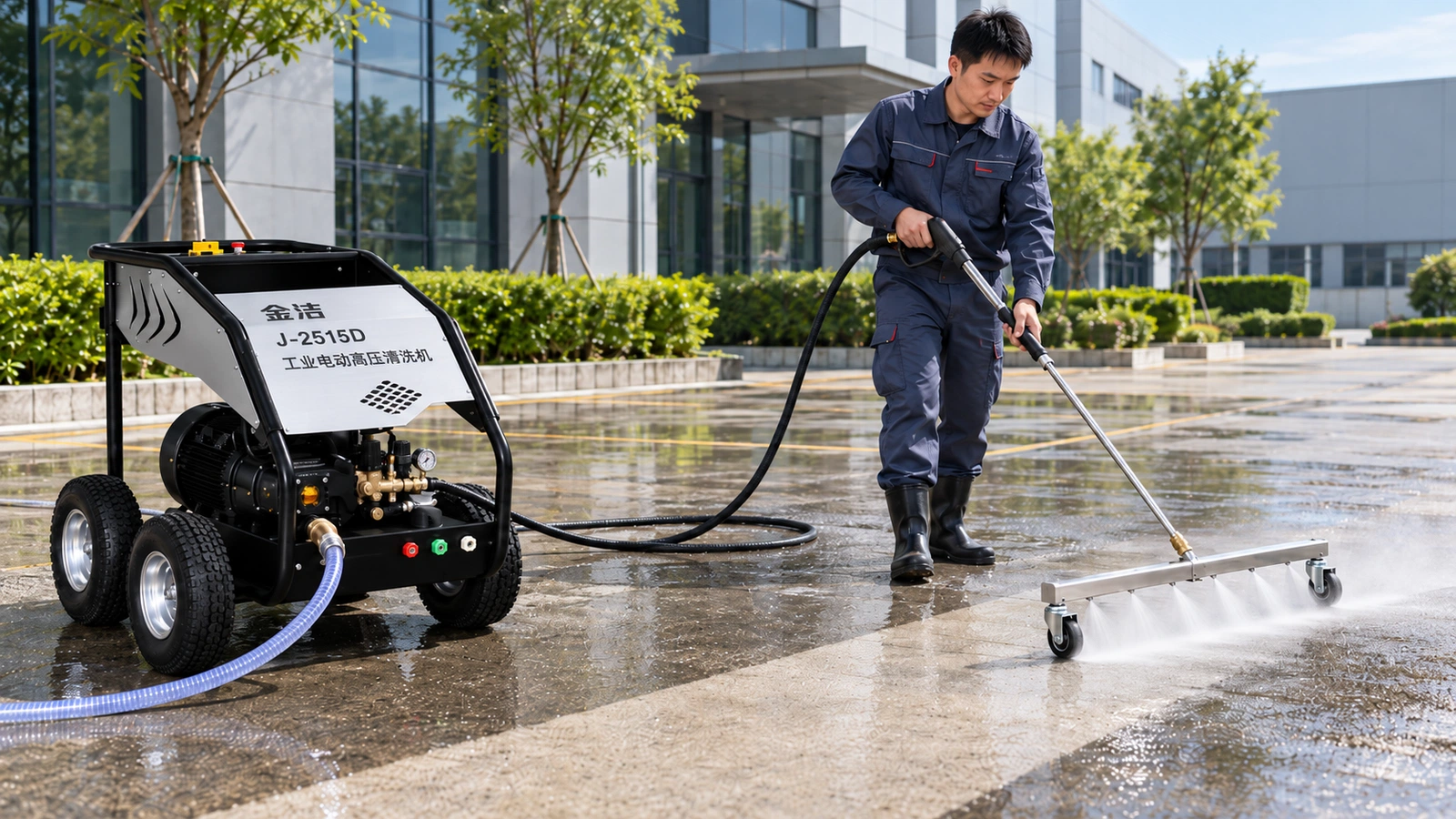
Jinjie J-2515D: optional multi-nozzle flushing
Sand still needs flushing after loosening? Assess the J-2515D optional flushing attachment
Equipment selection and operating reference for typical conditions.
Site background: why soil accumulates here
Removing loose mud and sand from hard factory floors also requires moving residue to a collection point. Where zoning and wastewater collection permit, assess flushing as an optional J-2515D attachment task.
Customer challenges: where the task gets difficult
- Scattered sand on wider ground remains in adjacent areas after spot washing.
- Following soil without a route can lead to repeatedly washing the same section.
- Expanding flushing without adequate supply and collection increases standing water.
Why consider Jinjie J-2515D
The current J-2515D page explicitly lists optional multi-nozzle flushing. Assess it for wider hard-floor flushing rather than assuming nozzle count, coverage or parallel operators. Verify 380 V power and water matching the listed 15 L/min; confirm attachment compatibility for the project.
Connect each problem with its working method
Product quality and support: verify the actual configuration
Quality means a compatible machine/attachment combination. Current J-2515D records list an AR ceramic-plunger pump and industrial electric power, but not compatibility with every flushing assembly. Verify interfaces, nozzles, hoses and parts lists before ordering; maintain actual components rather than assuming universal accessories.
Customer value: how to assess this plan
Select attachments for the flushing task; avoid incompatible purchases based only on pictures or names.
Include residue destination in the route to coordinate section handovers with wastewater collection.
Prepare nozzle and hose checks for the supplied components to support maintenance.
Selection and consultation: explain the site first
Assess single-lance spot washing for local stubborn soil; compare an optional surface cleaner for close-to-floor treatment. If more soil-carrying water is needed, assess J-2521D with site utilities rather than simply adding simultaneous lances.
Compare equipment:Jinjie J-1612D local-point washing · Jinjie J-2521D wider-area flushing. Related plan:Warehouse and logistics cleaning plan。
Provide city, photos, material, soil, area, work window, utilities and wastewater destination. For rental, add start/duration; availability, configuration and price require confirmation.
Models and original application images
Compare each model against its own configuration and the actual route, material and site services.
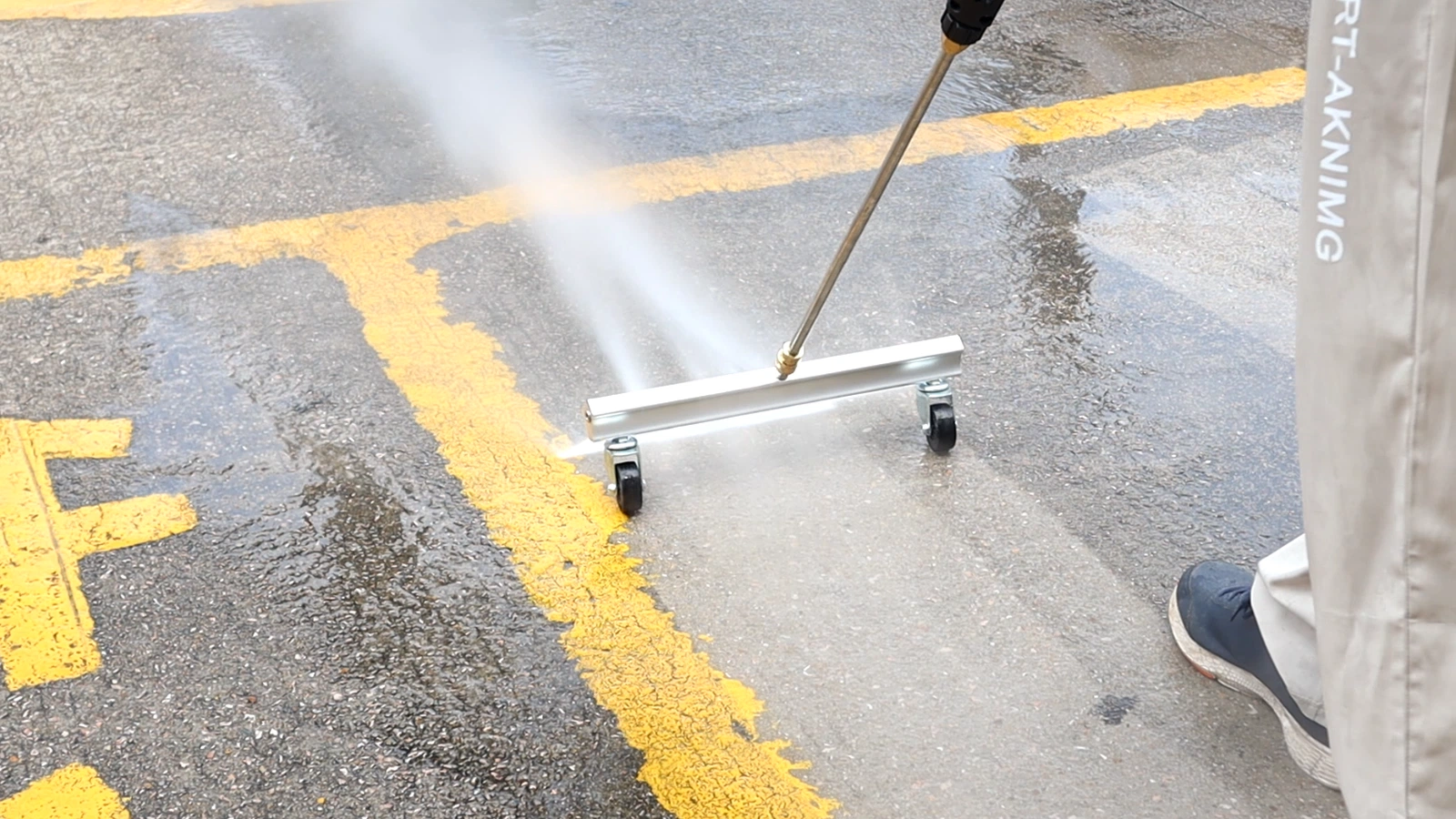
Jinjie J-2815H
Broader floor flushing to carry away loose sediment
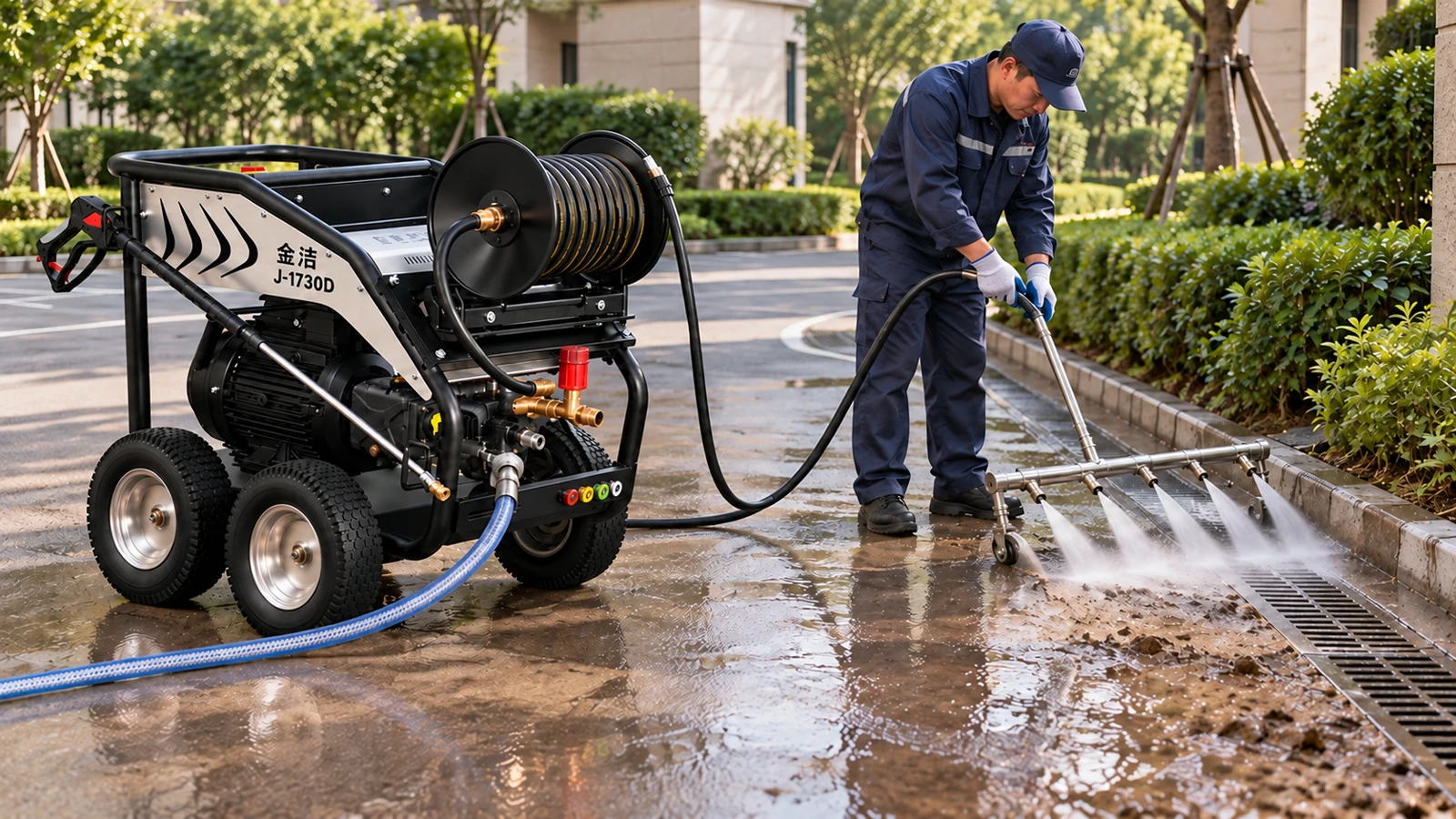
Jinjie J-1730D
Multi-outlet flushing for large-area coverage
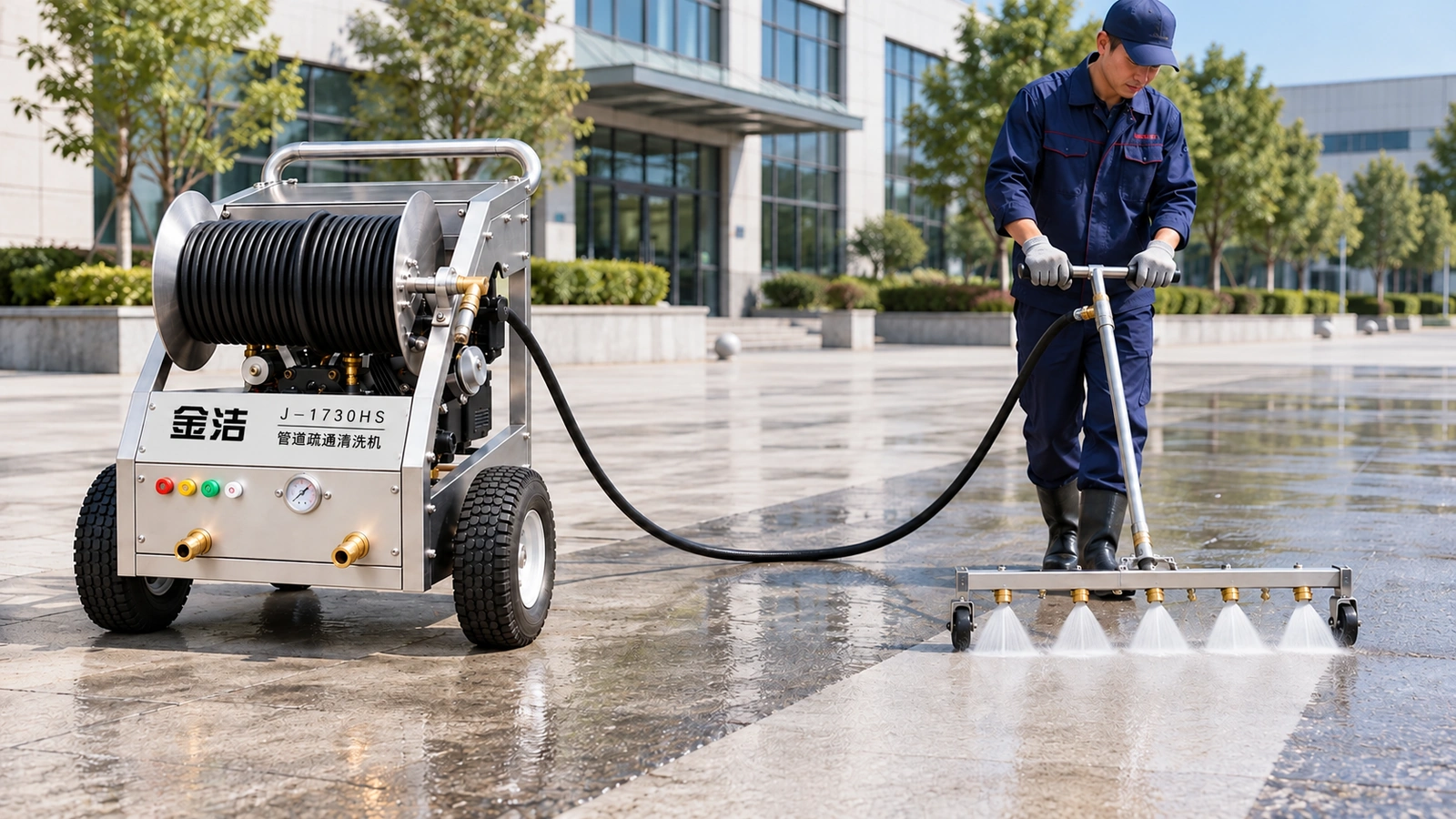
Jinjie J-1730HS
Broaden coverage per pass and reduce repeat washing
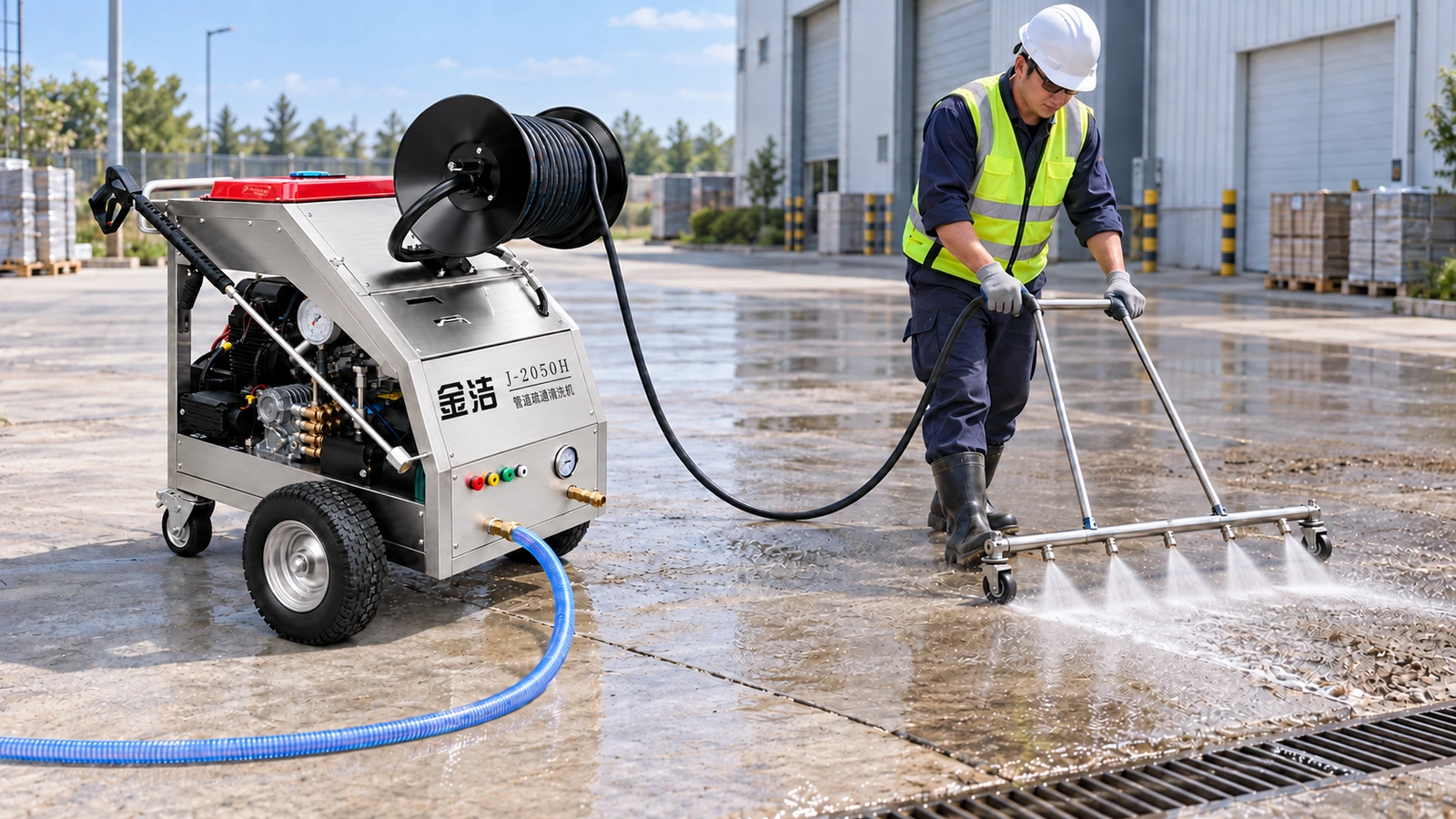
Jinjie J-2050H
Outdoor broad-area flushing coverage
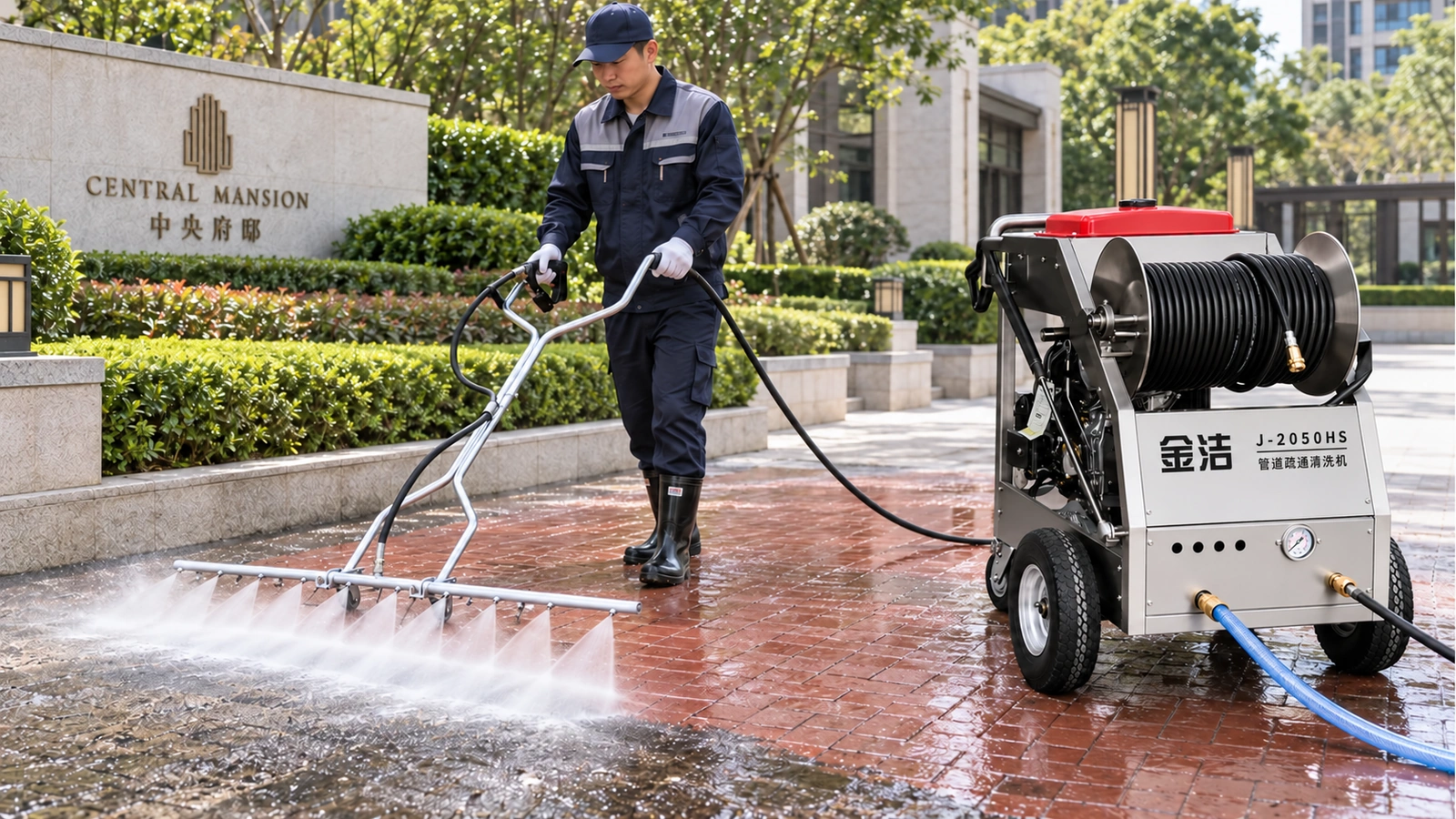
Jinjie J-2050HS
Model information positions J-2050HS for gasoline higher-flow jetting and auxiliary washing. Verify pipe nozzles, lances and optional bars separately rather than inferring accessory output from machine flow. A 304 component description is not a whole-304 fram…
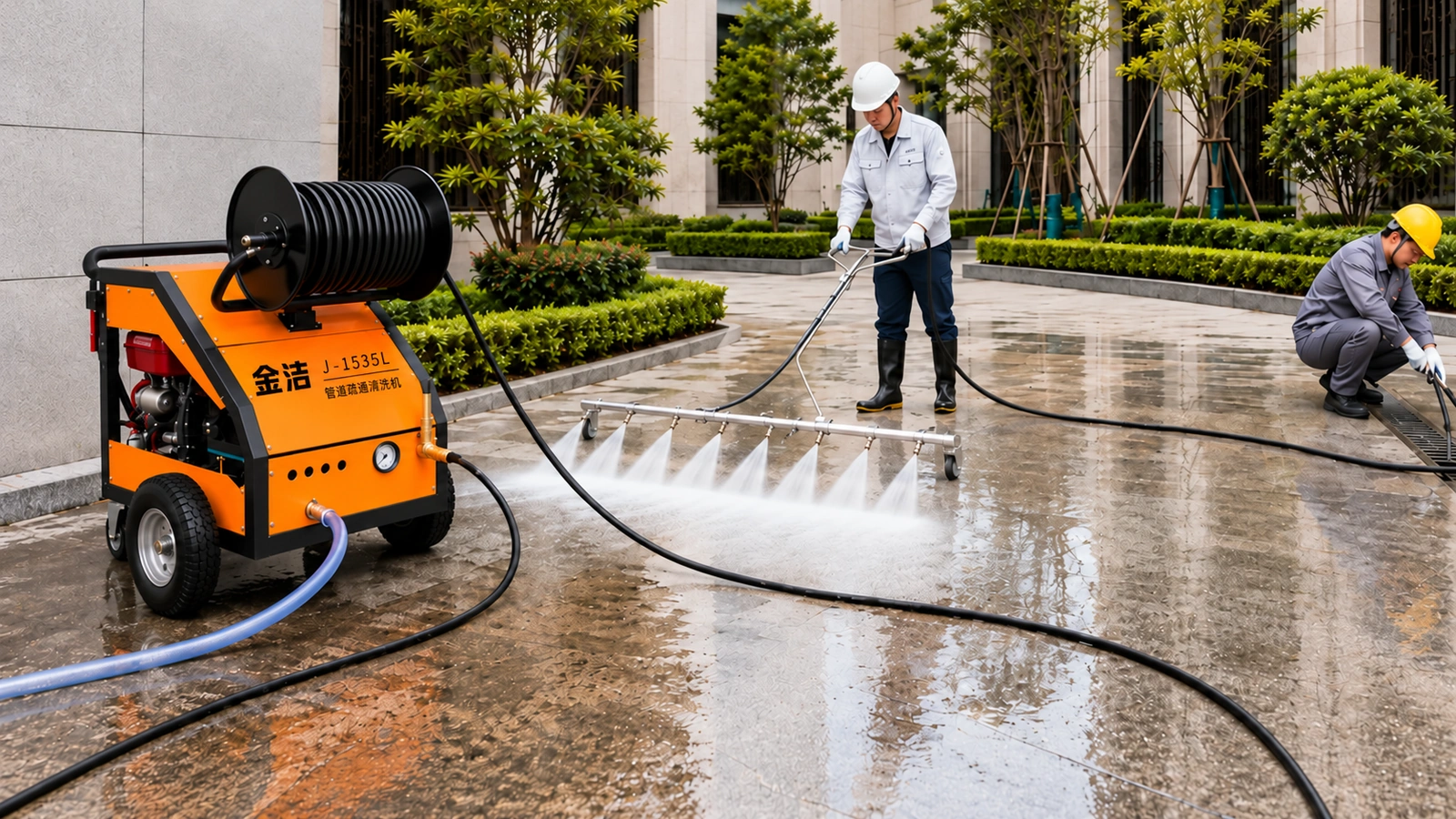
Jinjie J-1535L
Select this gasoline model’s lance and optional multi-nozzle bar separately. Machine flow of 35 L/min does not establish every nozzle’s output or coverage. Hose length is not effective reach; use only in open outdoor conditions with assessed supply and wastew…
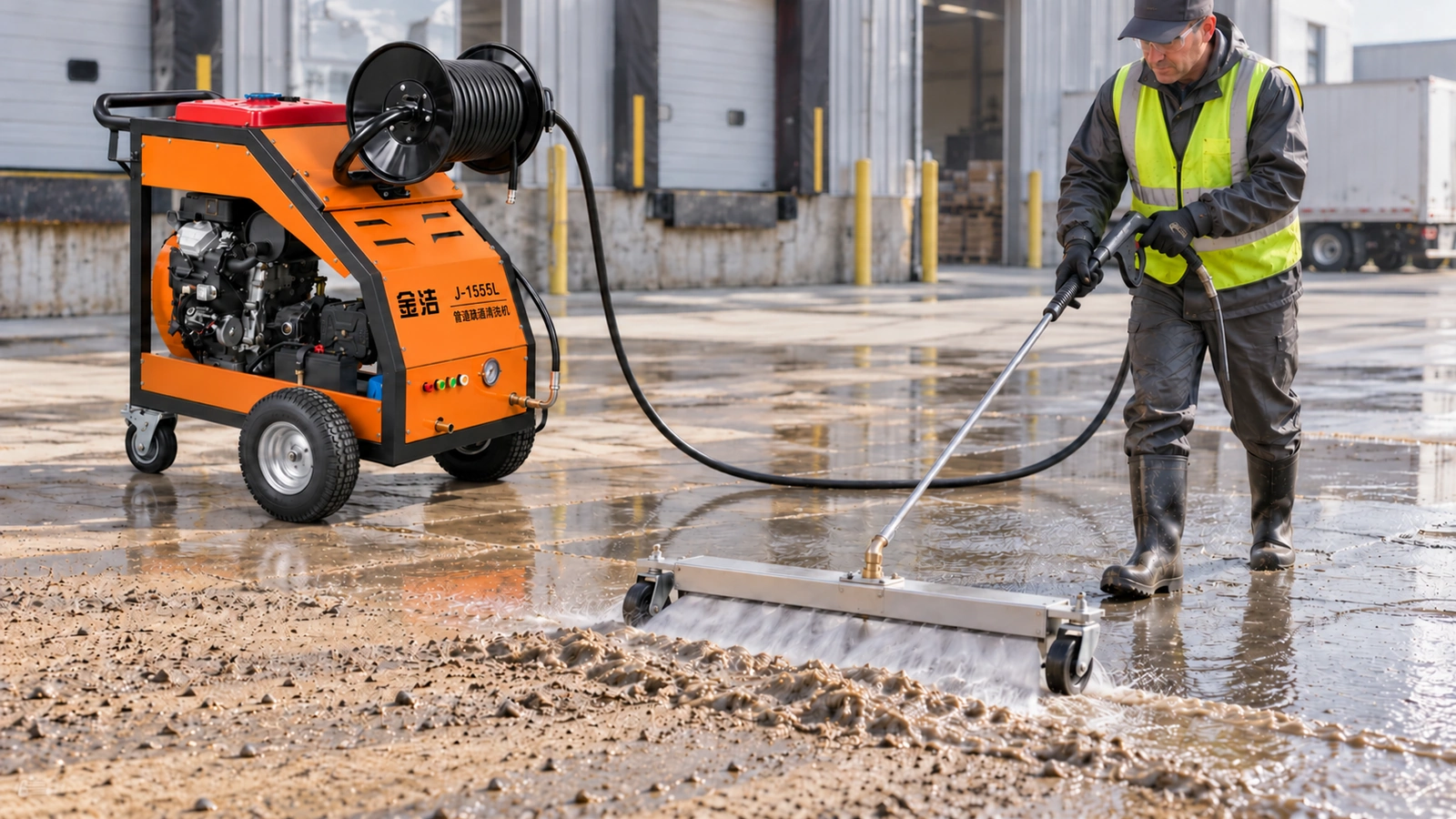
Jinjie J-1555L
Distinguish the stated 55 L/min machine flow from the historical 35 L/min lance note, whose conditions remain unresolved. Match the lance or optional bar to actual nozzle, regulation, supply and connections rather than inferring multi-gun output. Protect the …
Jinjie J-2515D
Current model
Broader floor flushing to carry away loose sediment