
Selected model: Jinjie J-56BF
Typical application · Equipment selectionRetail shelving-aisle floor cleaning
Jinjie J-56BF
Check squeegee clearance, displays and turns first, then combine scheduled scrubbing and recovery with manual edge work around shelves.
01 · What makes this task difficult?
Retail aisles combine packaging, footprints and local spill residues. Low stock and promotional displays are more exposed to wet work than open floor space.
Insufficient turning space
Measure and trial turns before washing
Moisture-sensitive low stock
Protect stock edges and collect debris first
02 · Why consider this Jinjie machine?
On safe, accessible shelf routes, ride-on scrubbing and recovery can cover open lanes while staff handle shelf edges and other places the machine should not enter.
Machine turn and squeegee sweep
Measure and trial turns before washing
Avoid selection based only on brush width
Controlled scrubbing and recovery
Protect stock edges and collect debris first
Include stock protection in the task
03 · A better cleaning workflow and customer value
Check squeegee clearance, displays and turns first, then combine scheduled scrubbing and recovery with manual edge work around shelves.
Avoid selection based only on brush width
Insufficient turning space · Measure and trial turns before washing
Include stock protection in the task
Moisture-sensitive low stock · Protect stock edges and collect debris first
Match tools, the material and the working route before comparing labour, time, consumables and maintenance costs. The potential value depends on suitable conditions and correct operation; no fixed saving or damage-free result is promised.
Where stock cannot be protected, visibility is obstructed or narrow routes cannot be isolated, compare compact walk-behind or self-propelled options instead.
Working method, evidence and original professional analysis
Task-specific equipment selection
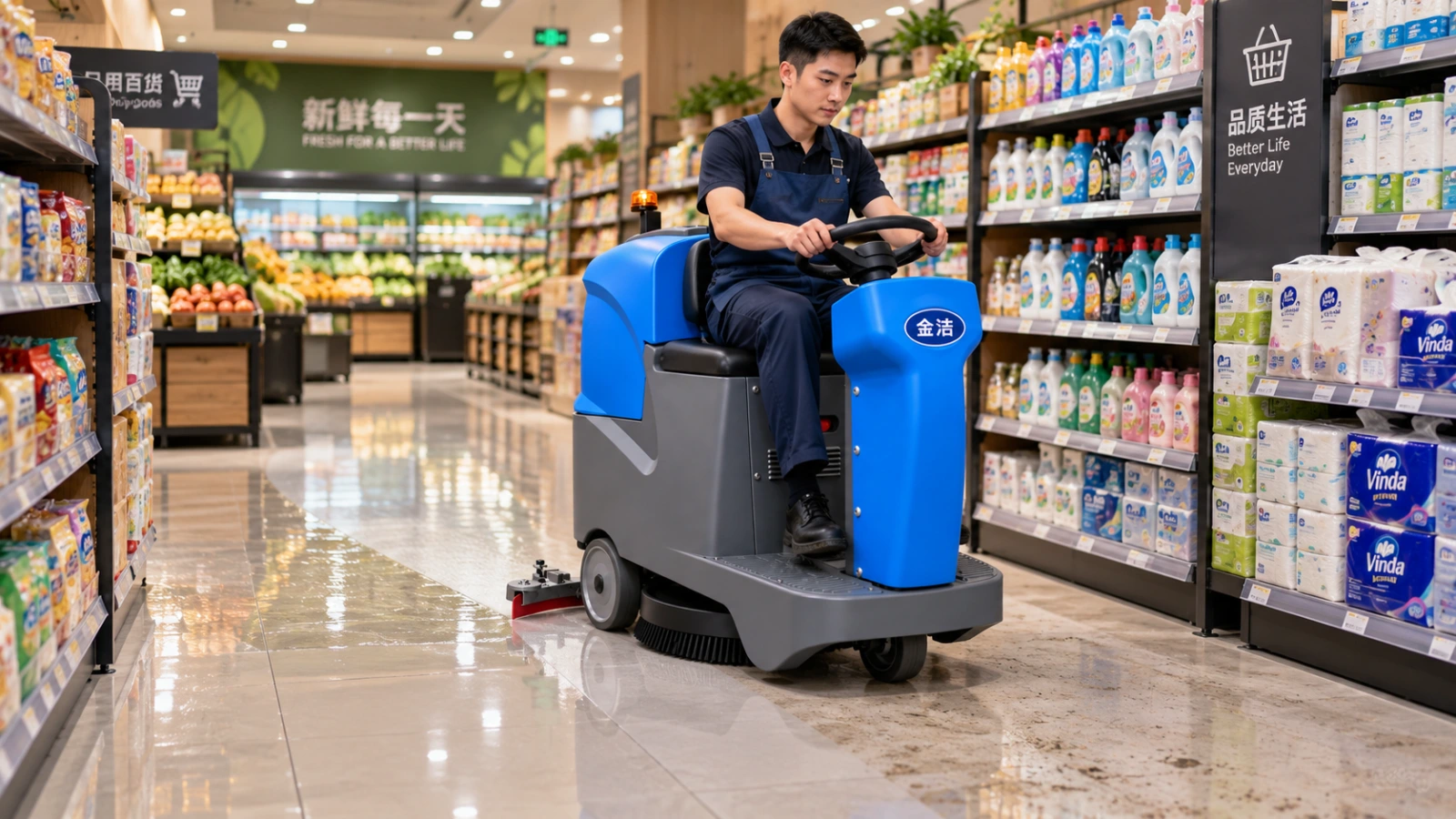
Ride-on work between retail shelves: verify end-of-aisle turning space
Site, material and contamination
Retail aisles combine packaging, footprints and local spill residues. Low stock and promotional displays are more exposed to wet work than open floor space.
Equipment basis and model differences
The J-56BF card illustrates ride-on aisle selection. Trial aisle ends, squeegee sweep and operator visibility; straight-line access does not establish full-route suitability.
| Site problem | Equipment / conditions | Suggested method | Potential value |
|---|---|---|---|
| Insufficient turning space | Machine turn and squeegee sweep | Measure and trial turns before washing | Avoid selection based only on brush width |
| Moisture-sensitive low stock | Controlled scrubbing and recovery | Protect stock edges and collect debris first | Include stock protection in the task |
Working method, accessories and site supply
- Measure aisles, ends and displays while maintaining required access.
- Clear debris, trial the surface and local stains, and check recovery.
- Inspect shelf-edge water and turns before reopening customer access.
Limits and safety
Where stock cannot be protected, visibility is obstructed or narrow routes cannot be isolated, compare compact walk-behind or self-propelled options instead.
Questions for this task
Prepare site information
Provide aisle-end and display layouts, stock-protection needs and trading hours.
FAQ
Is straight-aisle access enough for purchase?
No. Complete end turns and recovery checks too.
Does an old route remain valid after displays are added?
Recheck clearances and isolation rather than assuming the previous route still works.
What site information is needed for selection?
Provide aisle-end and display layouts, stock-protection needs and trading hours.
Select equipment for the actual site
Provide aisle-end and display layouts, stock-protection needs and trading hours.
Jinjie J-56BF · Selection enquiryCompare application plansModels and original application images
Compare each model against its own configuration and the actual route, material and site services.
Jinjie J-D3C
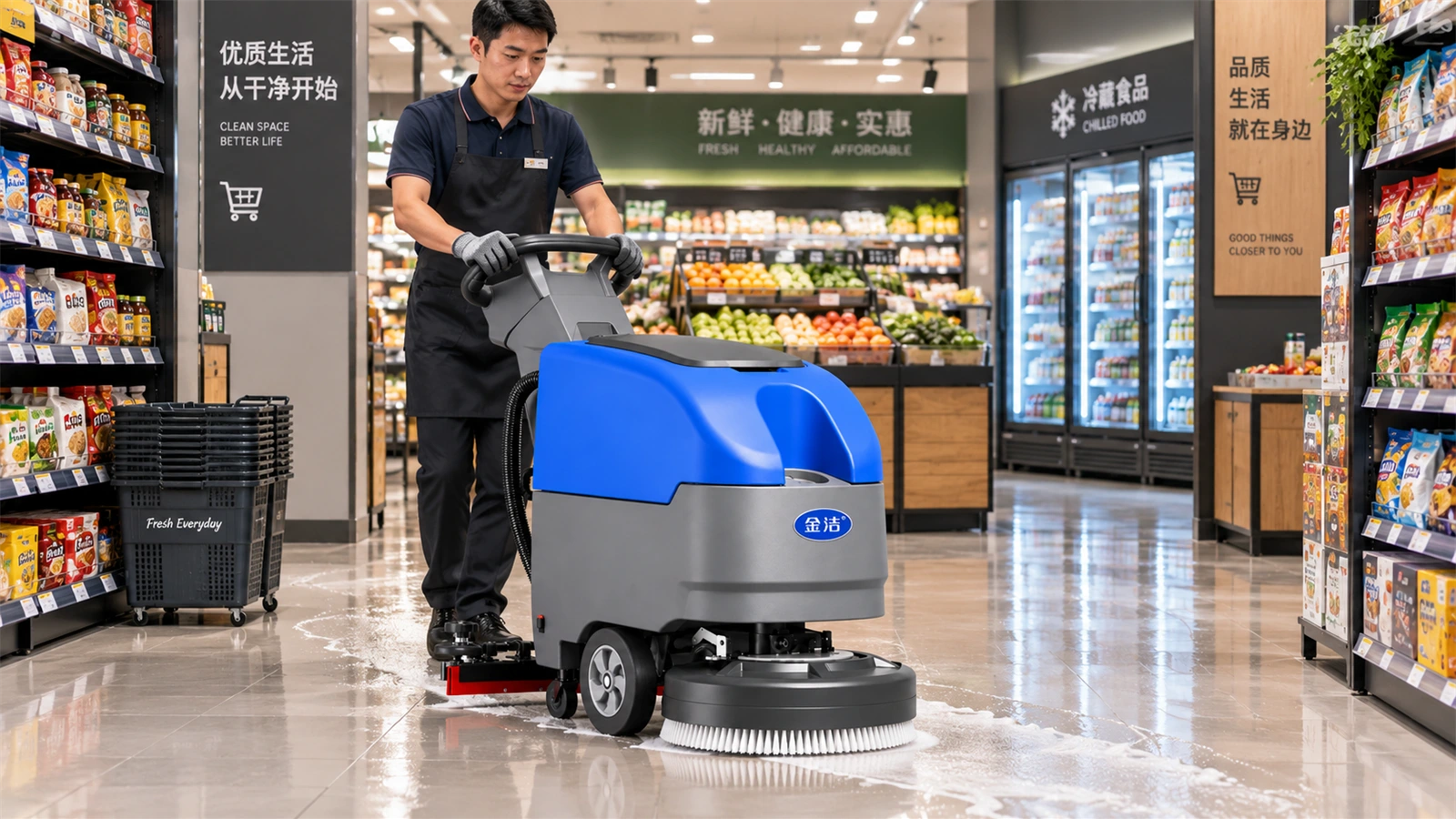
J-D3C is the small walk-behind option associated with this card. Check actual machine, brush and squeegee clearance; cleaning width is not passage clearance.
Jinjie J-D5SL
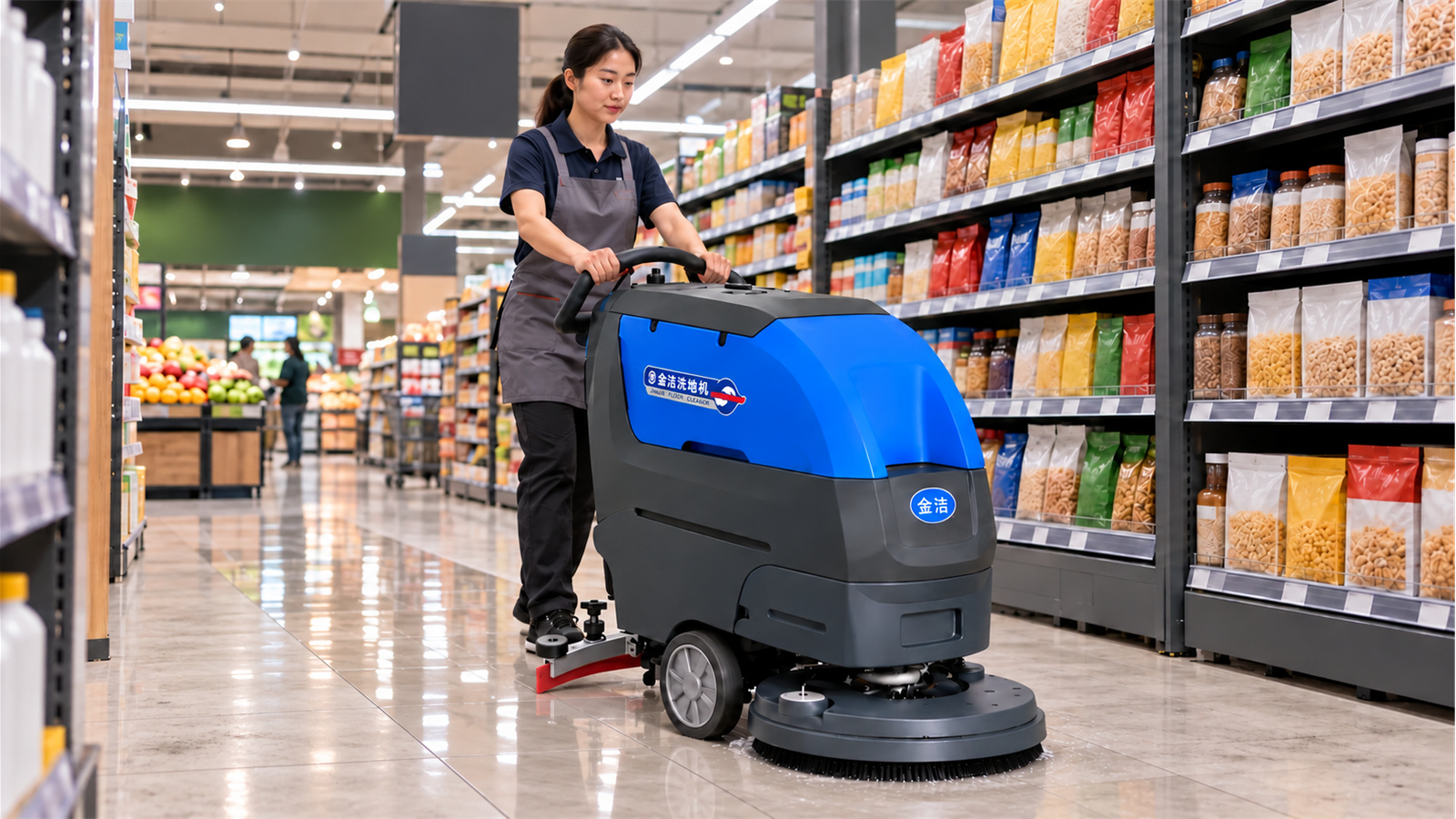
Current J-D5SL product information lists self-propelled travel, 24 V, 510 mm cleaning width and a 780 mm squeegee as selection checks, not measured hourly output. Self-propulsion is not autonomy or proof of adequate turning space.
Jinjie J-56BF
Current model
The J-56BF card illustrates ride-on aisle selection. Trial aisle ends, squeegee sweep and operator visibility; straight-line access does not establish full-route suitability.
Jinjie J-D3L
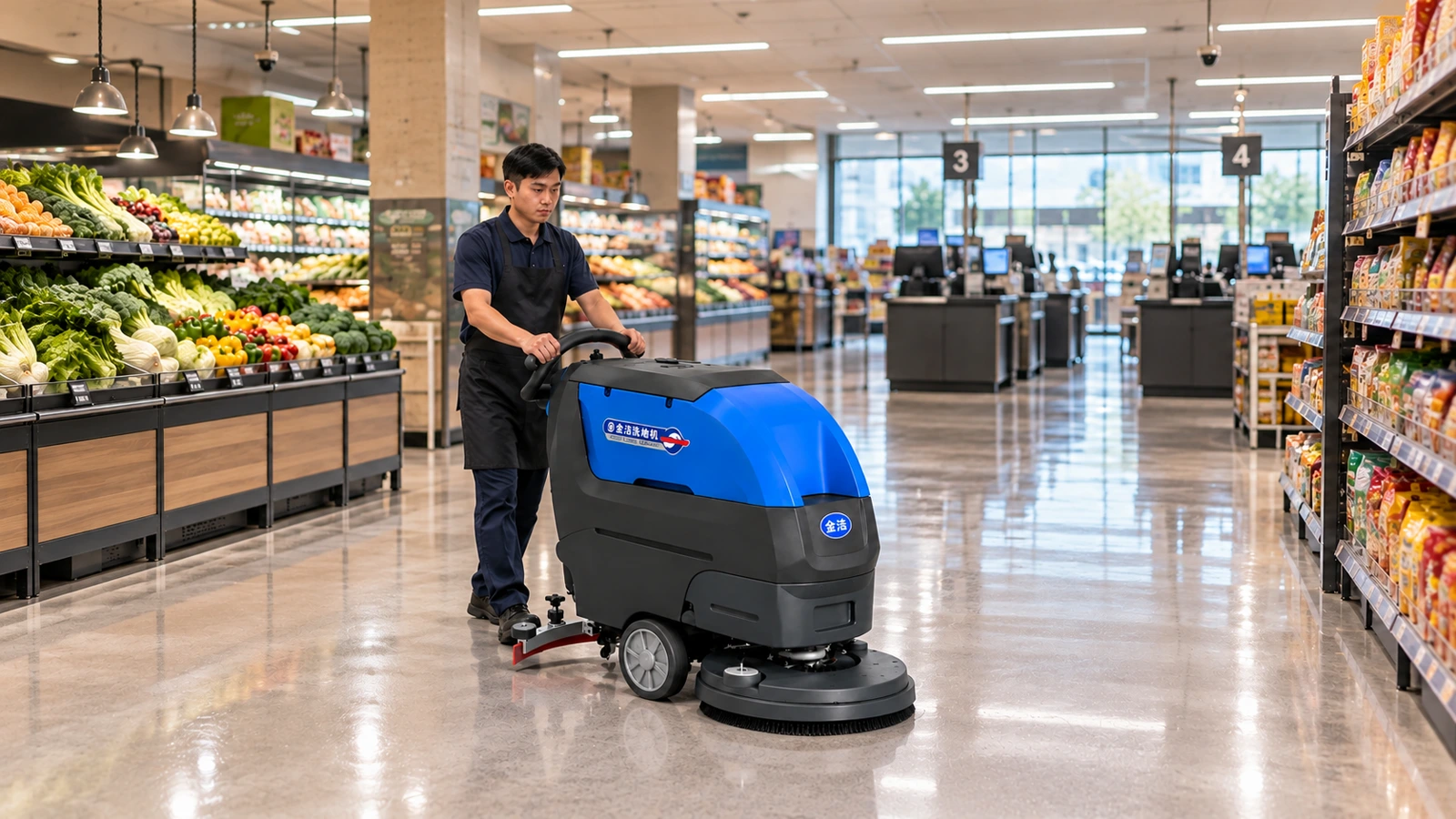
Supermarket and shop floor cleaning